sandhyaflexbiz@gmail.com - GST NO. : 36ABTCS2276B1Z4
- Send Email

Bridge Construction Products
Leading Manufacturers, Exporters, Wholesaler, Retailer of 125NB Rubber Hose, 210x210 Drainage Spout, 230x5mm PVC Water Stopper, 75mm Strip Seal Expansion Joint, Bitumen Expansion Joint Filler Board, Bitumen Mastic Pad, Bridge Drainage Spout, Bridge Expansion Joint, Bridge Slab Seal Expansion Joint, Bridge Strip Seal Expansion Joint, Bridges Drainage Spouts, Curing Hessian Cloth, Deep Gulvnized Drainage Spout, Drainage Granting, Drainage Spout, Drainage Spout 210 X 210, Drainage Spout Bridge, Elastomeric Bridge Bearing, Elastomeric Rubber Pad, Expansion Joint Filler Board, Expansion Joint Filler Board Road Construction and Expansion Joint Mastic Pad from Hyderabad.
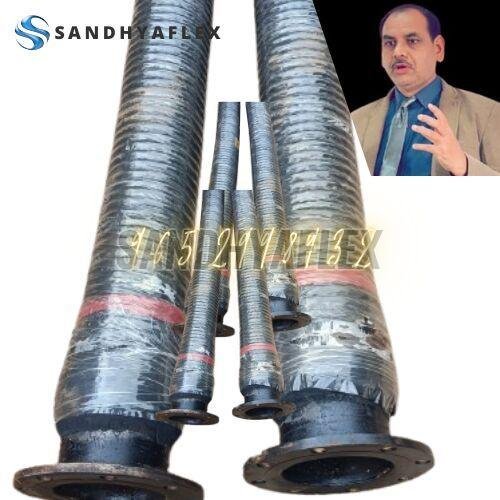


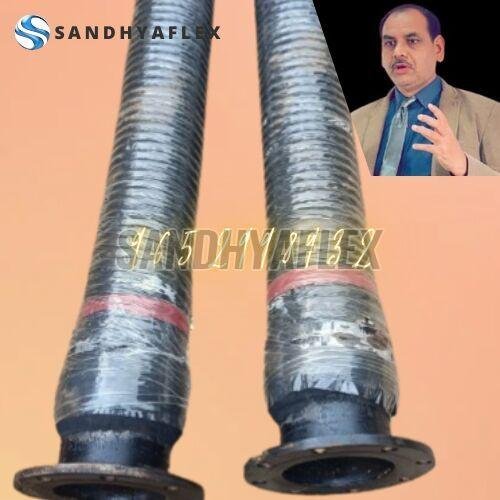
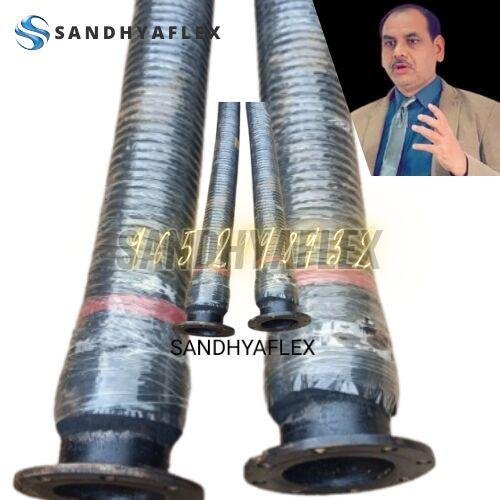

| Business Type | Manufacturer, Exporter, Supplier |
| Material | Rubber |
| Finishing | Wrap Fininshing |
| Shape | Round |
| Color | Black |
| Pressure | Medium |
| Usage | Industrial Use |
| Certification | ISO 9001:2008 |
| Product Code | 125NBRH |
| Port | mumbai |
| Delivery Time | 7 to 15 days |
| Packaging Details | Packing in stregth |
Do you mean “SANDHYAFLEX 125 NB Cement Feeding Rubber Hose” (i.e. with nominal bore 125 mm)?
Here’s what I found on that product + similar options and specs. Let me know if you want a quote or supplier.
What I found — specifications & details
From Sandhya / Sandhyaflex:
The cement feeding rubber hose is used for spraying cement grout in irrigation projects, buildings, dams, bridges, roads, hilly terrain, etc. ( • Reinforcement: Rubber-impregnated woven textiles or braided high strength synthetic yarns ( • Electrical Bonding: A copper wire strand is embedded in the reinforcing plies to ensure electrical continuity along hose length ( • The hose aligns with IS: 5137:1990 standard (Indian standard) for such hoses ( • Another listing states “125 mm Cementing Rubber Hose” by Sandhyaflex, hardness 55–60 Shore A, working pressure 10–15 kg/cm², thickness ~12–15 mm, etc. (
Similar / commercially available product options
Here are some product options I found that are close to what you asked (cement feeding rubber hoses). You can use these as comparisons or for ordering if they match your specs:
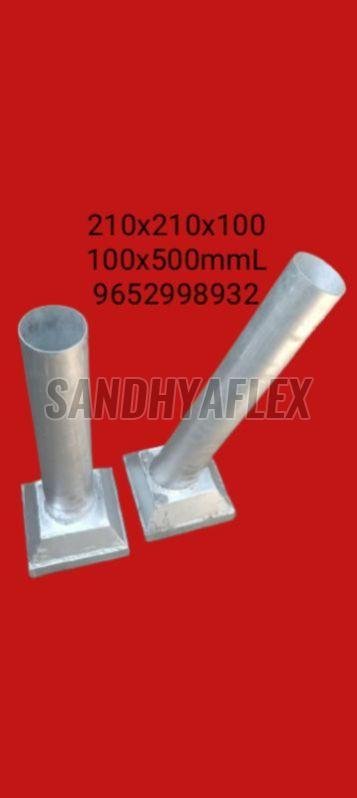
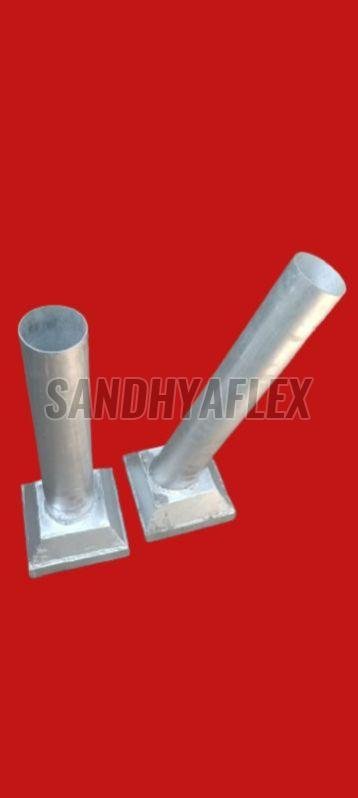
| Business Type | Manufacturer, Exporter, Supplier, Retailer |
| Certification | ISI Certified |
| Application | Gas Fitting, Marine Applications |
| Shape | Elbow, Square |
| Material | Stainless Steel, Perfect — Now You're Asking For **specification**,And Based On Our Convo So Far,It Sounds Like You're Putting Together A **product Spec Sheet** For A **slurry And Mud Rubber Hose**. Here's A Clean |
| Brand Name | SANDHYAFLEX |
| Capacity | NA |
| Finishing | Polished |
| Color | Grey |
| Product Code | 10000 |
| Port | depends |
| Payment Terms | D/A |
| Delivery Time | negotiable |
| Packaging Details | Here’s a focused breakdown of the **Packaging Details for Drainage Spouts** (commonly used in bridges, decks, and precast structures): --- ### 📦 **Packaging Details – Drainage Spout** | **Attribute** | **Details** | |----------------------------|------------------------------------------------------------------------------| | **Packaging Type** | Individually wrapped or bulk packed in cartons or wooden boxes | | **Material Protection** | Wrapped in bubble wrap / foam sheet to prevent scratches or dents | | **Packaging Material** | Corrugated cartons, shrink wrap, or wooden crates (for export) | | **Labeling** | Product name, size, quantity, batch number, and handling instructions | | **Unit per Package** | 5–20 pieces per box (based on size and type) | | **Dimensions (per piece)** | Varies – e.g., 100 mm dia × 300 mm length | | **Net Weight** | ~1–5 kg per spout (depends on material: MS / GI / PVC / SS) | | **Gross Weight** | Net + 1–2 kg (packaging weight) | | **Stacking Instructions** | Boxes stacked with edge protection; max 5 layers depending on weight | | **Storage Instructions** | Store in dry, covered space to prevent corrosion (for metallic spouts) | | **Export Readiness** | Wooden fumigated crates with waterproof wrapping (if exported) | | **Port of Dispatch** | [e.g., Nhava Sheva / Mundra Port, India] | --- ### ✅ Example JSON Format: ```json { "product": "Bridge Drainage Spout", "unitPackaging": "5–20 pcs per box", "materialProtection": "Bubble wrap and foam", "outerPackaging": "Corrugated box or wooden crate", "netWeightPerPiece": "1–5 kg", "grossWeight": "Net + 1–2 kg", "labeling": "Product name, size, quantity, batch number", "stacking": "Max 5 layers with edge guards", "storage": "Dry, shaded area", "portOfDispatch": "Nhava Sheva, India" } ``` --- Need help creating: - A **PDF datasheet**? - A **custom label design** for the box? - Or a **visual layout of packaging**? Just let me know |
A bridge drainage spout, also known as a bridge scupper or drainage outlet, is a crucial component designed to manage water runoff on bridges. Proper drainage is essential for maintaining the integrity and longevity of a bridge structure. Here are some common uses and applications of bridge drainage spouts:
\\n
\\n
1. **Preventing Water Accumulation:** One of the primary purposes of bridge drainage spouts is to prevent the accumulation of water on the bridge deck. Water accumulation can lead to corrosion, erosion, and other structural issues over time.
\\n
\\n
2. **Protection Against Ice Formation:** In cold climates, water that accumulates on a bridge can freeze, leading to the formation of ice patches. Bridge drainage spouts help prevent such ice formation, reducing the risk of accidents and enhancing safety for vehicles and pedestrians.
\\n
\\n
3. **Preserving Bridge Structural Integrity:** Excessive water on the bridge deck can contribute to the deterioration of the bridge\\\'s structural elements, such as concrete, steel, or other materials. Drainage spouts help preserve the integrity of these materials by directing water away from critical areas.
\\n
\\n
4. **Mitigating Hydroplaning Risk:** Adequate drainage reduces the risk of hydroplaning for vehicles traveling on the bridge during wet conditions. Hydroplaning occurs when a thin layer of water separates the tires from the road surface, leading to loss of traction and control.
\\n
\\n
5. **Preventing Ponding:** Bridge drainage spouts are designed to prevent ponding, which is the formation of standing water on the bridge surface. Ponding can accelerate the deterioration of the bridge deck and pose safety hazards.
\\n
\\n
6. **Minimizing Environmental Impact:** Proper drainage systems help minimize the environmental impact of bridges. By directing water away from the bridge structure, the risk of soil erosion and contamination of nearby water bodies is reduced.
\\n
\\n
7. **Compliance with Design Standards:** Many engineering standards and codes mandate the inclusion of effective drainage systems in bridge design. Bridge drainage spouts play a crucial role in ensuring compliance with these standards, contributing to the overall safety and longevity of the structure.
\\n
\\n
8. **Enhancing Aesthetics:** Well-designed drainage systems, including aesthetically pleasing spouts, can contribute to the overall visual appeal of a bridge. Integrating drainage elements seamlessly into the bridge design helps maintain an attractive appearance.
\\n
\\n
In summary, bridge drainage spouts are essential components of bridge infrastructure, serving to protect the structure from water-related damage, enhance safety, and comply with engineering standards. Their applications extend to various aspects of bridge design, maintenance, and environmental impact mitigation.
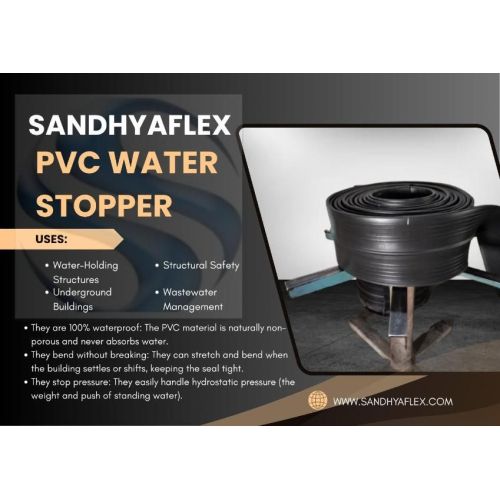
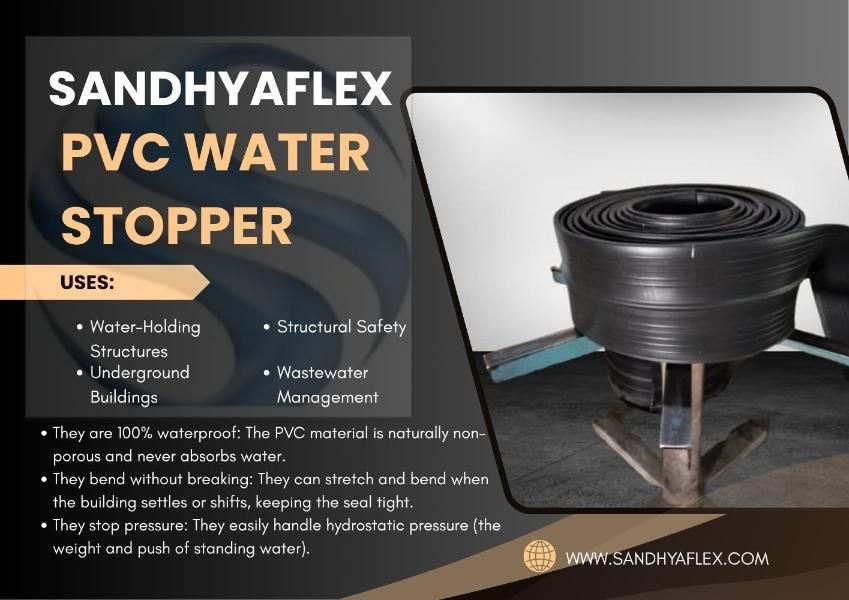




| Business Type | Manufacturer, Exporter |
| Length | 45-50mtr |
| Size | The Term **"size"** Can Mean Different Things Depending On The Context. Can You Tell Me What You're |
| Brand Name | Sandhyaflex |
| Material | Plastic,Pvc |
| Condition | New |
| Application | Construction |
| 9 inch width centre bulb | NA |
| Color | Black |
| Type | Center bulb |
| Country of Origin | India |
| Product Code | PVC Water Stopper |
| Port | Mumbai |
| Payment Terms | D/A |
| Delivery Time | 2 days |
| Packaging Details | Export Packing Dimension in CBM PVC Water Stopper with Center Bulb Each Roll 25Mtr SR No Dimension Length Width Height CBM Weight kg/Roll 1 150x5mm 0.625 0.625 0.150 0.059 40 2 150x6mm 0.625 0.625 0.150 0.059 45 3 150x8mm 0.625 0.625 0.150 0.059 55 4 200x8mm 0.625 0.625 0.200 0.059 70 5 200x10mm 0.65 0.65 0.200 0.078 80 6 225x5mm 0.625 0.625 0.23 0.090 65 7 225x6mm 0.625 0.625 0.230 0.090 70 8 225x8mm 0.65 0.65 0.230 0.097 90 9 225x10mm 0.65 0.65 0.230 0.097 100 10 240x8mm 0.65 0.650 0.240 0.104 110 11 240x10mm 0.650 0.650 0.240 0.104 125 12 250x8mm 0.675 0.675 0.250 0.114 95 s13 250x10mm 0.675 0.675 0.250 0.114 115 14 300x6mm 0.700 0.700 0.300 0.147 95 15 300x8mm 0.725 0..725 0.300 0.158 115 16 300x10mm 0.750 0.750 0.300 0.169 145 17 300x12mm 0.775 0.775 0.300 0.18 140 18 300x15mm 0.800 0.800 0.300 0.192 160 Kiker Type 19 230x4mm 0.625 0.625 0.230 0.090 67 Dumbbell Type 20 230x8mm 0.650 0.650 0.230 0.097 87 21 230x10mm 0.650 0.650 0.230 0.097 100 |
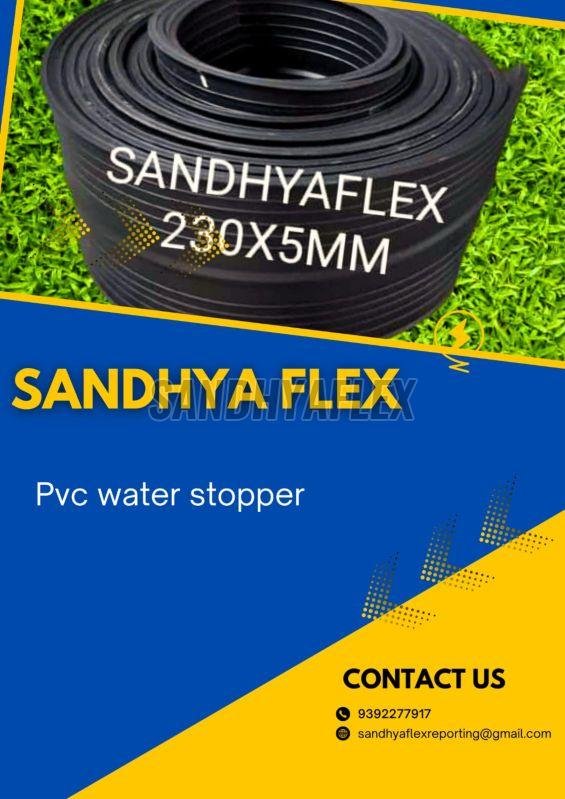
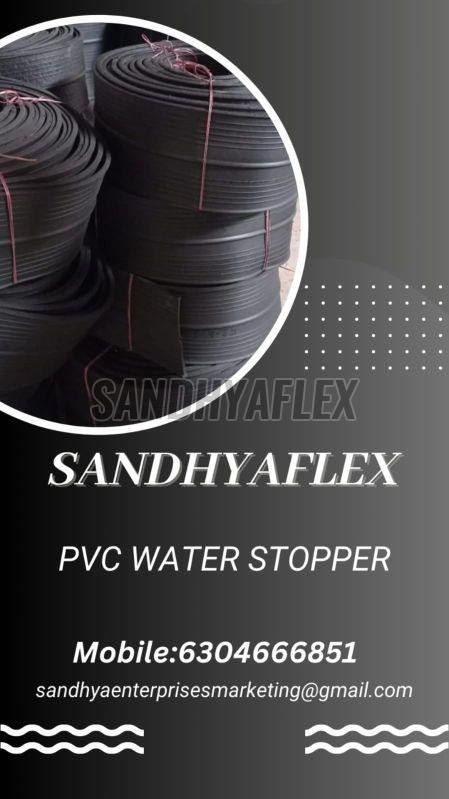
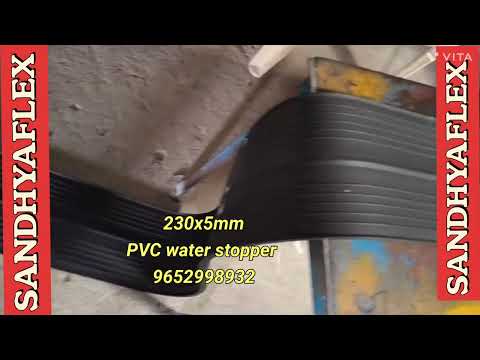
A PVC water stopper is a specialized product typically used in construction to prevent water from penetrating joints or gaps in concrete structures, such as basements, tunnels, or dams. These water stoppers are made from durable PVC (polyvinyl chloride) and are designed to create a watertight seal where concrete slabs or walls meet, especially in areas prone to water leakage.
The PVC material is resistant to water, chemicals, and extreme temperatures, which makes it ideal for use in environments where water leakage is a concern. PVC water stoppers are often installed during the pouring of concrete to form a continuous, impermeable barrier that prevents water ingress.
Would you like to know more about its installation process or where it's commonly used?






| Business Type | Manufacturer, Exporter, Supplier |
| Feature | Excellent Weather And Corrosion Resistance |
| Application | Bridge Construction |
| Country of Origin | India |
| Material | Aliminum |
| Surface Finish | Smooth |
| Operating Temperature | Sand Blasting and Spay Painting |
| Range Of Width Provided | 65mm and 75mm Edges Beam |
| Diameter | 16mm Dia of Anchoring Rod |
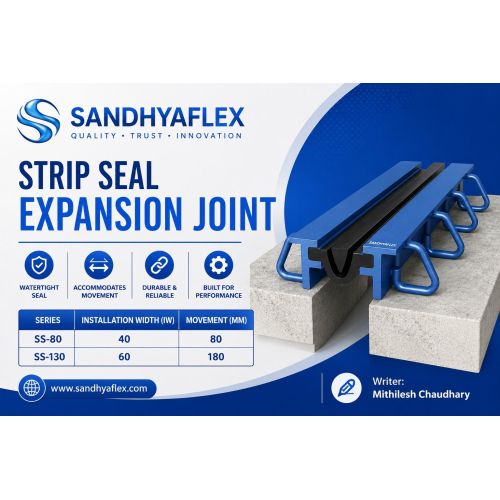
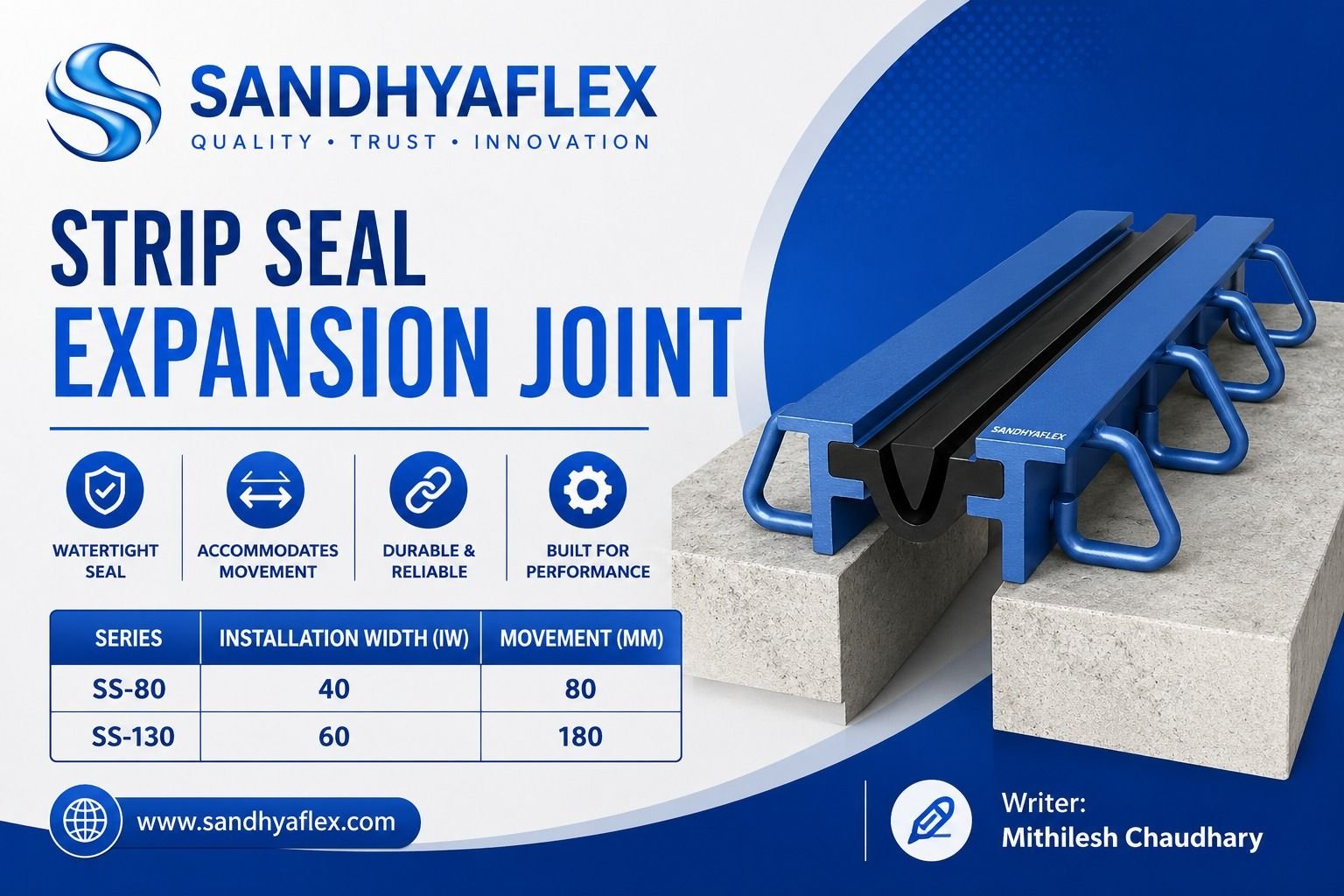
The Sandhyaflex M-Type Strip Seal Expansion Joint is a specialized expansion joint system used in bridges, highways, and large infrastructure projects to accommodate movements caused by temperature changes, traffic loads, and seismic activity. The M-Type design is specifically crafted for applications requiring greater movement capacity and durability.
✅ Features:-
Design:
- The M-Type Strip Seal features an "M" shaped configuration that provides superior flexibility and movement absorption.
- Designed to handle both longitudinal and transverse movements.
-
Material:
- Seal Material: High-quality elastomeric rubber, ensuring excellent resilience and weather resistance.
- Steel Edge Beams: Made of corrosion-resistant steel to offer strength and longevity.
- Waterproofing: Ensures water-tight sealing to prevent structural damage.
-
Movement Capability:
- Typically accommodates movements ranging from 80 mm to 200 mm.
-
Load Bearing Capacity:
- Can handle heavy vehicular loads, making it ideal for high-traffic bridges and highways.
- Bridges and Flyovers: To absorb expansions and contractions due to temperature fluctuations.
- Highways and Roadways: Ensures smooth vehicle movement while maintaining structural integrity.
- Parking Structures: Useful in large concrete or steel structures with expansion joints.
- Seismic Zones: Provides flexibility to accommodate seismic movements.
- Material: Elastomeric rubber and steel.
- Movement Range: Up to 200 mm.
- Temperature Range: Can withstand temperatures from -40°C to +70°C.
- Seal Width: Customizable based on the application requirements.
- Load Capacity: Suitable for both light and heavy-duty traffic.
- Provides long-term durability with minimal maintenance.
- Prevents water and debris infiltration.
- Reduces noise and vibration caused by vehicle movement.
- Easy to install and replace.
- Effectively accommodates structural movements without compromising safety.
If you need further information regarding installation procedures, technical drawings, or pricing, feel free to ask!


| Business Type | Manufacturer, Exporter, Supplier |
| Condition | New |
| Driven Type | Battery |
| Brand Name | Sandhyaflex |
| Country of Origin | India |
| Application | Roads And National High Ways, Bridges |
| Feature | Bitumen Expansion Joint Fillers Are Designed To Provide Specific Features And Properties To |
| Hardness | The hardness of bitumen expansion joint filler boards can vary depending on the specific ma |
| Temperature | The temperature of the bitumen expansion joint filler board in a construction applicatio |
| Port | The **Port of Dispatch** for **Polyvinyl Chloride (PVC) Resin** depends on the manufacturing locatio |
| Payment Terms | L/C |
| Delivery Time | 7 to 15 days |
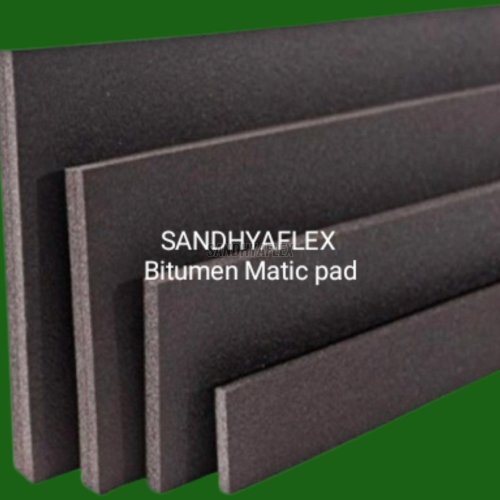
The Sandhyaflex Bitumen Mastic Pad is a high-performance, durable pad used in construction and infrastructure projects for vibration damping, load distribution, and providing a protective cushion between structural components. It\\\'s commonly used in bridge bearings, building foundations, and industrial applications.
\\n✅ Features:
\\n- \\n
- \\n
Material Composition:
\\n- \\n
- Made from a combination of bitumen and mineral fillers, offering excellent load-bearing and cushioning properties. \\n
- Reinforced with fabric or fibers for added strength and longevity. \\n
\\n - \\n
Design:
\\n- \\n
- Available in various thicknesses and sizes to suit different applications. \\n
- Offers uniform load distribution to prevent structural damage. \\n
\\n - \\n
Weather and Chemical Resistance:
\\n- \\n
- Resistant to water, chemicals, and environmental elements, ensuring long-term performance. \\n
- Maintains structural integrity even under extreme temperatures. \\n
\\n
🛠 Applications:
\\n- \\n
- Bridge Bearings: Used as a cushioning layer to absorb vibrations and distribute loads in bridges. \\n
- Building Foundations: Provides vibration damping and load management between structural components. \\n
- Industrial Equipment: Installed under heavy machinery to minimize vibration and noise. \\n
- Rail Tracks and Pipelines: Acts as a shock-absorbing material in rail systems and pipelines. \\n
📏 Specifications (May Vary Based on Model)
\\n- \\n
- Thickness: Typically available from 10 mm to 50 mm or customized based on application. \\n
- Size: Can be provided in standard or customized dimensions. \\n
- Load Capacity: Designed to handle high loads, ranging from 10 tons to 100 tons. \\n
- Temperature Range: Operates effectively between -20°C to +80°C. \\n
🔎 Advantages:
\\n- \\n
- Excellent vibration absorption and noise reduction. \\n
- Prevents structural wear and tear by evenly distributing loads. \\n
- Resistant to aging, weathering, and environmental damage. \\n
- Easy to install and maintain. \\n
- Provides long-term performance with minimal maintenance. \\n
\\n
If you\\\'d like further information on specific sizes, technical data sheets, or pricing, feel free to ask!
| Business Type | Manufacturer, Exporter, Supplier |
| Brand Name | SNDHYAFLEX |
| Material | Cane Fibre Based Composition With Mastic Pad Bitumen |
| Shape | Square |
| Color | Black |
| Application | Construction |
| Certification | ISO:9001-2015 |
| Length | 2-4feet |
| Country of Origin | India |
| Water Resistance | Water-resistant And Suitable For Moisture-prone Applications |
| Thickness Range | Available In 10 Mm, 12 Mm, 18 Mm, 19 Mm, And 25 Mm |
| Form Availability | Available In Both Board And Strip Forms |
| Compression Resistance | Excellent Resistance To Compression Under Structural Loads |
| Recovery Property | Outstanding Recovery Characteristics After Compression |
| Environmental Aspect | Eco-friendly Alternative To Thermocol And Plastic Joint Fillers |
| Standards Compliance | Conforms To ASTM D1751, ASTM D545, BS 1142, And IS 1838 (Part I):1983 |
| Product Code | BMP |
| Port | mumbai |
| Payment Terms | L/C |
| Delivery Time | 7 to 15 days |
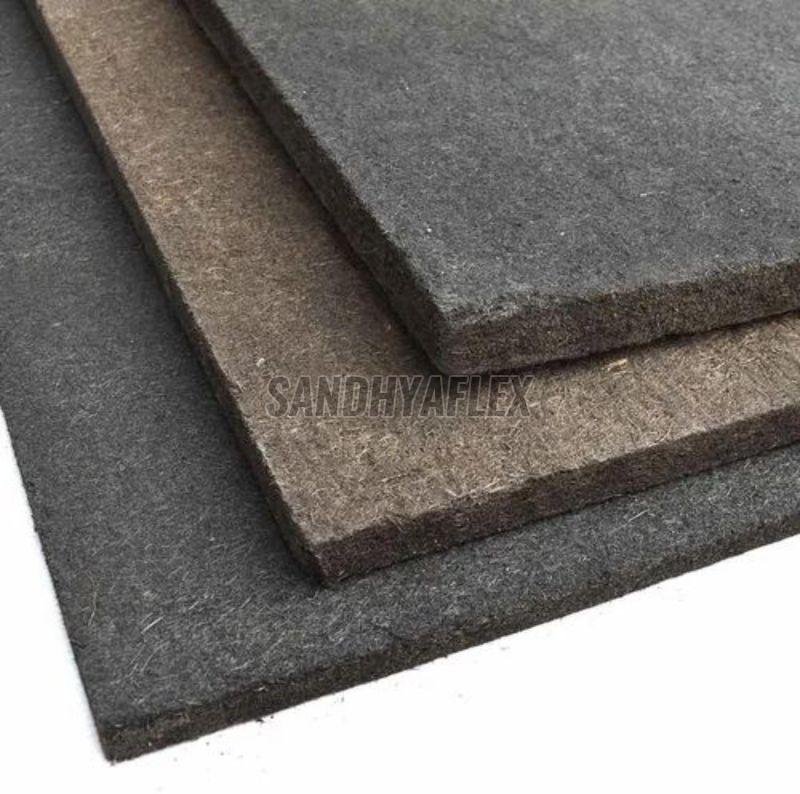
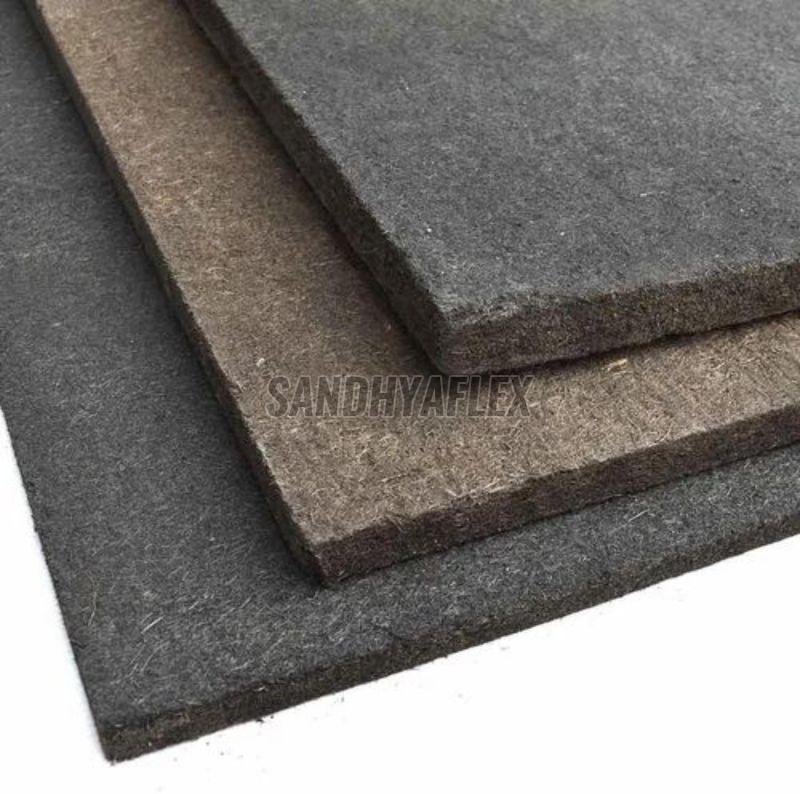
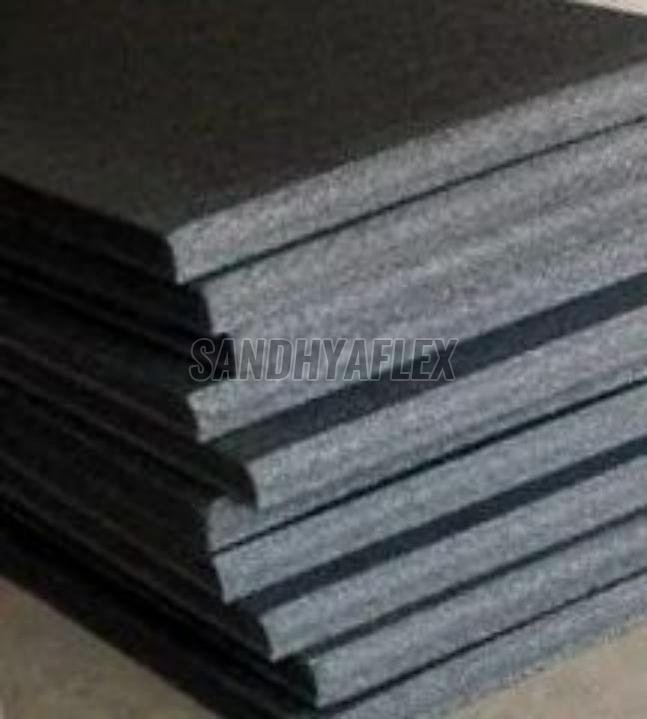
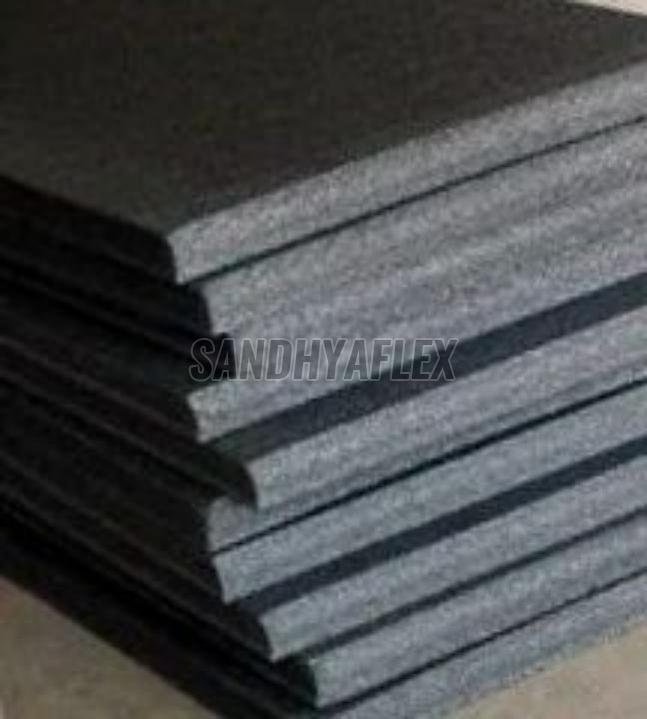
SANDHYAFLEX INDIA PVT LTD is involved in the dealing and supply of Jolly Board expansion Joint Filler. The Jolly Board Expansion Joint Filler is manufactured from cane fibre which is water resistant and has mastic pad bitumen. The range of sizes available– 10 MM, 12 MM, 18 MM, 19 MM and 25 MM (both boards and strips in thickness).
Joint Expansion Joint Filler have excellent resistance to compression and outstanding recovery characteristics. Also, they are environment-friendly contrary to the destructive thermocol/ plastic expansion joint filler.
Applications of Jolly Expansion Joint Fillers
- External wall cladding: it is used for filling expansion and structural separation joints in block and concrete construction.
- Traffic surfaces: It is used for filling expansion joints in motorways, roads, runways, pedestrian areas, bridges and curbs.
- Internal surfaces:It is useful in filling expansion joints across concrete floors including screed floors having under-floor heating
- Roofs and floor finishes:It is ideal for filling expansion joints in concrete floors
- Building superstructures: It can be used to fill expansion joints in basements, retaining walls, site slabs, subways and other water excluding structures.
- Expansion strips: It can be used against existing or between adjacent constructions and insects in concrete paving like drains, manholes and more.
- Jolly expansion joint fillers are used for Industrial flooring as well.
- Internal finishes: As per the state-of-the-art and local regulations, it can be used in various other flat works and concrete floors.
- hysical Properties: Jolly Bitulex Expansion Joint Fillers conform to the following required standards
- ASTM -D. 1751-83/D.545 - 84 Testing `concrete paving and structural construction' `pre-formed expansion Joint Fillers for concrete' Department of Transport - London 1986: `specification to highway works, part 3, clause 1015'
- B.S. 1142 for Standard Specifications for Expansion Joint Fillers.
- IS 1838(Part-I) 1983 Standard Test of Expansion Joint Fillers.


| Business Type | Manufacturer, Exporter, Supplier |
| Brand Name | Sandhayflex |
| Material | Mild Steel (MS) And Galvanised Steel (GI) |
| Standard Compliance | Manufactured As Per MORTH Specifications |
| Corrosion Resistance | High Resistance To Rust And Corrosion |
| Durability | Designed For Long Service Life Under Harsh Conditions |
| Weather Resistance | Withstands Heavy Rainfall, Heat Waves, And Corrosive Elements |
| Performance | Efficient And Reliable Bridge Water Drainage System |
| Customisation | Available In Standard Sizes And Customised Designs |
| Quality Control | Strict Multi-stage Quality Inspection From Raw Material To Final Product |
| Delivery Time | 20 to 25 days |
At Sandhya Flex, we're proud to provide premium Bridge Drainage Spout, that are known for their outstanding functionality and quality. Our drainage spouts are made to endure a long time and are made to handle extreme environmental conditions using quality materials like mild steel and galvanised steel.
MORTH Specifications Compliance
The Ministry of Road Transport and Highways (MORTH) exacting criteria are carefully followed in the production of our Bridge Drainage Spouts. This guarantees that our products are reliable and of the greatest calibre, making them appropriate for use in bridge-building projects of all kinds.
Premium Materials
We think that in order to guarantee the exceptional quality of our products, we need only use the best materials. Galvanised and mild steel, two premium-grade materials, are used in the construction of our Bridge Drainage Spouts. These materials are well known for their strength, resilience to corrosion, and ability to survive the rigours of challenging environmental circumstances.
Customized Solutions
Since every project has different requirements, we provide a large selection of drainage spouts specifically designed to fulfill our client's needs. We have the knowledge and resources to successfully meet your needs, whether you need standard-sized spouts or specially-tailored solutions.
Durability and Longevity
Our drainage spouts are built to last and are made with long-lasting durability in mind. They are engineered to withstand the most severe weather conditions, including intense downpours, intense heat waves, and corrosive substances, by utilising high-quality materials and sophisticated manufacturing processes. Because of their endurance, our drainage spouts offer dependable performance year after year, saving our customers money on maintenance and replacement.
Exceptional Performance
Our drainage spouts have outstanding rust and corrosion-resistant qualities and are designed to work exceptionally well. This guarantees the spouts' survival and functionality under the most extreme weather conditions, offering dependable drainage solutions for all kinds of bridges.
Rigorous Quality Control:
Our goods undergo strict quality control procedures at every level of the manufacturing process to maintain our commitment to quality excellence. We make every effort to create products that surpass our client's expectations, from choosing the finest raw materials to using state-of-the-art technology and following best practices.
| Business Type | Manufacturer, Exporter, Supplier |
| Brand Name | SNDHYAFLEX |
| Material | Metal |
| Color | Metalic |
| Size | 3inch |
| Feature | High Strength |
| Country of Origin | India |
| Gap Size | 40.0 mm nominal gap at installation condition |
| Movement Capacity | Designed to accommodate movement up to 80 mm |
| Edge Beams | Two high-strength edge beams with robust structural profile |
| Anchorage System | Heavy-duty anchorage embedded into bridge deck concrete for load transfer |
| Sealing Element | Neoprene sealing strip for flexibility and water tightness |
| Waterproofing | Designed to ensure complete water-tight joint performance |
| Load Transfer Mechanism | Transfers vehicular loads from edge beams to bridge deck via anchorage system |
| Traffic Safety Feature | Limits surface opening to ensure smooth and safe vehicular passage |
| Deck Protection | Protects adjacent bridge deck concrete from impact damage and structural deterioration |
| Product Code | SSEJ |
| Port | mumbai |
| Payment Terms | L/C |
| Delivery Time | 15 ot 30 days |
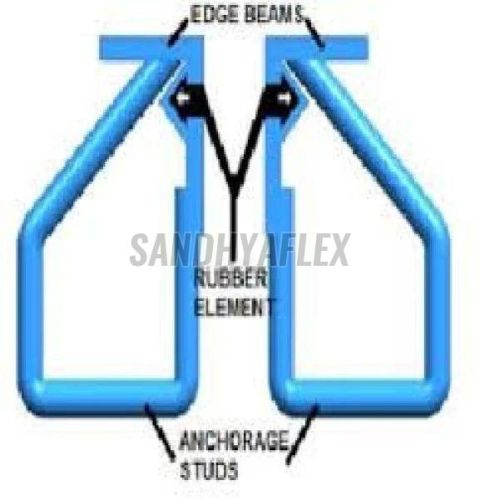
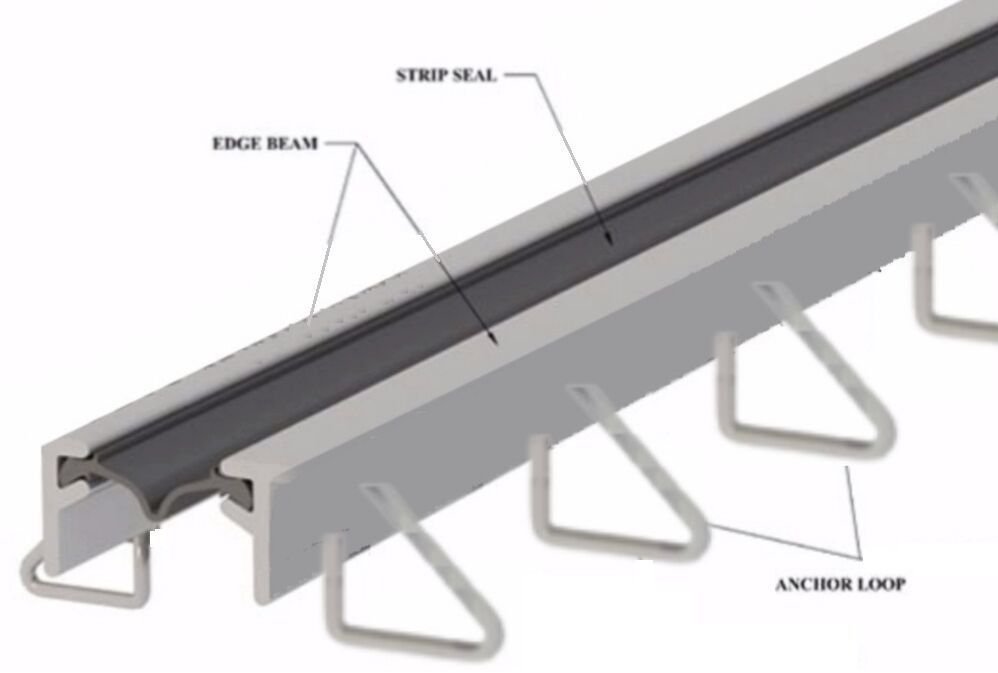
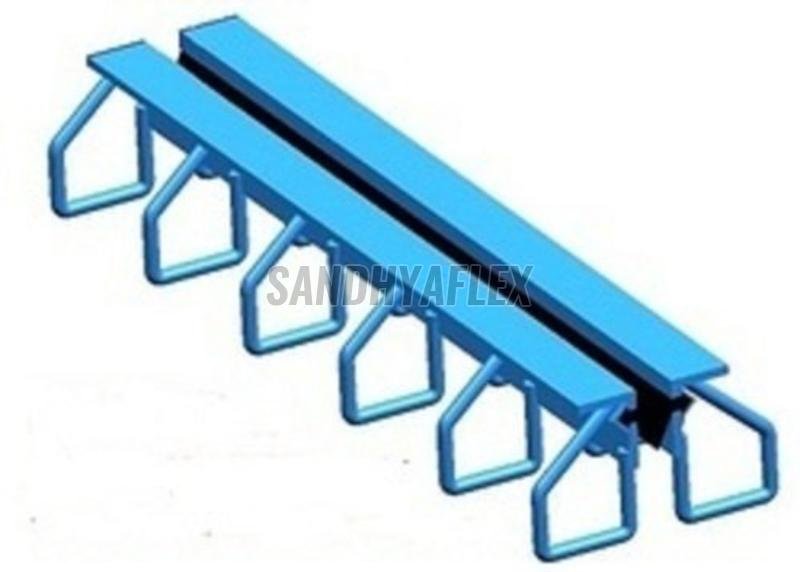
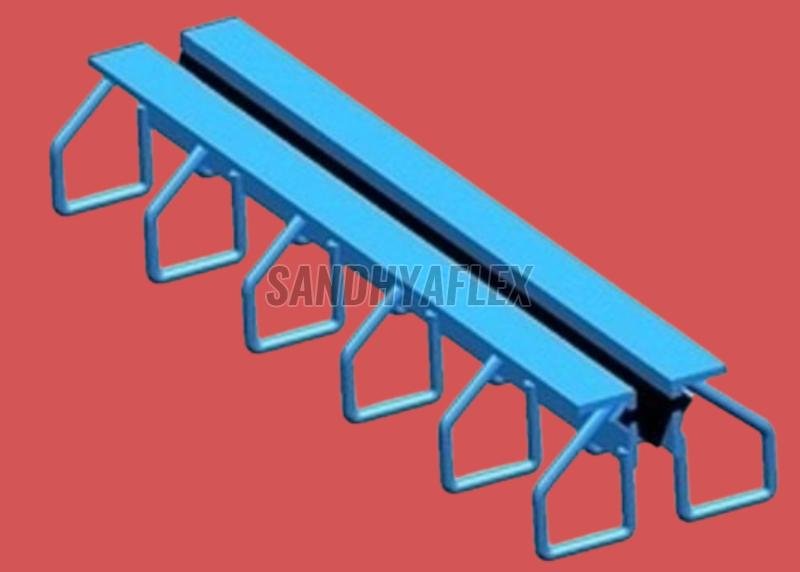
Bridge Expansion Joint Gap 40.0mm (Movement up to 80mm). Bridge Expansion Joint consist of two edge beams with anchorages and with Neoprene sealing element held firmly in the housing of edge beams that guarantee the water tightness the joint. The maximum gap between the edge beams at the road surface when the joint fully opens due to maximum contractions of the deck shall be limited to 80mm for comfortable passage of traffic. The edge beams protects the adjacent bridge deck concrete from damage due to vehicular impact and also transfer the vehicular loads to the deck structures through robust anchorage system.




| Business Type | Manufacturer, Exporter, Supplier |
| Material | Aliminum |
| Finishing | Non Polished |
| Shape | Round |
| Application | Hydrolic Pipe Use |
| Size | 1/2inch,Got it — are you asking about **brand size** in terms of: - **Logo size** (for web, social media, print, etc.)? - **Font size** in brand materials? - **Business size** (like brand reach or scale)? - |
| Feature | Fine Finishing |
| Brand Name | Hey! Could you clarify what you mean by ** |
| Product Code | sandhyaflex |
| Port | "**Port of dispatch**" refers to the **location (usually a seaport or airport)** from whic |
| Payment Terms | D/A, D/P, T/T |
| Delivery Time | 7 to 15 days |
| Packaging Details | Gotcha — sounds like you're working on **branding and packaging**! To give you solid input on **packaging details**, here are a few things that help: ### Could you tell me: 1. **What the product is** (e.g. skincare, food, clothing, tech)? 2. **Your target audience** (luxury, eco-conscious, fun/youthful, minimal)? 3. **Any packaging format** you're thinking (box, pouch, bottle, label only, etc)? 4. Do you have **brand colors, logo, or fonts** already? --- ### In general, here are key **packaging elements** to consider: **1. Front of Packaging** - Logo - Product name - Tagline or product benefit - Eye-catching visual or pattern - Size/weight info **2. Back/Side** - Ingredients or materials - Usage instructions - Brand story or mission - Barcode - Contact info/socials - Legal requirements (e.g., nutritional info, warnings, etc.) **3. Design Vibe** - Color palette that reflects the brand - Typography (legible, on-brand fonts) - Finish (matte, glossy, textured) - Sustainable options if relevant Once you give me more info, I can help sketch out a packaging layout, write the text, or pick colors/fonts. Want to dive in? |
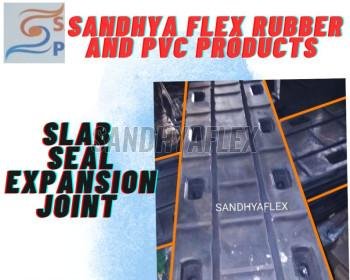
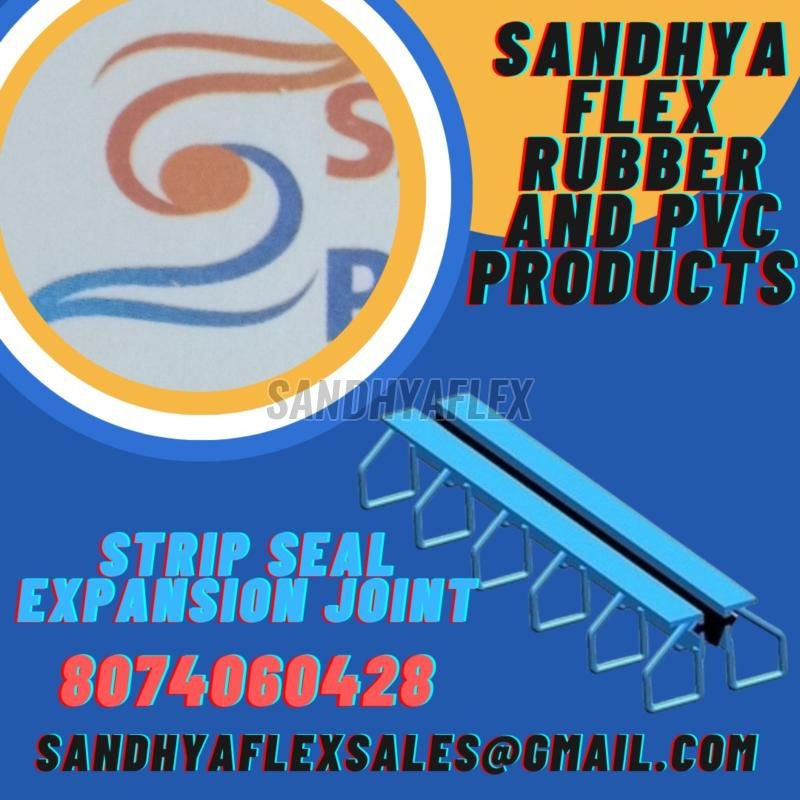
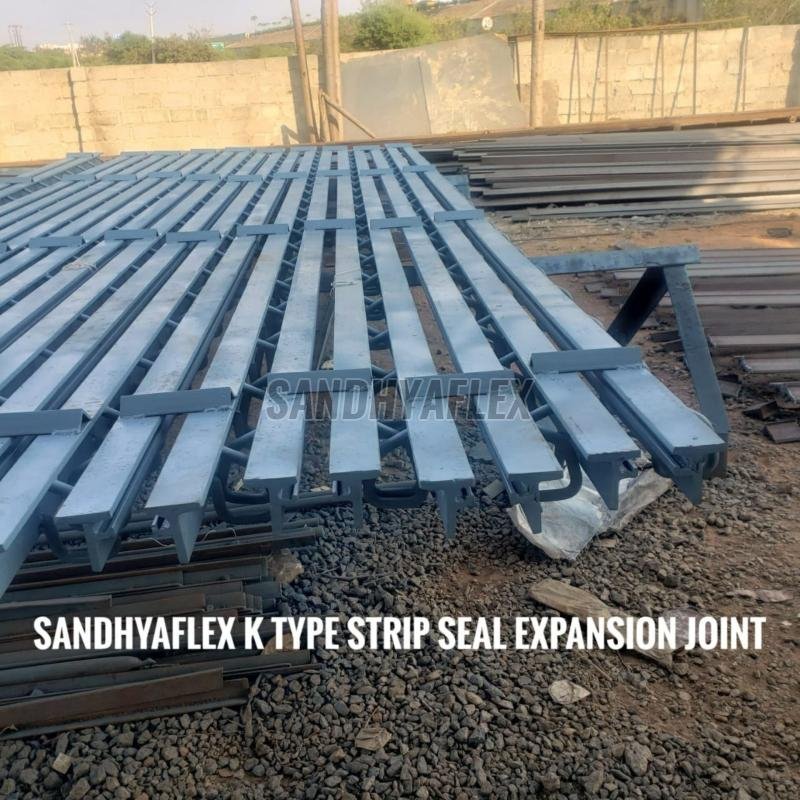
A slab seal expansion joint, often referred to as a slab seal joint or simply a slab seal, is a type of expansion joint used in concrete structures to accommodate the expansion and contraction of concrete slabs due to temperature fluctuations and other factors. These joints are essential for preventing cracking, damage, and structural problems that can result from the natural movement of concrete. Slab seal expansion joints are typically found in bridge decks, highways, parking structures, and other concrete pavements. Here are some key features and functions of slab seal expansion joints:
\r\n\r\n
**Key Features:**
\r\n\r\n
1. **Sealing Material:** The primary component of a slab seal expansion joint is the sealing material, which is typically a flexible elastomer, such as neoprene or silicone rubber. This material can expand and contract with changes in temperature while maintaining a watertight seal.
\r\n\r\n
2. **Metal Supports:** Slab seal expansion joints often include metal supports, such as aluminum or steel nosing, which serve as edge supports and protect the edges of the sealing material.
\r\n\r\n
3. **Design:** These expansion joints are designed to be flush or nearly flush with the surface of the concrete slab to allow for smooth vehicle or pedestrian traffic. This design minimizes the risk of tripping hazards.
\r\n\r\n
4. **Installation:** Slab seal expansion joints are installed during the construction of concrete structures. The sealing material is typically set in place and secured to the concrete using mechanical fasteners or adhesive bonding.
\r\n\r\n
**Functions:**
\r\n\r\n
1. **Accommodating Movement:** The primary function of a slab seal expansion joint is to accommodate the natural expansion and contraction of concrete slabs caused by temperature variations. During hot weather, concrete expands, and during cold weather, it contracts. Slab seals allow the concrete to move without causing cracks or damage.
\r\n\r\n
2. **Preventing Water Infiltration:** Slab seals are designed to create a watertight barrier between adjacent concrete slabs. This prevents water from infiltrating the joint and causing erosion, corrosion, or damage to the substructure.
\r\n\r\n
3. **Reducing Noise and Vibration:** Slab seal expansion joints can help reduce noise and vibration generated by vehicles or pedestrians crossing the joint. This is especially important in bridges and highways.
\r\n\r\n
4. **Protecting Substructure:** By preventing the intrusion of water and debris, slab seals protect the substructure of the concrete, including reinforcement and supporting components, from corrosion and deterioration.
\r\n\r\n
5. **Enhancing Durability:** Properly installed and maintained slab seal expansion joints can extend the service life of concrete structures by minimizing the development of cracks and preventing moisture-related damage.
\r\n\r\n
It\\\'s important to note that the selection, design, and installation of slab seal expansion joints must comply with industry standards and guidelines to ensure their effectiveness. Regular inspections and maintenance are also crucial to ensure that the joints remain functional and continue to perform their intended role in preserving the integrity of concrete structures.
| Business Type | Manufacturer, Exporter, Supplier, Retailer |
| Material | EPDM |
| Application | Constructional Use |
| Feature | Water Proof |
| Number Of Flower | Rubber Strips |
| RUBBER STRIP | 25 |
| Rubber Strip | 35 to 250/Mtr |
| Black | 35 to 250/Mtr |
| Brand | SANDHYAFLEX |
| Product Code | RS |
| Port | kakinada |
| Payment Terms | T/T |
| Delivery Time | 7 to 15days |
| Packaging Details | The packing details of strip seal expansion joints can vary depending on the manufacturer, supplier, and specific product. However, here are some general packing details that you may commonly find: 1. Quantity: The packaging should indicate the number of strip seal expansion joints included in a single pack. It can range from one joint to multiple joints, depending on the packaging configuration and the supplier's specifications. 2. Length: The packaging may specify the length of each strip seal expansion joint. The length typically corresponds to the expansion joint's span or the distance it is designed to cover between the adjacent structures or elements. 3. Width: The packaging may indicate the width of the strip seal expansion joint. The width corresponds to the size of the joint opening it is designed to fill and accommodate the movement of the structures. 4. Material: The packaging may mention the specific material used for the strip seal expansion joint, such as rubber, neoprene, or other elastomeric materials. This information confirms that the product is made from the intended material. 5. Color: Strip seal expansion joints are commonly available in black or other dark colors. The packaging may specify the color of the expansion joint. 6. Packaging Material: The packaging itself may be mentioned, indicating the type of packaging material used, such as cardboard boxes or plastic wrapping. The packaging should provide sufficient protection to prevent damage during transportation and storage. 7. Additional Information: The packaging may include additional information, such as installation guidelines, technical specifications, or safety instructions related to the strip seal expansion joint. It's important to note that the specific details may vary depending on the manufacturer, the product variation, and the specific requirements of the industry or application. Therefore, it is always recommended to refer to the packaging or contact the manufacturer or supplier directly for accurate and up-to-date information regarding the packaging details of a particular strip seal expansion joint. |
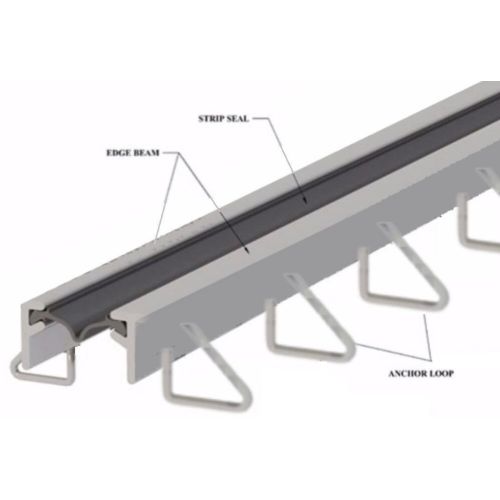
A bridge strip seal expansion joint is a type of mechanical expansion joint used in bridge construction and infrastructure projects. It is designed to accommodate movement and deformation between adjacent bridge components, such as bridge decks, abutments, or piers, while providing a watertight seal. The key features and characteristics of a bridge strip seal expansion joint include: 1. Construction: Bridge strip seal expansion joints are typically made of elastomeric materials, such as rubber or neoprene. These materials are chosen for their flexibility, durability, and resistance to environmental factors such as weathering, UV exposure, and chemicals. 2. Modular design: Bridge strip seal expansion joints are modular in nature, consisting of multiple rubber or neoprene strips that are interlocked and compressed between bridge components. This modular design allows for flexibility and ease of installation. 3. Movement accommodation: Bridge strip seal expansion joints are designed to accommodate both longitudinal and transverse movement, as well as rotation and vertical displacement, of bridge components. This helps to prevent structural damage and ensure the safe and smooth functioning of the bridge. 4. Watertightness: One of the primary functions of a bridge strip seal expansion joint is to provide a watertight seal. The rubber or neoprene strips are designed to compress and form a tight seal between adjacent bridge components, preventing water ingress and protecting the bridge structure from moisture-related damage. 5. Noise and vibration reduction: Bridge strip seal expansion joints can also help reduce noise and vibration transmission between bridge components. The elastomeric properties of the seals absorb and dampen vibrations and impact forces, improving the comfort and safety for vehicles and pedestrians crossing the bridge. 6. Maintenance: Regular inspection and maintenance of bridge strip seal expansion joints are necessary to ensure their proper functioning. This includes checking for signs of wear, damage, or degradation of the elastomeric material, as well as replacing any worn-out or damaged seals to maintain their performance. Bridge strip seal expansion joints are designed and installed in accordance with engineering specifications and industry standards. Consulting with qualified engineers or bridge construction professionals is essential to ensure the correct selection, installation, and maintenance of bridge strip seal expansion joints in accordance with specific project requirements and safety regulations. Strip seal expansion joints are widely used in the construction industry to accommodate the movement and provide a flexible connection between adjacent structures or elements. They are primarily applied in bridge construction, highway and road projects, and other infrastructure projects where the movement of the structures due to temperature changes, settlement, or seismic activity needs to be accommodated. Here are some common applications of strip seal expansion joints: 1. Bridge Construction: Strip seal expansion joints are extensively used in bridge construction to allow for the movement and expansion of bridge decks and abutments. They provide a flexible connection between adjacent bridge segments, allowing them to expand and contract without causing damage or structural failures. Strip seals are installed between the bridge deck and abutments or between adjacent bridge segments to provide a watertight and durable joint. 2. Highways and Roads: Strip seal expansion joints are employed in highway and road projects to accommodate the movement of road sections caused by temperature fluctuations and traffic loads. They are installed between the different sections of the road or between the road and structures such as bridges or retaining walls. Strip seal joints help prevent the formation of cracks and ensure a smooth and safe driving experience by allowing for controlled movement and




| Business Type | Manufacturer, Exporter, Supplier |
| Material | Mild Steel |
| Country of Origin | India |
| Capacity | 50000 |
| Brand Name | SNDHYAFLEX |
| Application | Industrial Fitting |
| Finishing | Galvanized |
| Surface Treatment | Polished |
| Product Code | DS |
| Port | mumbai |
| Payment Terms | D/A |
| Delivery Time | 15 days |
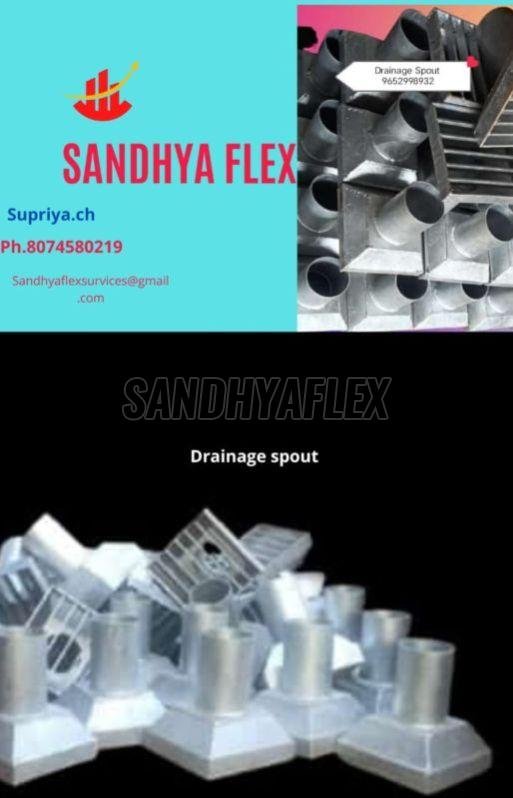
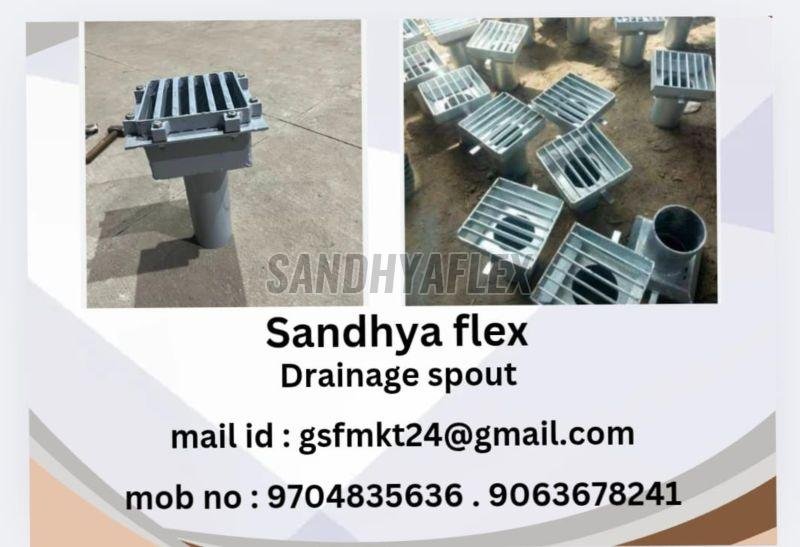
Sandhya Enterprises, operating under the brand SANDHYAFLEX, specializes in manufacturing high-quality bridge drainage spouts. These spouts are designed to efficiently channel rainwater from platforms and are constructed from mild steel with a galvanized coating to prevent corrosion. The company ensures that their products comply with the Ministry of Road Transport and Highways (MoRTH) specifications. citeturn0search0
\\nThey offer a variety of sizes to meet different project requirements, including:
\\n- \\n
- 210mm x 210mm with a collection pipe diameter of 100mm and a length of 300mm \\n
- 210mm x 210mm with a collection pipe diameter of 150mm and a length of 600mm \\n
- 180mm x 305mm with a collection pipe diameter of 150mm and a length of 100mm \\n
- 200mm x 150mm with a collection pipe diameter of 50mm and lengths of 300mm or 400mm \\n
- 300mm x 300mm with a collection pipe diameter of 100mm and a length of 400mm \\n
For more detailed information, including diagrams and specifications, you can refer to their product PDF. citeturn0search1
\\nTo get in touch with Sandhya Enterprises for inquiries or quotations, you can contact them at:
\\n- \\n
- Phone: +91 \\n
- Email: info@ \\n
- Address: 5-24-1223/5/1, Ambedkar Nagar, Gajularamaram, Qutubullapur, R. R. District, Hyderabad, Telangana - 500055, India \\n
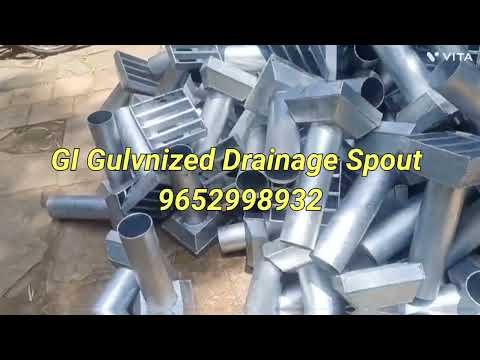
For a visual overview of their drainage spouts, you can watch the following video:
\\n\\n
videoSANDHYAFLEX Drainage Spoutturn0search3




| Business Type | Supplier, Retailer, Distributor |
| Brand Name | No Brand |
| Material | Net,burlap (hessiah Cloth) |
| Pattern | Plain |
| Packaging Color | When you mention "Packaging Color," are you referring to: 1. **The color scheme of the product pack |
| Application | Making Jute Bag |
| Shell Material | burlap (Hessian cloth) |
| Design | net |
| Gender | construction use |
| Product Code | Sandhyaflex |
| Port | The **Port of Dispatch** refers to the location or seaport where goods are shipped or dispatched fro |
| Payment Terms | D/P |
| Delivery Time | immediate |
| Packaging Details | **Packaging Details** typically refer to the specifications or description of how a product is packaged for shipping or sale. These details are often included in product listings, export documentation, or invoices. Here’s what packaging details can include: ### 1. **Packaging Type** * **Primary packaging**: This is the immediate container for the product, such as a bottle, box, or bag. * **Secondary packaging**: This may include additional protection or grouping, like outer cartons or shrink-wrapped layers. * **Tertiary packaging**: This is for bulk shipping or storage, like pallets or crates. ### 2. **Dimensions** * **Product Dimensions**: Size of the product itself. * **Package Dimensions**: Size of the entire packaging. * **Weight**: The weight of the product and the weight of the packaged item, often including packaging material. ### 3. **Material** * **Packaging Materials**: Type of material used for packaging, such as cardboard, plastic, foam, paper, glass, etc. * **Eco-friendly options**: If applicable, mention if the materials are recyclable or biodegradable. ### 4. **Design & Branding** * **Color & Graphics**: What colors and designs are used on the packaging? Includes logos, branding, product images, etc. * **Labels and Tags**: Information on product labels, barcode placement, product descriptions, or regulatory information. ### 5. **Instructions and Warnings** * **Handling Instructions**: If there are specific handling needs (fragile, keep upright, etc.). * **Storage Instructions**: Details on how the product should be stored or kept during transit. * **Hazardous Materials**: If the product requires special warnings due to its nature (flammable, corrosive, etc.). ### 6. **Quantities & Units** * **Units per Carton/Box**: How many individual units are in each box or carton. * **Cartons per Pallet**: If applicable, how many cartons fit on a pallet. * **Total Packaging Quantity**: The total number of packages per shipment. ### Example of Packaging Details **Product:** 12 oz Glass Jar of Organic Honey * **Packaging Type**: Glass jar with a metal lid, sealed with shrink wrap * **Dimensions**: * Jar: 4.5 inches height x 3 inches diameter * Package: 5 x 5 x 7 inches * **Weight**: * Product weight: 0.75 lbs * Package weight: 1.2 lbs * **Material**: * Primary: Glass, Metal Lid * Secondary: Cardboard box * Eco-friendly packaging: Yes (recyclable glass jar and cardboard) * **Design & Branding**: * Label: Printed with organic certification, brand logo, and product info * Color: Gold and amber for honey packaging, with a clear jar showing the product * **Handling Instructions**: Handle with care, keep upright * **Quantity per Carton**: 12 jars per carton * **Shipping Details**: 5 cartons per pallet Are you drafting packaging details for a specific product? Feel free to share more, and I can help you refine them! |
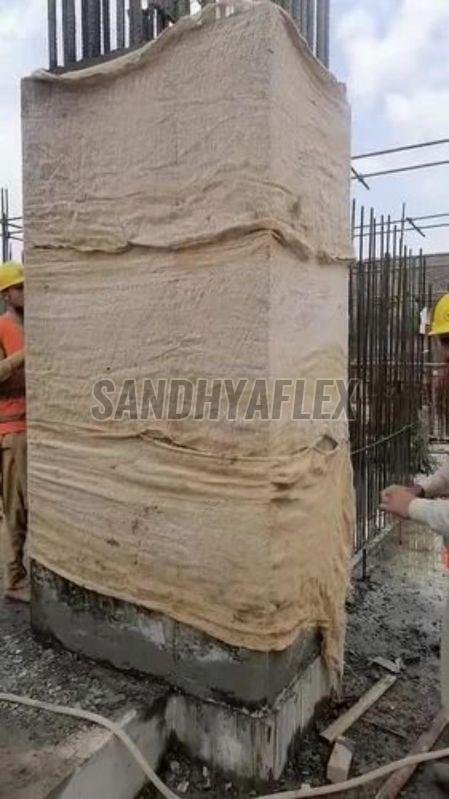
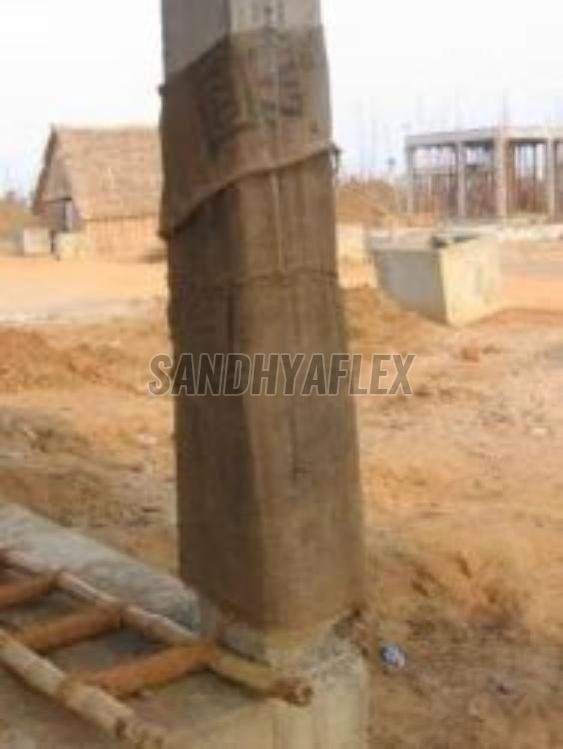
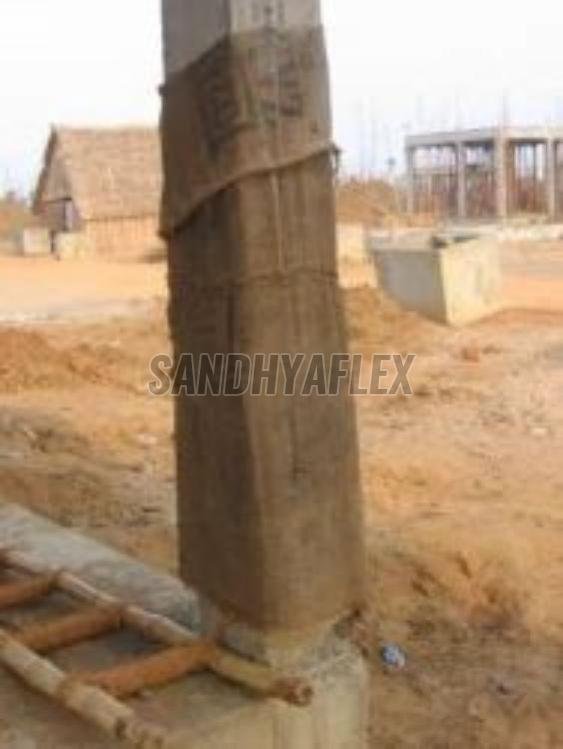
A cement curing cloth is a type of fabric or material used in the construction industry to help retain moisture during the curing process of concrete. Proper curing is essential to ensure the concrete gains its intended strength and durability. Here's more about it:
Features of Cement Curing Cloth:
Material:
- Often made from burlap (Hessian cloth) treated with water-repellent or water-absorbing agents.
- In some cases, synthetic fabrics or geotextiles are used.
Purpose:
- Prevents rapid evaporation of water from the concrete surface.
- Ensures a steady curing environment, minimizing cracking and ensuring optimal strength.
Usage:
- The cloth is thoroughly wetted before being placed over freshly poured concrete.
- Regular wetting is done to maintain moisture for the required curing period (commonly 7–14 days).
Alternatives:
- Plastic sheets or curing compounds are sometimes used instead of cloth.
Benefits of Using Curing Cloth:
- Enhances the hydration process of cement.
- Prevents surface shrinkage cracks.
- Improves surface hardness and overall durabilityCertainly! Curing hessian cloth (also known as jute cloth or wet gunny cloth) is widely used in the construction industry, especially for curing concrete. Here are the main advantages: ✅ Advantages of Curing Hessian Cloth
Maintains Surface Moisture
Helps retain moisture in concrete during curing, preventing early drying and shrinkage cracks.
Improves Concrete Strength
Proper curing with hessian ensures better hydration of cement, resulting in stronger and more durable concrete.
Reusable & Eco-Friendly
Made from natural jute fibers, it is biodegradable, reusable, and environmentally friendly.
Breathable Material
Allows air circulation while retaining moisture, reducing the risk of surface damage or over-saturation.
Cost-Effective
Affordable and readily available material that can be reused multiple times if handled properly.
Easy to Apply
Lightweight and flexible — can be easily laid over slabs, columns, or beams, and kept wet for extended curing.
Temperature Regulation
Helps regulate temperature on the concrete surface, especially in hot climates, reducing the risk of thermal cracking.
Versatile for Site Conditions
Suitable for horizontal and vertical surfaces, and effective in both open and shaded areas.
Maintains Moisture Content
Keeps concrete surfaces moist, allowing proper hydration and strength development.
Prevents Cracks
Reduces the risk of shrinkage cracks caused by rapid drying, especially in hot or windy conditions.
Improves Strength & Durability
Ensures proper curing, which directly improves the long-term strength and durability of concrete.
Breathable & Natural
Allows air flow while retaining moisture — ideal for consistent, natural curing.
Reusable & Eco-Friendly
Made from jute, a biodegradable material that can be reused multiple times.
Easy to Apply
Lightweight, flexible, and easy to drape over any concrete surface — horizontal or vertical.
Cost-Effective
Affordable curing method, especially for large-scale or outdoor construction projects.
Temperature Control
Helps regulate the concrete’s surface temperature, protecting it from rapid temperature changes.


| Business Type | Manufacturer, Exporter, Supplier |
| Brand Name | SNDHYAFLEX |
| Capacity | 5000 Nos /Month |
| Material | Stainless Steel |
| Finishing | Polished |
| Shape | Round |
| Color | Grey |
| Application | Industrial Fitting |
| Size | 2inch |
| Product Code | DS |
| Port | Mumbai |
| Payment Terms | T/T |
| Delivery Time | 2 days |
| Packaging Details | As per requirement |
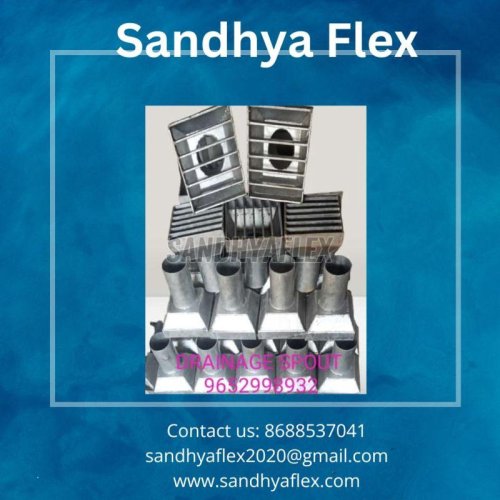
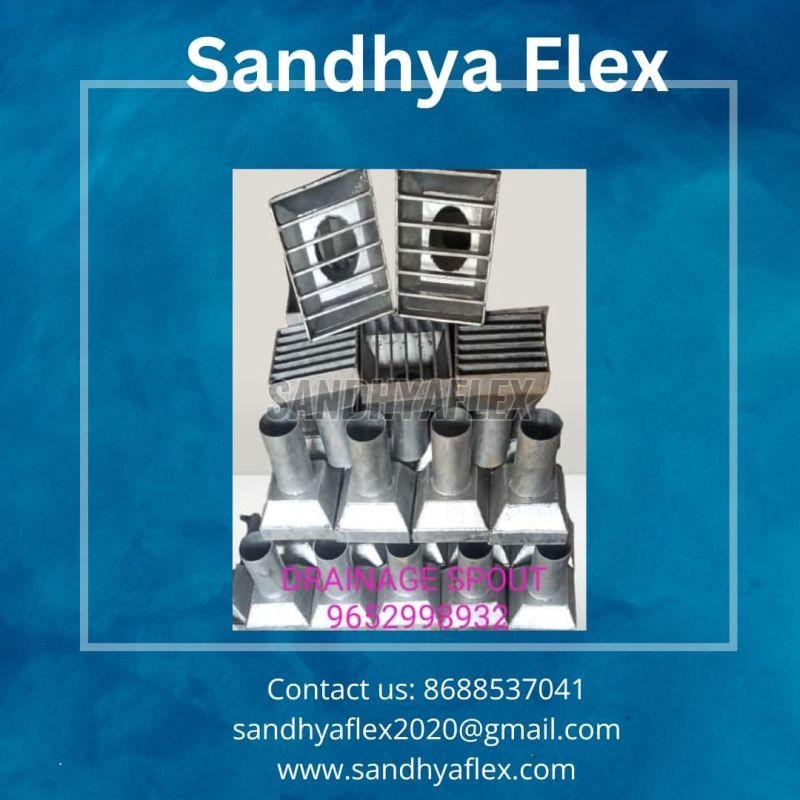
A drainage spout, also known as a downspout or simply a spout, is a component of a building's rainwater or stormwater drainage system. Its primary function is to collect rainwater from the gutters or other collection points on a roof and direct it away from the building's foundation. Drainage spouts play a crucial role in preventing water damage to a structure, as they guide rainwater or melted snow from the roof to a suitable drainage location, such as a drain, sewer system, or designated runoff area.
Key features and information about drainage spouts:
1. Materials: Drainage spouts are typically made of materials that can withstand exposure to weather and moisture, such as metal (e.g., aluminum, copper, steel), PVC, or other plastics. The choice of material depends on factors like cost, durability, and aesthetic considerations.
2. Shape and Size: Drainage spouts come in various shapes and sizes, with round and rectangular profiles being common. The size and number of spouts required for a building depend on its roof area and the local climate conditions.
3. Installation: Drainage spouts are attached to the downpipes or gutters that collect rainwater. They are typically affixed to the exterior of a building and extend downward, carrying water away from the eaves and foundation.
4. Elbows and Extensions: In some cases, elbows or extensions may be used to redirect the flow of water from a drainage spout. This is often done to ensure that water is directed away from the building or to create a more aesthetically pleasing arrangement.
5. Splash Blocks or Extensions: At the end of a drainage spout, a splash block or extension may be added to further direct water away from the building. These can help prevent erosion around the foundation and maintain the integrity of the landscaping.
6. Maintenance: Regular maintenance, including cleaning debris from gutters and ensuring that spouts are not clogged, is essential to keep the drainage system functioning correctly.
Properly functioning drainage spouts are important for protecting a building's foundation, preventing basement flooding, and preserving the structural integrity of the property. In some regions, there may be local building codes and regulations governing the installation and maintenance of drainage systems to ensure they effectively manage rainwater runoff.




| Business Type | Manufacturer, Exporter, Supplier, Retailer |
| Material | Stainless Steel |
| Surface Finishing | Polished |
| Country of Origin | India |
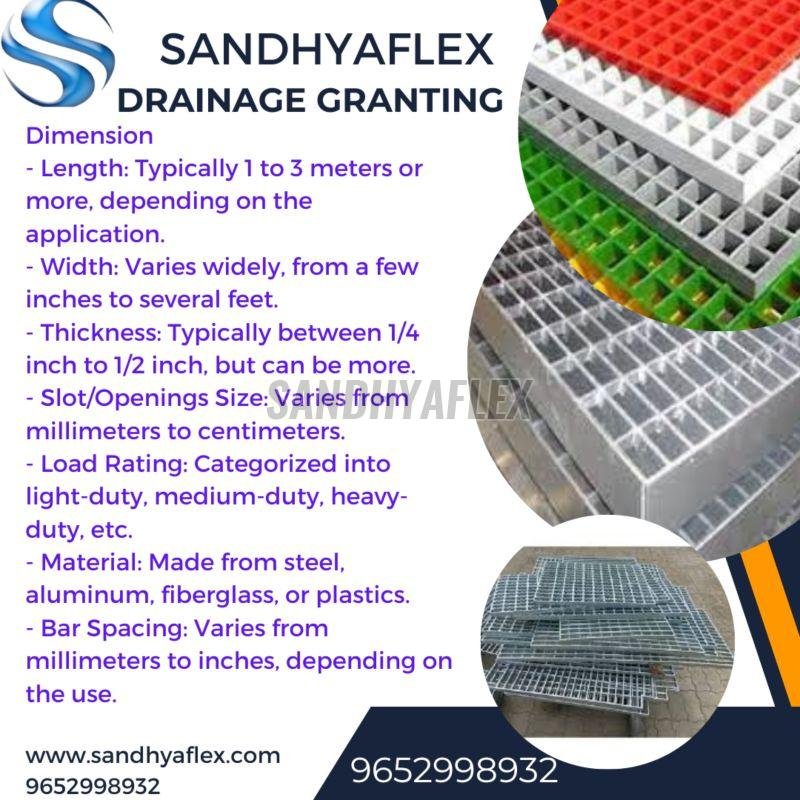
| Number Of Flower | Drainage Grant |
| Application Steps | Identify Eligibility, Grant Application, Submission, Review Process, Award, Project Implementation |
| Application | Improving Drainage Systems And Managing Water Flow |
| Payment Terms | T/T |
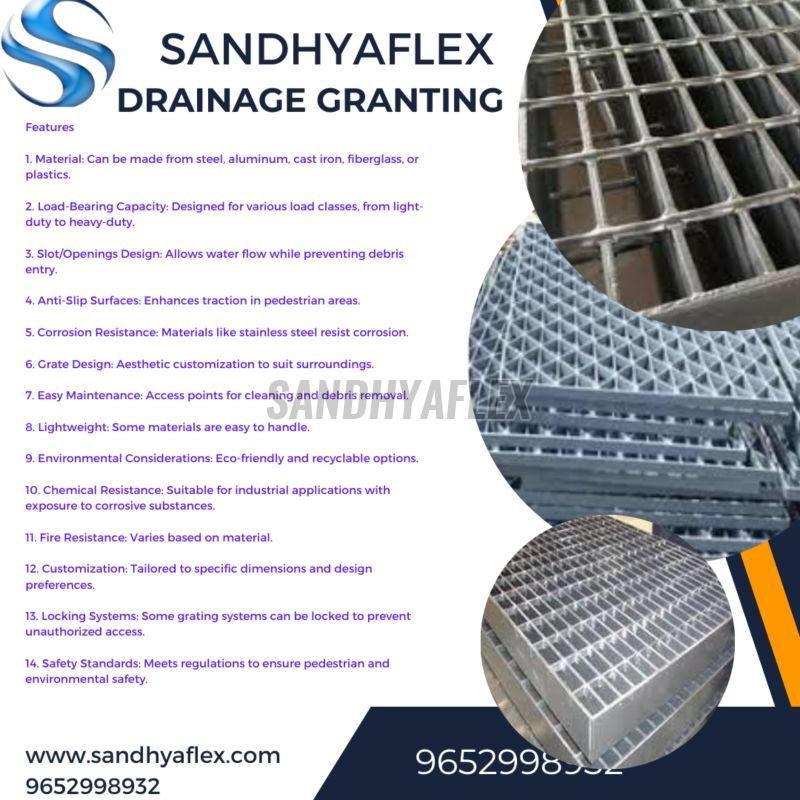
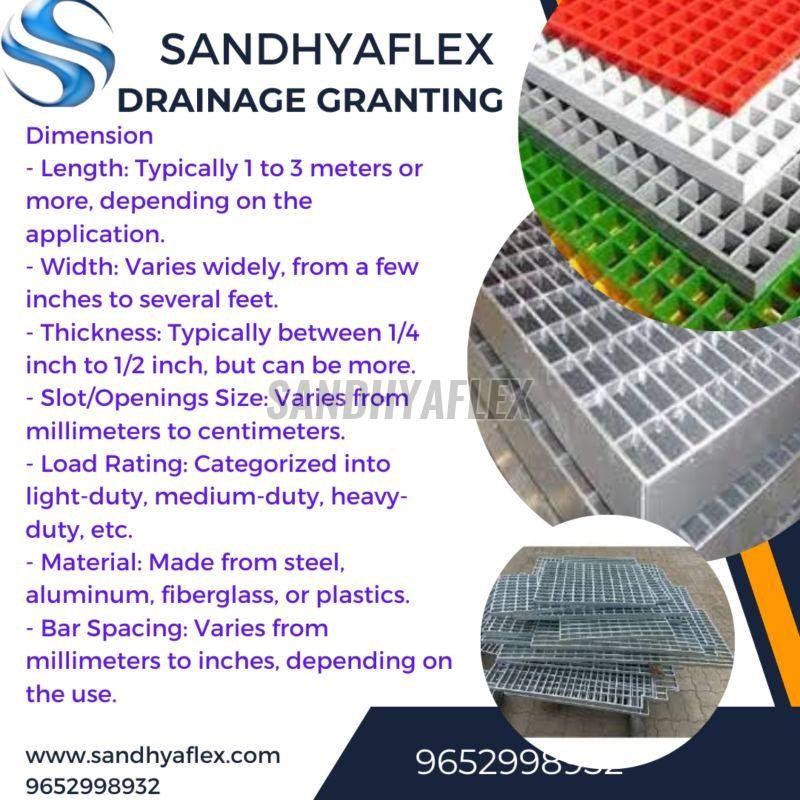
It appears you\\\'re inquiring about the use and application of drainage grants. Drainage grants are financial assistance programs provided by government agencies or organizations to support projects related to improving drainage systems and managing water flow. These grants are typically utilized in various contexts, including agriculture, urban planning, and environmental conservation. Here\\\'s how drainage grants are used and applied:
\r\n\r\n
1. Agricultural Drainage:
\r\n- Farmers often use drainage grants to install or upgrade drainage systems in their fields. These systems help manage excess water, prevent waterlogging, and improve crop yields.
\r\n- Grants may cover the cost of installing tile drainage, open ditches, or other drainage infrastructure on farms.
\r\n\r\n
2. Urban Drainage:
\r\n- Municipalities and local governments can use drainage grants to fund projects related to stormwater management, sewage systems, and flood control.
\r\n- These grants support infrastructure improvements that mitigate flooding and ensure proper water drainage in urban areas.
\r\n\r\n
3. Environmental Conservation:
\r\n- Drainage grants can be applied to projects aimed at protecting and restoring natural habitats, wetlands, and watersheds.
\r\n- Funding may be available for initiatives that promote sustainable drainage practices to reduce environmental impacts.
\r\n\r\n
4. Research and Development:
\r\n- Some organizations offer grants for research and development in drainage-related technologies and techniques. These grants can support innovative solutions for water management.
\r\n\r\n
To apply for drainage grants, individuals, organizations, or government entities typically need to follow these steps:
\r\n\r\n
1. Identify Eligibility: Determine if you meet the eligibility criteria set by the grant provider. This may include geographical location, project type, and specific requirements.
\r\n\r\n
2. Grant Application: Prepare a grant application, which usually includes project details, objectives, a budget, and a timeline.
\r\n\r\n
3. Submission: Submit the grant application according to the instructions provided by the grantor. Be sure to adhere to any application deadlines.
\r\n\r\n
4. Review Process: Grant applications are typically reviewed by a committee or organization responsible for allocating funds. They assess the proposals and select the most deserving projects.
\r\n\r\n
5. Award: If your project is selected, you\\\'ll be awarded the grant, and funding will be provided for your drainage project.
\r\n\r\n
6. Project Implementation: Execute your project as outlined in the grant application, keeping in compliance with the grant\\\'s terms and conditions.
\r\n\r\n
It\\\'s important to research and identify relevant drainage grants that match your specific needs and goals, and to ensure you meet all application requirements and deadlines. The availability and terms of drainage grants can vary depending on the region and the grant provider.
| Business Type | Manufacturer, Exporter |
| Shape | Round |
| Application | Industrial Fitting |
| Country of Origin | India |
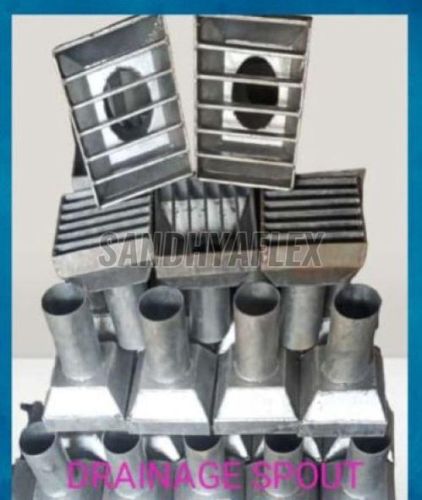
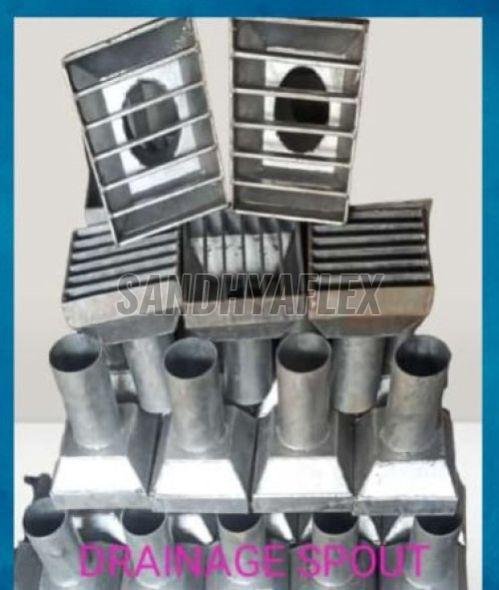
The Sandhyaflex Drainage Spout is a specialized component used for effective drainage management in bridge structures, flyovers, and other large infrastructure projects. It is designed to channel water away from the bridge deck, preventing water accumulation and structural damage.
✅ Features:
Material:
- Typically made from high-quality rubber, steel, or PVC to ensure durability and corrosion resistance.
- Resistant to UV rays, chemicals, and harsh weather conditions.
Design:
- Designed with a sloping or tapered structure for efficient water flow.
- Equipped with a flanged end for secure installation.
- Can include protective grates to prevent debris from clogging the drainage system.
Water Management:
- Effectively channels rainwater and runoff away from the bridge surface, preventing water stagnation.
🛠 Applications:
- Bridges and Flyovers: Ensures proper water drainage to prevent water pooling and structural damage.
- Highways and Roadways: Prevents water accumulation on roads, ensuring safer driving conditions.
- Industrial Areas: Used for drainage in large industrial complexes and warehouses.
- Parking Structures: Facilitates effective water management in multi-level parking facilities.
📏 Specifications (May Vary Based on Model)
- Material Options: Rubber, Steel, or PVC.
- Diameter: Available in sizes ranging from 50 mm to 300 mm.
- Length: Customizable based on project needs.
- Flow Capacity: Designed to handle large volumes of water efficiently.
- Corrosion Resistance: Suitable for long-term use in outdoor environments.
🔎 Advantages:
- Prevents water accumulation, reducing the risk of structural damage.
- Provides efficient water drainage and management.
- Resistant to wear and tear, ensuring long-term performance.
- Easy to install and maintain.
- Customizable to meet specific project requirements.
If you require additional information regarding technical drawings, installation procedures, or pricing, feel free to ask!
| Business Type | Manufacturer, Exporter, Supplier, Retailer |
| Size | As Per Customer Requirement |
| Length | Length As Per Customer Specificaion |
| Application | Manufacturing Unit,Construction,ROAD & HIGHWAY |
| Shape | Round, Square |
| Material | Mild Steel, Mild Steel |
| Brand Name | SANDHYA FLEX |
| Steel Grade | MILD STEEL |
| Payment Terms | Other |
| Delivery Time | as per the quantity of customer |
MS drainage spout refers to a spout or pipe component made of mild steel (MS), commonly used in drainage systems for water or waste management. Mild steel is a popular material due to its strength, affordability, and ease of fabrication, making it suitable for handling liquid drainage in various applications.
Uses of MS Drainage Spouts:
- Rainwater drainage: Commonly used in gutter systems to guide rainwater away from buildings.
- Industrial drainage: Handles wastewater from manufacturing or industrial processes.
- Stormwater management: Helps direct stormwater in urban areas to prevent flooding.
- Sewage systems: Utilized in waste management systems for carrying wastewater.
Benefits:
- Durable: Resistant to mechanical wear and tear.
- Cost-effective: Affordable compared to stainless steel or other high-end materials.
- Customizable: Easy to weld and shape into various configurations.
Considerations:
- Corrosion resistance: Mild steel requires proper coating (e.g., galvanization, painting) to prevent rust in wet conditions.
- Maintenance: Periodic inspection and maintenance are necessary to ensure longevity.


| Business Type | Manufacturer, Exporter, Supplier |
| Size | 2inch |
| Application | Industrial Fitting |
| Shape | Round |
| Finishing | Non Poilshed |
| Material | Alloy Steel |
| Capacity | 10000 |
| Brand Name | SNDHYAFLEX |
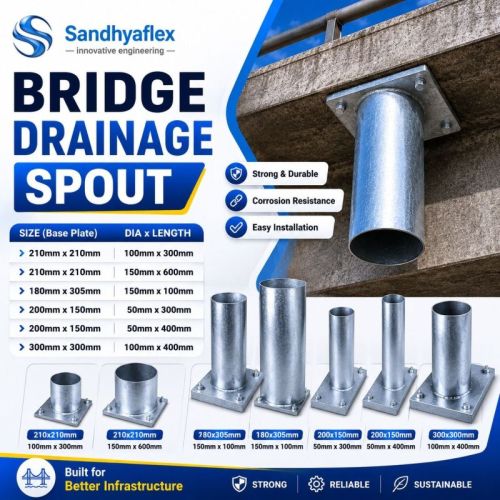
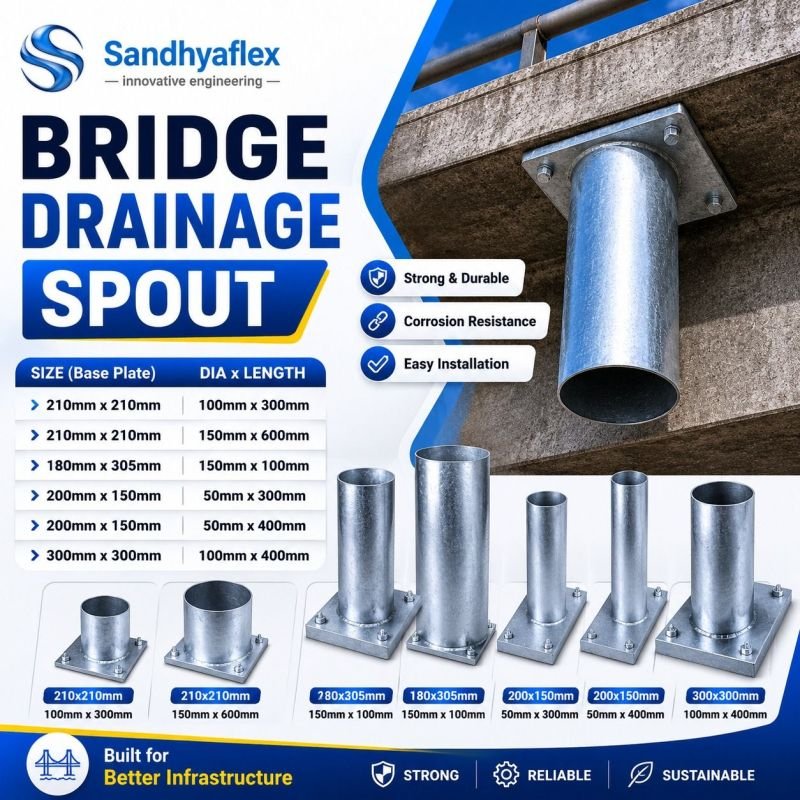
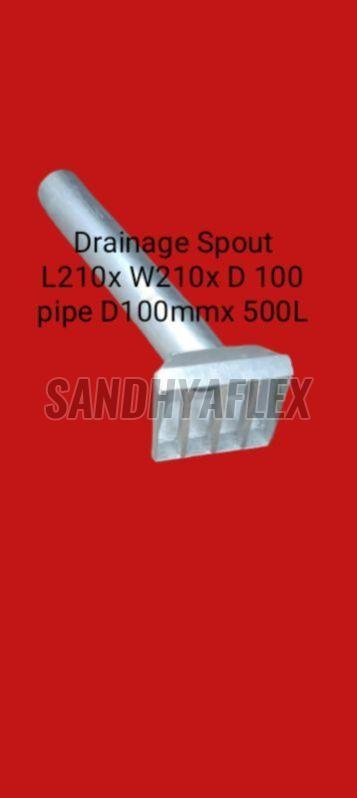
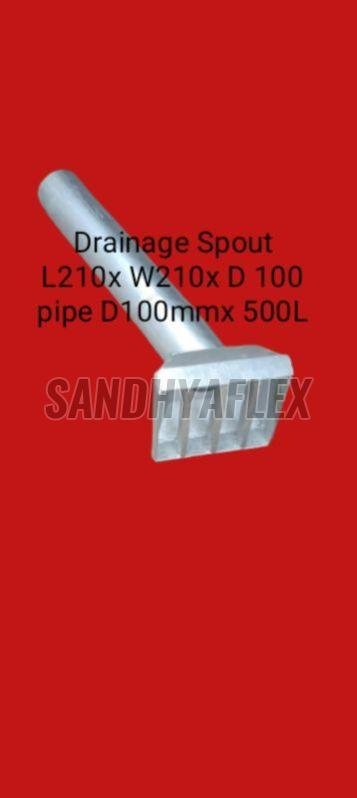
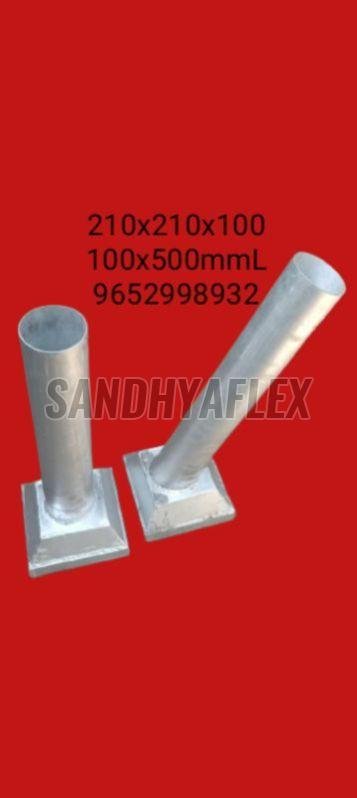
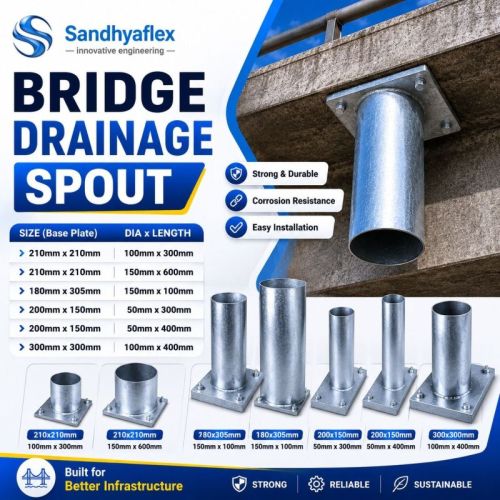
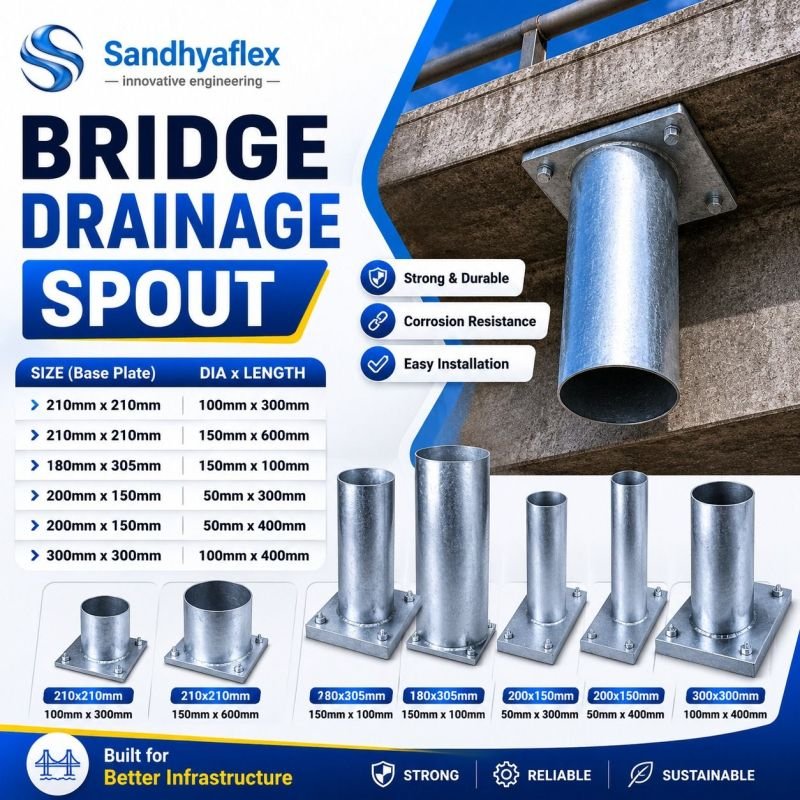
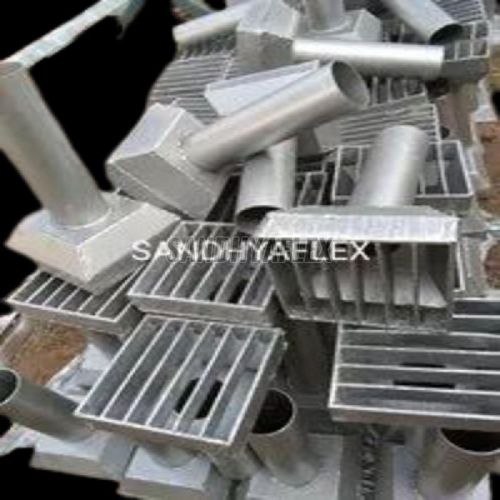
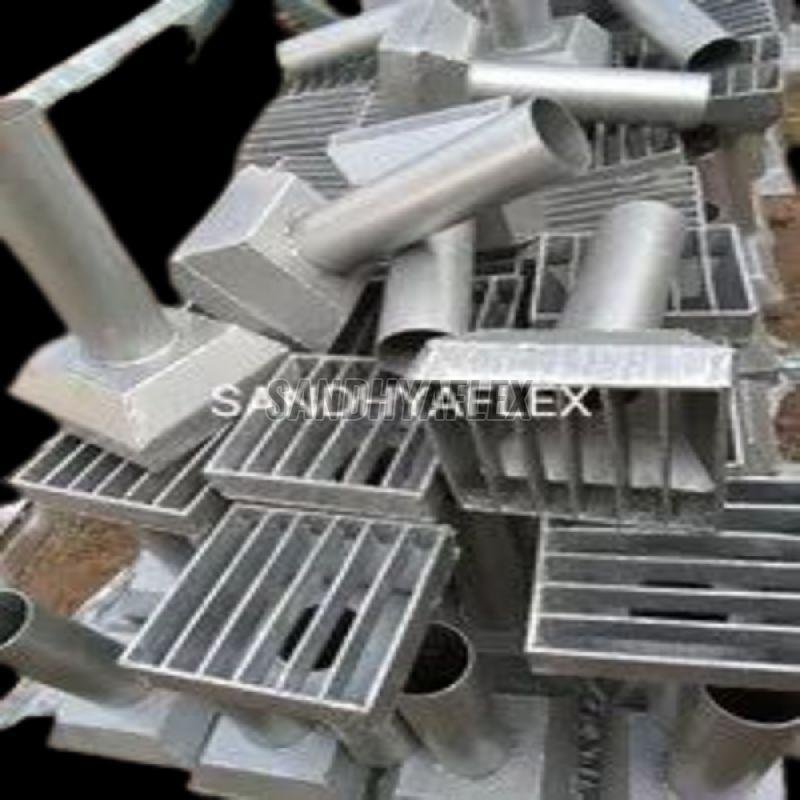
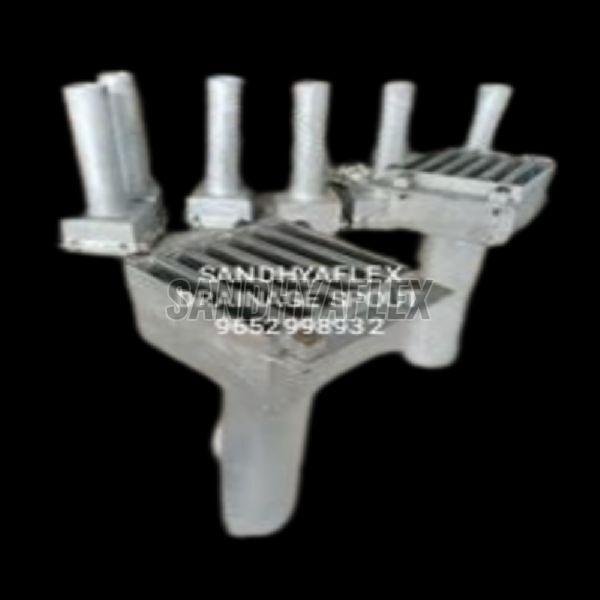
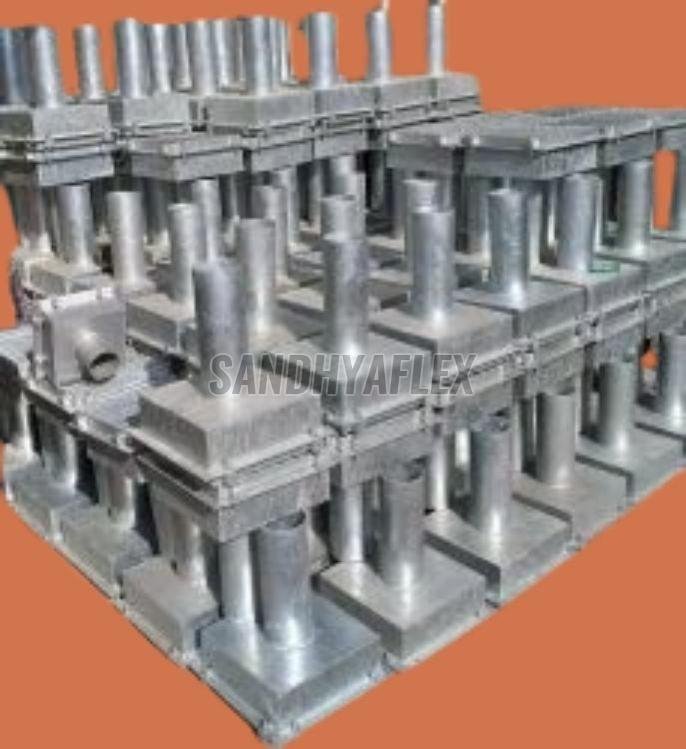
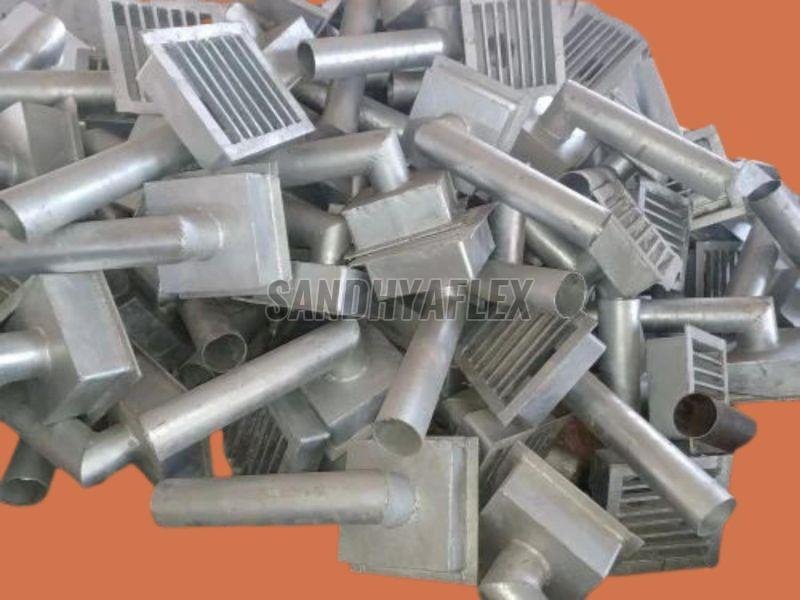
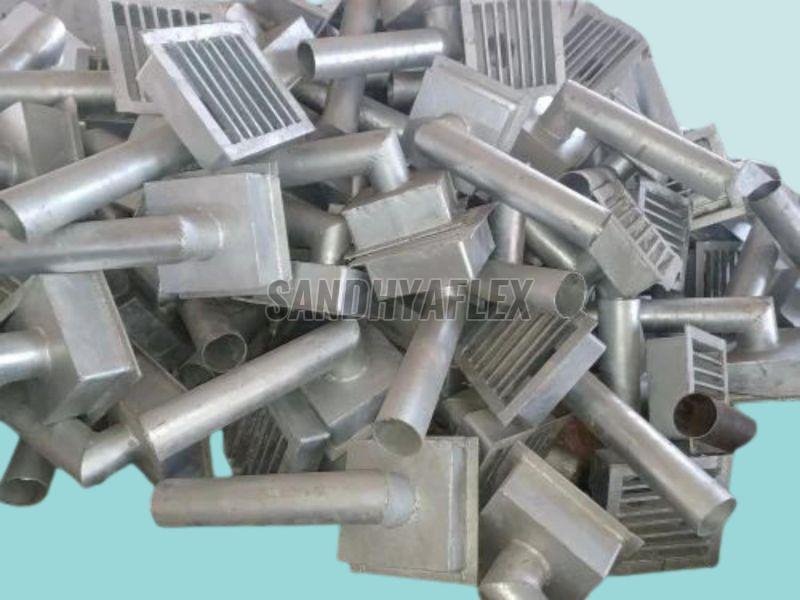
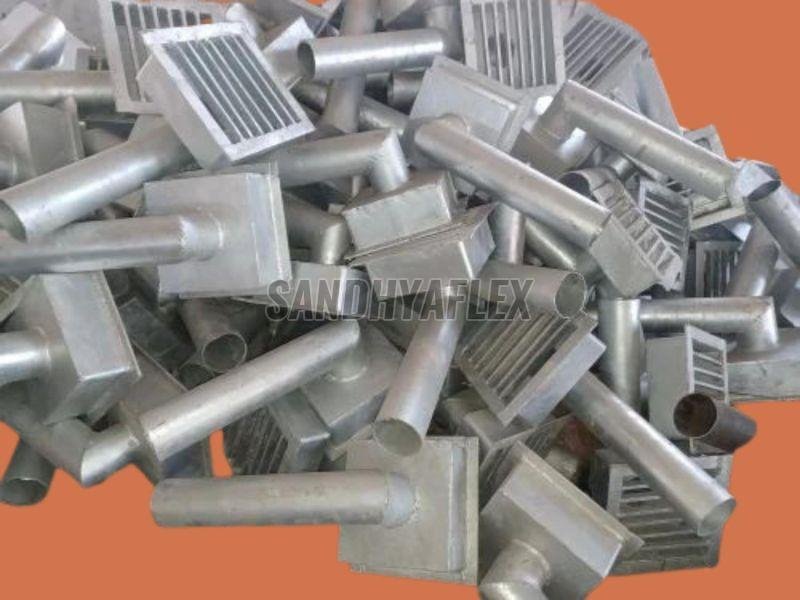
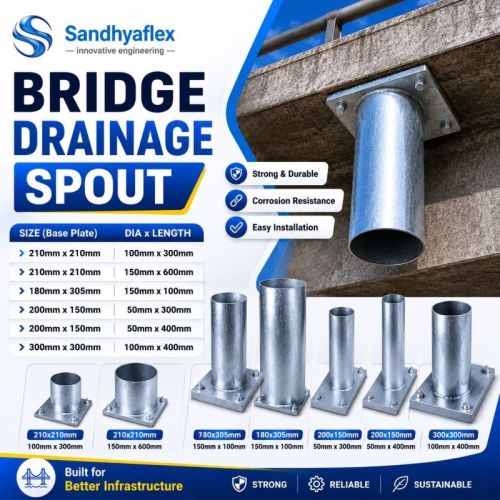
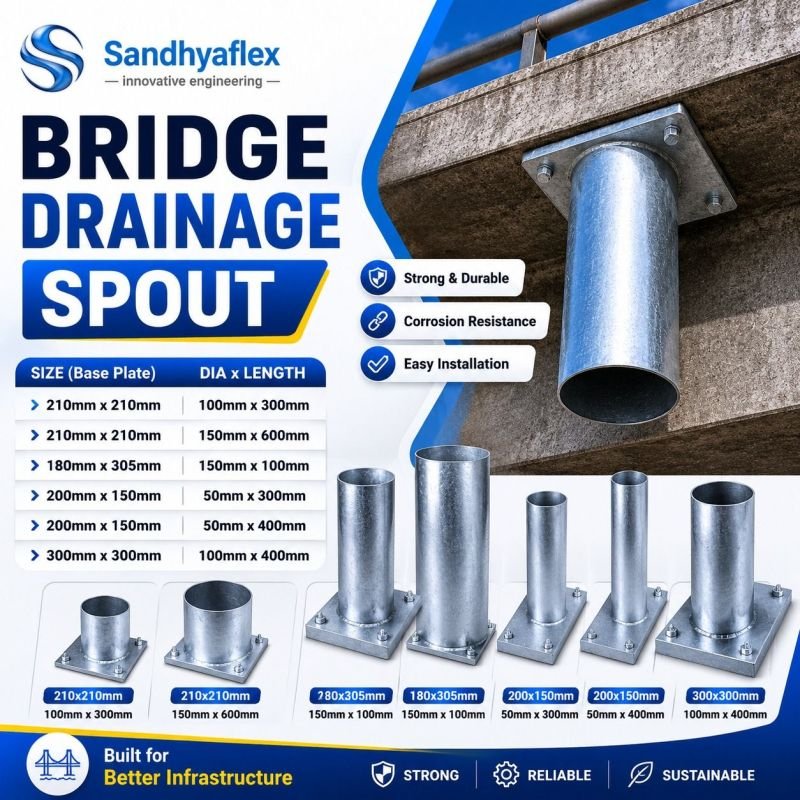
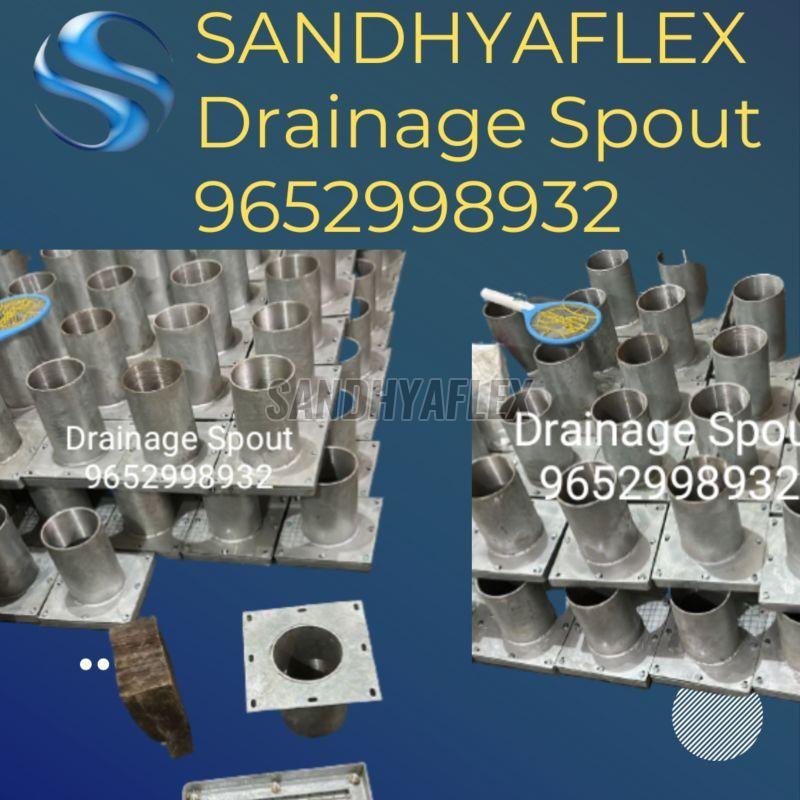
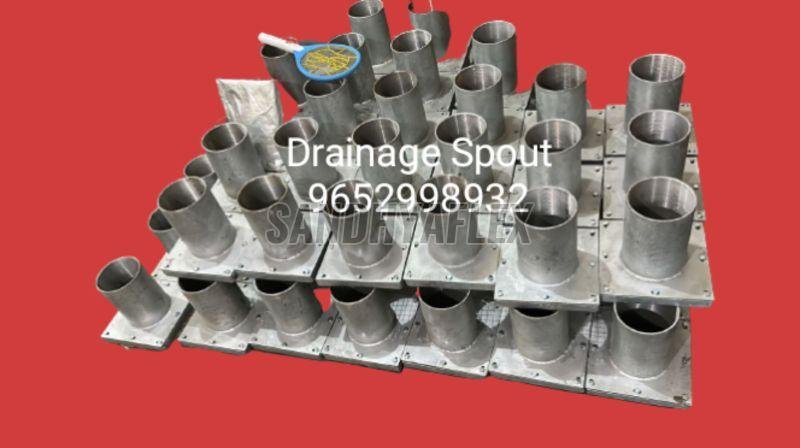
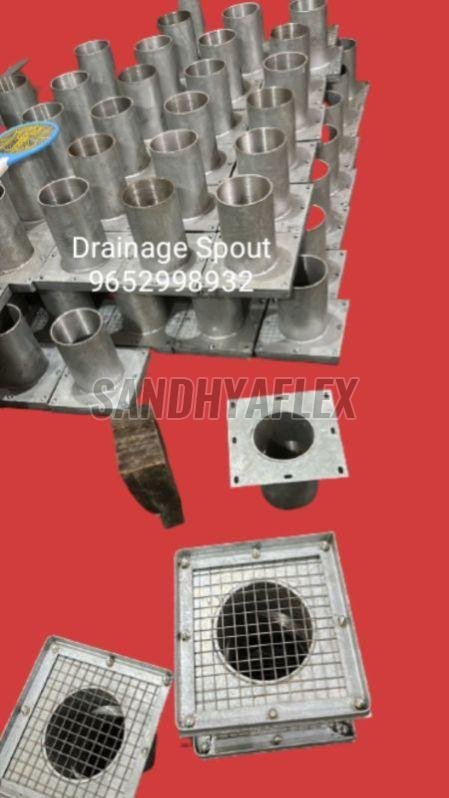
A Bridge Drainage Spout is a vertical pipe for carrying rainwater down from a platform. It is made from mild steel and galvanized to prevent corrosion or rusting due to water flowing through the pipe.
Bridge Drainage Spoutare manufactured and supplied according to MORTH specifications. Our range of Dranges Spout and as per customers Drg.
size:210mmx210mm, Dia of Collection Pipe 100mm, length of Collection Pipe 300mm
size:210mmx210mm, Dia of Collection Pipe 150mm, length of Collection Pipe 600mm
size:180x305, Dia of Collection Pipe 150mm, length of Collection Pipe 100mm
size:200mmx150mm, Dia of Collection Pipe 50mm, length of Collection Pipe 300
size:200mmx150mm, Dia of Collection Pipe 50mm, length of Collection Pipe 400
size:300mmx300mm, Dia of Collection Pipe 100mm, length of Collection Pipe 400.
You can get the best bridge drainage spout from Sandhya Flex which is of high quality and offers finest performance. The bridge drainage spout is a pipe that carries rainwater down from a platform. Moreover, the materials used to make it are mild steel and galvanized. It protects it and prevents corrosion or rusting resulting due to the water flowing through the pipes. Also, at Sandhya Flex, Bridge Drainage Spout are manufactured and supplied as per the specifications of MORTH. Also, we provide a range of drainage spout as well as according to customer specifications.
Being a prominent drainage spout manufacturers for bridges, we offer top-class products to the customers. Also, they are precisely designed to ensure the best performance and long lasting. The bridge drainage spouts we offer are high corrosion-resistance and rust-resistance. The drainage spouts are easy to install alongside having superb finish, precise dimensions and finest manufacturing.
Also, every drainage spout is rigorously tested by our quality controllers. The bridge drainage spouts are made of top-notch raw material along with advanced technology with the best practices. Therefore, for the best drainage spouts at exceptional prices, Sandhya Flex can be the best choice.
Size: 210mmx210mm, Dia of Collection Pipe 100mm, length of Collection Pipe 300mm
Size: 210mmx210mm, Dia of Collection Pipe 150mm, length of Collection Pipe 600mm.
Size: 180mmx305mm, Dia of Collection Pipe 150mm, length of Collection Pipe 100mm.
Size: 200mmx150mm, Dia of Collection Pipe 50mm, length of Collection Pipe 300.
Size: 200mmx150mm, Dia of Collection Pipe 50mm, length of Collection Pipe 400.
Size: 300mmx300mm, Dia of Collection Pipe 100mm, length of Collection Pipe 400


| Business Type | Manufacturer, Exporter, Supplier |
| Material Composition | High-quality Elastomer (rubber-based Compound With Reinforced Layers) |
| Load Capacity | Designed To Withstand Heavy Structural Loads In Bridges And Large Structures |
| Movement Capability | Allows Movement In Multiple Directions (horizontal, Vertical, Rotational) |
| Elongation Property | Good Elongation Strength For Flexibility Under Dynamic Loads |
| Installation | Simple And Easy Installation In Bridges, Buildings, Auditoriums, And Stadiums |
| Maintenance Requirement | Low Maintenance, Long Service Life Under Normal Conditions |
| Standards Compliance | Manufactured As Per National And International Quality Standards |
| Tensile Strength | High Tensile Strength For Structural Stability And Load Distribution |
| Packaging Details | Suitable for road, rail, sea, and export shipments. Export packing available on request with wooden crates and moisture protection. These packing methods are intended to ensure that Sandhyaflex Elastomeric Bridge Bearings reach the installation site without damage and in ready-to-install condition. |
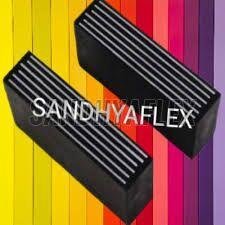
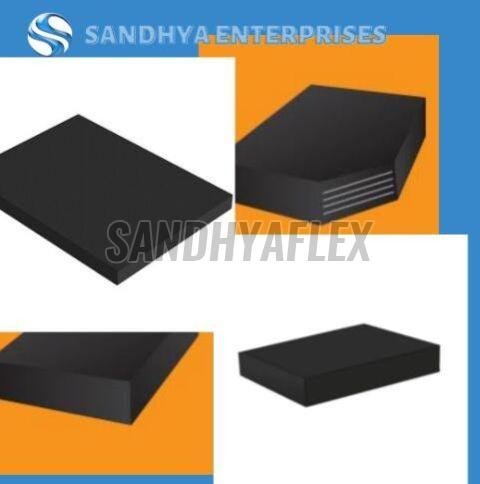
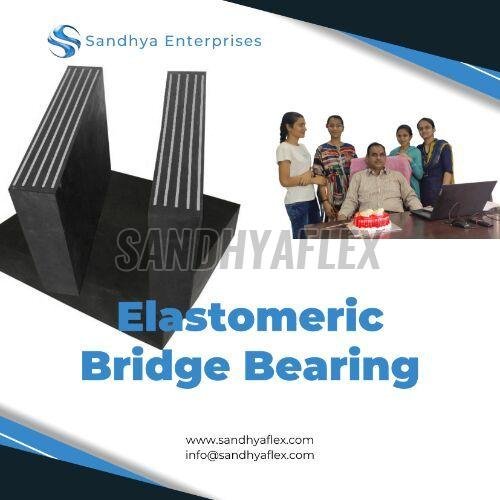
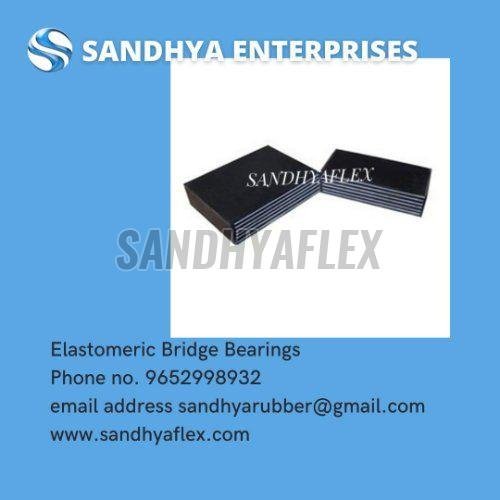
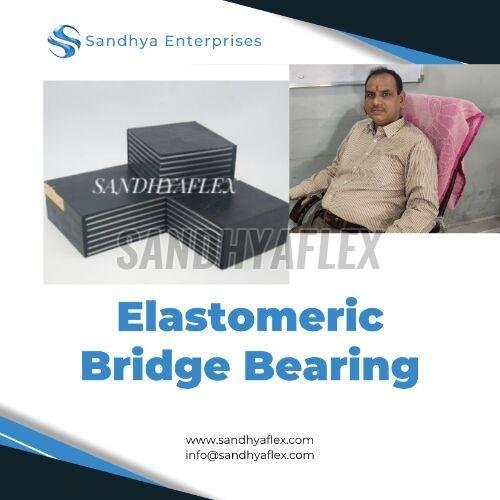
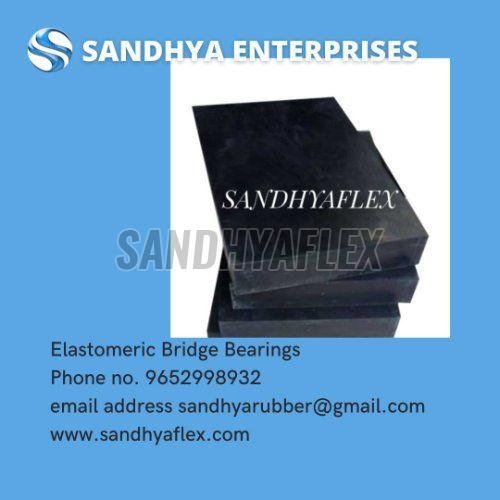
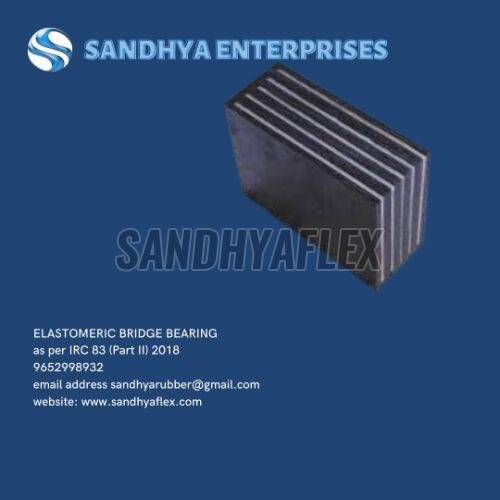
Offering the finest Elastomeric Bridge Bearing, Sandhya Flex takes pleasure as a leading manufacturer of the products. We have segregated our infrastructure into several units with one of them as packaging unit. Here we meticulously pack our Elastomeric Bridge Bearing to ensure safe and secure deliverables. For the safe storage of the manufactured products, we have installed our facility equipped with all the modern amenities for absolute quality satisfaction.
The features of the elastomeric bridge bearing involve a strong design, simple installation and high quality. Also, it allows movement in all the directions you desire. Moreover, it finds it application in bridges, auditoriums, buildings and stadiums among others. They have exceptional tensile strength along with good elongation strength.
They are easy to install for various applications. Above all, they require less maintenance as well. They are precisely manufactured by specialists and experts as per the national and international norms and standards. Also, we use premium quality raw material to manufacture these elastomeric bridge bearing which are sourced from reliable vendors. Further, we assure the best quality, superior performing, durable and energy-efficient elastomeric bridge bearing which you can get from Sandhya Flex at competitive prices in the market.
| Business Type | Manufacturer, Exporter, Supplier, Retailer |
| Country of Origin | India |
| Number Of Flower | Elastomeric Bridge Bearings |
| Brand Name | SANDHYAFLEX |
| Material | Rubber |
| Elastomeric Rubber Pad | 0.34 to 0.38/ccm |
| Product Code | ERP |
| Port | kakinada |
| Payment Terms | T/T |
| Delivery Time | 7 to 15days |
| Packaging Details | Packing with HDPE Cover |
Sandhya enterprises manufacturer and suppliers elastomeric rubber pad. 2mm to 144mm thickness.as per irc 83 (part ii) 1987 specification


| Business Type | Manufacturer, Exporter, Supplier, Retailer |
| Brand Name | JOLLY BOARD |
| Material | Bitumen |
| Condition | New |
| Application | We Are The Recommended Distributors And Wholesalers Of Bitumen Joint Filler Board. Ideal Base Materi,Use For Constructin |
| Size | 600mm X 12000mm |
| Feature | We Are The Recommended Distributors And Wholesalers Of Bitumen Joint Filler Board. Ideal Base Materi |
| Density | 0.8 |
| Number Of Flower | Bitumen Fibrer Fille Board |
| Thickness | 12mm,20mm And 25mm |
| Total Carbohydrate | 1Year |
| Country of Origin | India |
| Thickness range | 12mm To 25mm |
| Pack Type | 10Nos and 15Nos /Pack |
| Water Absorption | 10% max |
| Temperature | -10 to 150Deg C |
| Features | Heat Resistance |
| Resilient | Weather Resistance |
| Thermally Stable Temperature | -10 to 150 Deg c |
| Applications | Construction |
| Product Code | EJFB |
| Payment Terms | T/T |
| Delivery Time | immedailty |
| Packaging Details | Packing with Strech Film The packing details of an expansion joint filler board can vary depending on the manufacturer, supplier, and specific product. However, here are some general packing details that you may commonly find: 1. Quantity: The packaging should indicate the number of expansion joint filler boards included in a single pack. It can range from one filler board to multiple boards, depending on the packaging configuration and the supplier's specifications. 2. Size and Dimensions: The packaging may specify the size and dimensions of the expansion joint filler board, including the thickness, width, and length. This information helps determine if the filler board is suitable for the intended application and joint size. 3. Material: The packaging may mention the specific material of the expansion joint filler board, such as expanded polystyrene (EPS), polyethylene (PE), or polyurethane (PU). This information confirms that the product is made from the intended material. 4. Compressibility: The packaging may indicate the compressibility or recovery rate of the filler board, providing information about how much the board can compress and expand to accommodate the movement of the concrete. 5. Color: Expansion joint filler boards are typically available in a standard color, such as black or white. The packaging may specify the color of the filler board. 6. Packaging Material: The packaging itself may be mentioned, indicating the type of packaging material used, such as plastic bags or cardboard boxes. The packaging should provide sufficient protection to prevent damage during transportation and storage. 7. Additional Information: The packaging may include additional information, such as installation guidelines, technical specifications, or safety instructions related to the expansion joint filler board. It's important to note that the specific details may vary depending on the manufacturer, the product variation, and the specific requirements of the industry or application. Therefore, it is always recommended to refer to the packaging or contact the manufacturer or supplier directly for accurate and up-to-date information regarding the packaging details of a particular expansion joint filler board. |
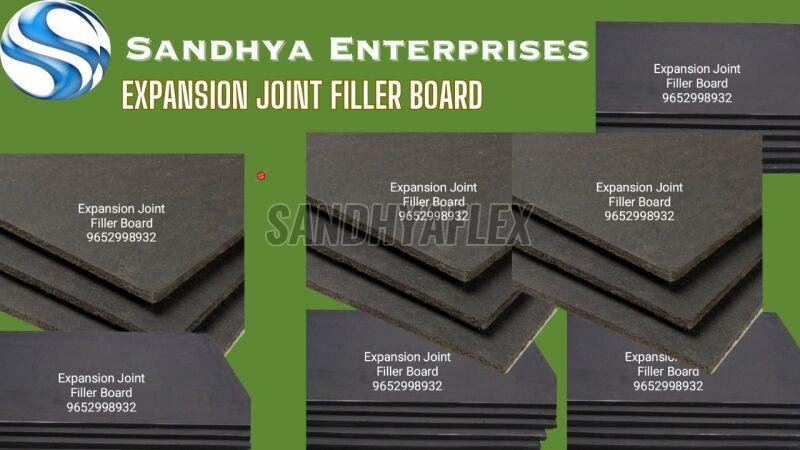
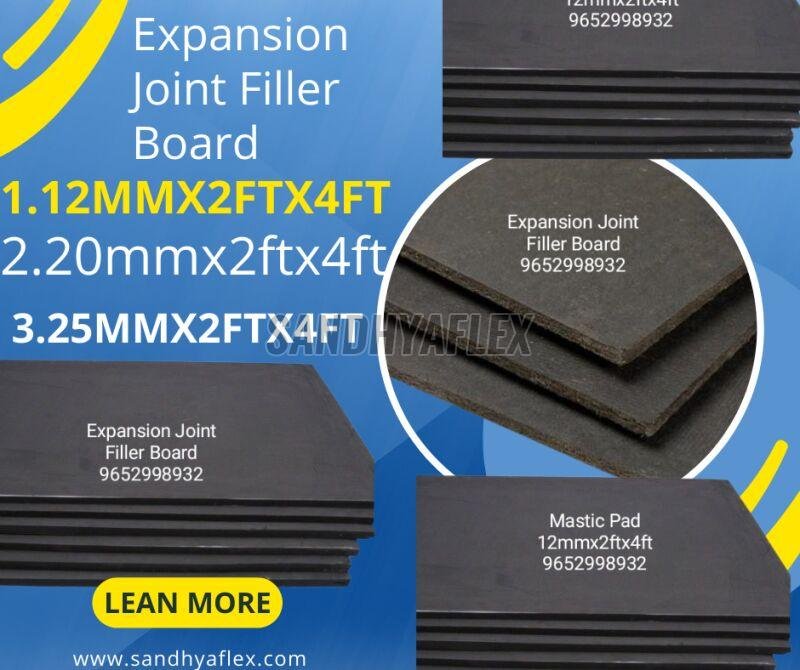
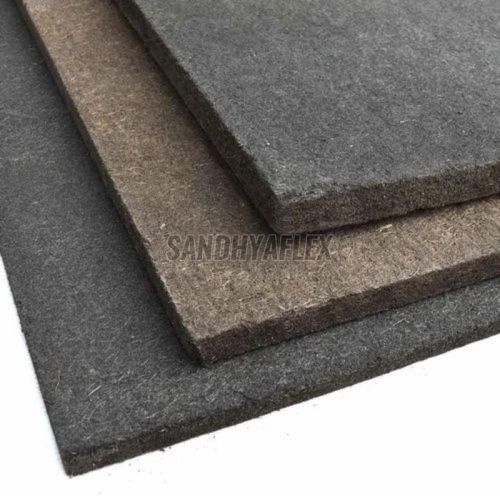
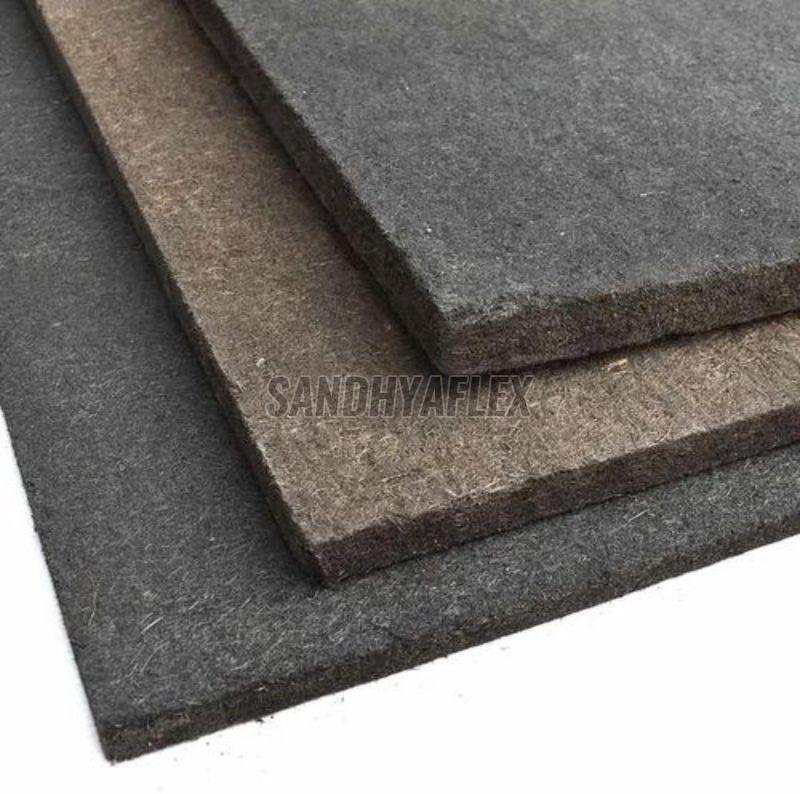
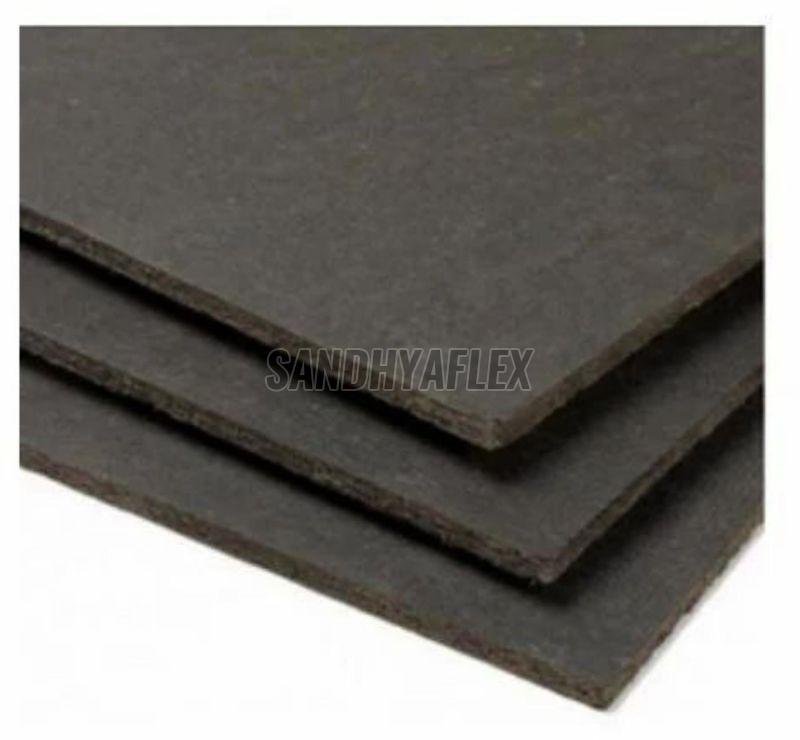
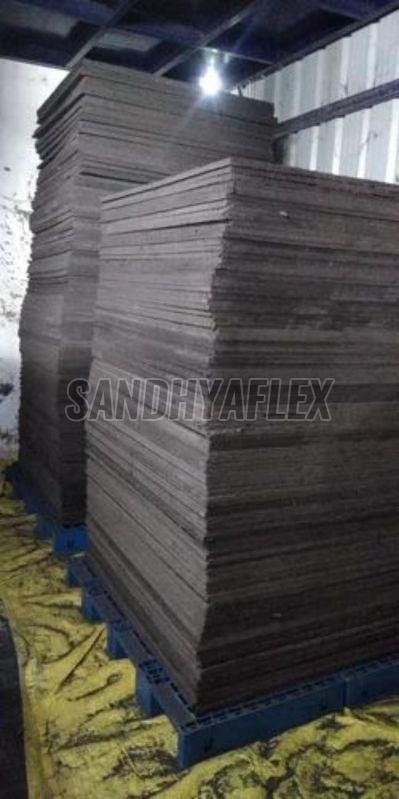
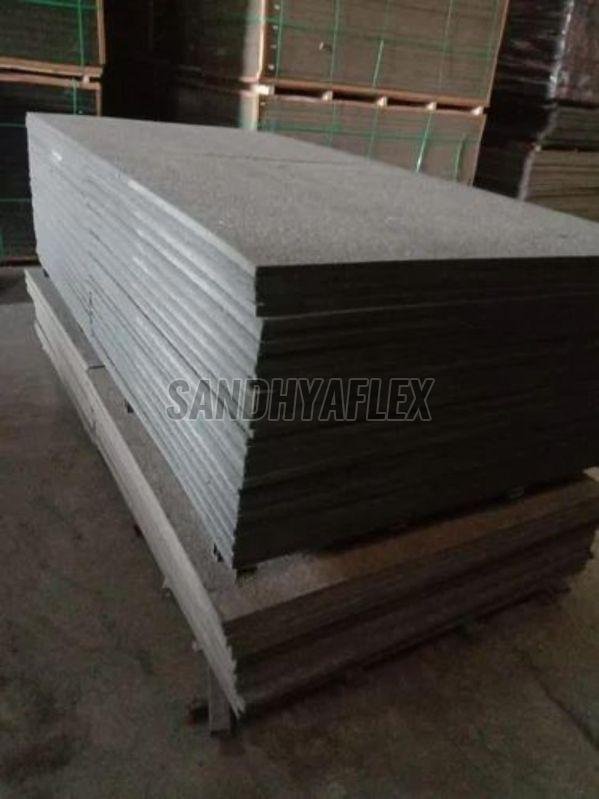
The purpose of the expansion of expansion joint is to protect the structure from damage due to temperature changes, whereas the purpose of expansion joint filler board is to fill the gap created by expansion joint or isolation joints to avoid any foreign materials get into the gap. It is available in a wide range of sizes, both as boards & strips in thicknesses of 10 MM, 12 MM, 18 MM, 19 MM, 25 MM. Jolly Expansion Joint Filler displays excellent resistance to compression, with outstanding recovery characteristics. Impregnated with Bitumen in various percentages, it is a perfect base material for expansion joint fillers. The board’s compression and recovery characteristics confirm to the U.K., U.S.A. and Indian Standards much above the required averages. We are the recommended distributors and wholesalers of Bitumen Joint Filler Board. Ideal base material for expansion joint filers, this board allows free movement of concrete slabs during expansion and contraction. Offered board provides a waterproof seal and resists the entry of foreign matter into the joint read more... Brochure size: 12mm x 2ftx4ft Packing 15 Nos/PKD 20mm x2ftx4ft Packing 10 Nos /PKD 25mmx2ftx4ft Packing 10 Nos/PKD A mastic pad, also known as a mastic sealant pad, is a material used for sealing and waterproofing purposes in various construction applications. It is typically made from a combination of asphalt, fillers, and modifiers, which are mixed together to create a flexible, adhesive, and durable seal. Mastic pads are commonly used in the construction industry for sealing joints, gaps, and cracks in buildings, infrastructure, and other structures. They are particularly useful for applications where movement is expected, as they can accommodate slight shifts and vibrations without losing their sealing properties. The primary purpose of a mastic pad is to create a watertight and airtight seal, preventing the ingress of water, air, dust, or other contaminants. They are often used in areas such as windows, doors, expansion joints, curtain walls, and other building components that require a reliable and long-lasting seal. Installation of mastic pads typically involves cleaning the surface and applying the pad directly onto the joint or gap. The flexibility and adhesive properties of the mastic allow it to conform to irregular surfaces and create a tight seal. It is important to follow the manufacturer's instructions for proper installation and ensure that the surface is clean, dry, and free from any loose debris. Mastic pads have several advantages, including excellent adhesion to various substrates, resistance to weathering and UV degradation, and compatibility with different construction materials such as concrete, metal, glass, and wood. They can also provide some level of acoustic insulation and thermal insulation. It's worth noting that mastic pads are just one type of sealant available in the market, and their selection should be based on the specific requirements of the project. Consulting with a professional contractor or engineer is recommended to determine the appropriate type and specification of mastic pad for a particular application. An expansion joint filler board, also known as an expansion joint foam or expansion joint filler, is a material used in construction to fill expansion joints in concrete structures. It is designed to accommodate the movement and expansion of the concrete, preventing damage and maintaining the integrity of the structure. Here are some key details and features related to expansion joint filler boards: 1. Material: Expansion joint filler boards are typically made from closed-cell foam materials, such as expanded polystyrene (EPS), polyethylene (PE), or polyurethane (PU). These materials offer excellent compressibility, flexibility, and resistance to water absorption. 2. Types: Expansion joint filler boards come in various types and sizes, depending on the specific applicatio
| Business Type | Manufacturer, Exporter, Supplier |
| Material | Bitumen |
| Brand Name | SNDHYAFLEX |
| Port | mumbai |
| Payment Terms | T/T |
| Packaging Details | The packing details for rubber expansion joint bellows can vary depending on the manufacturer, supplier, and specific product specifications. However, here are some common elements you might find in the packing details: 1. **Packaging Material:** Information about the type of packaging material used, such as cartons, crates, or other protective materials. 2. **Quantity per Package:** The number of rubber expansion joint bellows included in each package. This may vary based on the size and specifications of the expansion joints. 3. **Dimensions of the Package:** The dimensions of the package containing the rubber expansion joint bellows, including length, width, and height. This is crucial for transportation and storage considerations. 4. **Weight of the Package:** The weight of the package, including the weight of the rubber expansion joint bellows and any additional packaging materials. This information is important for shipping and handling purposes. 5. **Package Markings:** Any markings on the package, such as labels, symbols, or handling instructions. These markings help in identifying the contents and provide guidance on proper handling. 6. **Product Information:** Details about the rubber expansion joint bellows themselves, including specifications, sizes, materials, and any specific features. This information may be included in the packaging or as part of accompanying documentation. 7. **Storage Recommendations:** Guidance on how to store the rubber expansion joint bellows once they are received, including information about temperature, humidity, and environmental conditions. 8. **Installation Instructions:** If applicable, instructions on how to install or use the rubber expansion joint bellows may be included in the packaging. 9. **Compliance Certifications:** Documentation related to compliance with relevant industry standards or specifications may be included in the packaging. 10. **Handling Instructions:** Information about how to handle the package during transportation, unloading, and storage. This can include instructions on lifting techniques and weight-bearing capacity. It's important to carefully review the packing details provided by the manufacturer or supplier to ensure that the rubber expansion joint bellows are handled and stored appropriately. Following any specific instructions and guidelines provided can contribute to the effective use of the expansion joints in their intended applications, such as in piping systems to absorb movements, vibrations, and misalignments. |
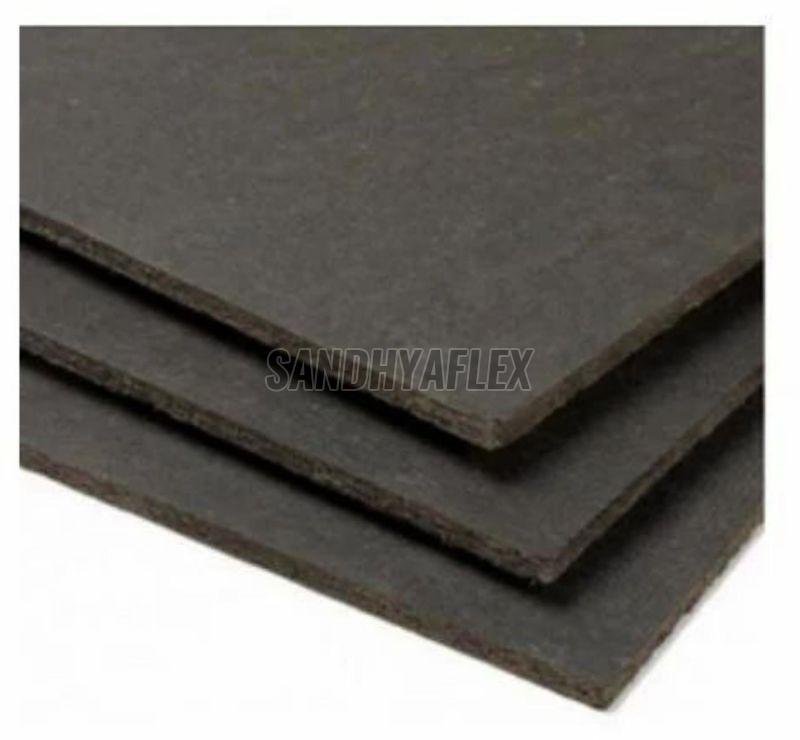
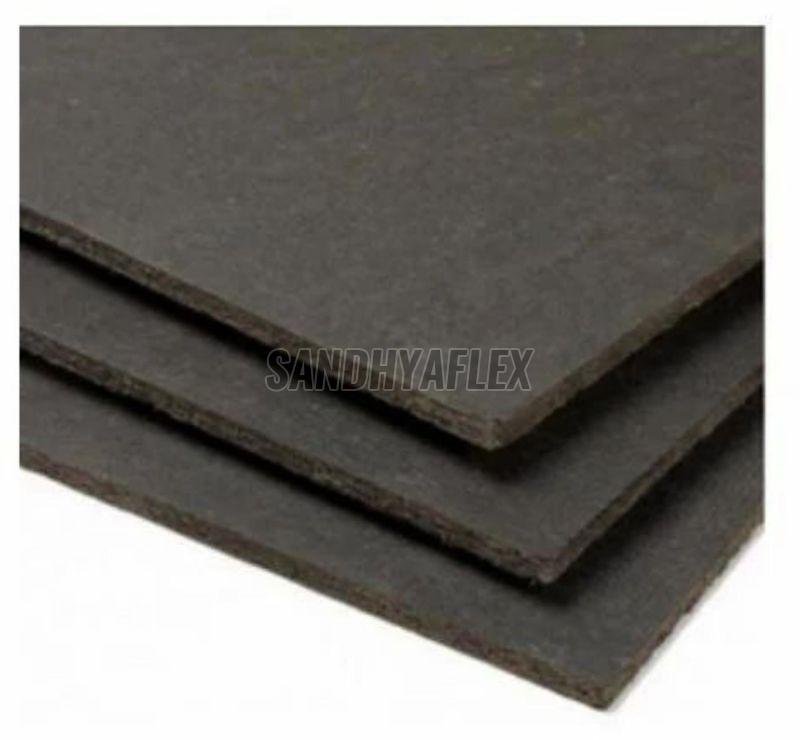
Expansion joint filler boards are materials used in construction to fill gaps and joints in structures, allowing for movement caused by temperature variations, seismic activity, or settlement. These filler boards are typically made of materials that can absorb the stress induced by such movements, preventing damage to the structure. Here are key features and considerations related to expansion joint filler boards:
\r\n\r\n
**Key Features:**
\r\n\r\n
1. **Material:** Expansion joint filler boards are often made from materials such as bitumen-impregnated fiberboard, cork, rubber, foam, or other flexible and compressible materials. The choice of material depends on the specific requirements of the construction project.
\r\n\r\n
2. **Flexibility:** Filler boards are flexible and compressible, allowing them to accommodate movement without transmitting stress to the surrounding structures.
\r\n\r\n
3. **Compressibility:** The compressibility of these boards helps them absorb the forces generated by expansion and contraction, preventing damage to the adjacent structures.
\r\n\r\n
4. **Water Resistance:** Many expansion joint filler boards are designed to be resistant to water, preventing water infiltration into the joints and helping maintain the structural integrity of the building.
\r\n\r\n
5. **Chemical Resistance:** Depending on the material used, filler boards may offer resistance to chemicals present in the environment, enhancing their durability.
\r\n\r\n
6. **Temperature Resistance:** Filler boards are designed to withstand a range of temperatures, making them suitable for outdoor applications where temperature variations are significant.
\r\n\r\n
7. **Easy Installation:** The installation of expansion joint filler boards is typically straightforward. They can be cut to size and inserted into the joint, providing an effective barrier against moisture and contaminants.
\r\n\r\n
8. **Compatibility:** These filler boards are compatible with various construction materials, including concrete, asphalt, and other building materials.
\r\n\r\n
**Common Applications:**
\r\n\r\n
1. **Building Construction:** Expansion joint filler boards are widely used in the construction of buildings to fill gaps in structures, including floor slabs, walls, and roofs.
\r\n\r\n
2. **Bridges and Highways:** In the construction of bridges and highways, expansion joint filler boards are used to accommodate the movement caused by temperature changes and seismic activity.
\r\n\r\n
3. **Airport Runways:** Filler boards are applied in the construction of airport runways to fill joints and gaps, allowing for movement and preventing the development of cracks.
\r\n\r\n
4. **Parking Structures:** In parking garages and structures, expansion joint filler boards are used to fill gaps and joints in concrete decks and ramps.
\r\n\r\n
5. **Water Retaining Structures:** Dams, reservoirs, and other water-retaining structures utilize expansion joint filler boards to accommodate movement and prevent water infiltration.
\r\n\r\n
6. **Industrial Flooring:** Expansion joint filler boards may be used in industrial settings, such as warehouses or manufacturing facilities, to fill joints in concrete floors.
\r\n\r\n
7. **Seismic Joints:** In earthquake-prone regions, expansion joint filler boards are often employed in structures to provide flexibility and absorb seismic forces.
\r\n\r\n
Proper installation and selection of the appropriate type of expansion joint filler board are crucial to the performance and longevity of the construction joint. The specific requirements for filler boards depend on factors such as the type of construction, the expected range of movement, and environmental conditions.


| Business Type | Manufacturer, Exporter, Supplier |
| Feature | Fine Finishing, Light Weigth |
| Country of Origin | India |
| Brand Name | sandhyaflex |
| Material | rubber |
| Shape | Square |
| Design Printing | Hey! Could you tell me a bit more about what you mean by "design printing"? Are you looking for: - |
| Application | Got it! Are you thinking about: - **Designing a printing-related application** (like a web app for |
| Type | Expansion Joints |
| Size | Export Packing Dimension in CBM Expansion Joint Filler Board Size 2 Feet and 4Feet Color Block S No |
| Product Code | sandhyaflex |
| Port | A **port of dispatch** refers to the location (typically a seaport or airport) from which goods are |
| Payment Terms | D/A, D/P |
| Delivery Time | 7to 15days |
| Packaging Details | packaging as per dimension |
- \\n
- It is a cross-linked, pre-moulded, high performance joint filler board. It is readily compressible and ensures low load transfer. Applications: Structural expansion joint in concrete brick and block work Isolation to infill panels Bridge decks, abutments, pier hinge joint etc. As a backup support for sealant. \\n
- The purpose of the expansion of expansion joint is to protect the structure from damage due to temperature changes, whereas the purpose of expansion joint filler board is to fill the gap created by expansion joint or isolation joints to avoid any foreign materials get into the gap. \\n
- \\n
- \\n
- Impregnated with Bitumen in various percentages, it is a perfect base material for expansion joint fillers. The board’s compression and recovery characteristics confirm to the U.K., U.S.A. and Indian Standards much above the required averages. \\n
- \\n
- \\n
- It is available in a wide range of sizes, both as boards & strips in thicknesses of 10 MM, 12 MM, 18 MM, 19 MM, 25 MM. Jolly Expansion Joint Filler displays excellent resistance to compression, with outstanding recovery characteristics. \\n
- \\n
- \\n
- Joint fillers are relatively a compressed material so that it does not fail as the concrete grows around it and shrinks due to temperature change or movement. The joint fillers prevents untimely failure of the concrete structure. Following are the various types of joint filler materials as follows: \\n
\\n
\\n
\\n