sandhyaflexbiz@gmail.com - GST NO. : 36ABTCS2276B1Z4
- Send Email

PVC Products
Leading Manufacturers, Exporters, Wholesaler, Retailer of 125mm Cement Feeding Rubber Hose, 150 Mm PVC Water Stopper, 150x6mm PVC Water Stopper, 150x8mm PVC Water Stopper, 230x10 Mm Water Stopper, 230x6mm Center Bulb PVC Water Stopper, 230x6mm PVC Water Stopper, 230x8mm Water Stopper, 250x8mm PVC Water Stopper, 265x165x30mm PVC Rungs 16mm Rod, 300mm Width PVC Water Stopper, 6" Width PVC Water Stopper, Bridge Center Bulb PVC Water Stopper, Center PVC Water Stopper, Chlorinated Paraffin Wax, Color PVC Braided Water Pipe, Dumbell Type Water Stopper, Elastomeric Bearing Pad, Elastomeric Bearings with Anchoring Bolt, Electrical Insulated Rubber Mat, Electrical Insulation Rubber Mats and Electrical Mat from Hyderabad.

| Business Type | Manufacturer, Exporter, Supplier, Retailer |
| Country of Origin | India |
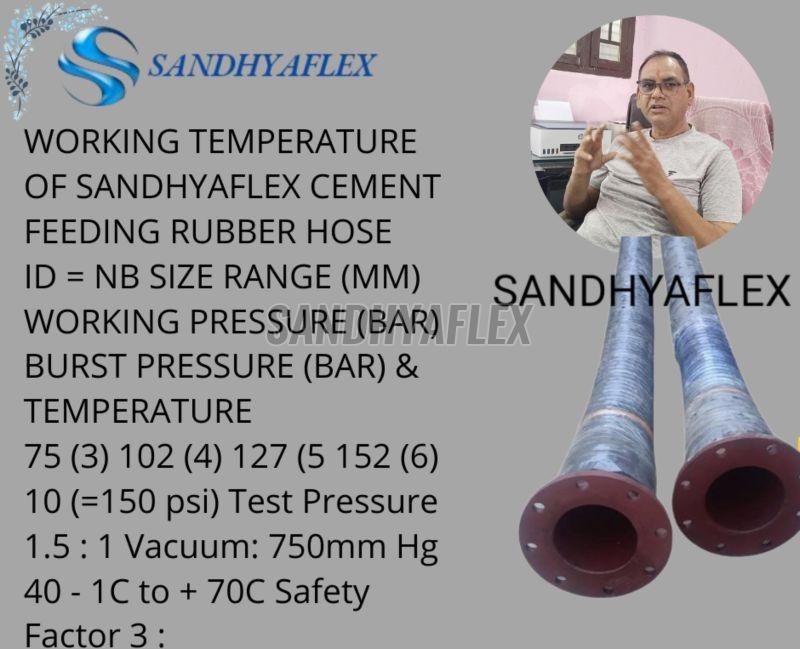
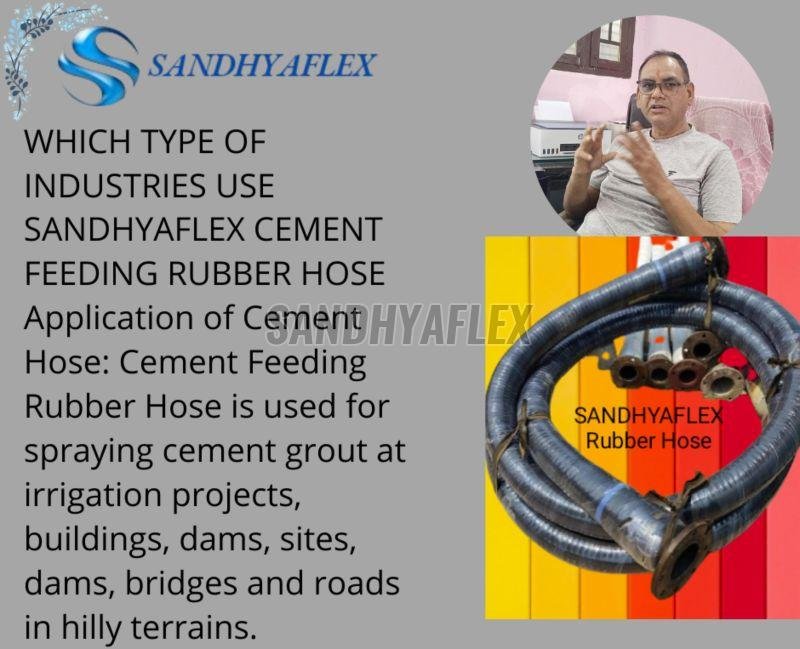
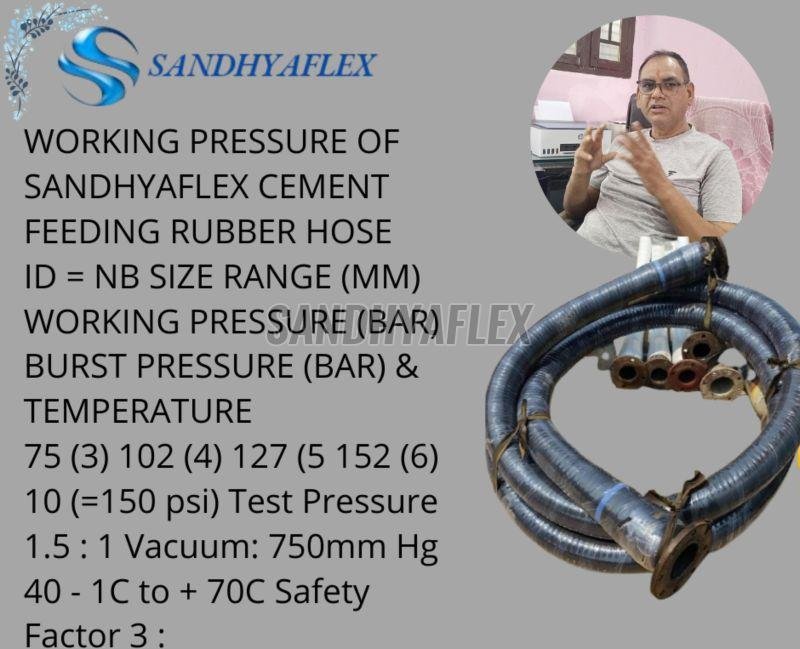
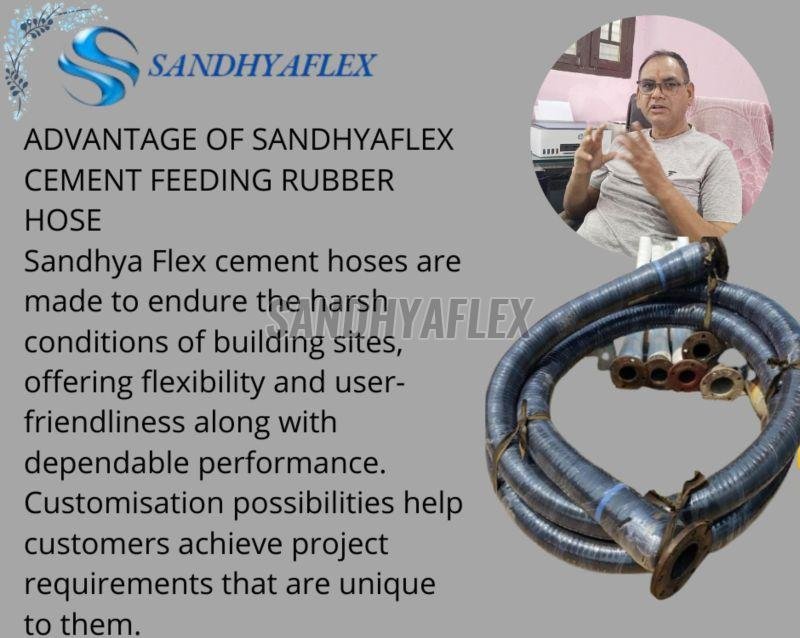
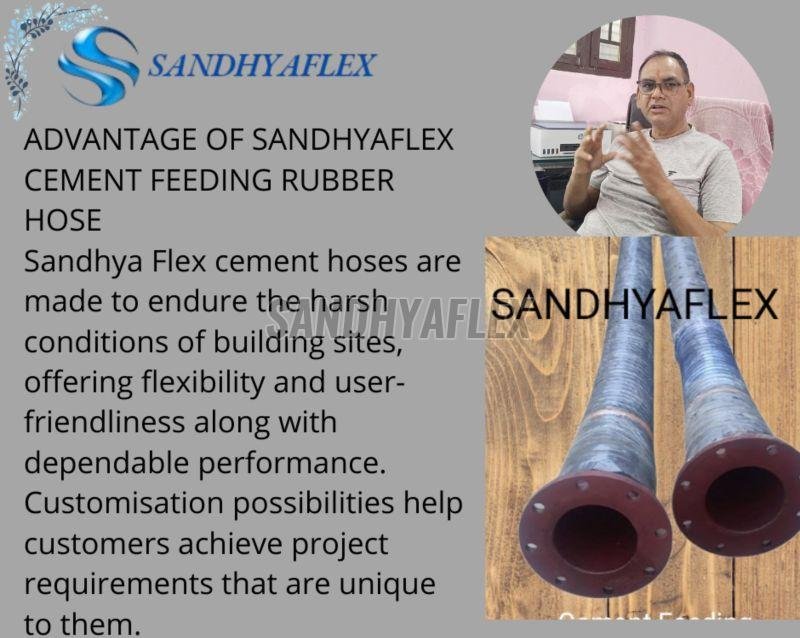
| Usage | Industrial Use, Transfer Dry Cement,Fly Ash,Lime,Silica,And Other Dry Bulk Powders In Construction,Power Plants,Cement Manufacturing,Precast Unit Production,And Industrial Material Transport. |
| Color | Black |
| Material | Neoprene Rubber |
| Brand Name | SANDHYAFLEX |
| Finishing | Coated |
| Shape | Round |
| Pressure | High |
| Special Features | Specially Designed For Safe, Fast, And Efficient Transfer Of Dry Cement And Powders. |
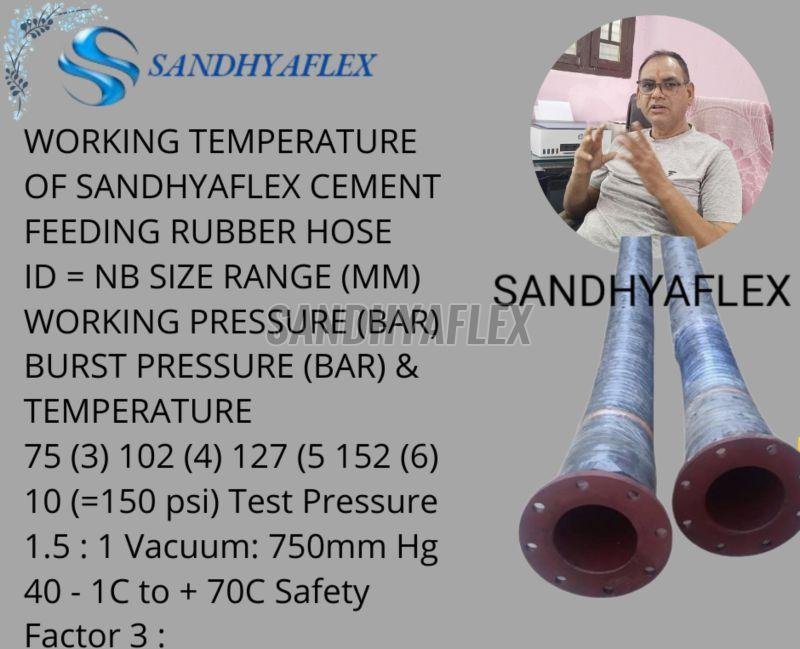
| Typical Pressure Rating | 10-15 Bar |
| Product Code | SECFRFBSF |
| Port | mumbai |
| Payment Terms | L/C |
| Delivery Time | 7 to 15 days |
| Packaging Details | Could you please clarify what you're referring to with "Packaging Details"? Are you looking for information on how to: * Describe packaging details for a product listing? * Create packaging instructions for manufacturing or shipping? * Design packaging (materials, dimensions, branding)? * Comply with packaging regulations or standards? Let me know the context so I can tailor the response. |
- Inner Lining (Tube): Thick, premium smooth bore made from a natural or synthetic rubber blend (NR/SBR) engineered for supreme abrasion resistance to withstand scraping from fast-moving dry particles.
- Reinforcement Layer: Formed by multiple plies of high-tensile synthetic textile or cord combined with an embedded galvanized steel wire helix. This structure prevents the hose from collapsing under full suction/vacuum and resists extreme pressure surges.
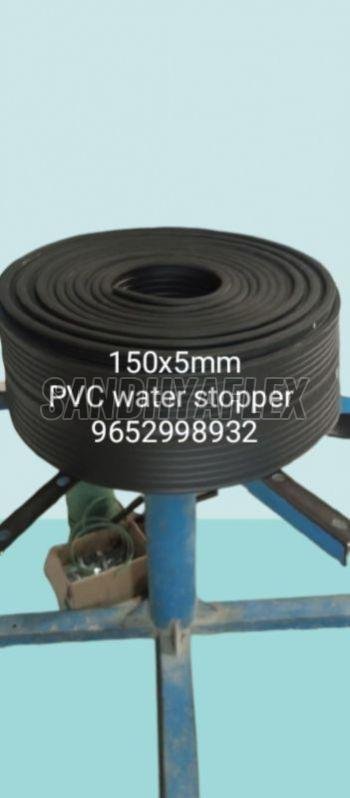
| Business Type | Manufacturer, Exporter |
| Length | 25-30mtr |
| Size | 150x5mm |
| Application | Construction |
| Surface Treatment | PVC Water Stoppers, Often Used In Construction Projects Like Dams, Tunnels, And Foundations, Are Ess |
| Condition | New |
| Material | Pvc |
| Brand Name | SANDHYAFLEX |
| Product Code | PVC Water Stopper |
| Port | Mumbai |
| Payment Terms | D/A |
| Delivery Time | 2-4days |
| Packaging Details | Export Packing Dimension in CBM PVC Water Stopper with Center Bulb Each Roll 25Mtr SR No Dimension Length Width Height CBM Weight kg/Roll 1 150x5mm 0.625 0.625 0.150 0.059 40 2 150x6mm 0.625 0.625 0.150 0.059 45 3 150x8mm 0.625 0.625 0.150 0.059 55 4 200x8mm 0.625 0.625 0.200 0.059 70 5 200x10mm 0.65 0.65 0.200 0.078 80 6 225x5mm 0.625 0.625 0.23 0.090 65 7 225x6mm 0.625 0.625 0.230 0.090 70 8 225x8mm 0.65 0.65 0.230 0.097 90 9 225x10mm 0.65 0.65 0.230 0.097 100 10 240x8mm 0.65 0.650 0.240 0.104 110 11 240x10mm 0.650 0.650 0.240 0.104 125 12 250x8mm 0.675 0.675 0.250 0.114 95 s13 250x10mm 0.675 0.675 0.250 0.114 115 14 300x6mm 0.700 0.700 0.300 0.147 95 15 300x8mm 0.725 0..725 0.300 0.158 115 16 300x10mm 0.750 0.750 0.300 0.169 145 17 300x12mm 0.775 0.775 0.300 0.18 140 18 300x15mm 0.800 0.800 0.300 0.192 160 Kiker Type 19 230x4mm 0.625 0.625 0.230 0.090 67 Dumbbell Type 20 230x8mm 0.650 0.650 0.230 0.097 87 21 230x10mm 0.650 0.650 0.230 0.097 100 |
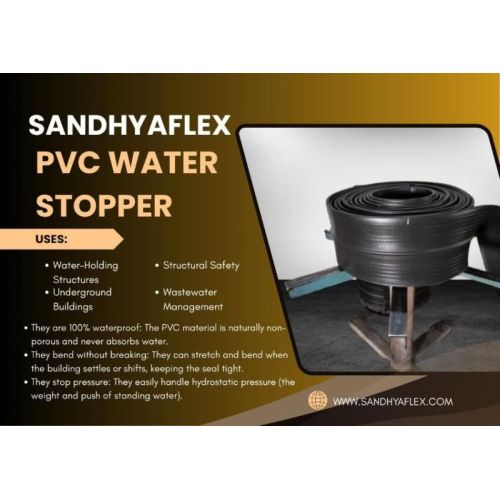
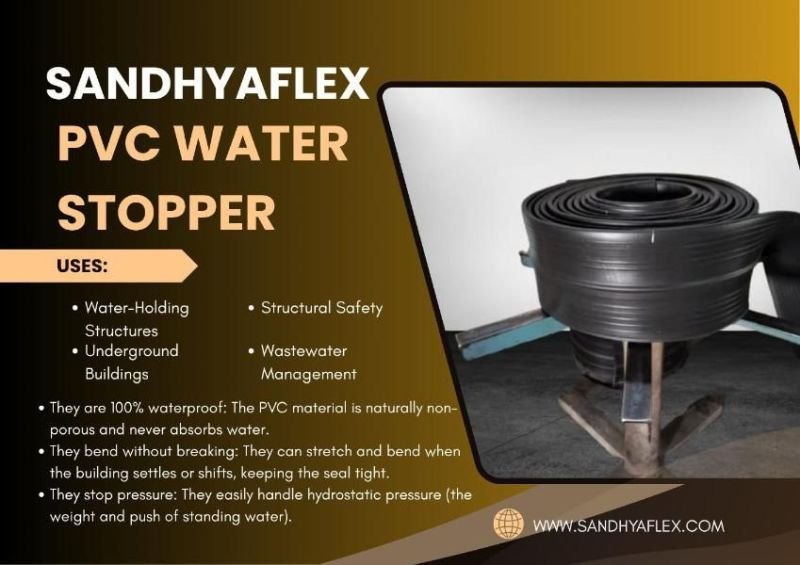
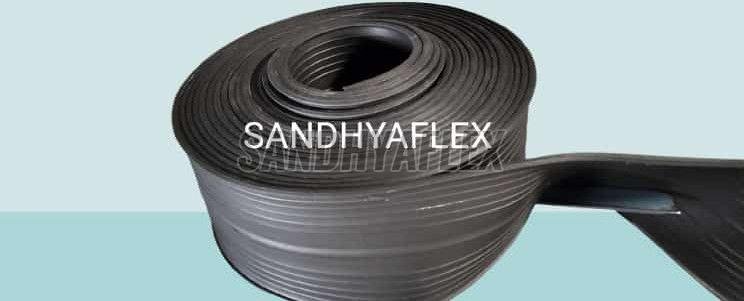
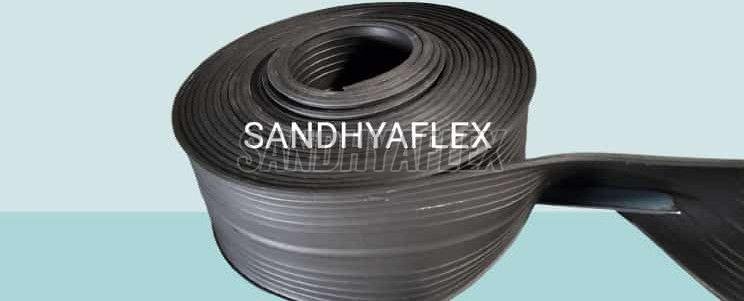
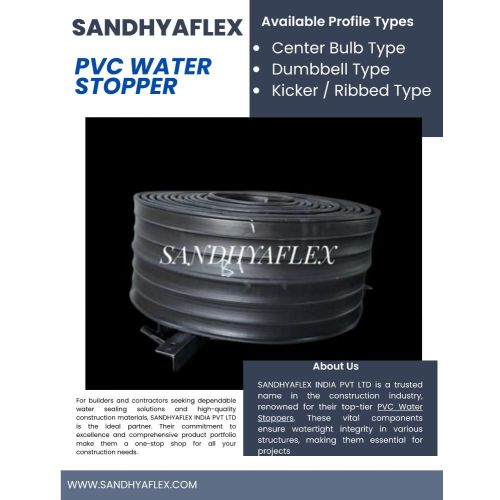
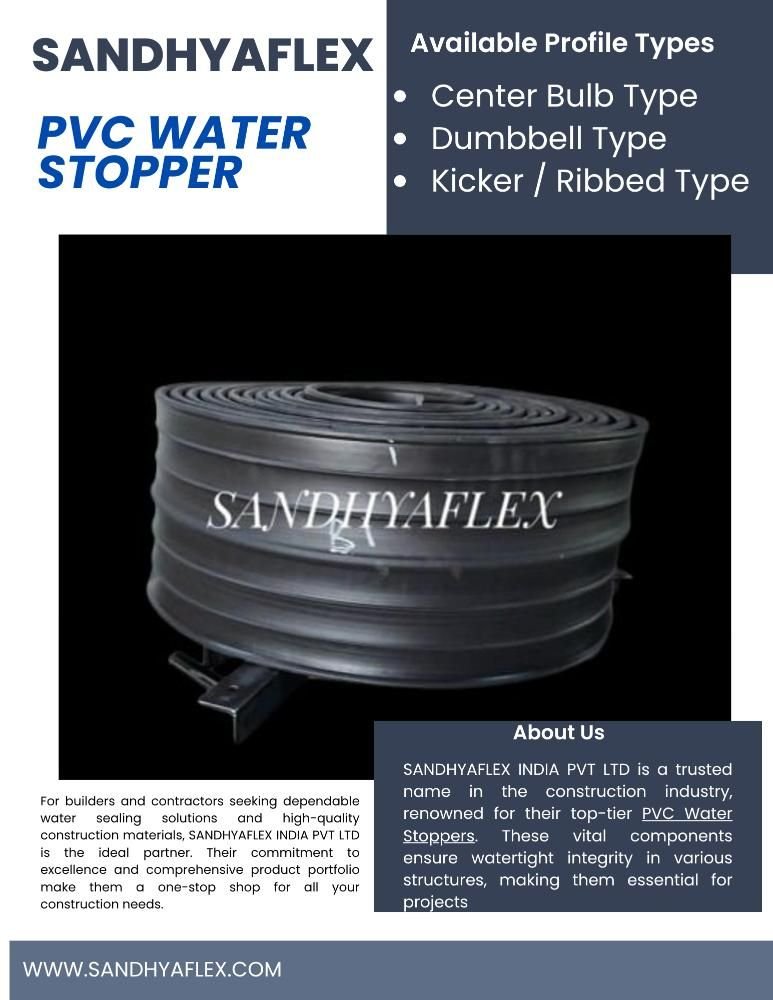
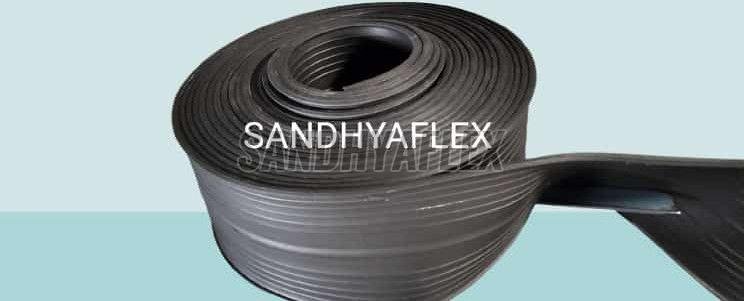
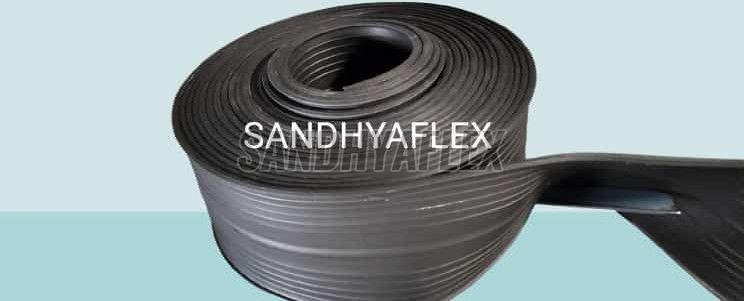
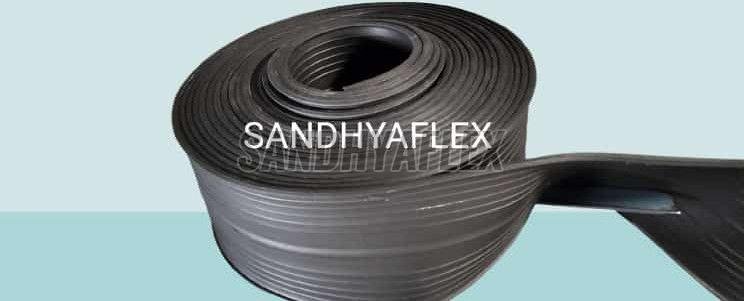
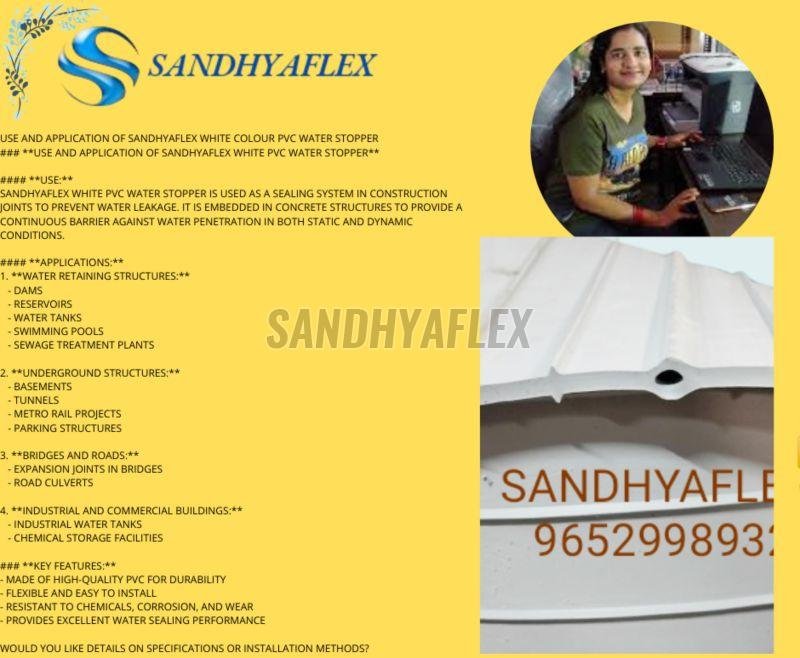
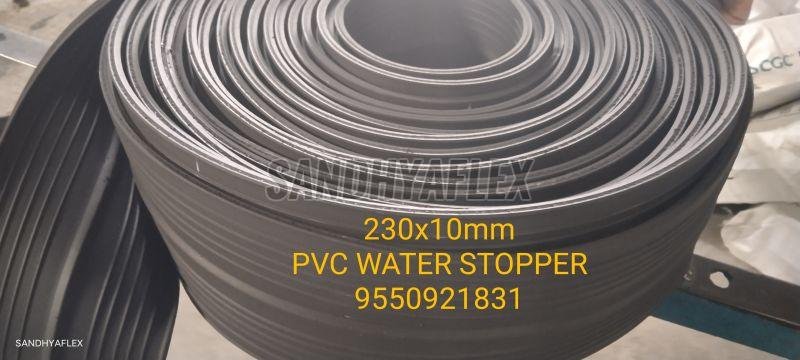
A PVC water stopper is a specialized product used in construction to prevent the passage of water through joints or cracks in structures like concrete walls, floors, or foundations. Made from durable polyvinyl chloride (PVC), it is commonly used in projects such as basements, tunnels, reservoirs, and dams to create a watertight seal.
Key Characteristics:- Waterproofing: It is primarily designed to stop water from seeping through concrete joints.
- Durability: PVC is resistant to chemicals, corrosion, and physical wear, ensuring long-lasting protection.
- Flexibility: Many PVC water stoppers are designed to be flexible enough to handle joint movement caused by settling or thermal expansion of concrete.
- Easy Installation: They are typically installed during the construction phase by embedding them into the concrete formwork at the joint locations.
- Flat Type: A simple flat design, placed along the joint for basic water resistance.
- Profile Type: Features a more complex, ribbed or molded design for better sealing and enhanced durability.
- Flange Type: Comes with flanges for better bonding to the concrete and more effective sealing.
- Water Treatment Plants
- Dams
- Underground Parking
- Tunnels
- Swimming Pools
- Reservoirs
PVC water stoppers are essential in any construction project where water leakage could be a problem, helping ensure that structures remain dry and intact over time.
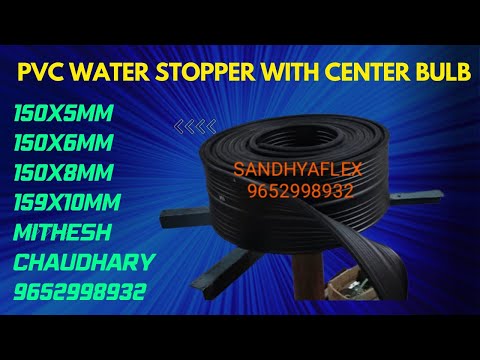
| Business Type | Manufacturer, Exporter, Supplier |
| Length | 25-30mtr |
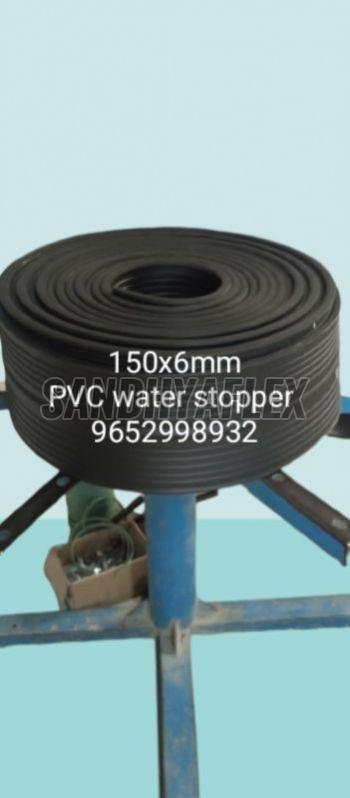
| Size | 150x6mm |
| Application | Construction |
| Surface Treatment | PVC Water Stoppers, Often Used In Construction Projects Like Dams, Tunnels, And Foundations, Are Ess |
| Condition | New |
| Material | Pvc |
| Brand Name | SANDHYAFLEX |
| Product Code | PVC Water Stopper |
| Port | Mumbai |
| Payment Terms | D/A |
| Delivery Time | 2 days |
| Packaging Details | Export Packing Dimension in CBM PVC Water Stopper with Center Bulb Each Roll 25Mtr SR No Dimension Length Width Height CBM Weight kg/Roll 1 150x5mm 0.625 0.625 0.150 0.059 40 2 150x6mm 0.625 0.625 0.150 0.059 45 3 150x8mm 0.625 0.625 0.150 0.059 55 4 200x8mm 0.625 0.625 0.200 0.059 70 5 200x10mm 0.65 0.65 0.200 0.078 80 6 225x5mm 0.625 0.625 0.23 0.090 65 7 225x6mm 0.625 0.625 0.230 0.090 70 8 225x8mm 0.65 0.65 0.230 0.097 90 9 225x10mm 0.65 0.65 0.230 0.097 100 10 240x8mm 0.65 0.650 0.240 0.104 110 11 240x10mm 0.650 0.650 0.240 0.104 125 12 250x8mm 0.675 0.675 0.250 0.114 95 s13 250x10mm 0.675 0.675 0.250 0.114 115 14 300x6mm 0.700 0.700 0.300 0.147 95 15 300x8mm 0.725 0..725 0.300 0.158 115 16 300x10mm 0.750 0.750 0.300 0.169 145 17 300x12mm 0.775 0.775 0.300 0.18 140 18 300x15mm 0.800 0.800 0.300 0.192 160 Kiker Type 19 230x4mm 0.625 0.625 0.230 0.090 67 Dumbbell Type 20 230x8mm 0.650 0.650 0.230 0.097 87 21 230x10mm 0.650 0.650 0.230 0.097 100 |
A PVC water stopper is a specialized product used in construction to prevent the passage of water through joints or cracks in structures like concrete walls, floors, or foundations. Made from durable polyvinyl chloride (PVC), it is commonly used in projects such as basements, tunnels, reservoirs, and dams to create a watertight seal.
Key Characteristics:- Waterproofing: It is primarily designed to stop water from seeping through concrete joints.
- Durability: PVC is resistant to chemicals, corrosion, and physical wear, ensuring long-lasting protection.
- Flexibility: Many PVC water stoppers are designed to be flexible enough to handle joint movement caused by settling or thermal expansion of concrete.
- Easy Installation: They are typically installed during the construction phase by embedding them into the concrete formwork at the joint locations.
- Flat Type: A simple flat design, placed along the joint for basic water resistance.
- Profile Type: Features a more complex, ribbed or molded design for better sealing and enhanced durability.
- Flange Type: Comes with flanges for better bonding to the concrete and more effective sealing.
- Water Treatment Plants
- Dams
- Underground Parking
- Tunnels
- Swimming Pools
- Reservoirs
PVC water stoppers are essential in any construction project where water leakage could be a problem, helping ensure that structures remain dry and intact over time.
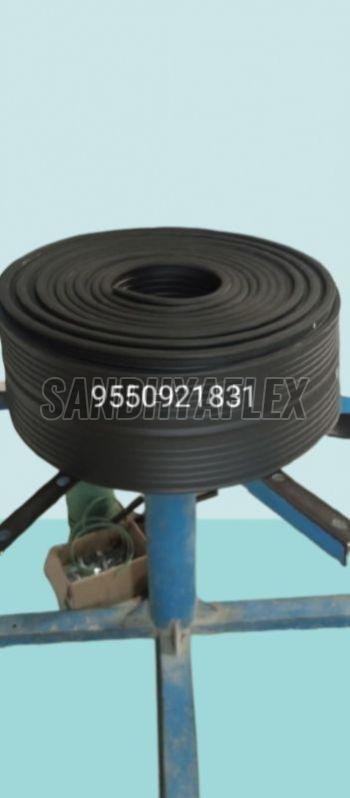
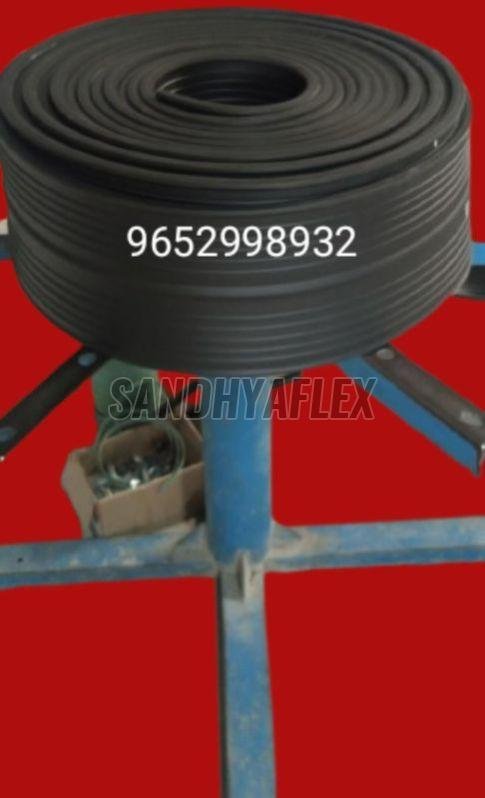
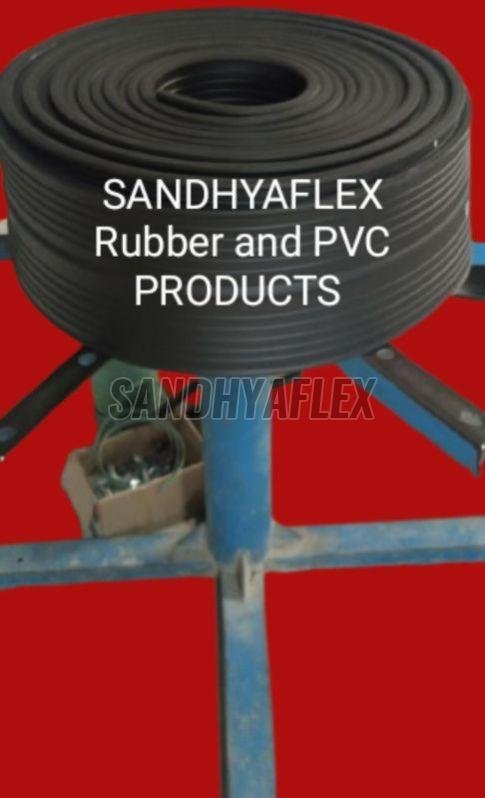
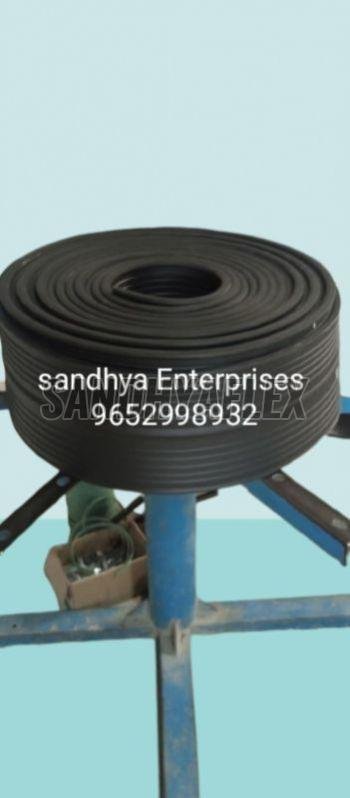
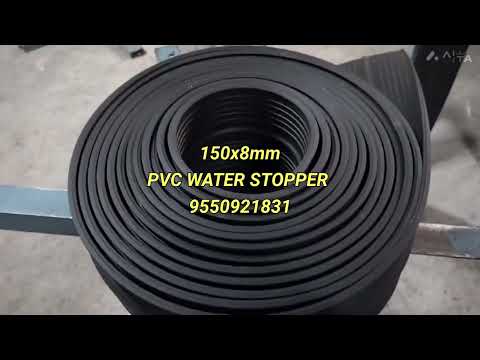
| Business Type | Manufacturer, Exporter, Supplier |
| Length | 25-30mtr |
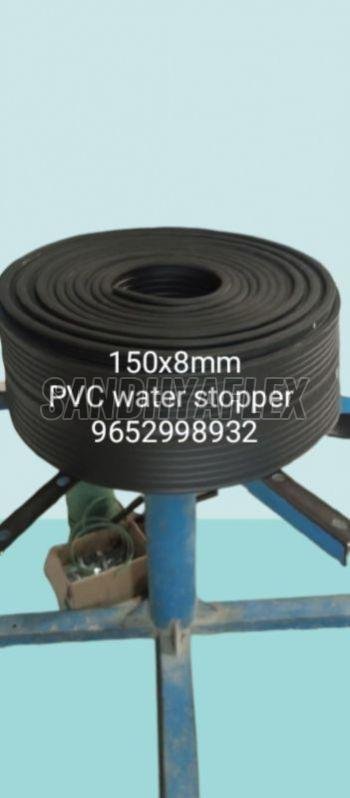
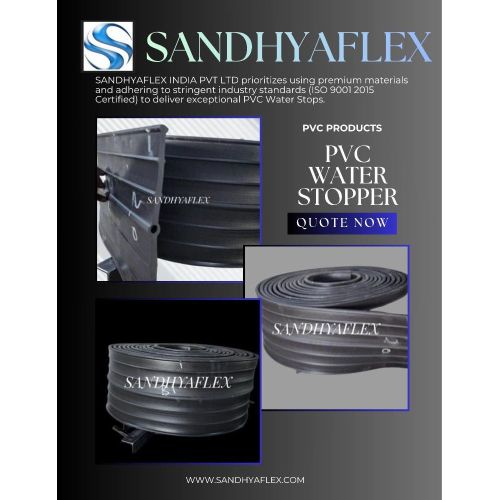
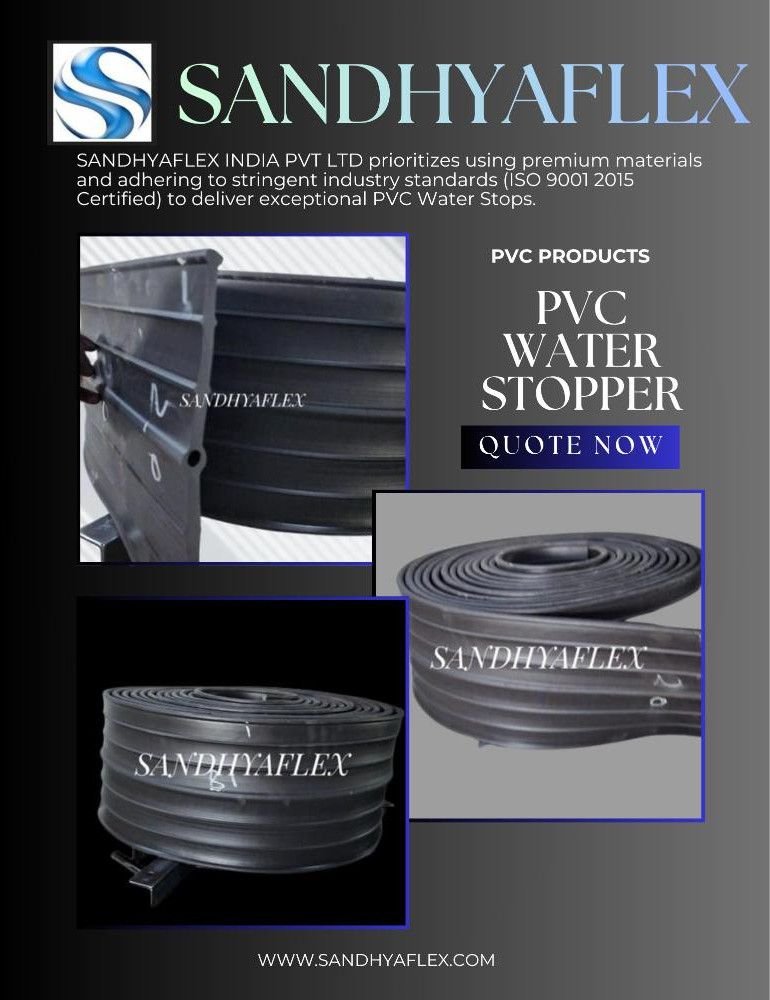
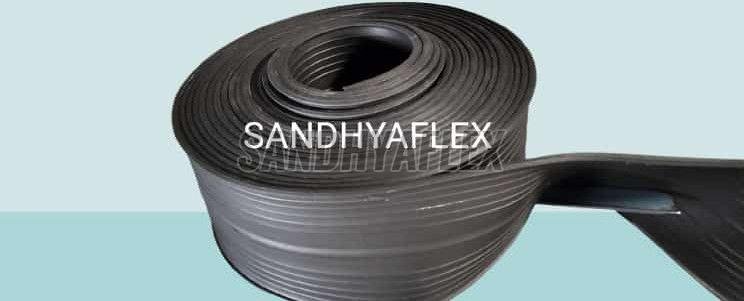
| Size | 150x8mm |
| Application | Construction |
| Surface Treatment | PVC Water Stopper |
| Condition | New |
| Material | Pvc |
| Brand Name | SANDHYAFLEX |
| Product Code | PVC Water Stopper |
| Port | Mumbai |
| Payment Terms | D/A |
| Delivery Time | 2 days |
| Packaging Details | Export Packing Dimension in CBM PVC Water Stopper with Center Bulb Each Roll 25Mtr SR No Dimension Length Width Height CBM Weight kg/Roll 1 150x5mm 0.625 0.625 0.150 0.059 40 2 150x6mm 0.625 0.625 0.150 0.059 45 3 150x8mm 0.625 0.625 0.150 0.059 55 4 200x8mm 0.625 0.625 0.200 0.059 70 5 200x10mm 0.65 0.65 0.200 0.078 80 6 225x5mm 0.625 0.625 0.23 0.090 65 7 225x6mm 0.625 0.625 0.230 0.090 70 8 225x8mm 0.65 0.65 0.230 0.097 90 9 225x10mm 0.65 0.65 0.230 0.097 100 10 240x8mm 0.65 0.650 0.240 0.104 110 11 240x10mm 0.650 0.650 0.240 0.104 125 12 250x8mm 0.675 0.675 0.250 0.114 95 s13 250x10mm 0.675 0.675 0.250 0.114 115 14 300x6mm 0.700 0.700 0.300 0.147 95 15 300x8mm 0.725 0..725 0.300 0.158 115 16 300x10mm 0.750 0.750 0.300 0.169 145 17 300x12mm 0.775 0.775 0.300 0.18 140 18 300x15mm 0.800 0.800 0.300 0.192 160 Kiker Type 19 230x4mm 0.625 0.625 0.230 0.090 67 Dumbbell Type 20 230x8mm 0.650 0.650 0.230 0.097 87 21 230x10mm 0.650 0.650 0.230 0.097 100 |
PVC water stoppers, often used in construction projects like dams, tunnels, and foundations, are essential for preventing the passage of water through joints in concrete structures. To improve their effectiveness and durability, the surface treatment of PVC water stoppers is crucial.
Common surface treatments for PVC water stoppers include:
-
UV Protection Coating: PVC is susceptible to degradation from ultraviolet (UV) rays, so applying a UV-resistant coating helps prolong the material's lifespan when exposed to sunlight. This treatment also ensures that the water stopper maintains its strength and flexibility over time.
-
Surface Polishing: Polishing the surface can improve the adhesion of the water stopper to concrete. It smooths out imperfections, ensuring that the stopper forms a tight seal and reduces the risk of water leakage.
-
Heat Stabilization: PVC material can degrade when exposed to high temperatures. Surface heat treatment processes can stabilize the material to enhance its performance in varying temperature conditions. This treatment also increases its resistance to thermal aging.
-
Antifungal and Antibacterial Coatings: These treatments help prevent microbial growth on the surface of the PVC water stopper, which can occur due to moisture exposure. The application of antimicrobial coatings ensures a cleaner surface and prolongs its usability in harsh, wet conditions.
-
Chemical Resistance Treatment: If the water stopper is exposed to aggressive chemicals or extreme environmental conditions, surface treatments may involve applying chemical-resistant coatings to protect the material from degradation.
-
Textured Surface Treatment: Sometimes, a textured or roughened surface is applied to improve bonding between the PVC water stopper and the surrounding concrete. This is particularly important for ensuring that the stopper remains securely in place during the setting of the concrete.
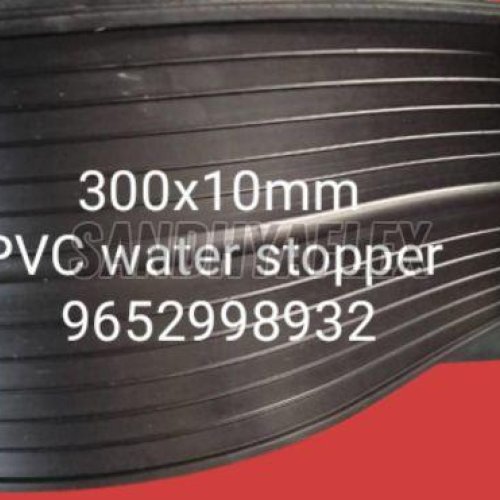
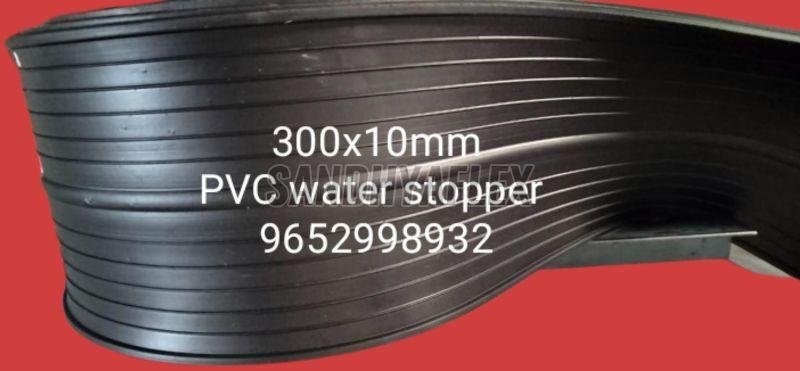
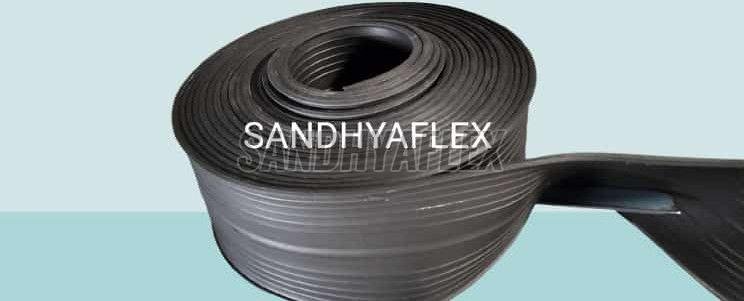
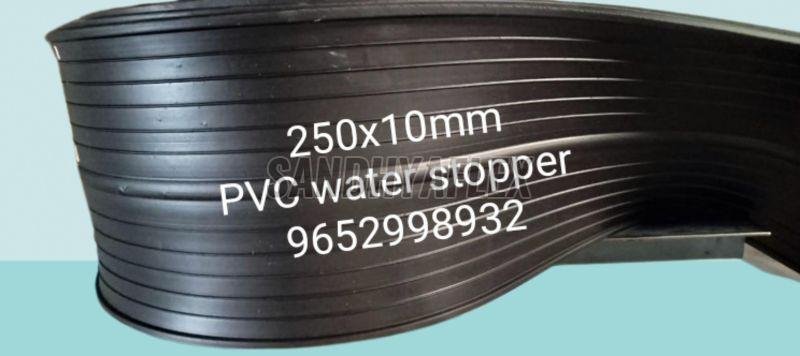
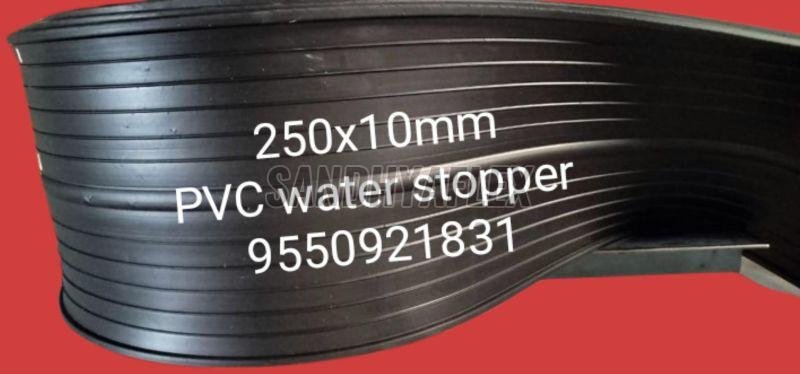
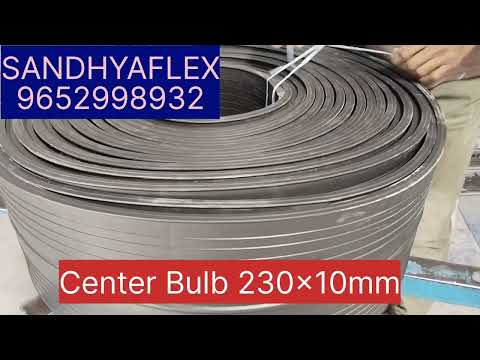
| Business Type | Manufacturer, Exporter |
| Brand Name | SANDHYAFLEX |
| Material | PVC |
| Application | Construction |
| Size | Standard |
| Certification | ISO |
| Feature | A PVC Water Stopper,Also Known As A Water Bar Or Water Seal,Is Commonly Used In Construction To Pr |
| Number Of Flower | Ribbed Type |
| Product Code | PVC Water Stopper |
| Port | Mumbai |
| Payment Terms | D/A |
| Delivery Time | Immidiate |
| Packaging Details | Export Packing Dimension in CBM PVC Water Stopper with Center Bulb Each Roll 25Mtr SR No Dimension Length Width Height CBM Weight kg/Roll 1 150x5mm 0.625 0.625 0.150 0.059 40 2 150x6mm 0.625 0.625 0.150 0.059 45 3 150x8mm 0.625 0.625 0.150 0.059 55 4 200x8mm 0.625 0.625 0.200 0.059 70 5 200x10mm 0.65 0.65 0.200 0.078 80 6 225x5mm 0.625 0.625 0.23 0.090 65 7 225x6mm 0.625 0.625 0.230 0.090 70 8 225x8mm 0.65 0.65 0.230 0.097 90 9 225x10mm 0.65 0.65 0.230 0.097 100 10 240x8mm 0.65 0.650 0.240 0.104 110 11 240x10mm 0.650 0.650 0.240 0.104 125 12 250x8mm 0.675 0.675 0.250 0.114 95 s13 250x10mm 0.675 0.675 0.250 0.114 115 14 300x6mm 0.700 0.700 0.300 0.147 95 15 300x8mm 0.725 0..725 0.300 0.158 115 16 300x10mm 0.750 0.750 0.300 0.169 145 17 300x12mm 0.775 0.775 0.300 0.18 140 18 300x15mm 0.800 0.800 0.300 0.192 160 Kiker Type 19 230x4mm 0.625 0.625 0.230 0.090 67 Dumbbell Type 20 230x8mm 0.650 0.650 0.230 0.097 87 21 230x10mm 0.650 0.650 0.230 0.097 100 |
A PVC water stopper is a specialized product used in construction to prevent the passage of water through joints or cracks in structures like concrete walls, floors, or foundations. Made from durable polyvinyl chloride (PVC), it is commonly used in projects such as basements, tunnels, reservoirs, and dams to create a watertight seal.
Key Characteristics:- Waterproofing: It is primarily designed to stop water from seeping through concrete joints.
- Durability: PVC is resistant to chemicals, corrosion, and physical wear, ensuring long-lasting protection.
- Flexibility: Many PVC water stoppers are designed to be flexible enough to handle joint movement caused by settling or thermal expansion of concrete.
- Easy Installation: They are typically installed during the construction phase by embedding them into the concrete formwork at the joint locations.
- Flat Type: A simple flat design, placed along the joint for basic water resistance.
- Profile Type: Features a more complex, ribbed or molded design for better sealing and enhanced durability.
- Flange Type: Comes with flanges for better bonding to the concrete and more effective sealing.
- Water Treatment Plants
- Dams
- Underground Parking
- Tunnels
- Swimming Pools
- Reservoirs
PVC water stoppers are essential in any construction project where water leakage could be a problem, helping ensure that structures remain dry and intact over time.
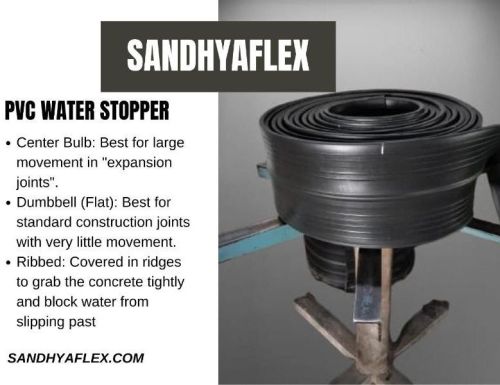
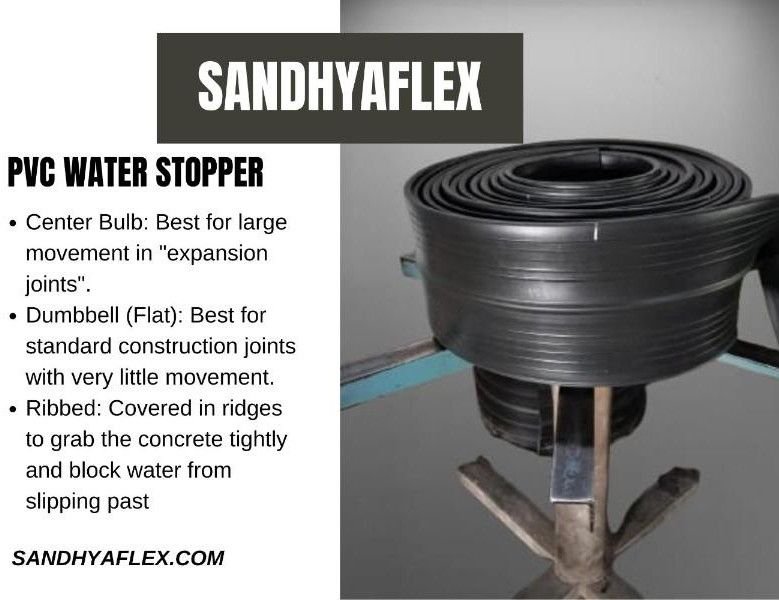
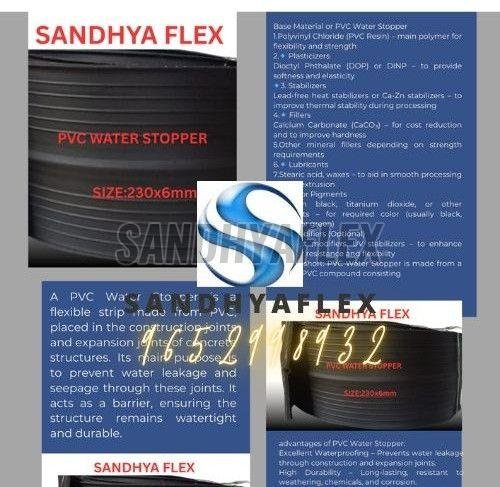
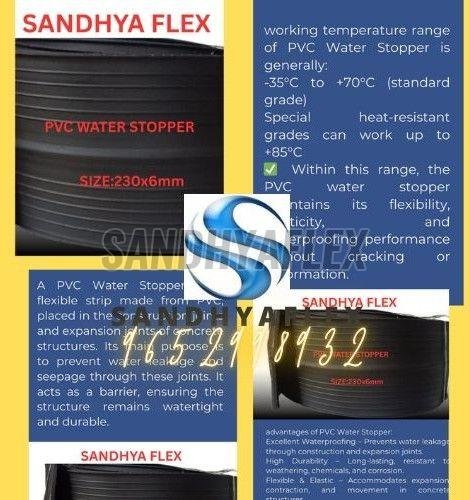
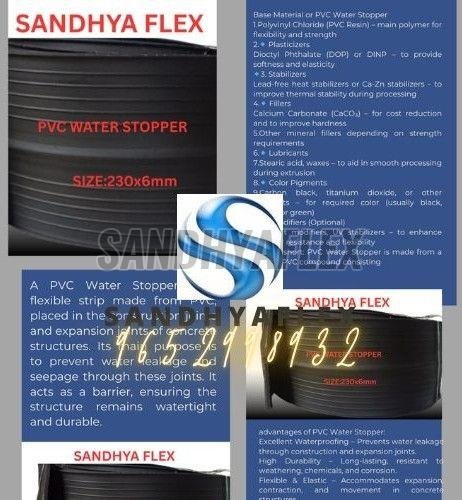
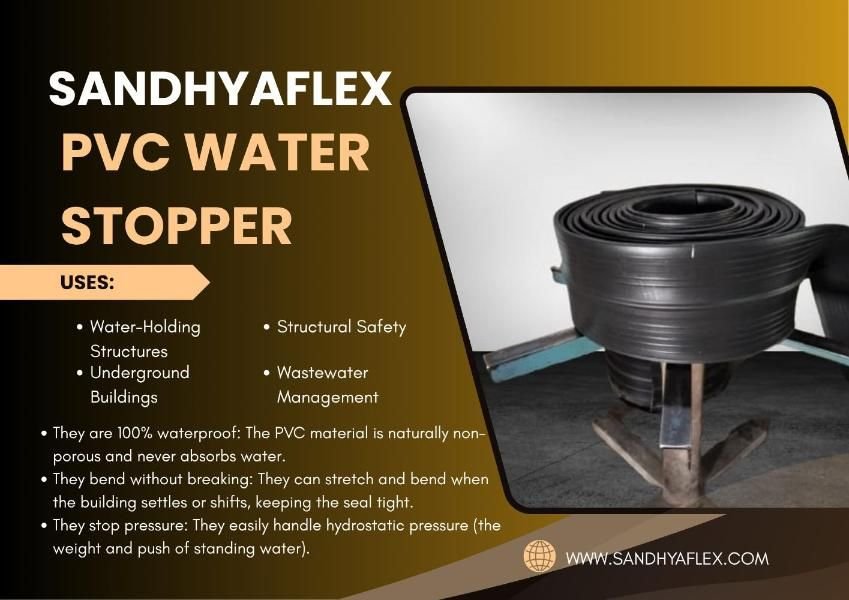
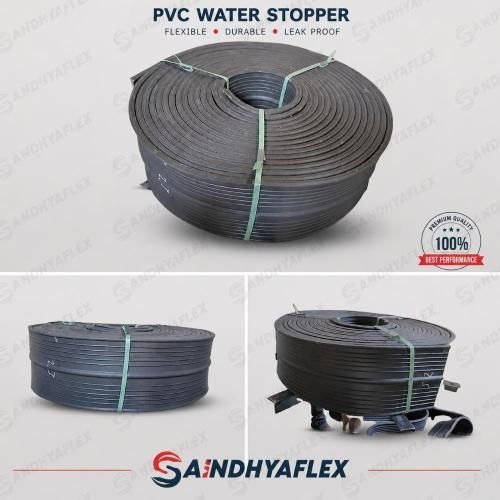
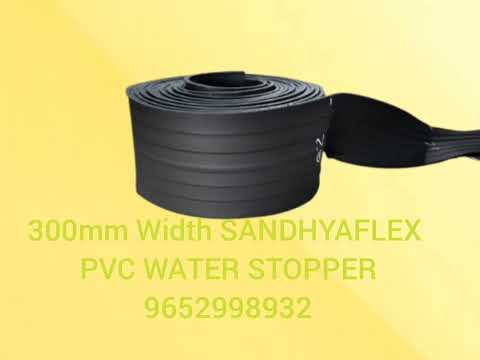
| Business Type | Manufacturer, Exporter, Supplier |
| Country of Origin | India |
| Brand Name | SNDHYAFLEX |
| Material | Pvc |
| Color | Black, Blue, White |
| Condition | New |
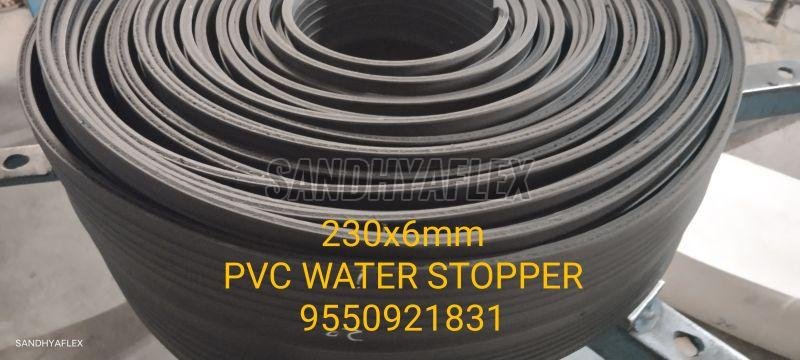
| Surface Treatment | The **230 × 6 Mm PVC Water Stopper (Sandhyaflex Or Similar Make)** Does Not Receive Any **separate M |
| Application | Construction |
| Size | 230x6mm |
| Length | 25-30mtr |
| Type | Center Bulb,Ribbed,Center bulb |
| Product Code | 230x6MMPVCWS |
| Port | mumbai |
| Payment Terms | T/T |
| Delivery Time | 2 to 7 days |
| Packaging Details | Packing each Roll 25Mtr with HDPE Cover |
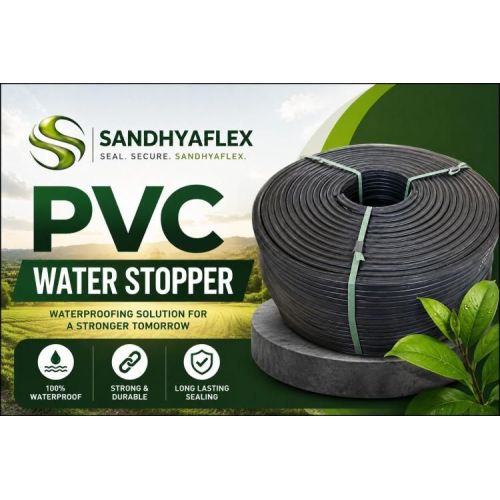
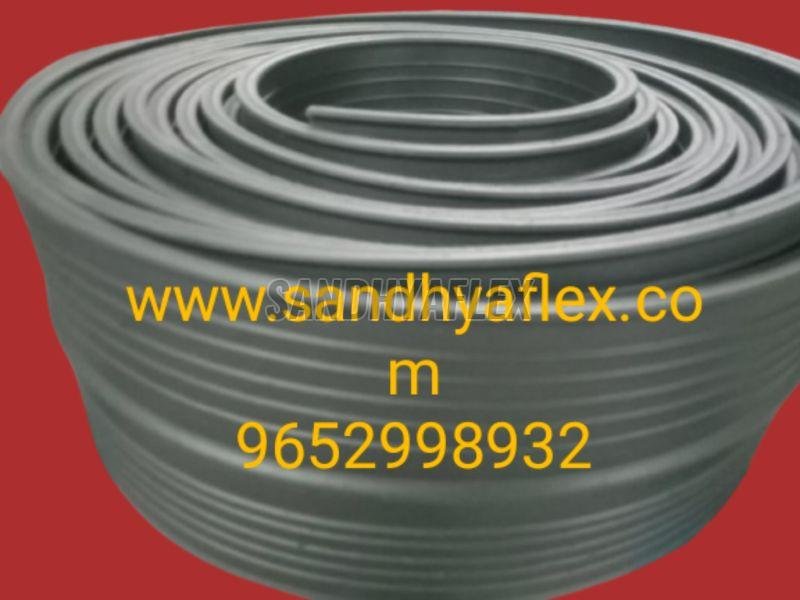
Here’s what I found for Sandhyaflex 230 × 6 mm PVC Water Stopper, along with product options, specifications, and tips. If you tell me the joint type, hydrostatic pressure, and installation environment, I can help pick the most suitable profile.
What is “230 × 6 mm PVC Water Stopper” (Sandhyaflex)
From Sandhyaflex / Sandhya websites:
-
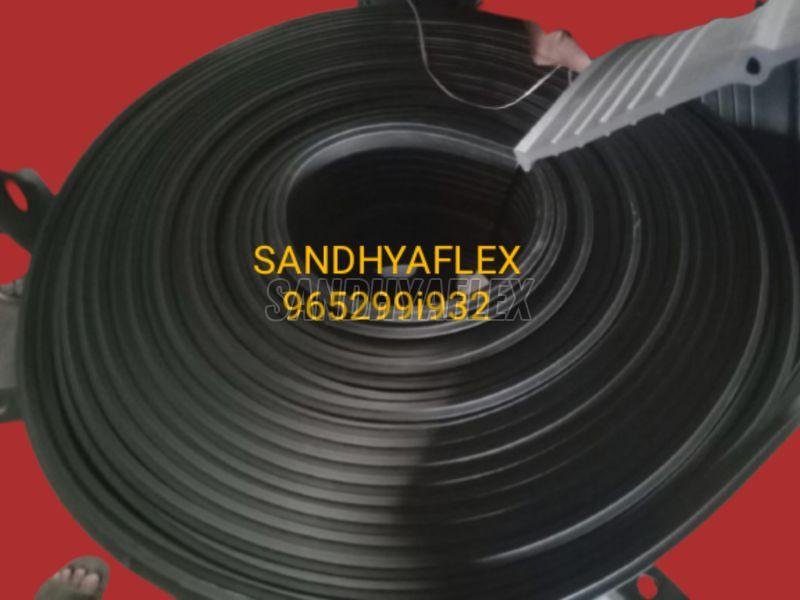
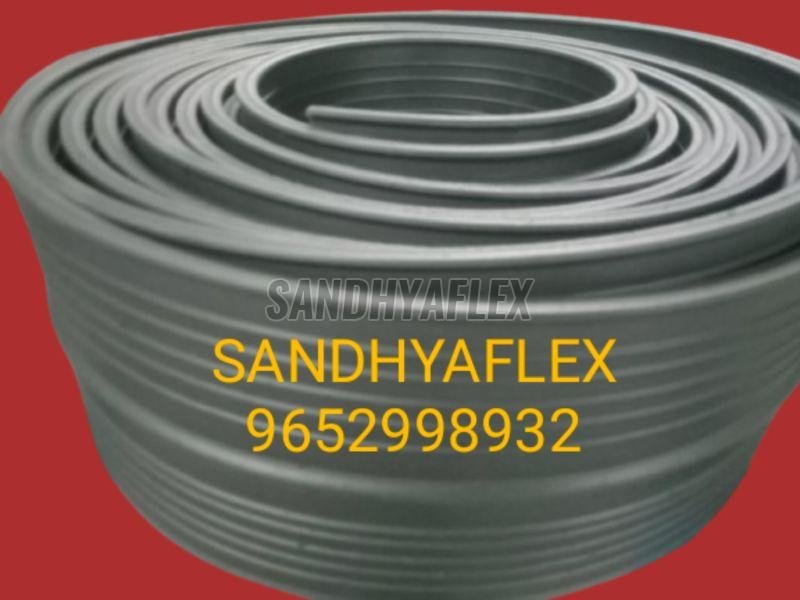
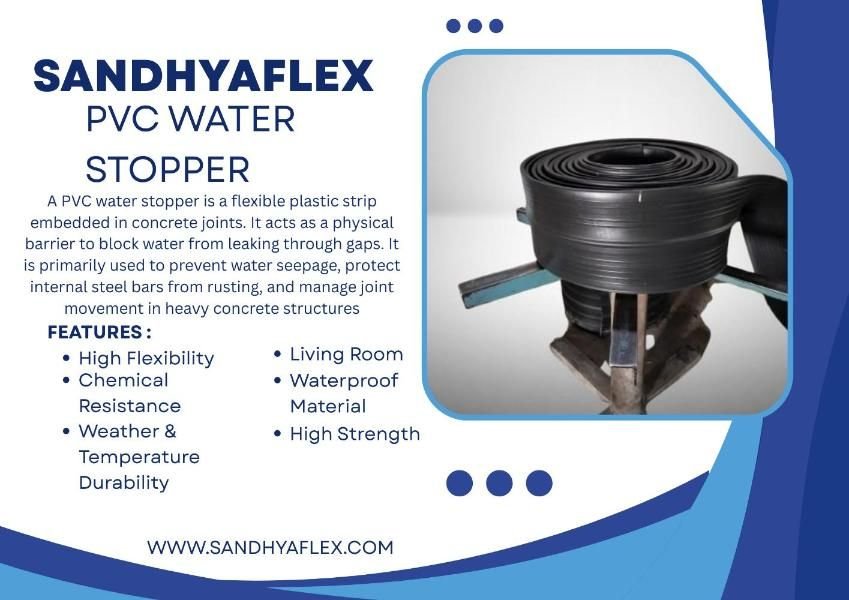
230 × 6 mm refers to a water-stop strip that is 230 mm wide and 6 mm thick (usually the thickness of the ribs / body). (
| Business Type | Manufacturer, Exporter, Supplier, Retailer |
| Brand Name | SNDHYAFLEX |
| Material | Pvc |
| Condition | New |
| 9 inch width centre bulb | NA |
| Color | Black |
| Surface Treatment | Smooth |
| Application | Construction |
| Size | 150x8mm |
| Type | Center bulb |
| Country of Origin | India |
| Product Code | pvcws |
| Port | Mumbai |
| Delivery Time | 2 days |
| Packaging Details | As per specification. |
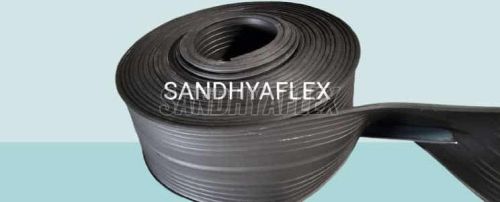
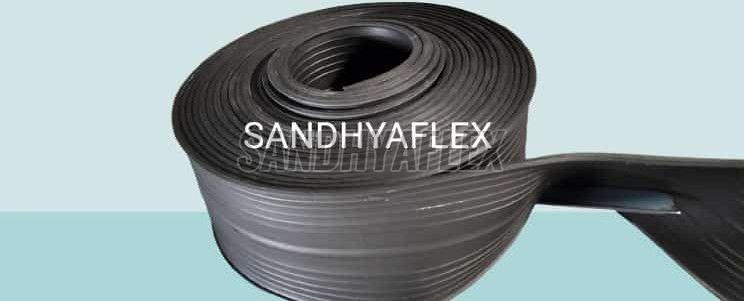
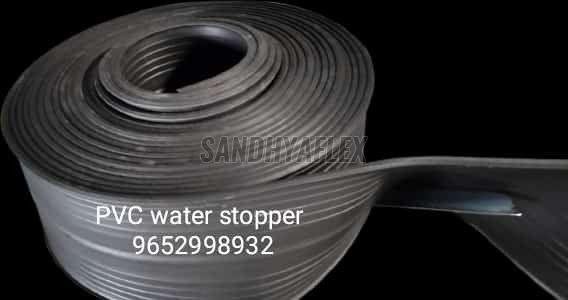
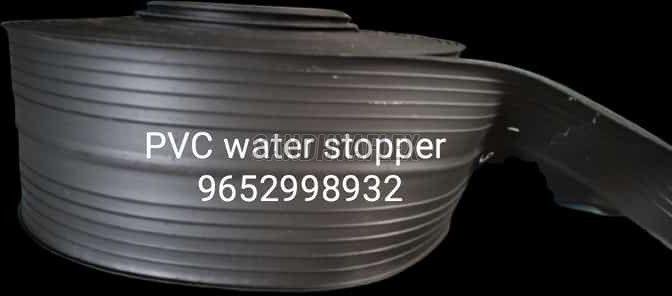
A center bulb PVC water stopper is a type of water stop used in construction to provide a water-tight seal in joints and expansion or construction joints. The center bulb design is a common feature in certain types of water stoppers, offering specific benefits in preventing water ingress. Here are some common uses and features of center bulb PVC water stoppers: 1. **Construction Joints:** - Center bulb PVC water stoppers are often used in construction joints where two concrete structures meet. These joints are prone to water penetration, and the water stopper helps prevent leakage and seepage. 2. **Expansion Joints:** - In structures that experience thermal expansion and contraction, such as bridges or large concrete structures, expansion joints are installed. Center bulb PVC water stoppers are placed in these joints to accommodate movement while maintaining a water-tight seal. 3. **Basement Construction:** - During the construction of basements or below-grade structures, water stoppers are crucial to prevent water from entering the structure. Center bulb PVC water stoppers are effective in sealing joints in these applications. 4. **Water Retaining Structures:** - Structures like reservoirs, water tanks, and swimming pools often use water stoppers to prevent water leakage. Center bulb PVC water stoppers are suitable for these applications due to their flexibility and water-sealing properties. 5. **Tunnels and Subway Construction:** - In underground constructions like tunnels or subway systems, where water pressure may be a concern, water stoppers are employed. Center bulb PVC water stoppers help maintain a watertight seal even under pressure. 6. **Swimming Pools and Water Features:** - For the construction of swimming pools and decorative water features, water stoppers are used to prevent water from seeping into surrounding structures. Center bulb PVC water stoppers can accommodate the dynamic conditions in these environments. 7. **Dams and Canals:** - Water stoppers play a critical role in dams and canals to control water flow and prevent seepage. The flexibility and durability of PVC water stoppers make them suitable for these large-scale projects. 8. **Road and Bridge Construction:** - In road construction, particularly in bridges and overpasses, water stoppers are used to maintain the integrity of the structures. Center bulb PVC water stoppers help in creating a secure barrier against water infiltration. Center bulb PVC water stoppers are designed to accommodate movement and deformation in joints while maintaining an effective water seal. Their flexibility, durability, and resistance to chemicals make them a popular choice in various construction projects where preventing water ingress is crucial.PVC water stoppers are specialized construction materials used to prevent water from penetrating through joints in concrete structures. Here's how they are commonly used: 1. **Construction Joints**: PVC water stoppers are installed at construction joints in concrete structures such as basements, retaining walls, swimming pools, dams, and water tanks. These joints are vulnerable points where water can seep through, leading to leaks and structural damage. 2. **Expansion Joints**: In large concrete structures where thermal expansion and contraction occur, PVC water stoppers are used to seal expansion joints. These joints accommodate movement caused by temperature changes, preventing water ingress and maintaining the integrity of the structure. 3. **Joint Sealing**: PVC water stoppers are inserted into the joint gap between adjacent concrete sections before pouring concrete. They act as a barrier, preventing water from infiltrating the joint and causing deterioration over time. 4. **Waterproofing**: PVC water stoppers are integral components of waterproofing systems in concrete construction. By effectively sealing joints and expansion points, they help create a watertight barrier, prev
| Business Type | Manufacturer, Exporter |
| Material | Pvc |
| Condition | New |
| Application | Construction |
| Length | 25-30mtr |
| Feature | A PVC Water Stopper,Also Known As A Water Bar Or Water Seal,Is Commonly Used In Construction To Pr |
| Pattern | Ribbed |
| Dimension | 200-250mm |
| Product Code | PVC Water Stopper |
| Port | Mumbai |
| Payment Terms | D/A |
| Delivery Time | Immidiate |
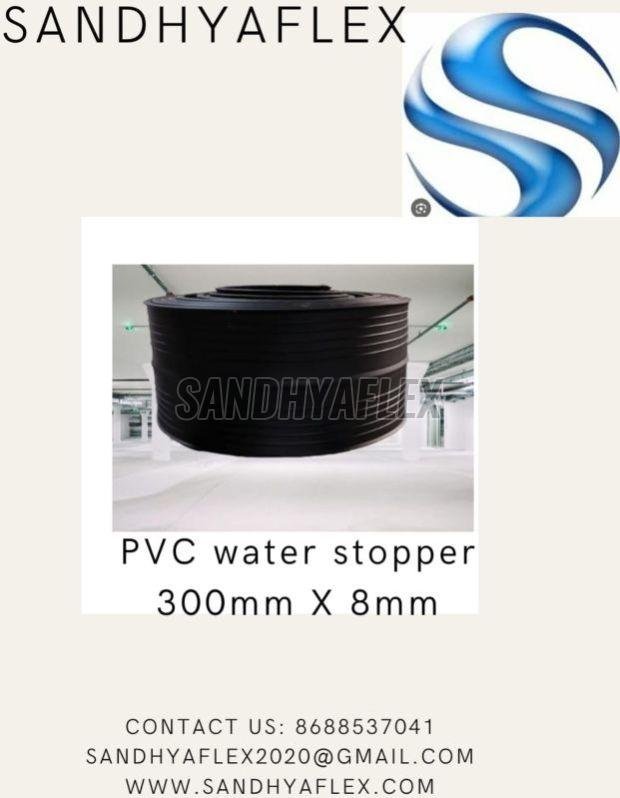
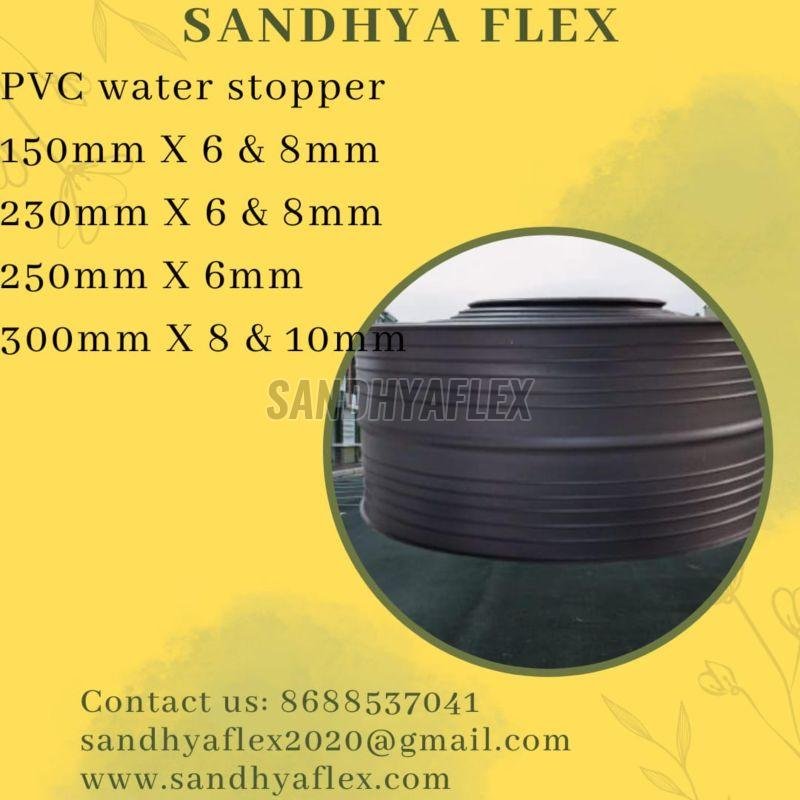
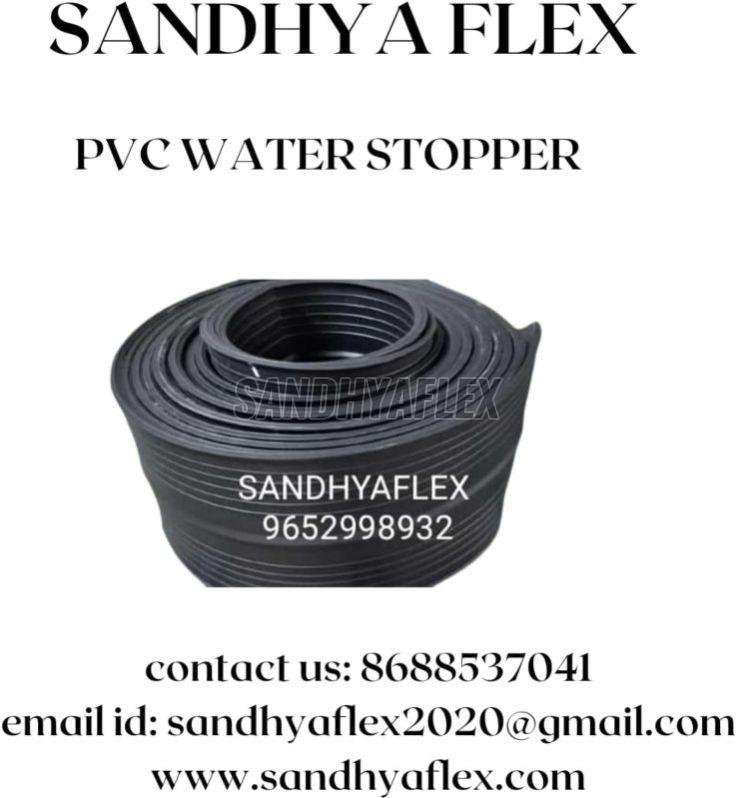
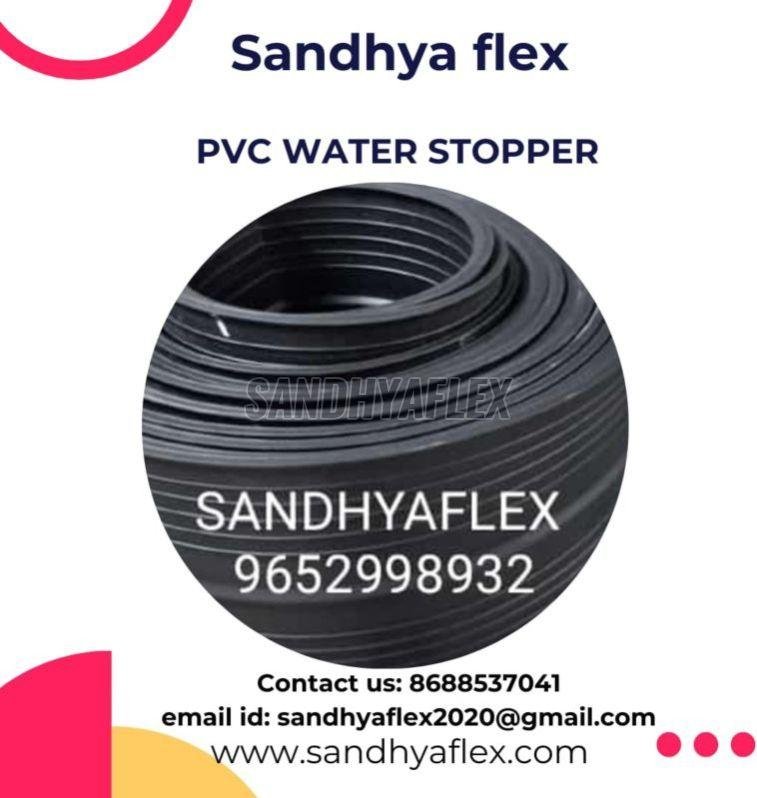
A PVC water stopper is a construction material commonly used in concrete structures to prevent the passage of water through construction joints, expansion joints, and other openings. It's typically made of high-quality polyvinyl chloride (PVC) and is used to ensure a waterproof seal in various applications, including basements, tunnels, reservoirs, swimming pools, and water treatment plants.
Key Features of PVC Water Stoppers:
- Waterproofing: The main function is to prevent water from seeping through joints in concrete structures.
- Durability: Resistant to chemical attack, corrosion, and degradation over time, making it ideal for long-lasting applications.
- Flexibility: PVC water stoppers are flexible and can expand or contract to accommodate joint movements.
- Ease of Installation: They are relatively easy to install during the construction phase, as they can be embedded in the concrete joints.
- Variety of Designs: Available in different shapes and sizes to suit specific joint configurations (e.g., straight, L-shaped, or T-shaped).
- Cost-effective: PVC is relatively affordable, providing an economical solution for waterproofing needs.
Applications:
- Foundation and basement walls: To prevent water ingress in subterranean structures.
- Water tanks and reservoirs: To maintain water-tightness.
- Bridge decks and tunnels: To protect against water penetration.
- Swimming pools: To ensure a durable water seal.
Installation Tips:
- Placement: It is installed in the construction joint or where two concrete surfaces meet.
- Positioning: Careful positioning within the formwork is crucial for ensuring its effectiveness.
- Sealing: After concrete is poured, the water stopper should be carefully checked to ensure there are no gaps or defects.
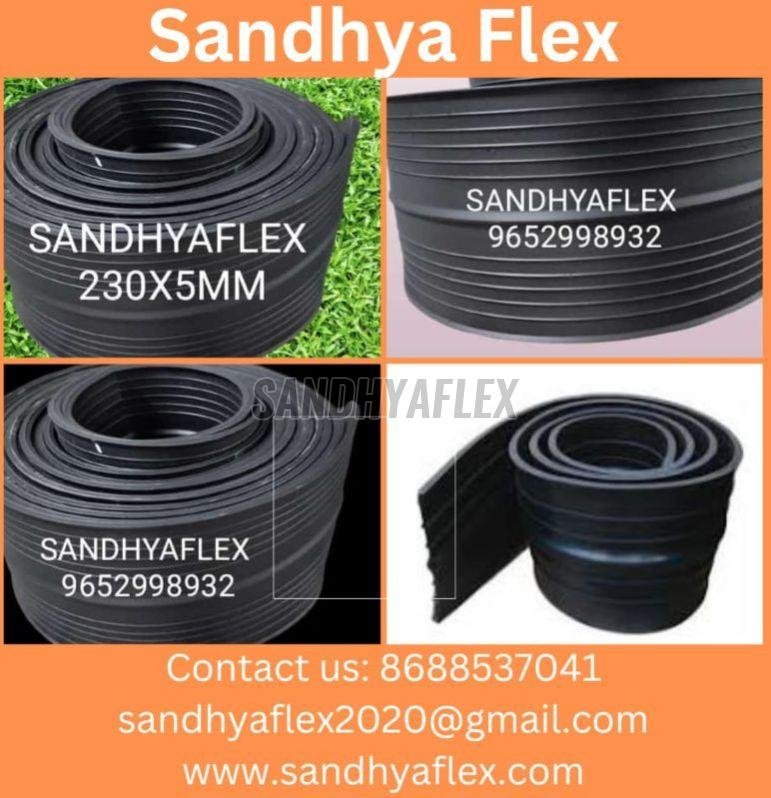
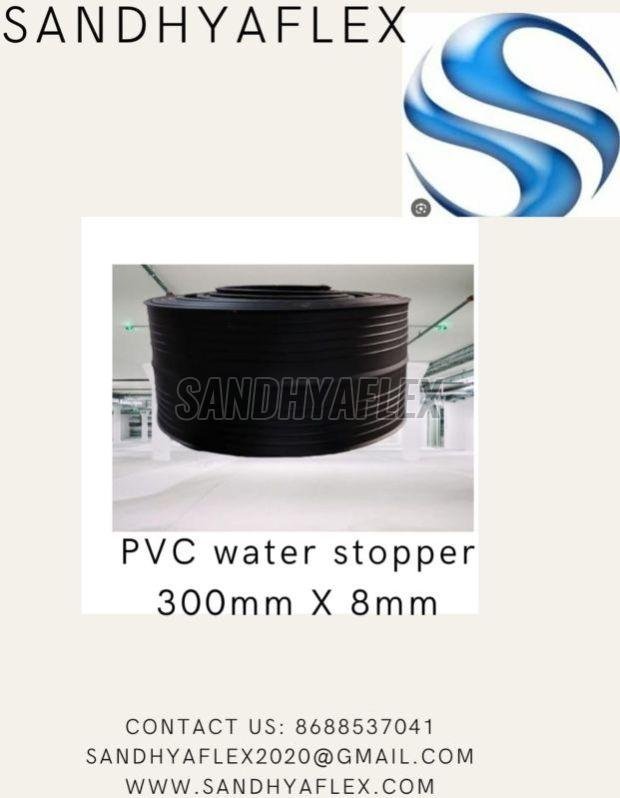

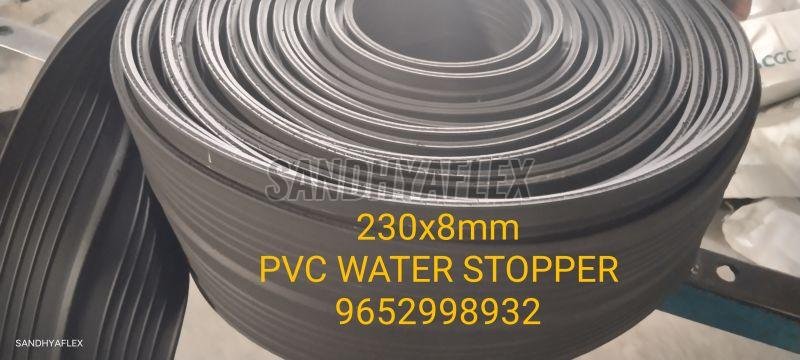
| Business Type | Manufacturer, Exporter |
| Length | 25-30mtr |
| Size | 230x8mm |
| Application | Construction |
| Surface Treatment | Water Proofing |
| Condition | New |
| Material | Pvc |
| Brand Name | SNDHYAFLEX |
| Product Code | 230PVCWS |
| Port | mumbai |
| Payment Terms | D/P, Other |
| Delivery Time | 2 to 7 days |
| Packaging Details | packing in 25Mtr/Roll |
A **250mm x 8mm PVC Water Stopper** refers to a specific size of water stopper used for preventing water seepage through joints in concrete structures. Here\\\'s a breakdown of its details:
\\n\\n
### Specifications:
\\n- **Width**: 250 mm (25 cm), indicating the horizontal width of the water stopper.
\\n- **Thickness**: 8 mm, which refers to the overall thickness of the PVC material.
\\n\\n
### Characteristics:
\\n- **Material**: Made of flexible PVC (Polyvinyl Chloride), providing durability, flexibility, and resistance to chemicals and weather conditions.
\\n- **Center Bulb or Flat Profile**: Depending on the design, it could either have a center bulb (for expansion joints) or be flat (for construction or contraction joints).
\\n\\n
### Applications:
\\n- **Water Retaining Structures**: Commonly used in water tanks, reservoirs, dams, and swimming pools.
\\n- **Underground Structures**: Basements, tunnels, and retaining walls to stop water seepage through construction joints.
\\n- **Concrete Expansion Joints**: In bridges, culverts, and other large concrete structures where water penetration is a concern.
\\n\\n
### Advantages:
\\n- **Waterproofing**: Effectively seals joints to prevent water leakage.
\\n- **Flexibility**: Accommodates movement in the structure while maintaining a waterproof seal.
\\n- **Durability**: High resistance to weathering, chemicals, and environmental stress.
\\n\\n
The **250mm x 8mm PVC Water Stopper** is used in medium- to large-scale concrete structures, providing a robust and durable solution for waterproofing joints.
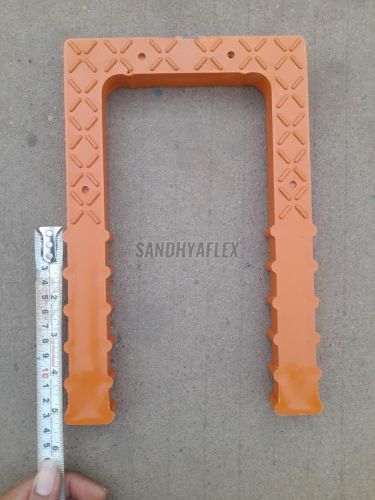
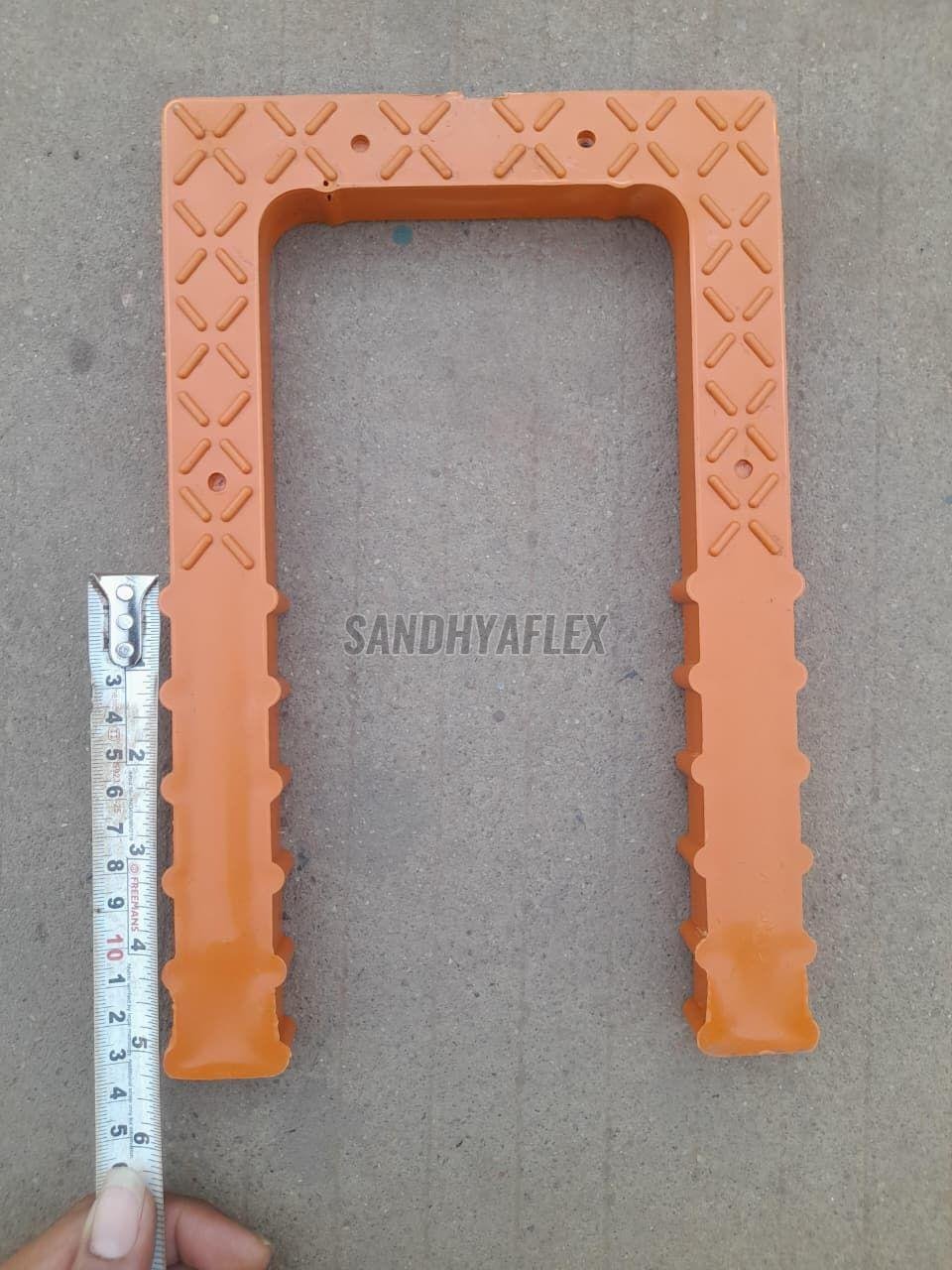
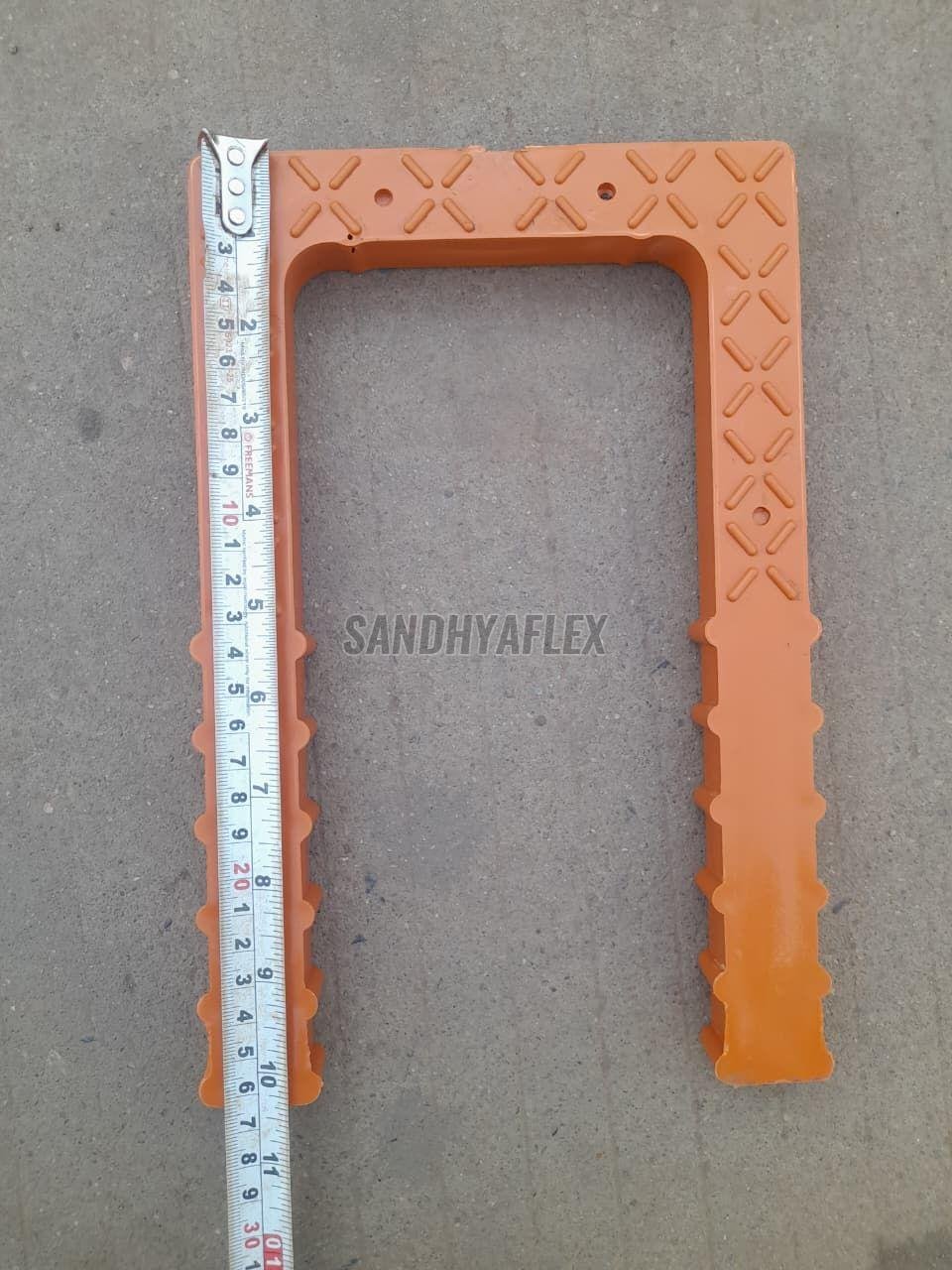
| Business Type | Manufacturer, Exporter, Supplier |
| Size | Varies |
| Application | Welding Purpose |
| Shape | Round |
| Material | Pvc |
| Brand Name | sandhyaflex,Got it! Sounds like you're asking about the **"working pressure"** as an **attribute value**—possibly in a technical document, database, or HTML/XML context. Here’s how it breaks down in different co |
| Power Source | Electric |
| Certification | ISI Certified |
| Product Code | SF-RSB |
| Port | depends |
| Delivery Time | negotiable |
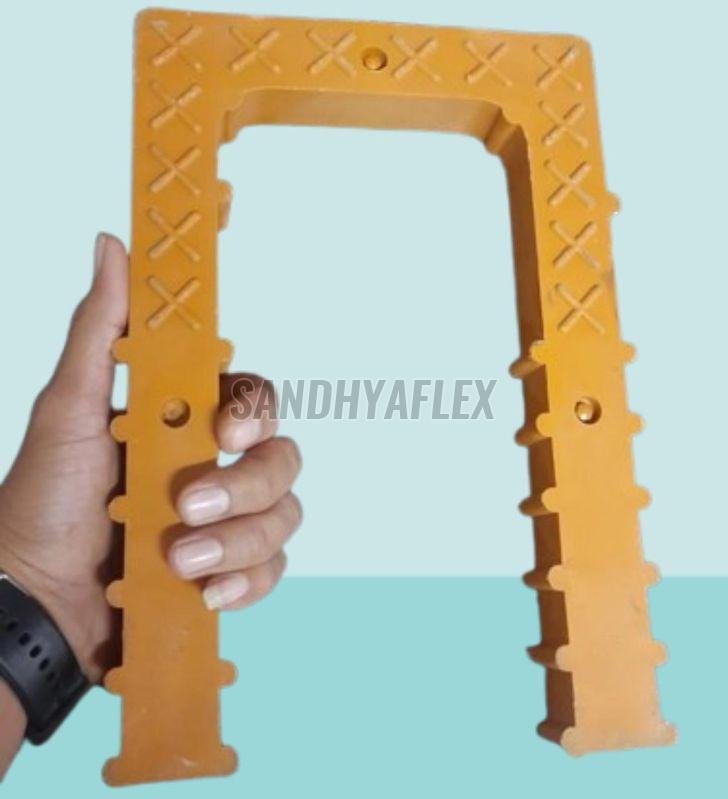
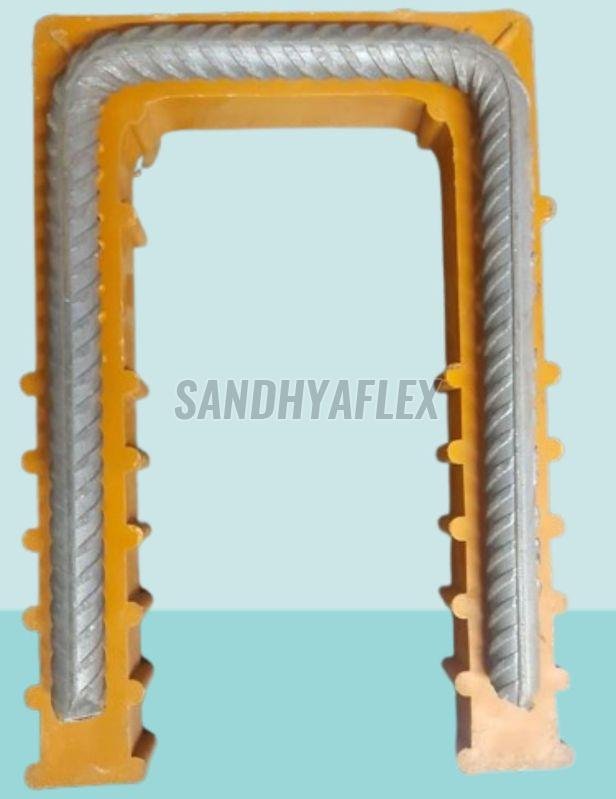
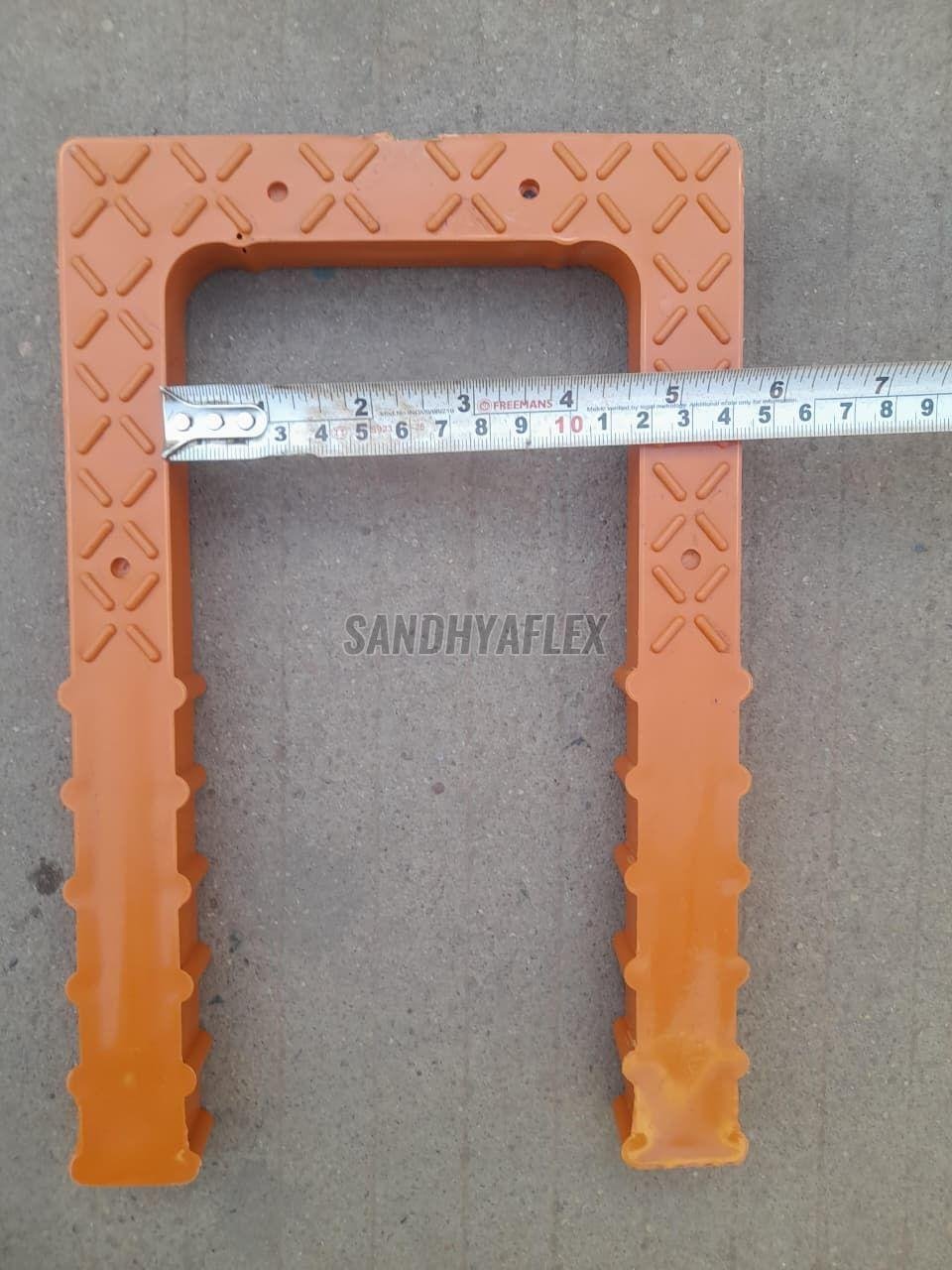
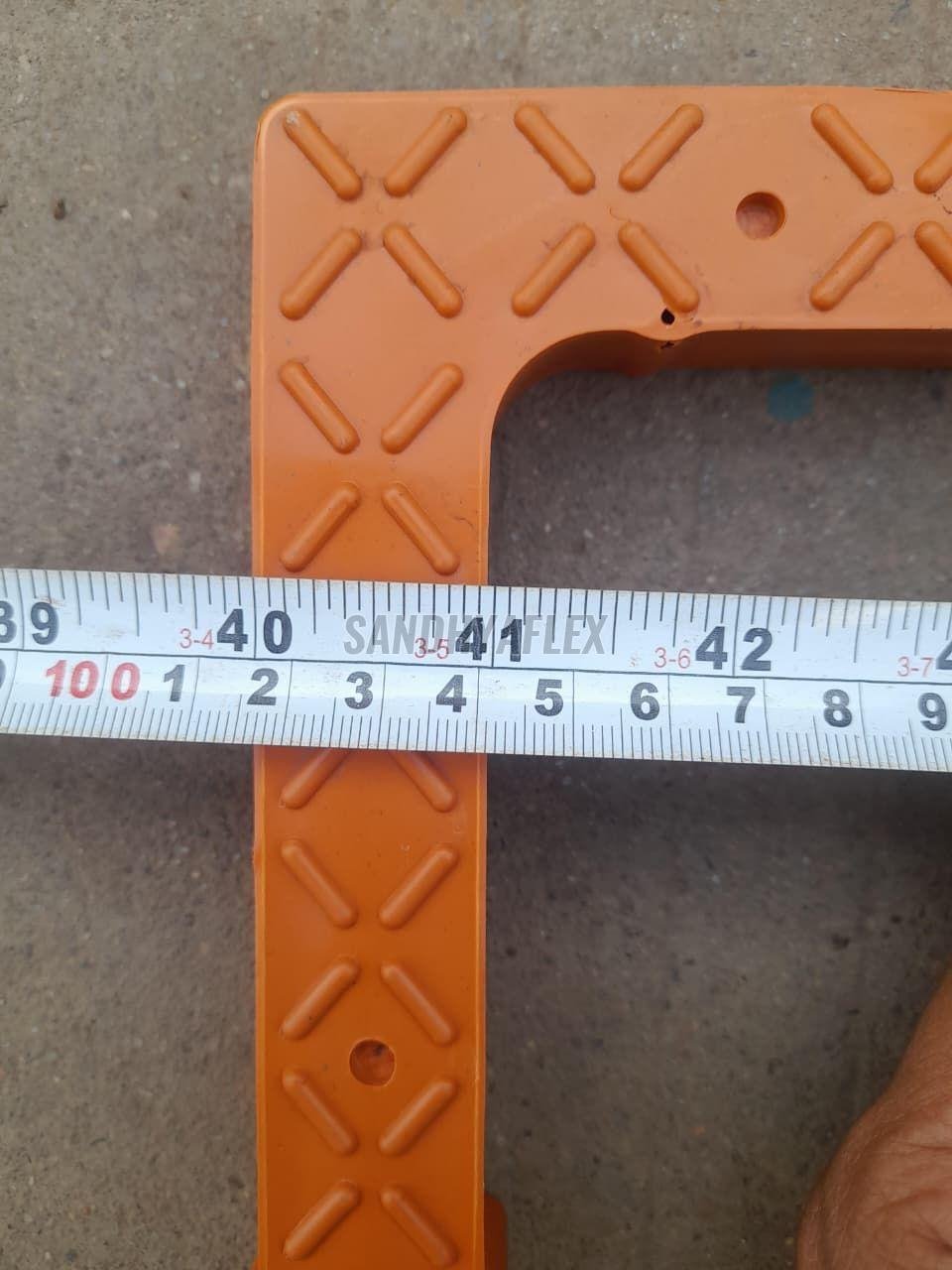
The Sandhyaflex 265x165x30mm 16mm Rod PVC Rung seems to refer to a product made of PVC, similar to the water stopper but designed for a different application, such as construction or other industrial uses.
However, the term "Rung" could be a bit ambiguous in this context. Typically, rungs are the horizontal steps or bars in a ladder or scaffold, or it could be referring to a similar structure or component in construction systems, especially those used in areas like drainage or water containment.
If this 265x165x30mm 16mm Rod PVC Rung is related to reinforcement, support, or a structural component, then it could potentially be a part of a system used for creating physical supports or frameworks in various construction scenarios.
If the product is related to:
-
Support/Structure (e.g., Ladder or Frame):
- It could be used as a component for structural applications like scaffolding or ladders.
- The 16mm rod would offer the required strength and durability for supporting heavy weights or pressures in construction.
-
Waterproof/Sealing Solutions (e.g., like a Water Stopper but for a different application):
- If it has a similar function to a water stopper, the material and dimensions would still work well in creating a watertight barrier for joints or seals in concrete or industrial structures.
-
PVC Reinforcement:
- The PVC material would be resistant to water and chemicals, making it useful for long-term durability in harsh environments, such as in water retention systems.
| Business Type | Manufacturer, Exporter |
| Length | 25-30mtr |
| Size | 300 Mm Width |
| Application | Construction |
| Surface Treatment | PVC Water Stoppers, Often Used In Construction Projects Like Dams, Tunnels, And Foundations, Are Ess |
| Condition | New |
| Material | Pvc |
| Brand Name | SANDHYAFLEX |
| Product Code | PVC Water Stopper |
| Port | Mumbai |
| Payment Terms | D/A |
| Delivery Time | 2-4days |
| Packaging Details | Export Packing Dimension in CBM PVC Water Stopper with Center Bulb Each Roll 25Mtr SR No Dimension Length Width Height CBM Weight kg/Roll 1 150x5mm 0.625 0.625 0.150 0.059 40 2 150x6mm 0.625 0.625 0.150 0.059 45 3 150x8mm 0.625 0.625 0.150 0.059 55 4 200x8mm 0.625 0.625 0.200 0.059 70 5 200x10mm 0.65 0.65 0.200 0.078 80 6 225x5mm 0.625 0.625 0.23 0.090 65 7 225x6mm 0.625 0.625 0.230 0.090 70 8 225x8mm 0.65 0.65 0.230 0.097 90 9 225x10mm 0.65 0.65 0.230 0.097 100 10 240x8mm 0.65 0.650 0.240 0.104 110 11 240x10mm 0.650 0.650 0.240 0.104 125 12 250x8mm 0.675 0.675 0.250 0.114 95 s13 250x10mm 0.675 0.675 0.250 0.114 115 14 300x6mm 0.700 0.700 0.300 0.147 95 15 300x8mm 0.725 0..725 0.300 0.158 115 16 300x10mm 0.750 0.750 0.300 0.169 145 17 300x12mm 0.775 0.775 0.300 0.18 140 18 300x15mm 0.800 0.800 0.300 0.192 160 Kiker Type 19 230x4mm 0.625 0.625 0.230 0.090 67 Dumbbell Type 20 230x8mm 0.650 0.650 0.230 0.097 87 21 230x10mm 0.650 0.650 0.230 0.097 100 |
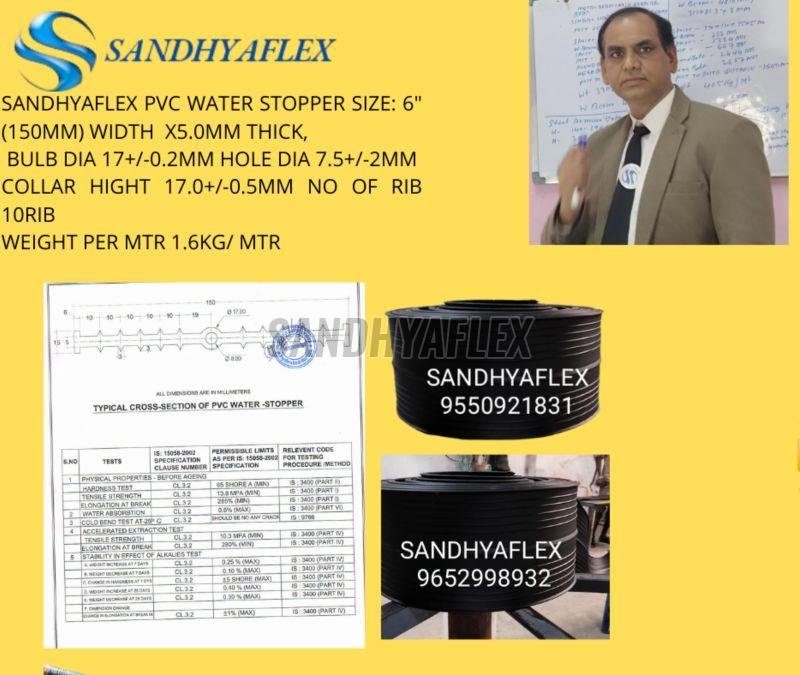
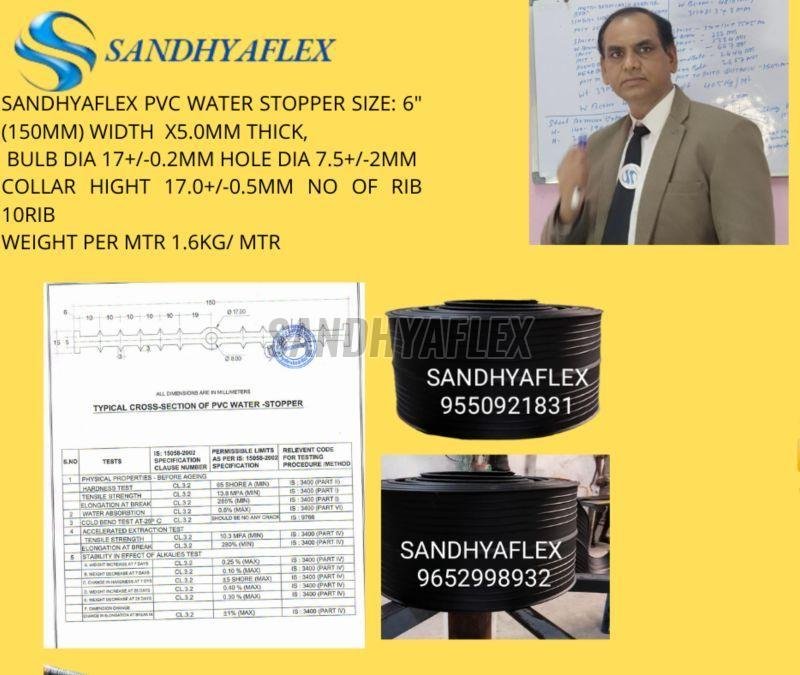
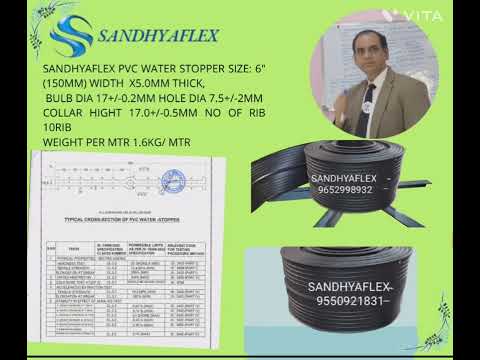
A PVC water stopper is a specialized product used in construction to prevent the passage of water through joints or cracks in structures like concrete walls, floors, or foundations. Made from durable polyvinyl chloride (PVC), it is commonly used in projects such as basements, tunnels, reservoirs, and dams to create a watertight seal.
Key Characteristics:- Waterproofing: It is primarily designed to stop water from seeping through concrete joints.
- Durability: PVC is resistant to chemicals, corrosion, and physical wear, ensuring long-lasting protection.
- Flexibility: Many PVC water stoppers are designed to be flexible enough to handle joint movement caused by settling or thermal expansion of concrete.
- Easy Installation: They are typically installed during the construction phase by embedding them into the concrete formwork at the joint locations.
- Flat Type: A simple flat design, placed along the joint for basic water resistance.
- Profile Type: Features a more complex, ribbed or molded design for better sealing and enhanced durability.
- Flange Type: Comes with flanges for better bonding to the concrete and more effective sealing.
- Water Treatment Plants
- Dams
- Underground Parking
- Tunnels
- Swimming Pools
- Reservoirs
PVC water stoppers are essential in any construction project where water leakage could be a problem, helping ensure that structures remain dry and intact over time.
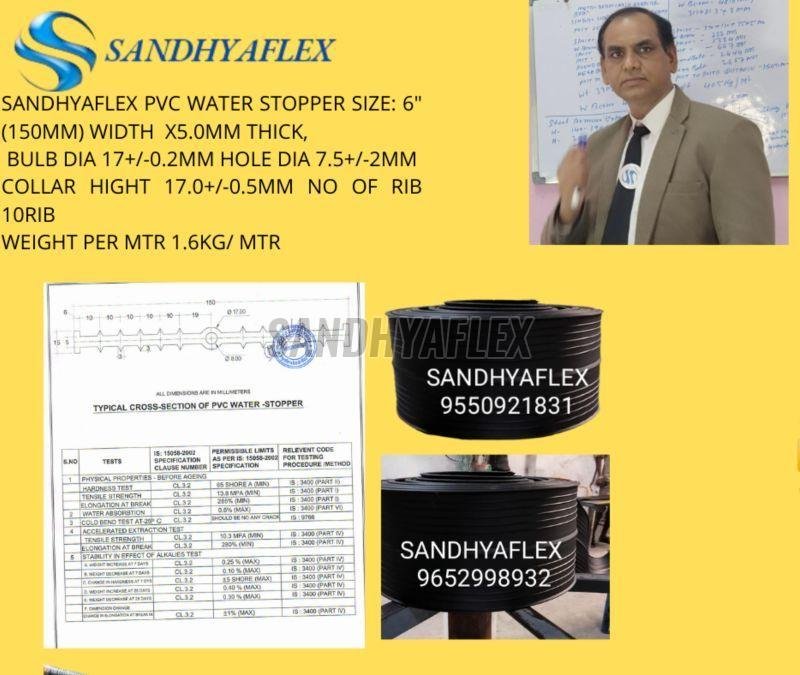
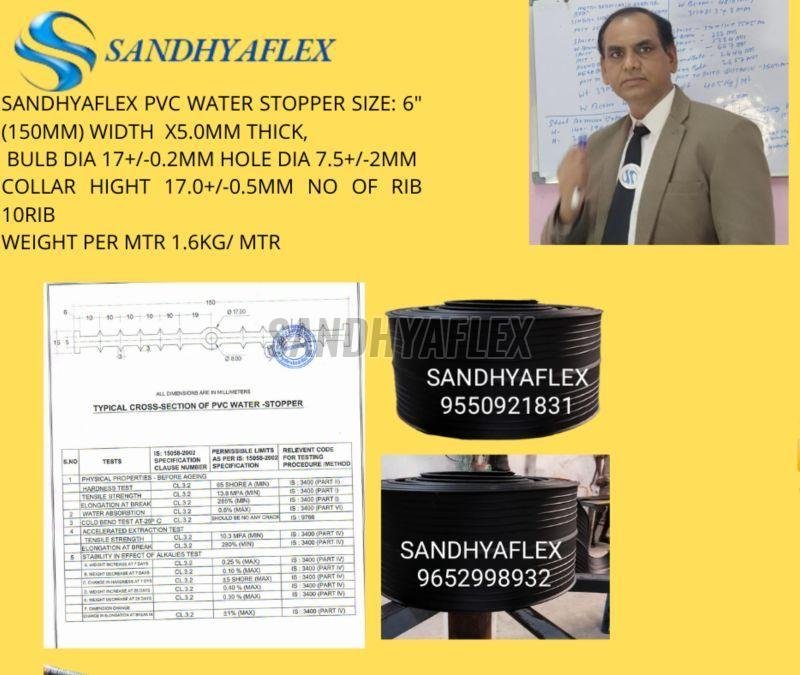
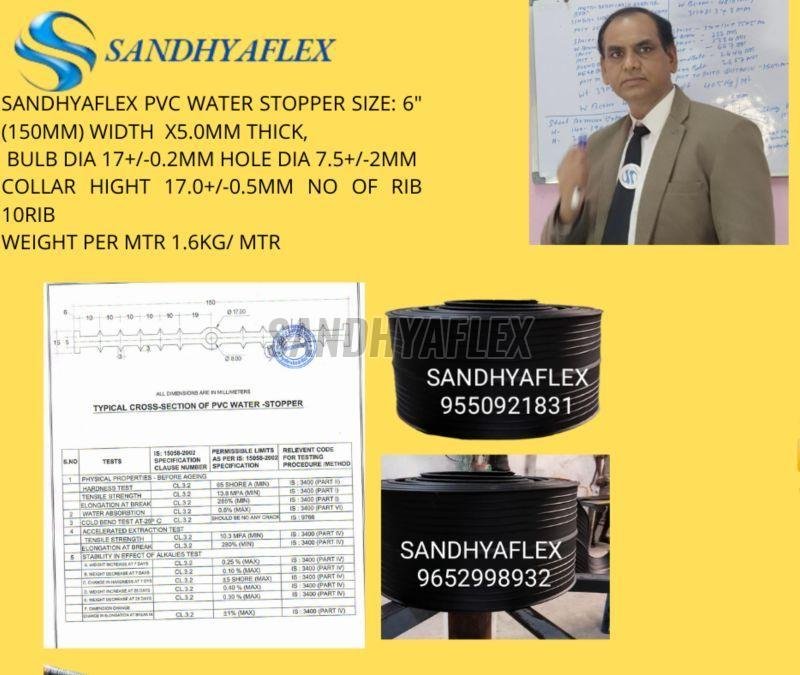
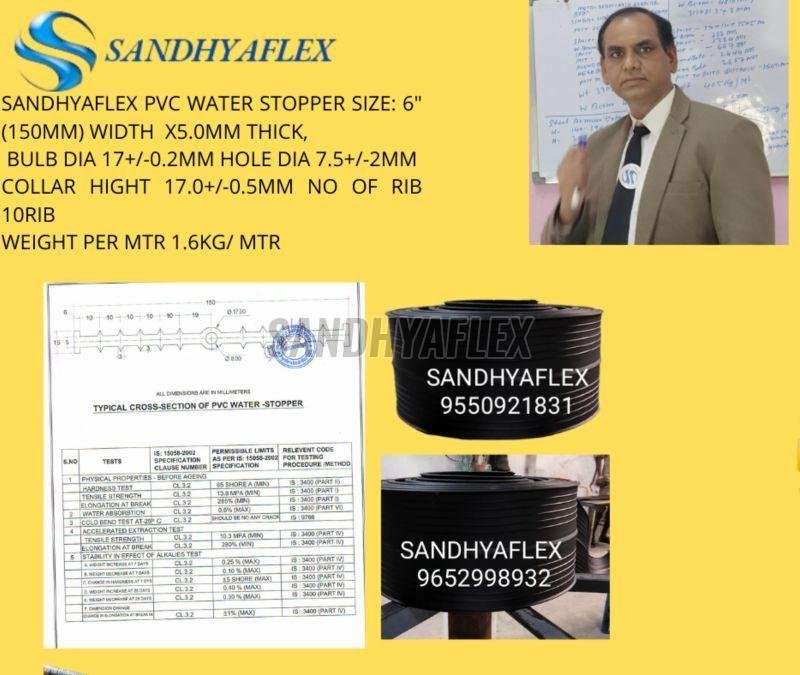
| Business Type | Manufacturer, Exporter, Supplier |
| Condition | New |
| Brand Name | SANDHYAFLEX |
| Material | Pvc |
| Application | Construction |
| Length | 25-30mtr |
| Feature | Best Quality, High Quality |
| Country of Origin | India |
| Product Code | PVC Water Stopper |
| Port | Mumbai |
| Payment Terms | D/A |
| Delivery Time | 2-4days |
| Packaging Details | Export Packing Dimension in CBM PVC Water Stopper with Center Bulb Each Roll 25Mtr SR No Dimension Length Width Height CBM Weight kg/Roll 1 150x5mm 0.625 0.625 0.150 0.059 40 2 150x6mm 0.625 0.625 0.150 0.059 45 3 150x8mm 0.625 0.625 0.150 0.059 55 4 200x8mm 0.625 0.625 0.200 0.059 70 5 200x10mm 0.65 0.65 0.200 0.078 80 6 225x5mm 0.625 0.625 0.23 0.090 65 7 225x6mm 0.625 0.625 0.230 0.090 70 8 225x8mm 0.65 0.65 0.230 0.097 90 9 225x10mm 0.65 0.65 0.230 0.097 100 10 240x8mm 0.65 0.650 0.240 0.104 110 11 240x10mm 0.650 0.650 0.240 0.104 125 12 250x8mm 0.675 0.675 0.250 0.114 95 s13 250x10mm 0.675 0.675 0.250 0.114 115 14 300x6mm 0.700 0.700 0.300 0.147 95 15 300x8mm 0.725 0..725 0.300 0.158 115 16 300x10mm 0.750 0.750 0.300 0.169 145 17 300x12mm 0.775 0.775 0.300 0.18 140 18 300x15mm 0.800 0.800 0.300 0.192 160 Kiker Type 19 230x4mm 0.625 0.625 0.230 0.090 67 Dumbbell Type 20 230x8mm 0.650 0.650 0.230 0.097 87 21 230x10mm 0.650 0.650 0.230 0.097 100 |
\\n
A PVC water stopper is a type of sealing material commonly used in construction and civil engineering projects to prevent the flow of water through joints in concrete structures. These water stoppers are made from high-quality PVC (polyvinyl chloride), a durable, flexible material that is resistant to water, chemicals, and temperature fluctuations.
\\nKey Features of PVC Water Stoppers:- \\n
- Waterproofing: PVC water stoppers are designed to effectively seal joints and cracks, preventing water infiltration and leakage in structures like basements, dams, swimming pools, and tunnels. \\n
- Durability: PVC is resistant to corrosion, which makes the water stopper long-lasting and effective even under harsh conditions. \\n
- Flexibility: The flexibility of PVC allows it to adjust to slight movements in the structure, ensuring the seal remains intact over time. \\n
- Ease of Installation: PVC water stoppers can be easily integrated into the construction process, usually placed in construction joints before pouring the concrete. \\n
- Chemical Resistance: PVC water stoppers are resistant to a wide range of chemicals and can be used in environments where exposure to chemicals is common. \\n
- \\n
- Construction: Used in concrete joints of foundations, water treatment plants, dams, swimming pools, reservoirs, and tunnels. \\n
- Underground Structures: Effective in sealing joints in underground structures exposed to groundwater. \\n
- Expansion and Contraction: Accommodates the expansion and contraction of concrete structures, maintaining the waterproof seal. \\n
PVC water stoppers come in various shapes, such as U-shaped, T-shaped, or ribbed, depending on the specific requirements of the project. They are available in different sizes to suit different joint widths and water pressure conditions.
\\n
| Business Type | Exporter |
| Brand Name | SNDHYAFLEX |
| Material | Pvc |
| Condition | New |
| Application | Construction |
| Size | 150mm Width |
| Length | 25-30mtr |
| 9 inch width centre bulb | NA |
| Color | Black |
| Type | Center bulb |
| Country of Origin | India |
| Product Code | 150mmPVCWS |
| Port | mumbai |
| Delivery Time | 2 to 7 days |
| Packaging Details | 25mtr/Roll |
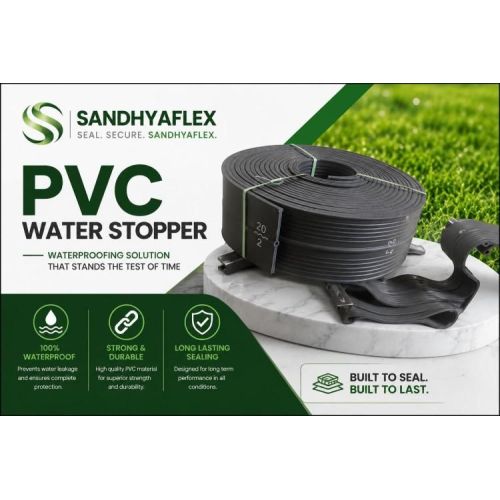
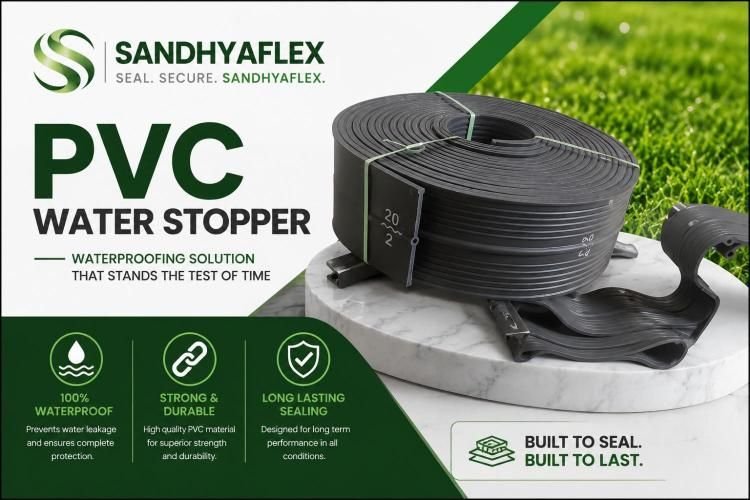
The Sandhyaflex 300mm Width PVC Water Stopper is a type of water-resistant sealing product commonly used in construction and civil engineering projects. This particular water stopper is made of PVC (Polyvinyl Chloride), which is known for its durability, flexibility, and resistance to water and chemicals. With a width of 300mm, it is designed to be used in joints and cracks in concrete structures, such as in:
\\n
- \\n
- \\n
Foundations: To prevent water leakage in basements, underground structures, or water containment areas.
\\n
\\n
- \\n
Dams and reservoirs: To prevent seepage through expansion joints in water-retaining structures.
\\n
\\n
- \\n
Tunnels: For waterproofing between tunnel sections.
\\n
\\n
- \\n
Swimming pools: For preventing water leakage between pool walls and floors.
\\n
\\n
- \\n
Water treatment plants: To seal joints in structures exposed to water pressure.
\\n
\\n
\\n
PVC water stoppers are generally used in areas where there is a significant risk of water leakage, and they help in preventing water from seeping through joints between concrete sections. The flexibility of PVC allows it to accommodate slight movements in the structure while maintaining a tight seal.
\\n
\\n
Would you like more information on how this product works, or on how to install it in construction projects?
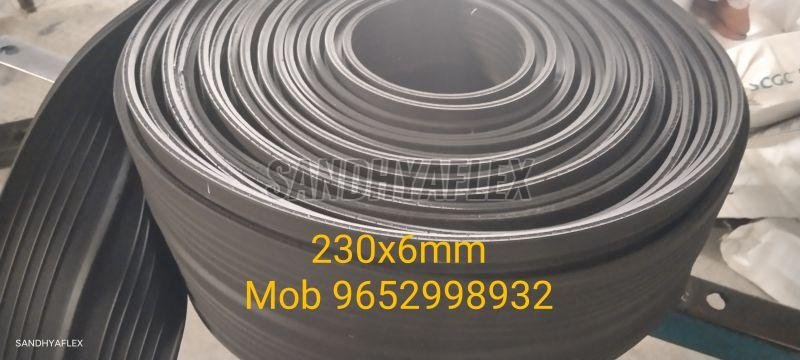
| Business Type | Manufacturer, Supplier, Retailer |
| Country of Origin | India |
| Thickness | 6-8mm, 6mm To 12mm |
| Dimension | 150mm-200 Mm, 200-250mm, 250-300mm |
| Pattern | Striped |
| Feature | Best Quality, Durable, High Quality |
| Length | 20-25mtr |
| Size | 150,230 And 300mm |
| Application | Construction |
| Condition | New |
| Material | Pvc, RUBBER DAM GATE SEAL |
| Brand Name | SANDHYAFLEX |
| 9 inch width centre bulb | NA |
| PVC Water Stopper | 900 to 1800/Mtr |
| Type | Pvc Water Stopper,Ribbed |
| Color | Black |
| Product Code | pvcws |
| Port | mumbai |
| Payment Terms | T/T |
| Delivery Time | 10 to 15days |
| Packaging Details | Packing with HDPE CoverThe packing details of a PVC water stopper can vary depending on the manufacturer, supplier, and specific product. However, here are some general packing details that you may commonly find: 1. Quantity: The packaging should indicate the number of PVC water stoppers included in a single pack. It can range from one water stopper to multiple stoppers, depending on the packaging configuration and the supplier's specifications. 2. Size and Dimensions: The packaging may specify the size and dimensions of the PVC water stopper, including the width, height, and length. This information helps determine if the water stopper is suitable for the intended application and joint size. 3. Profile Type: PVC water stoppers come in various profile types, such as straight, bulb-shaped, ribbed, or external profiles. The packaging should indicate the specific profile type included in the pack. 4. Material: The packaging may mention the material of the PVC water stopper, which is typically polyvinyl chloride (PVC). This information confirms that the product is made from the intended material. 5. Color: PVC water stoppers are usually available in different colors, with black being the most common. The packaging may specify the color of the water stopper, although it is typically understood that the standard color is black unless otherwise mentioned. 6. Packaging Material: The packaging itself may be mentioned, indicating the type of packaging material used, such as plastic bags, cardboard boxes, or reels. The packaging should provide sufficient protection to prevent damage during transportation and storage. 7. Additional Information: The packaging may include additional information, such as installation guidelines, technical specifications, or safety instructions related to the PVC water stopper. It's important to note that the specific details may vary depending on the manufacturer, the product variation, and the specific requirements of the industry or application. Therefore, it is always recommended to refer to the packaging or contact the manufacturer or supplier directly for accurate and up-to-date information regarding the packaging details of a particular PVC water stopper. |
We are offering We are one of the leading & approved Manufacturers and suppliers of PVC Water Stops as per IS:12200:1987 & IS:15058:2002 & ASTMD Standard. We have supplied our PVC Water Stoppers to more then 100 various major civil construction sites in all over India.A PVC water stopper is a device used in construction to prevent water from penetrating through joints or gaps in concrete structures, such as basements, swimming pools, water tanks, and underground structures. It is commonly used to provide a watertight seal and protect the structure from water damage. PVC water stoppers are typically made from high-quality polyvinyl chloride (PVC) material, which is durable, flexible, and resistant to water and chemicals. They come in various shapes and sizes to accommodate different types of joints and applications. The most common shapes include "dumbbell" or "center bulb" profiles, which provide effective sealing against water ingress. Installation of PVC water stoppers involves embedding them in the concrete joints before pouring the concrete. The water stopper is placed in the joint, and concrete is poured around it, ensuring a tight seal. The flexibility of the PVC allows it to accommodate slight movements or vibrations without compromising the water seal. PVC water stoppers are preferred over traditional alternatives like rubber or metal due to their excellent chemical resistance, cost-effectiveness, ease of installation, and long-term durability. They are also available in different grades to meet specific project requirements, such as resistance to hydrostatic pressure or chemical exposure. It's important to note that while PVC water stoppers can provide effective waterproofing, their performance also relies on proper installation and other waterproofing measures, such as proper surface preparation, use of sealants, and adequate drainage systems. Consulting with a professional engineer or contractor is recommended to ensure the correct selection and installation of PVC water stoppers for specific construction projects.A PVC water stopper, also known as a PVC waterstop, is a type of construction material used to prevent water penetration in concrete structures, such as basements, swimming pools, water tanks, tunnels, and other areas where water containment is essential. It is designed to create a watertight seal and protect the integrity of the structure. Here are some key details and features related to PVC water stoppers: 1. Material: PVC water stoppers are made from high-quality polyvinyl chloride (PVC) material, which is known for its excellent durability, flexibility, and chemical resistance. PVC is resistant to water, chemicals, and environmental factors, making it suitable for use in various water containment applications. 2. Types: PVC water stoppers come in different types and profiles, depending on the specific application and requirements. Common types include straight PVC water stoppers, bulb-shaped water stoppers, ribbed water stoppers, and external water stoppers, among others. Each type has its unique design and features to cater to different sealing needs. 3. Design and Structure: PVC water stoppers are typically designed with a combination of rigid and flexible sections. The rigid sections provide stability and anchoring within the concrete structure, while the flexible sections allow for movement and accommodate joint expansion and contraction. 4. Installation: PVC water stoppers are usually installed during the concrete pouring process. They are placed within the construction joints or between the concrete sections to create a continuous barrier against water infiltration. The water stoppers are embedded into the concrete, forming a mechanical bond and ensuring a secure seal. 5. Sizes: PVC water stoppers are available in various sizes and dimensions to suit different joint widths and concrete thicknesses. The sizes can range from narrow profiles for smaller joints to wider profiles
| Business Type | Exporter, Supplier |
| Brand Name | SNDHYAFLEX |
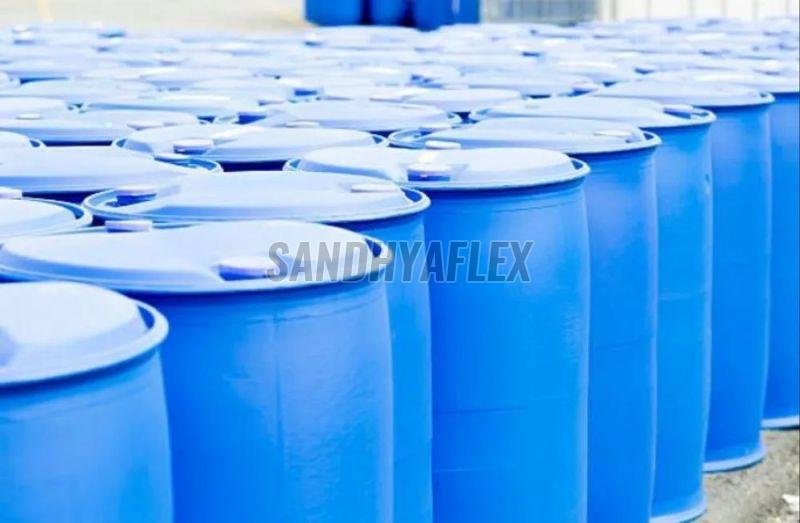
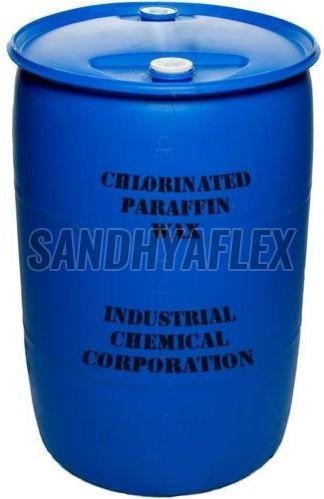
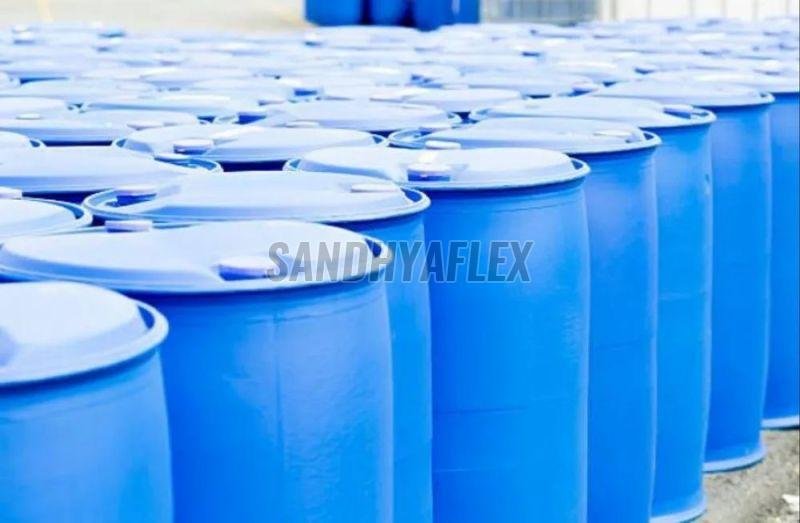
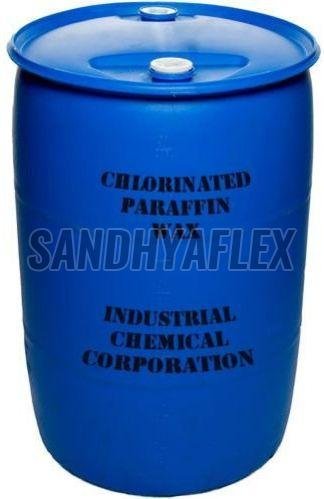
| Form | Liquid |
| Certification | ISO 9001:2008 Certified |
| Grade | 1225 |
| Product Code | CPW |
| Port | mumbai |
| Packaging Details | 250 Kg/drum |
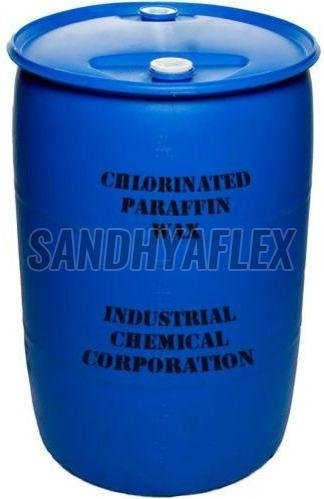
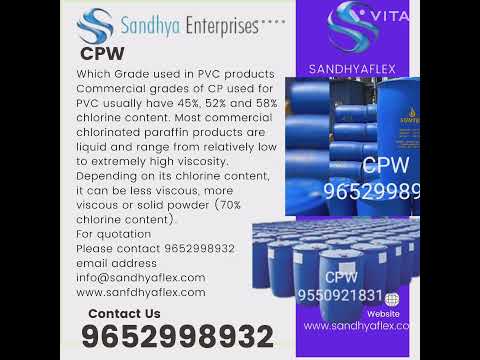
**Chlorinated Paraffin Wax (CPW)** is a versatile chemical product used in various industrial applications. It is produced by chlorinating paraffin wax (long-chain hydrocarbons derived from petroleum), resulting in different grades of CPW with varying levels of chlorination (typically between 30% to 70%). Its characteristics, such as flame retardancy, plasticizing effect, and chemical stability, make it useful in several industries.
### Key Properties:
- **Flame Retardant**: Due to its high chlorine content, CPW acts as a flame retardant in plastics, rubbers, and other materials.
- **Plasticizer**: CPW functions as a secondary plasticizer, mainly for flexible PVC, enhancing flexibility and reducing brittleness.
- **Water and Chemical Resistance**: It is resistant to water, oils, acids, and alkalis, making it useful in applications requiring chemical stability.
- **Low Volatility**: It has low vapor pressure and remains stable over a wide temperature range, contributing to its durability.
### Types of CPW:
- **CPW 42%**: Typically used in rubber and leather industries.
- **CPW 52%**: Most commonly used grade, used as a plasticizer and flame retardant in PVC and other polymers.
- **CPW 70%**: Higher chlorine content, primarily used for flame retardant applications.
### Applications:
1. **PVC Industry**:
- Used as a **secondary plasticizer** in flexible PVC products such as cables, wires, and flooring. It improves flexibility and lowers production costs by reducing the amount of primary plasticizer needed (e.g., phthalates).
2. **Flame Retardants**:
- CPW is added to polymers, rubbers, and paints to improve flame resistance, commonly in wire and cable insulation, rubber belts, and conveyor belts.
3. **Metalworking Fluids**:
- CPW is used in the formulation of **cutting oils and lubricants** for metalworking, where it serves as an extreme pressure additive, providing lubrication and cooling under high-pressure conditions.
4. **Paints and Coatings**:
- CPW is used in industrial coatings to improve resistance to corrosion, water, and chemicals, and enhance fire retardancy.
5. **Rubber and Sealants**:
- Added to rubber compounds (e.g., in conveyor belts, rubber sheets) to improve flame retardancy and flexibility.
- Used in adhesives and sealants for weather resistance and durability.
6. **Leather and Textile**:
- In the leather industry, CPW can be used as a fat-liquoring agent, adding flexibility to treated leather. It also serves as a coating agent in textiles to impart flame-retardant properties.
### Advantages:
- **Cost-Effective**: CPW is often used to lower production costs by reducing the need for more expensive plasticizers or flame retardants.
- **Chemical Stability**: CPW is chemically inert and provides resistance to degradation from water, oils, and chemicals.
- **Versatility**: It can be easily blended with other additives for tailored applications.
### Environmental and Health Considerations:
- **Toxicity**: CPW can be harmful to the environment, especially aquatic life, due to its persistence and bioaccumulative properties. The production and use of CPW are regulated in many countries, and certain high-chlorine-content grades (above 70%) may face restrictions.
- **Regulations**: Some countries have restricted or regulated the use of chlorinated paraffins due to their environmental impact, and they may require proper handling and disposal.
In summary, **Chlorinated Paraffin Wax (CPW)** is widely used in industries like PVC manufacturing, flame retardancy, lubricants, coatings, and rubber production. It is valued for its cost-efficiency, flame-retardant properties, and chemical stability but requires careful consideration regarding environmental and health impacts.
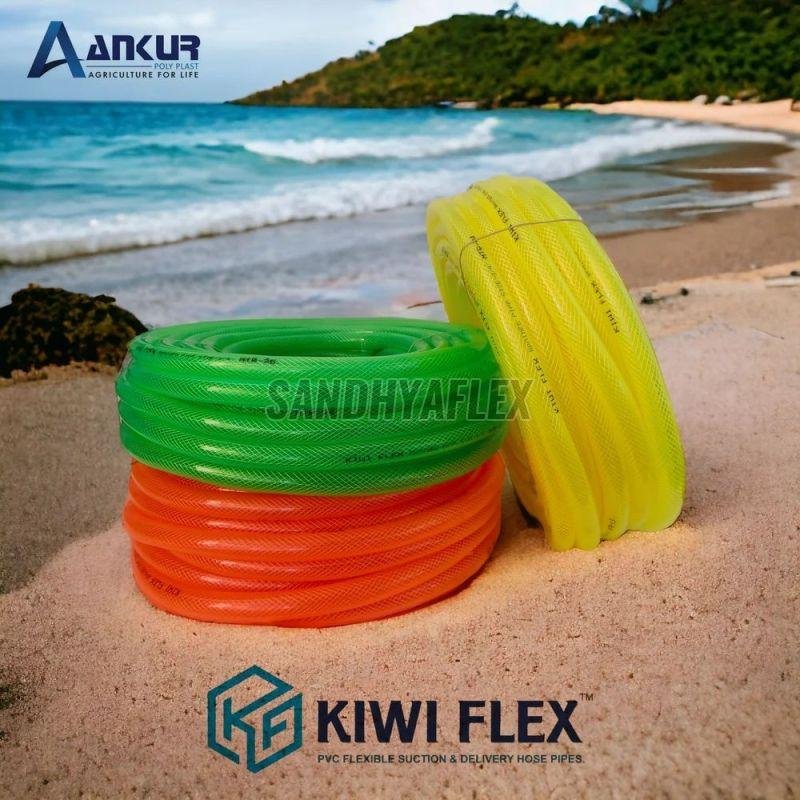
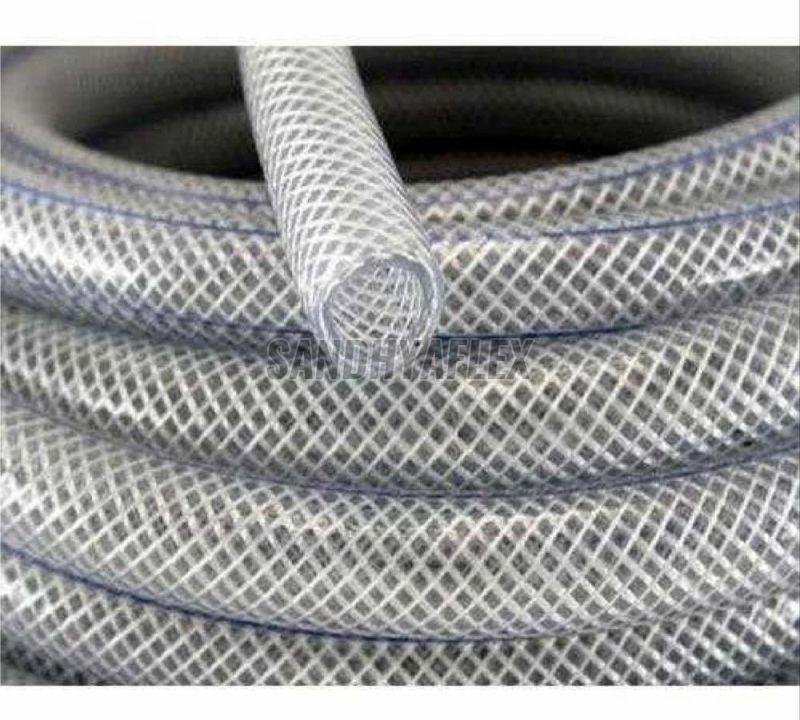
| Business Type | Manufacturer, Exporter, Supplier, Retailer |
| Brand Name | SNDHYAFLEX |
| Material | Pvc |
| Packaging Type | Multicolor |
| Feature | Soft |
| Number Of Flower | Pvc Braided Hose Pipe |
| Product Code | PVCBP |
| Port | mumbai |
| Delivery Time | 7 to 15 days |
| Packaging Details | packing in Coil |
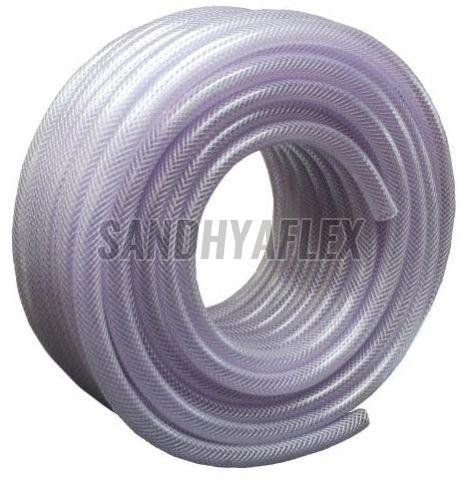
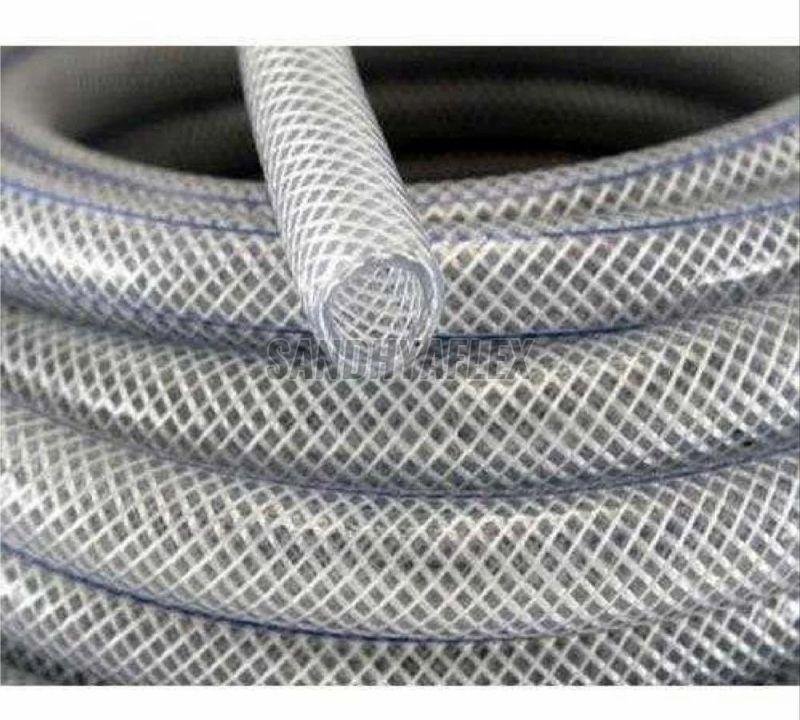
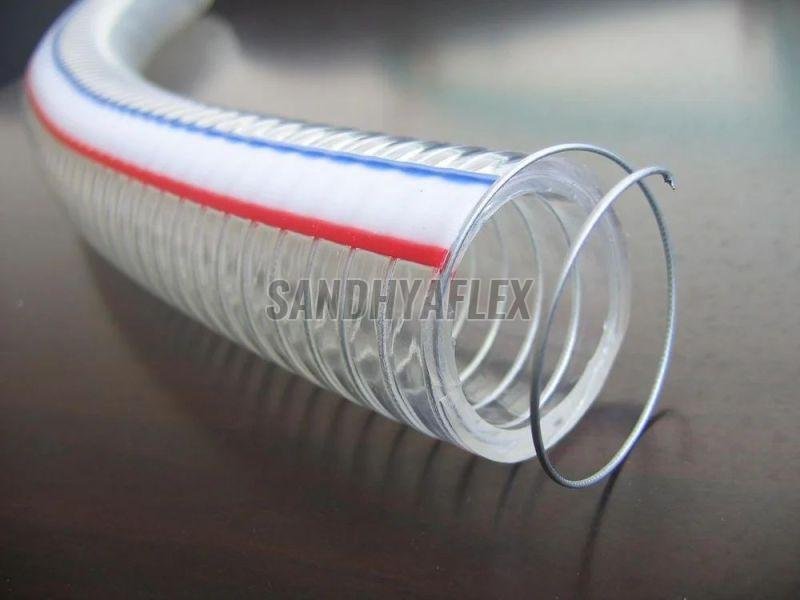
PVC color braided pipes are flexible hoses made of polyvinyl chloride (PVC) material with reinforcement in the form of braided fibers. These pipes are commonly used for various applications due to their flexibility, durability, and resistance to chemicals. The braided reinforcement provides added strength, making the pipes suitable for both low and high-pressure applications. Here are some key features and uses of PVC color braided pipes:
1. **Material:** PVC color braided pipes are typically made from PVC resin, which is a versatile and widely used thermoplastic material. The braided reinforcement is often made of polyester or nylon.
2. **Color Options:** These pipes come in various colors, and the color is often incorporated into the outer layer of the PVC material. The color can serve practical purposes, such as color-coding for specific applications or aesthetics.
3. **Braided Reinforcement:** The braided layer enhances the strength of the PVC pipe, making it resistant to kinking, crushing, and deformation. The braiding also provides stability under pressure, making these pipes suitable for both suction and delivery applications.
4. **Flexibility:** PVC color braided pipes are known for their flexibility, allowing for easy handling and installation. This flexibility is particularly beneficial in applications where the pipes need to navigate around obstacles or tight spaces.
5. **Chemical Resistance:** PVC is generally resistant to a wide range of chemicals, making these pipes suitable for conveying various liquids. However, the specific chemical resistance may vary depending on the formulation of the PVC material.
6. **Temperature Resistance:** PVC color braided pipes are suitable for a range of temperatures, but it's essential to check the manufacturer's specifications to ensure they meet the requirements of your specific application.
7. **Applications:** Common applications for PVC color braided pipes include water supply, irrigation, gardening, air and gas supply, industrial fluid transfer, and various other uses where a flexible and durable hose is required.
8. **Sizes and Specifications:** PVC color braided pipes come in various sizes and specifications to meet different flow and pressure requirements. It's crucial to select the appropriate size and type based on the intended application.
9. **Installation:** These pipes are relatively easy to install, and they can be connected using fittings compatible with PVC material. Proper installation ensures optimal performance and longevity.
When using PVC color braided pipes, it's important to follow the manufacturer's guidelines, including recommended temperature and pressure ratings. Regular inspection and maintenance can help ensure the pipes remain in good condition and perform effectively over time.
| Business Type | Manufacturer, Exporter, Supplier |
| Number Of Flower | Water Stopper, Dumbbells |
| Material | Plastic, Pvc |
| Thickness | 4-6mm, 6-8mm, 8-10mm |
| Country of Origin | India |
| Payment Terms | T/T |
| Delivery Time | 3 to 5 days |
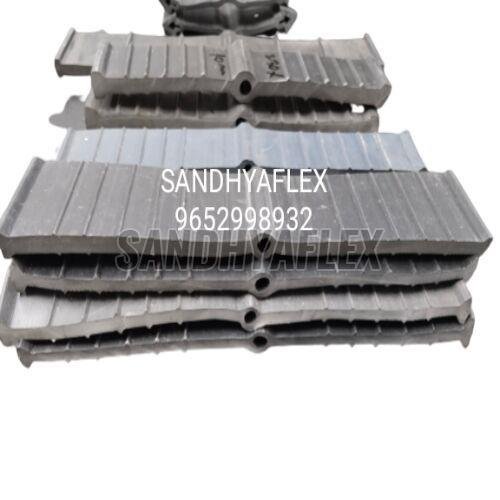
| Packaging Details | Selection of appropriate PVC water stopper Ribbed Type – It has a multi-purpose water stopper design to be used for the expected differential settlement of poured concrete and a firm concrete grip desired. Dumbbell Type – With greater variation in temperature, expansion and contraction of joints happen. Dumbbell type water stoppers are the suggested ones for these cases. Kicker (Surface Type) – Where the embedded types cannot be used owing to interference of steel reinforcement, these are placed externally. Installation procedure: During installation, using small wires, the water stoppers are tied to the steel framework through the eyelets. Also, certain metal clamps are used to grip the water stop seal and keep it in proper position. Initially, half of the water stopper is places in the concrete. It leaves the other half extended. Then, the other half is embedded that leaves the centre bulb free for expansion and contraction movements. Applications Of PVC Water Stoppers Public Utilities: For bridges, road embankments, tunnels, water tanks, water filtration systems, swimming pools, sewage plants, clarifiers, dams, canals, reservoirs, aqueducts and irrigation projects cooling towers. Buildings: For basements, foundations slabs, masonry joints, retaining walls, terraces, overhead & underground water tanks and Industries: For fertilizer steel, chemical plants, waste treatment plants, atomic reactors, thermal & hydro power stations and shipyard & docks. Precautions to take while water stopper installation They are vulnerable to damage during the construction process The concrete compaction around the water stopper should be taken care of. If not, it can dislocate and lead to a risk of honeycomb formation. This might result in leakage through concrete instead of the joint. Methods for joining PVC water stoppers with heater blade Water stoppers can be joined on the site using a simple electrical heater blade. Water bars having the same width and design should be sharply levelled with a knife at the Turn on the Electric Heater Blade. Wait till it becomes hot Place the water stopper on both sides of heater blade. Press it until it melts but without burning Remove the heater blade upward Join the molten ends quickly. Hold them together firmly for approximately 20 to 30 seconds. PVC Water Stopper with Center Bulb 150 (6") x4mm 150 (6") x5mm 150 (6") x6mm. 150 (6" ) x8mm 150 {6") x10mm 200 (8" x 8mm 200 )8") x10mm 240 x 8mm 240x10mm. 250 (10") x8mm 250 (10") x10mm 250(10" x12mm 300 (12") x6mm 300 (12") 8mm 300 (12") 10mm 300 (12" ) 12mm 300(12") 15mm |
Selection of appropriate PVC water stopper Ribbed Type – It has a multi-purpose water stopper design to be used for the expected differential settlement of poured concrete and a firm concrete grip desired. Dumbbell Type – With greater variation in temperature, expansion and contraction of joints happen. Dumbbell type water stoppers are the suggested ones for these cases. Kicker (Surface Type) – Where the embedded types cannot be used owing to interference of steel reinforcement, these are placed externally. Installation procedure: During installation, using small wires, the water stoppers are tied to the steel framework through the eyelets. Also, certain metal clamps are used to grip the water stop seal and keep it in proper position. Initially, half of the water stopper is places in the concrete. It leaves the other half extended. Then, the other half is embedded that leaves the centre bulb free for expansion and contraction movements. Applications Of PVC Water Stoppers Public Utilities: For bridges, road embankments, tunnels, water tanks, water filtration systems, swimming pools, sewage plants, clarifiers, dams, canals, reservoirs, aqueducts and irrigation projects cooling towers. Buildings: For basements, foundations slabs, masonry joints, retaining walls, terraces, overhead & underground water tanks and Industries: For fertilizer steel, chemical plants, waste treatment plants, atomic reactors, thermal & hydro power stations and shipyard & docks. Precautions to take while water stopper installation They are vulnerable to damage during the construction process The concrete compaction around the water stopper should be taken care of. If not, it can dislocate and lead to a risk of honeycomb formation. This might result in leakage through concrete instead of the joint. Methods for joining PVC water stoppers with heater blade Water stoppers can be joined on the site using a simple electrical heater blade. Water bars having the same width and design should be sharply levelled with a knife at the Turn on the Electric Heater Blade. Wait till it becomes hot Place the water stopper on both sides of heater blade. Press it until it melts but without burning Remove the heater blade upward Join the molten ends quickly. Hold them together firmly for approximately 20 to 30 seconds. PVC Water Stopper with Center Bulb 150 (6") x4mm 150 (6") x5mm 150 (6") x6mm. 150 (6" ) x8mm 150 {6") x10mm 200 (8" x 8mm 200 )8") x10mm 240 x 8mm 240x10mm. 250 (10") x8mm 250 (10") x10mm 250(10" x12mm 300 (12") x6mm 300 (12") 8mm 300 (12") 10mm 300 (12" ) 12mm 300(12") 15mm A PVC water stopper is a device used in construction to prevent water from penetrating through joints or gaps in concrete structures, such as basements, swimming pools, water tanks, and underground structures. It is commonly used to provide a watertight seal and protect the structure from water damage. PVC water stoppers are typically made from high-quality polyvinyl chloride (PVC) material, which is durable, flexible, and resistant to water and chemicals. They come in various shapes and sizes to accommodate different types of joints and applications. The most common shapes include "dumbbell" or "center bulb" profiles, which provide effective sealing against water ingress. Installation of PVC water stoppers involves embedding them in the concrete joints before pouring the concrete. The water stopper is placed in the joint, and concrete is poured around it, ensuring a tight seal. The flexibility of the PVC allows it to accommodate slight movements or vibrations without compromising the water seal. PVC water stoppers are preferred over traditional alternatives like rubber or metal due to their excellent chemical resistance, cost-effectiveness, ease of installation, and long-term durability. They are also available in different grades to meet specific project requirements, such as resistance to hydrostatic pressure or chemical
| Business Type | Manufacturer |
| Brand Name | SNDHYAFLEX |
| Material | Neoprene Rubber |
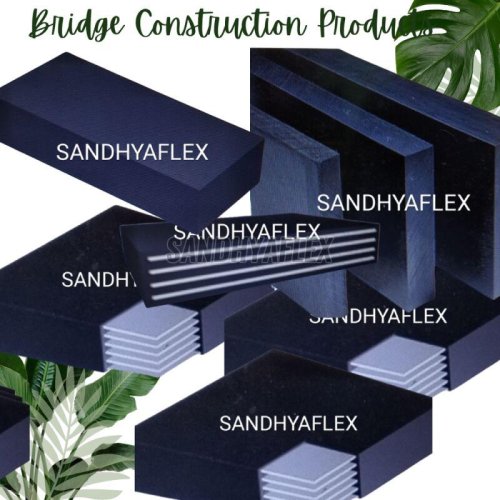
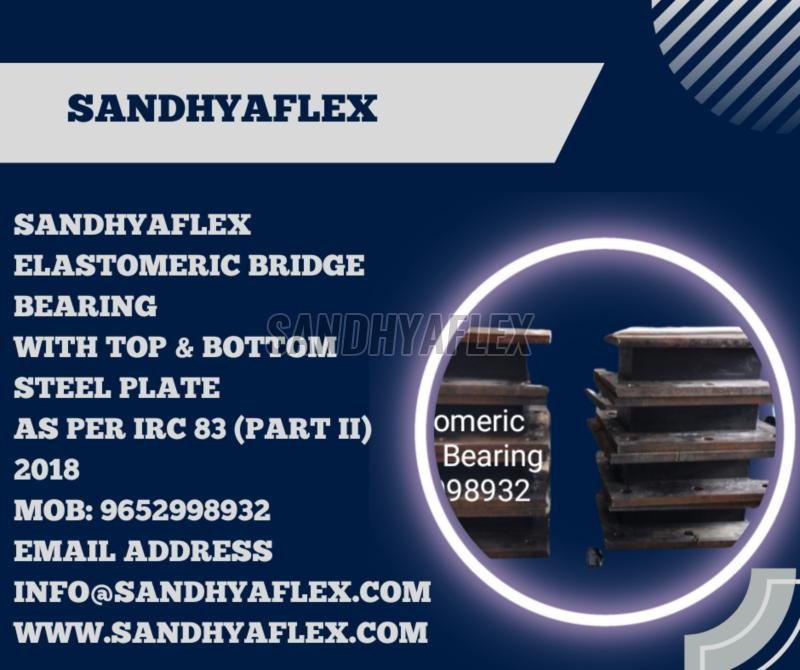
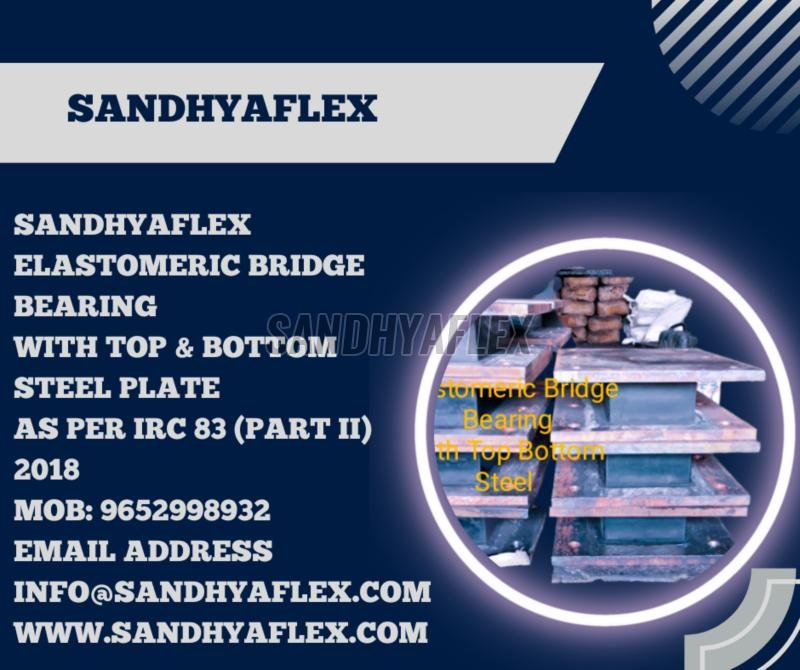
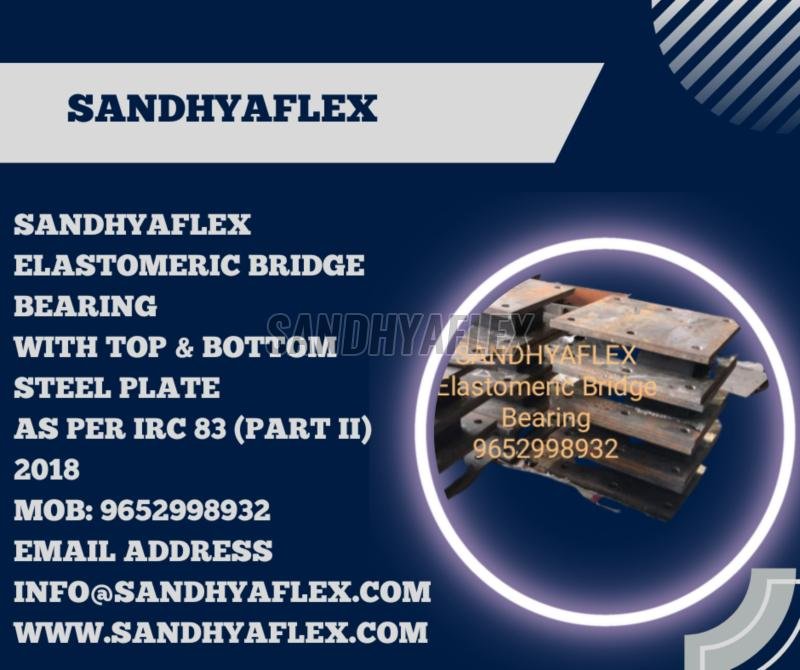
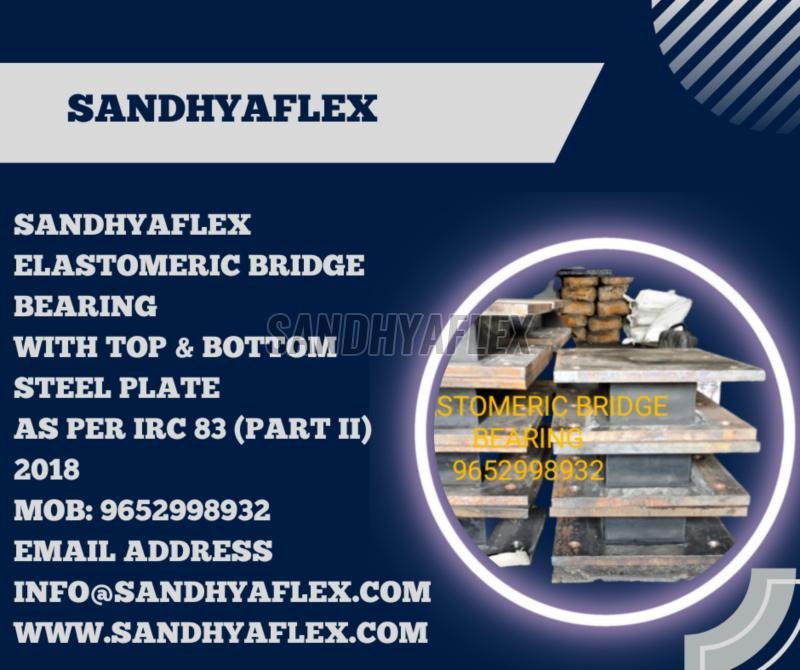
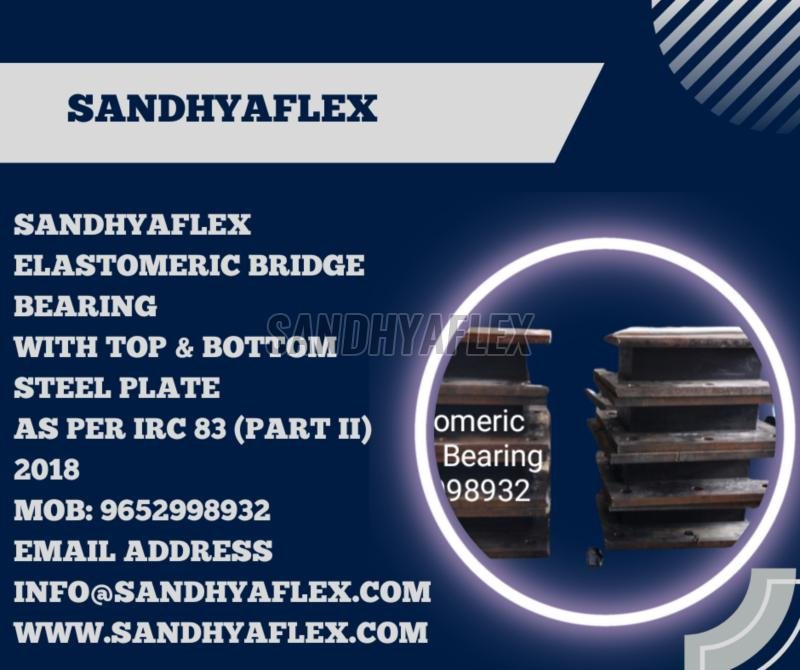
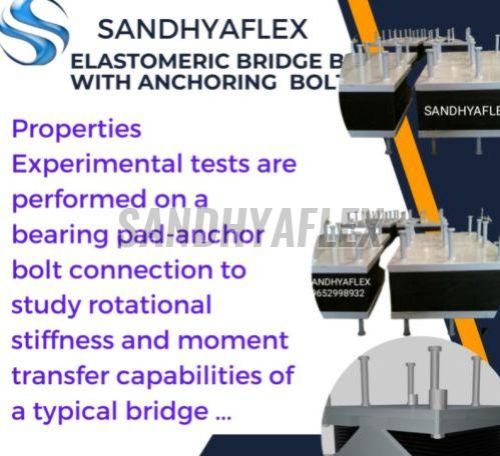
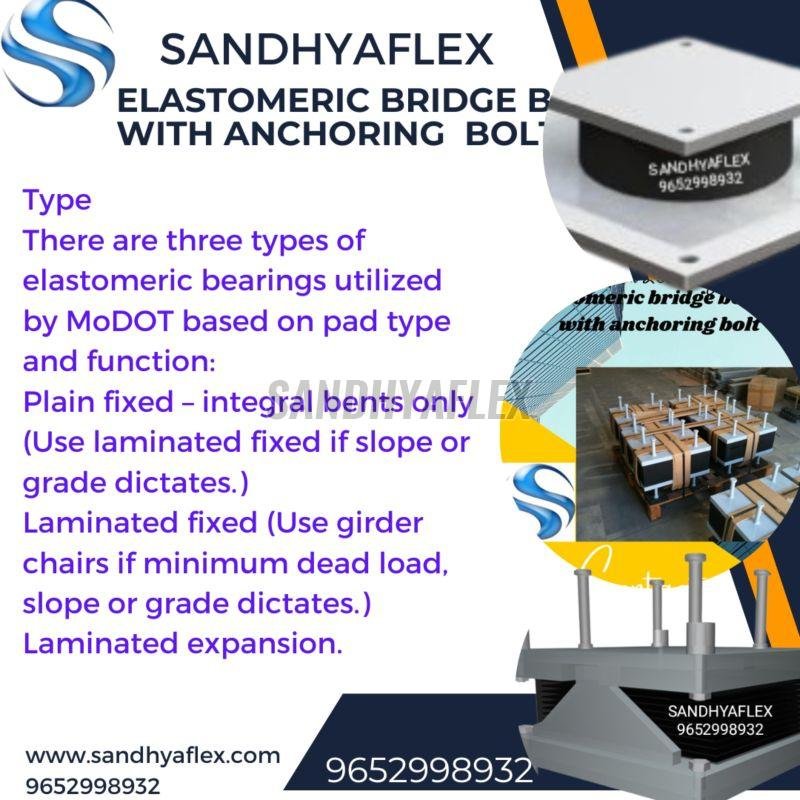
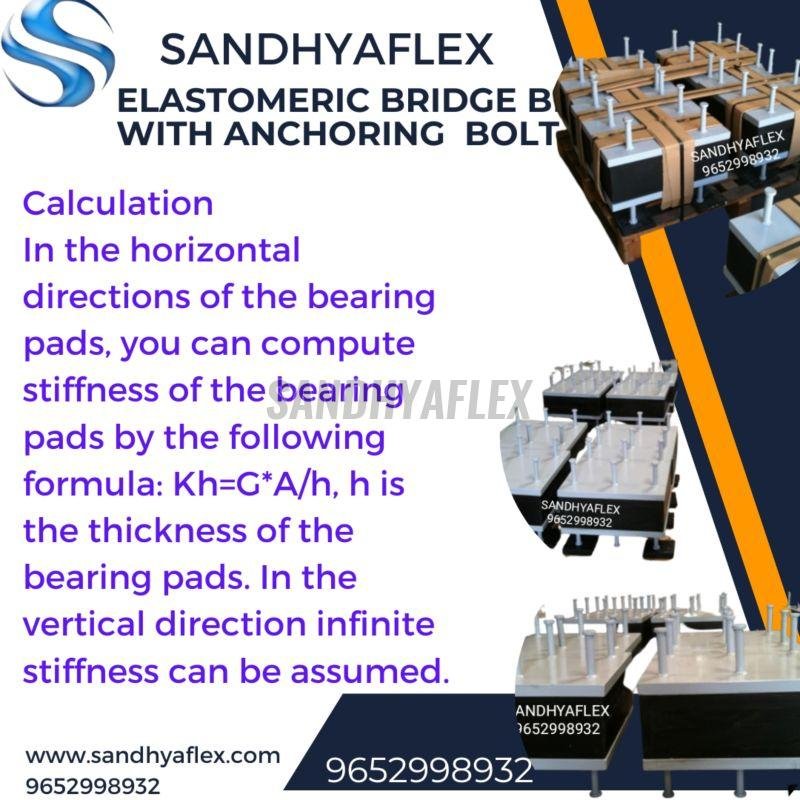
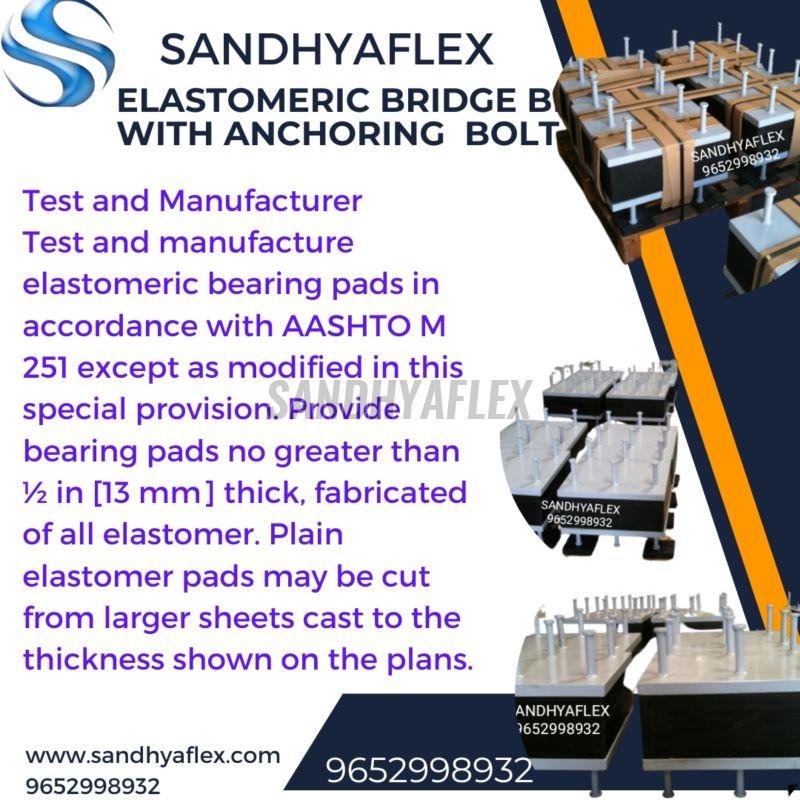
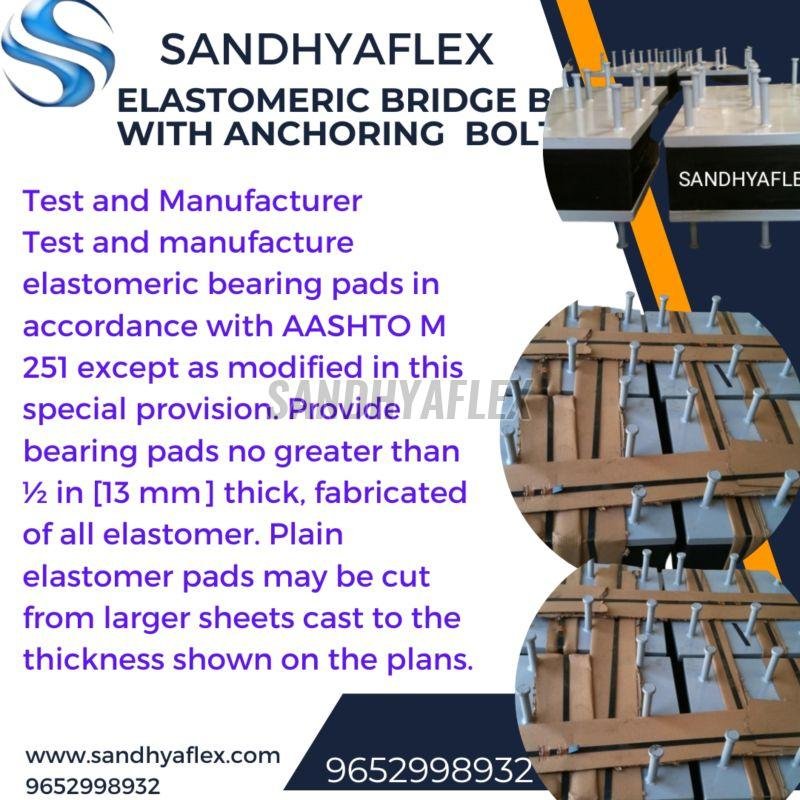
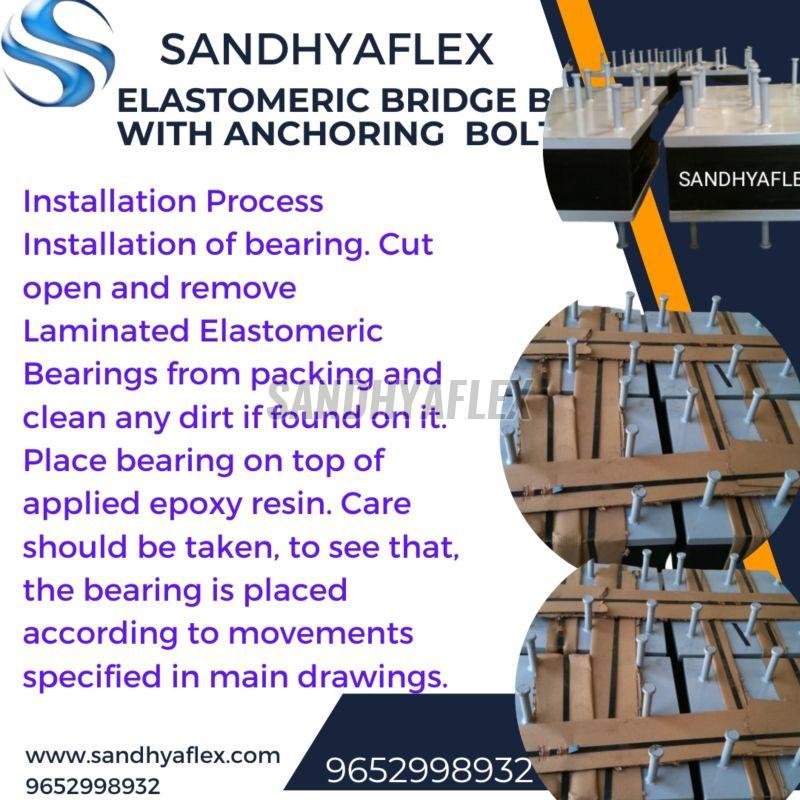
Elastomeric bridge bearings are components used in the construction of bridges to accommodate movement and provide support between different structural elements. These bearings are made of elastomeric materials, such as natural rubber or synthetic rubber compounds, which possess excellent elastic properties.
The primary purpose of elastomeric bridge bearings is to transfer loads from the bridge superstructure to the bridge substructure while allowing for various types of movements, including rotation, translation, and rotation. These movements can occur due to factors such as thermal expansion and contraction, seismic activity, and traffic-induced vibrations.
Here are some key features and benefits of elastomeric bridge bearings:
1. Load Transfer: Elastomeric bearings distribute the load from the bridge deck to the piers or abutments, reducing stress concentrations and ensuring even load distribution. They can handle vertical, horizontal, and rotational forces effectively.
2. Vibration and Shock Absorption: Elastomeric materials have excellent damping properties, allowing them to absorb and dissipate energy from dynamic forces, such as traffic vibrations and seismic activity. This helps in reducing the transmission of vibrations to the bridge superstructure and enhances overall bridge performance.
3. Movement Accommodation: Elastomeric bearings can accommodate both translational and rotational movements of the bridge superstructure. They allow for expansion and contraction due to temperature changes, as well as movements caused by seismic events or live loads.
4. Durability and Longevity: Elastomeric materials used in bridge bearings are designed to withstand harsh environmental conditions, including exposure to ultraviolet (UV) radiation, moisture, and temperature variations. They have good resistance to aging, weathering, and chemical degradation, ensuring the longevity of the bridge bearings.
5. Low Maintenance: Elastomeric bearings require minimal maintenance compared to other types of bridge bearings. Their robust design and durability reduce the need for frequent inspections and repairs, resulting in cost savings over the life of the bridge.
It's important to note that specific design and installation guidelines must be followed while incorporating elastomeric bridge bearings into a bridge project. These guidelines ensure that the bearings are properly sized, positioned, and installed to provide optimal performance and safety.
Overall, elastomeric bridge bearings play a crucial role in the construction and functionality of bridges by accommodating movements, reducing stress, and enhancing the overall structural integrity.
| Business Type | Manufacturer, Exporter, Supplier, Retailer |
| Brand Name | Lazio |
| Material | SS |
| Finishing | Polished |
| Shape | U Shaped |
| Condition | New |
| Automatic Grade | Manual |
| Usage | Industrial |
| Size | Hey! Could you clarify what you mean by "size"? Are you referring to: - Clothing or shoe size? - Image or file size? - Screen or display size? - Something else? Let me know how I can help! |
| Product Code | sandhyaflex |
| Port | A **port of dispatch** refers to the location (usually a seaport or airport) where goods are officia |
| Payment Terms | L/C |
| Delivery Time | depends |
| Packaging Details | Hey! Could you clarify what you mean by “packaging details”? Are you referring to: - Product packaging specifications (e.g. dimensions, materials, design)? - Shipping/handling packaging? - Labeling and regulatory details? - Packaging for a specific product or industry? Let me know a bit more and I can give you the right info! |
The load capacity of elastomeric bridge bearings depends on various factors, and the design must be carefully engineered to ensure the bearings can adequately support the loads imposed by the bridge structure. Several key factors influence the load capacity of elastomeric bridge bearings:
\r\n\r\n
1. **Bridge Design Load:**
\r\n- The primary factor influencing the load capacity is the design load of the bridge, including dead loads (permanent loads like the weight of the bridge structure itself), live loads (variable loads such as traffic and pedestrians), and other dynamic forces.
\r\n\r\n
2. **Bearing Size and Configuration:**
\r\n- The dimensions and configuration of the elastomeric bearing, including its length, width, and thickness, play a significant role in determining its load-carrying capacity. Larger bearings generally have higher load capacities.
\r\n\r\n
3. **Material Properties:**
\r\n- The specific elastomeric material used in the bearing affects its load-bearing capacity. The material should have the appropriate compressive strength, elasticity, and durability to withstand the applied loads over time.
\r\n\r\n
4. **Shore Hardness:**
\r\n- The shore hardness of the elastomeric material, measured on the Shore durometer scale, is an indication of the material\\\'s resistance to indentation. The hardness should be selected based on the expected loads and deformation requirements.
\r\n\r\n
5. **Number of Bearings:**
\r\n- The arrangement and number of elastomeric bearings used in a bridge also impact the overall load distribution. Engineers consider the optimal layout to ensure that the loads are evenly distributed among the bearings.
\r\n\r\n
6. **Temperature Effects:**
\r\n- Temperature variations can affect the load capacity of elastomeric bearings. The material should be selected to withstand the expected temperature range, and the design should account for thermal expansion and contraction.
\r\n\r\n
7. **Dynamic Forces:**
\r\n- Consideration must be given to dynamic forces such as those caused by seismic events or bridge movement. Elastomeric bearings may need to accommodate not only static loads but also dynamic forces to ensure the bridge\\\'s stability during various conditions.
\r\n\r\n
8. **Standards and Codes:**
\r\n- Designing elastomeric bridge bearings in accordance with relevant industry standards and codes is essential. These standards provide guidelines for calculating and verifying the load capacity of the bearings.
\r\n\r\n
9. **Testing and Quality Assurance:**
\r\n- Load testing and quality assurance procedures are conducted to verify that the elastomeric bridge bearings meet the specified load capacity requirements. This may involve both laboratory testing and field testing.
\r\n\r\n
10. **Installation Considerations:**
\r\n- Proper installation of the elastomeric bearings, including correct torque for anchoring bolts, is crucial for ensuring their load-carrying capacity. Installation procedures should follow engineering specifications.
\r\n\r\n
It\\\'s important to note that elastomeric bridge bearings are typically designed by structural engineers using specific load calculations based on the characteristics of the bridge and its expected usage. The load capacity is determined through a combination of material properties, geometric considerations, and structural analysis. Consulting with a qualified structural engineer and adhering to industry standards and codes are essential to ensuring the proper selection and design of elastomeric bridge bearings for a specific application.

| Business Type | Manufacturer, Exporter |
| Brand Name | SANDHYAFLEX |
| Material | Synthetic Rubber |
| Application | Insulating Mats |
| Size | 20x14feet |
| Feature | Easy To Clean |
| Width | Could you please clarify what the **"Width"** refers to? For example: - **Width of the product?** |
| Hardness | Soft |
| Standard size | 2mm ,2.5mm 3mm, |
| Product Code | Insulating Rubber Mat |
| Port | sandhyaflex |
| Payment Terms | D/A |
| Delivery Time | depends |
| Packaging Details | Could you clarify what kind of packaging details you're looking for? For example: - **Product type:** Electronics, food, clothing, etc.? - **Purpose:** For shipping, retail display, or storage? - **Information needed:** Box dimensions, materials used, labeling requirements, etc.? Here’s a general template you can use for **Packaging Details**: --- **Packaging Details** - **Product Name:** - **Packaging Type:** (e.g., Box, Blister Pack, Pouch, Bottle) - **Dimensions:** (L x W x H in cm or inches) - **Weight:** (Net and Gross Weight) - **Material Used:** (e.g., Corrugated cardboard, Plastic, Glass) - **Units per Carton:** - **Carton Dimensions:** - **Carton Weight:** - **Labeling:** (e.g., Product label, barcode, handling instructions) - **Special Instructions:** (e.g., Keep away from sunlight, Fragile) - **Compliance:** (e.g., FDA approved, RoHS compliant, recyclable packaging) --- Let me know if you want a more specific example or help filling this out. |
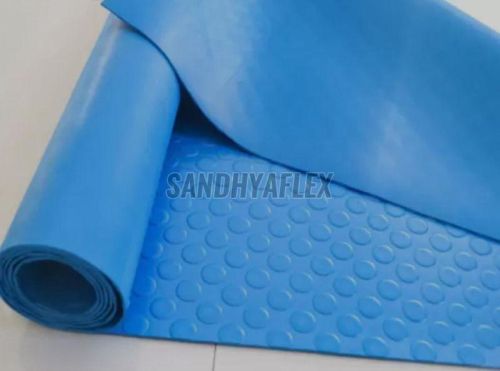
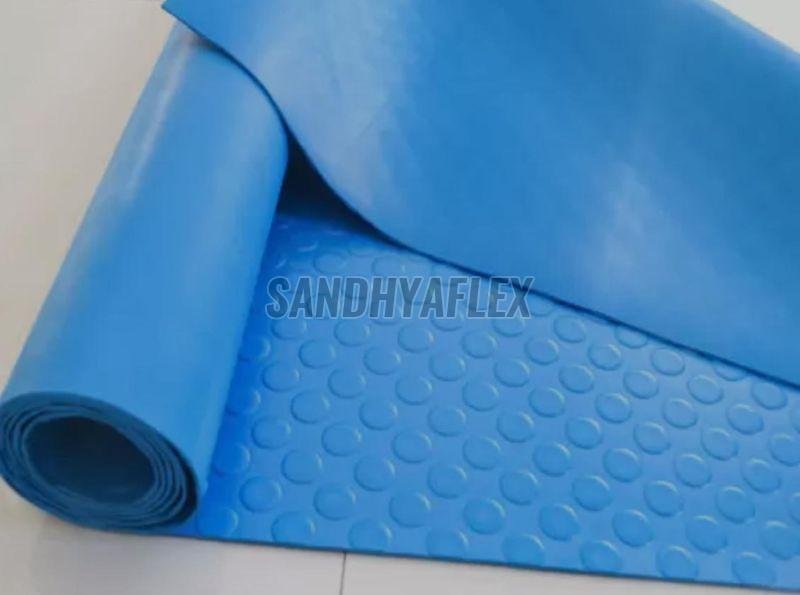
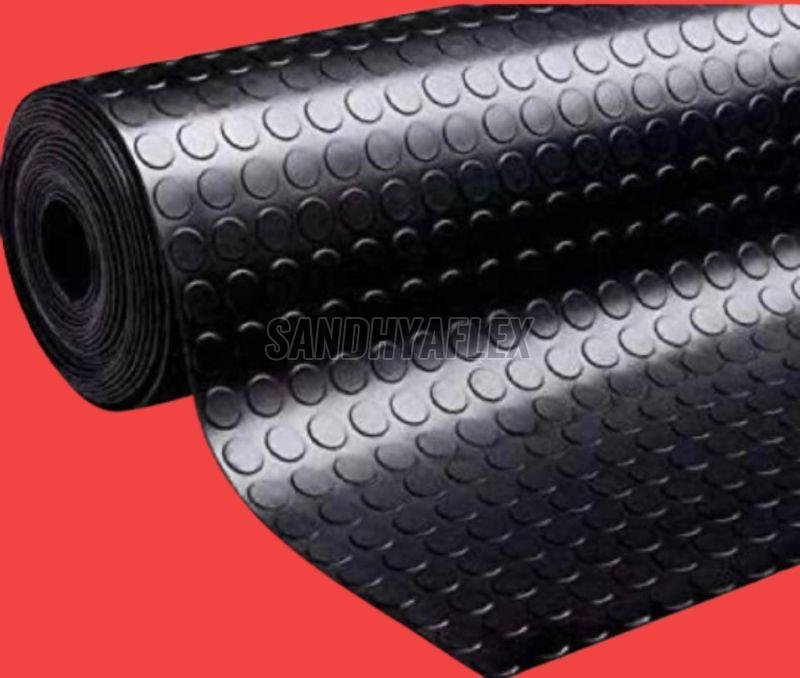
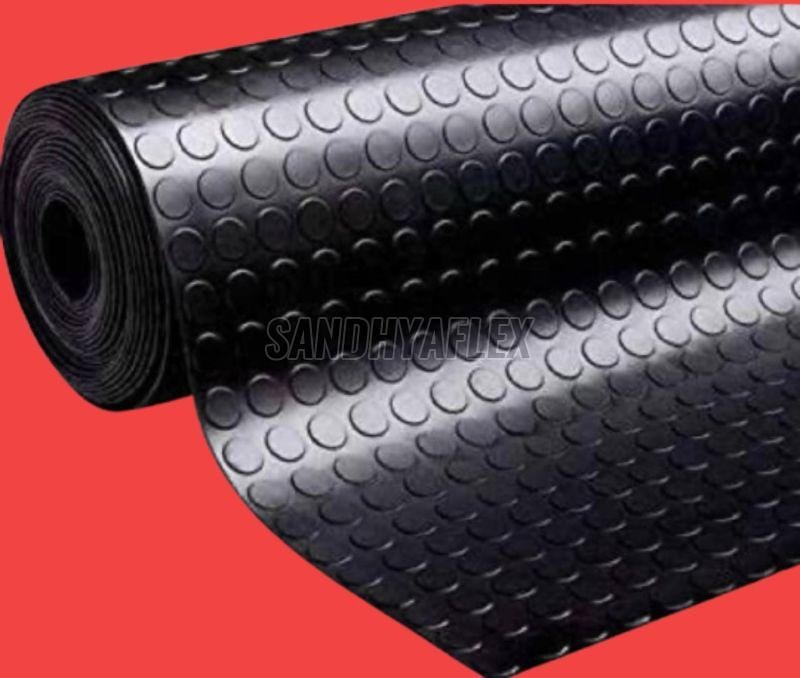
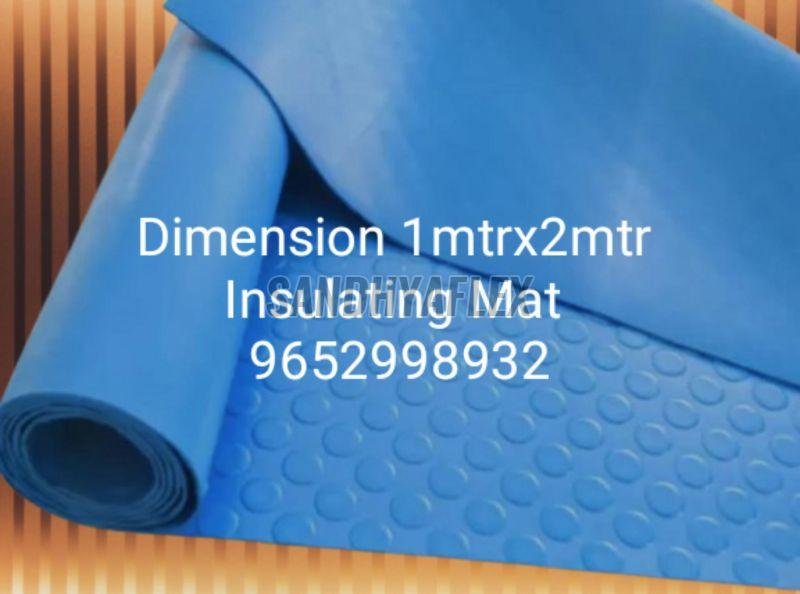
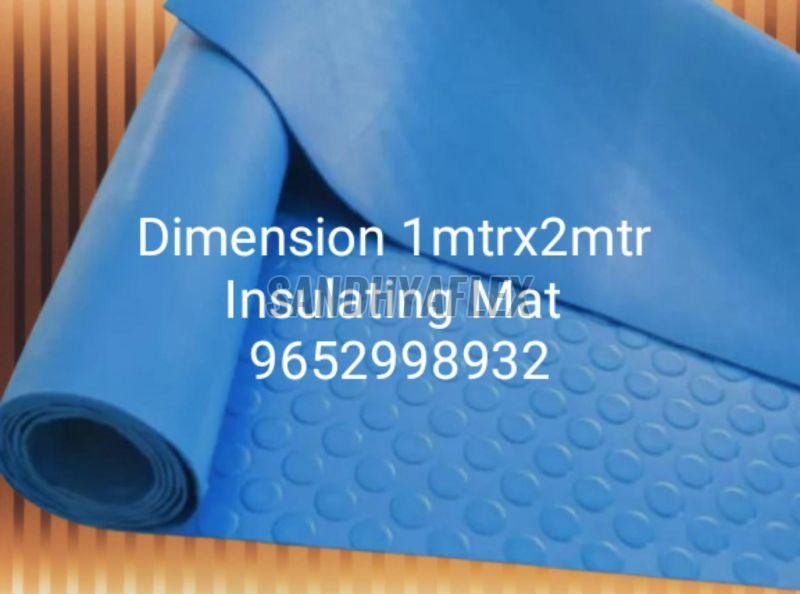
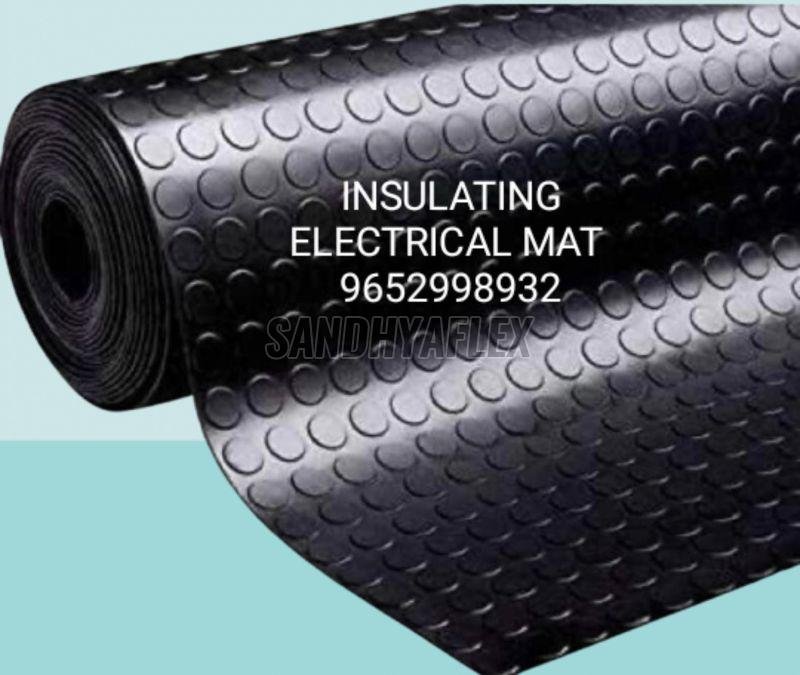
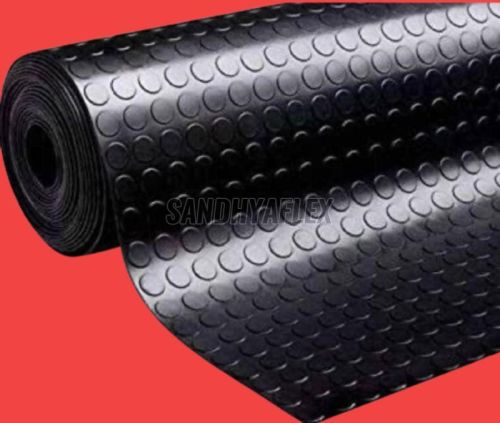
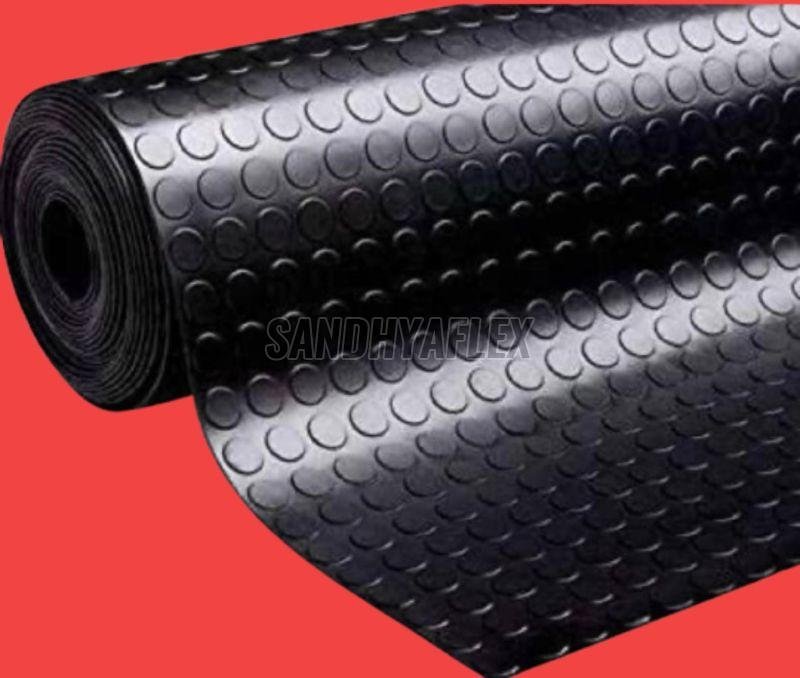
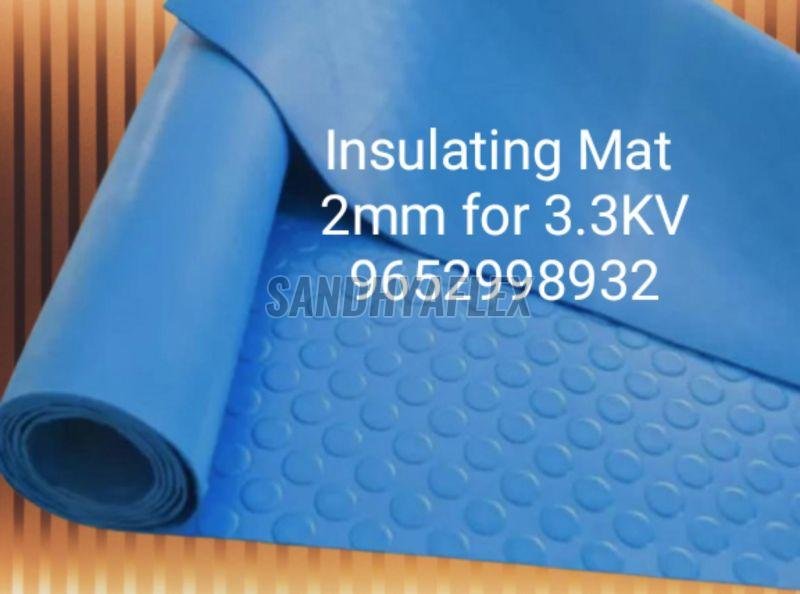
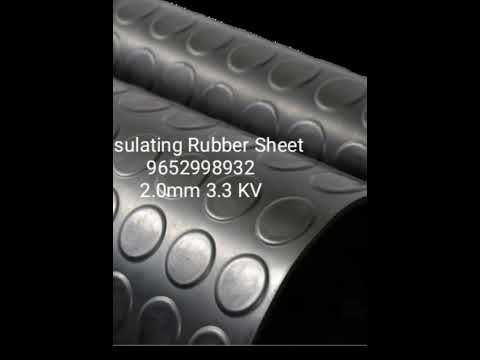
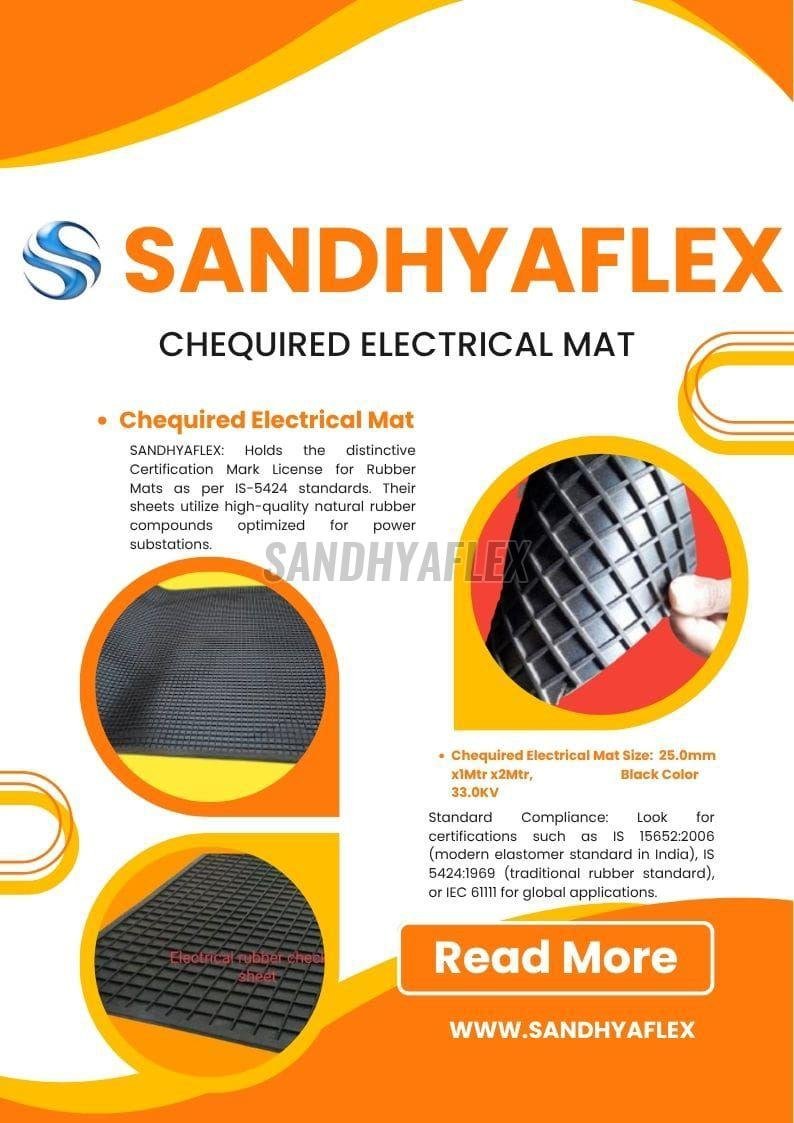
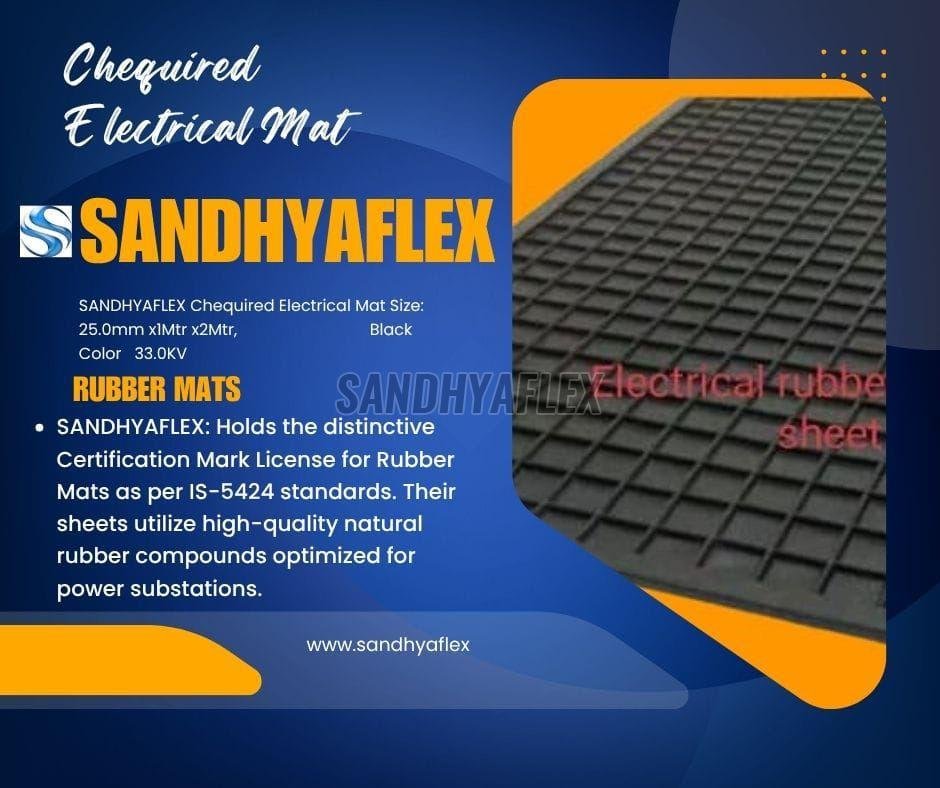
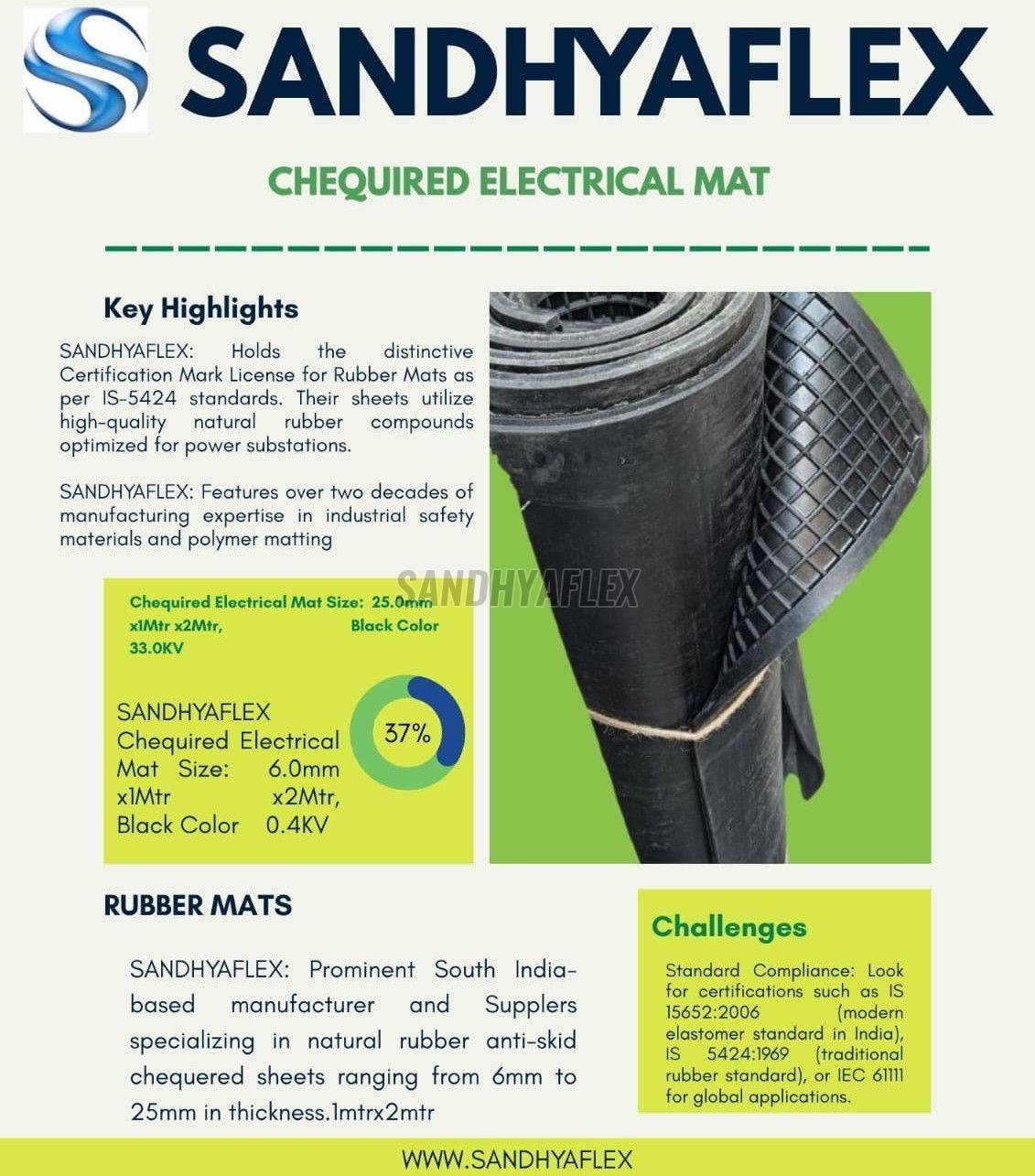
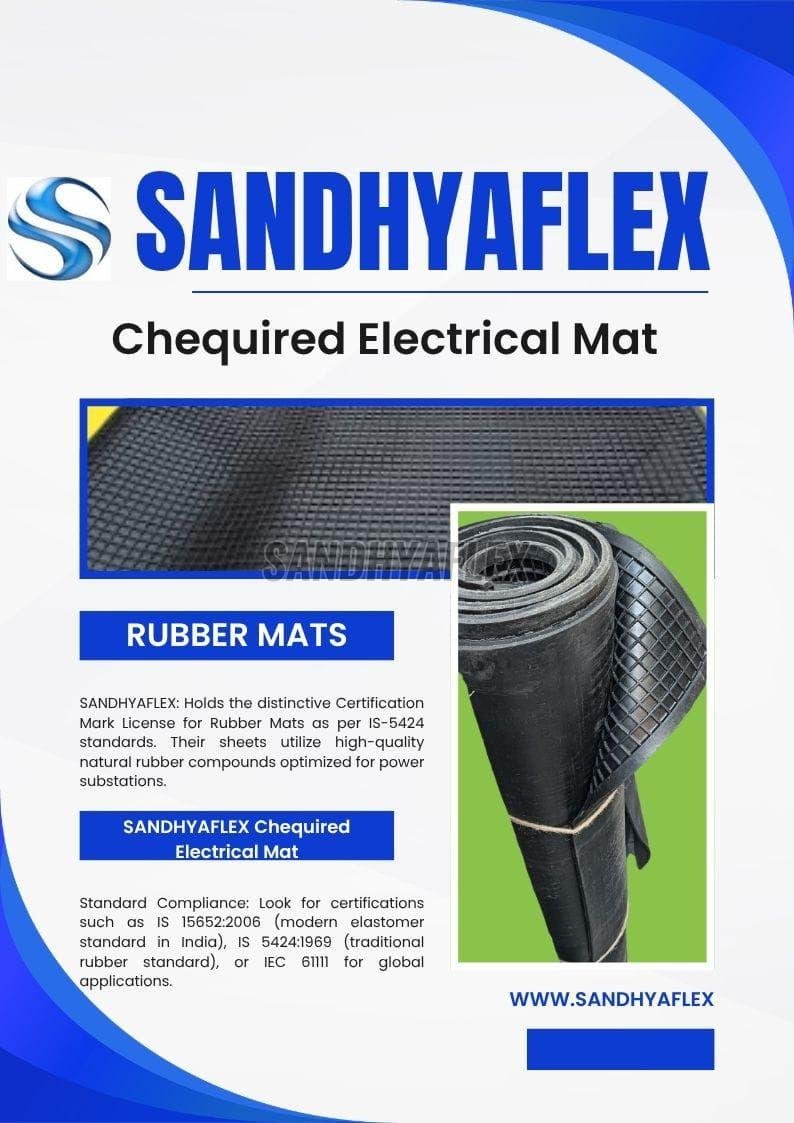
An electrical insulating rubber mat is a protective material designed to prevent electrical shock and provide insulation when working around live electrical equipment. These mats are typically made from rubber or other durable materials and are tested to withstand high voltage. They are commonly used in environments where workers may be exposed to electrical hazards, such as electrical substations, switchgear rooms, or areas with exposed electrical wiring.
The mats are usually color-coded (often in yellow and black) and are rated based on their voltage withstand capability. For example, a Class 0 mat might be rated for 1,000 volts, while a Class 4 mat could handle up to 36,000 volts. They offer excellent protection when placed on the floor under electrical equipment or workers.
Would you like to know more about the different classes or how to properly use an insulating rubber mat?
| Business Type | Manufacturer, Exporter, Supplier |
| Storage Type | Other |
| Brand Name | SANDHYAFLEX |
| Standard size | 2mm ,2.5mm 3mm, |
| Size | Could you clarify what you mean by "brand color size"? Are you looking for: 1. **A brand's specific color and its size usage in design** (like logo dimensions or font sizes)? 2. **How to choose brand |
| Product Code | 10000 |
| Port | sandhyaflex |
| Payment Terms | L/C, D/A |
| Delivery Time | depends |
| Packaging Details | Could you clarify what kind of packaging details you're looking for? For example: - **Product type:** Electronics, food, clothing, etc.? - **Purpose:** For shipping, retail display, or storage? - **Information needed:** Box dimensions, materials used, labeling requirements, etc.? Here’s a general template you can use for **Packaging Details**: --- **Packaging Details** - **Product Name:** - **Packaging Type:** (e.g., Box, Blister Pack, Pouch, Bottle) - **Dimensions:** (L x W x H in cm or inches) - **Weight:** (Net and Gross Weight) - **Material Used:** (e.g., Corrugated cardboard, Plastic, Glass) - **Units per Carton:** - **Carton Dimensions:** - **Carton Weight:** - **Labeling:** (e.g., Product label, barcode, handling instructions) - **Special Instructions:** (e.g., Keep away from sunlight, Fragile) - **Compliance:** (e.g., FDA approved, RoHS compliant, recyclable packaging) --- Let me know if you want a more specific example or help filling this out. |
Ah, I see! You're talking about insulating rubber mats. These mats are typically used for electrical safety purposes. They’re designed to protect against electrical shock by providing insulation between the person and the ground, especially when working around electrical equipment or live circuits.
Are you looking for more information about these mats or how they work?Absolutely! Electrical insulation rubber mats (also known as insulating mats or electrical safety mats) are essential safety equipment used in electrical environments to protect personnel from electric shocks. Here’s a clear list of their advantages:
✅ Advantages of Electrical Insulation Rubber Mats
Electrical Shock Protection
Designed to insulate and protect users from electric current, especially in high-voltage areas.
High Dielectric Strength
Manufactured to resist high voltages — commonly tested for 3.3 kV to 33 kV and above, depending on the class.
Improved Workplace Safety
Used in front of switchboards, transformers, control panels, and other live equipment to meet safety compliance standards.
Slip-Resistant Surface
Often textured or ribbed to provide grip and prevent slipping in wet or oily conditions.
Durable & Long-Lasting
Resistant to wear, tearing, water, acids, and alkalis — ideal for industrial environments.
Fire & Heat Resistance
Many mats are flame-retardant and can withstand high temperatures without degrading.
Chemical & Oil Resistance
Maintains integrity even when exposed to chemicals, oils, and grease — perfect for factories and substations.
Portable & Easy to Install
Simple to lay out and can be moved as needed — no complex installation required.
Compliance with Safety Standards
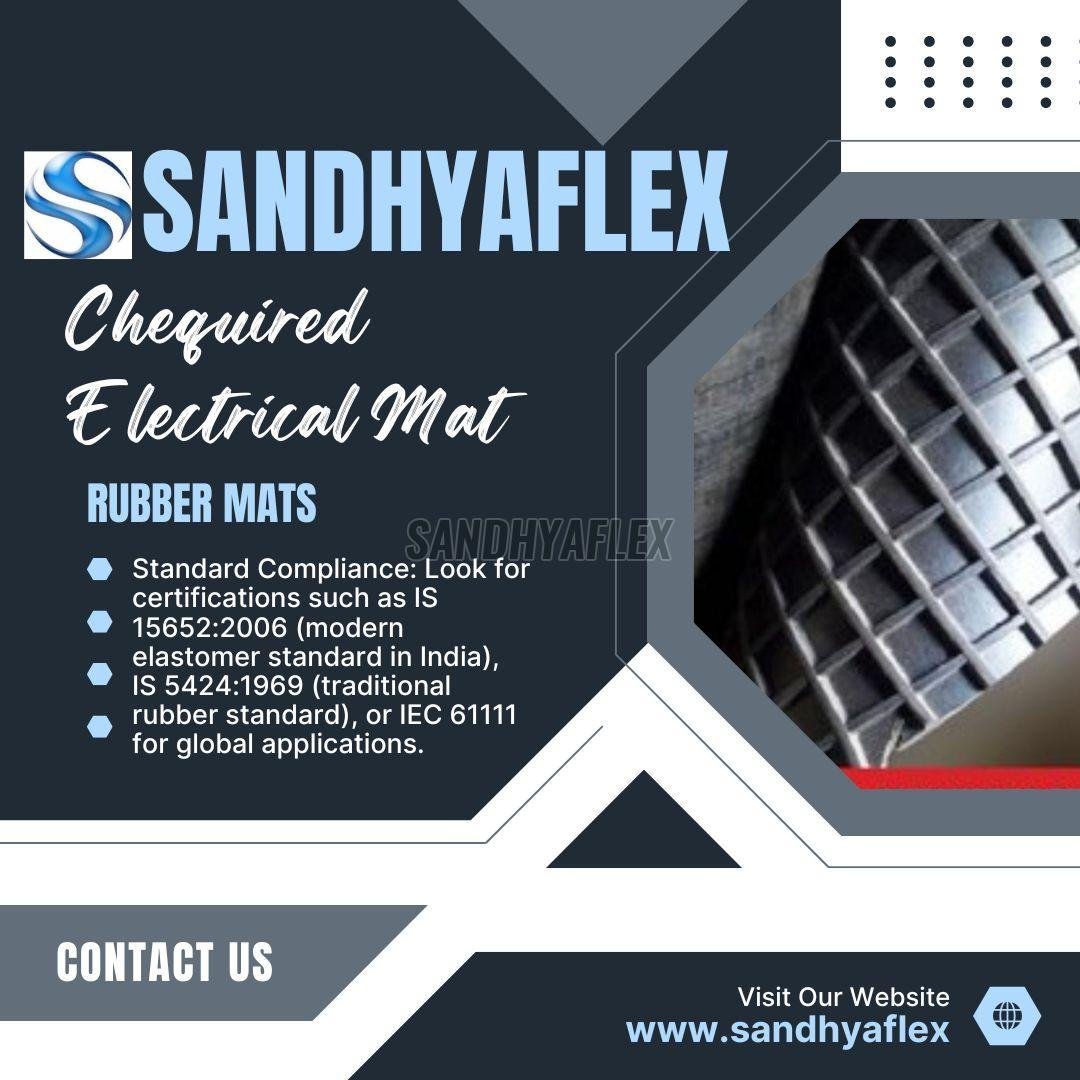
Meets national and international safety standards like IEC 61111, ASTM D178, or IS 15652 (India), ensuring reliability and legal compliance.
Custom Sizes & Classes Available
Available in different classes (Class 0 to Class 4) and sizes to suit specific voltage ratings and applications.
Let me know if you'd like to see a voltage-class chart or need help choosing the right mat for your setup!
| Business Type | Manufacturer, Exporter, Supplier |
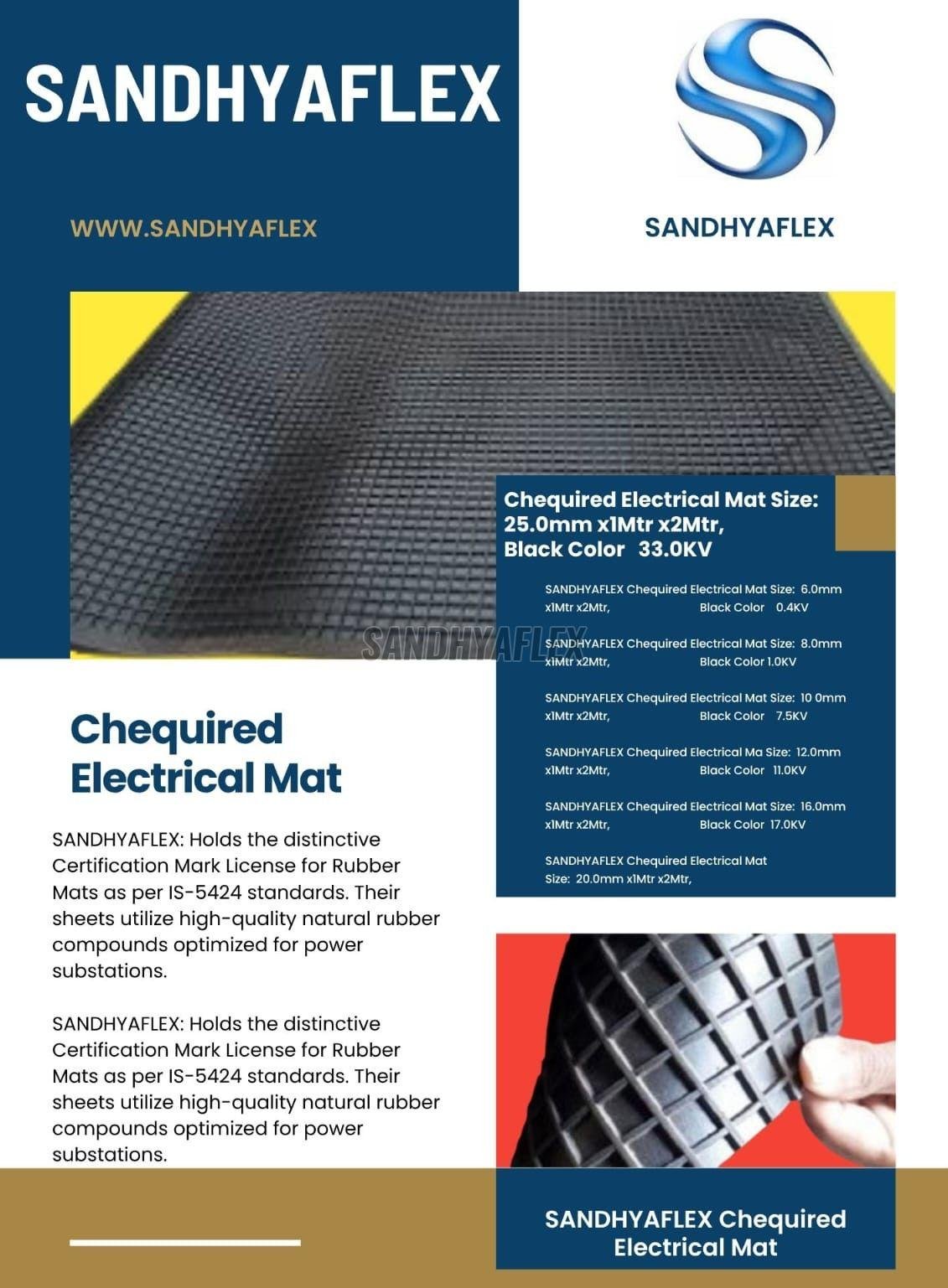
| Size | Class Thickness Grade KV Proof Voltage B/Down Voltage A 2.0 Mm 3.3 10KV/3 Minutes 30 KV B 2.5 Mm 11 |
| Color | Black |
| Usage | An **insulating Mat** (electrical Insulating Rubber Mat) Is Used To Protect People From Electric Sho |
| Type | Insulating Mats Are Commonly Classified By Their **voltage Rating**. The Standard Types Include: | |
| Brand Name | Sandhyaflex |
| Material | Electrical Rubber Mat |
| Thickness | The **thickness Of An Insulating Mat** Depends On Its Voltage Class And The Applicable Standard (suc |
| Storage Type | ### Storage Of Insulating Mats Proper Storage Helps Maintain The Insulating Properties And Extends |
| Product Code | IM |
| Port | Mumbai |
| Payment Terms | L/C |
| Delivery Time | Samedate |
| Packaging Details | ### Packaging Details of Insulating Mat Typical packaging details for electrical insulating rubber mats are: | **Parameter** | **Details** | | --------------------- | ---------------------------------------------------------------------------------------------------------------------------------------------------------------------- | | **Packaging Type** | Rolled and wrapped | | **Primary Packing** | Polyethylene (PE) film or shrink wrap to protect against dust and moisture | | **Secondary Packing** | Corrugated cardboard box or woven HDPE bag (depending on size and quantity) | | **Roll Securing** | Plastic straps or nylon ties | | **Protection** | End caps or protective covers to prevent edge damage during transport | | **Labeling** | Product name, voltage class, dimensions, thickness, batch number, manufacturing date, standard (IEC 61111/IS 15652), manufacturer's details, and handling instructions | | **Storage Condition** | Keep in a cool, dry place away from direct sunlight, heat, oils, and chemicals | | **Transportation** | Transport in a dry, covered vehicle. Avoid sharp objects, excessive bending, folding, or stacking heavy loads on the rolls. | ### Typical Roll Packing * **Width:** 0.9 m, 1.0 m, or 1.2 m * **Length:** 10 m or 20 m per roll (or as required) * **Packing:** One roll wrapped in PE film and packed in a corrugated box or HDPE woven bag. * **Net Weight:** Depends on thickness and dimensions. * **Gross Weight:** Net weight plus packaging material. The exact packaging can be customized based on the customer's requirements, export standards, and the mat dimensions. |
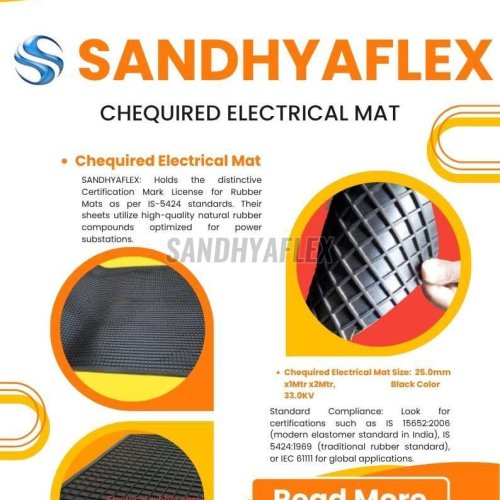
An ISO-9001:2015 certified Co., SANDHYAFLEX INDIA PVT LTD is engaged in Polymer and Rubber Industry from over last three decades. At metro Corporation (Formerly Tata rubber Corporation), we offer premium grade safety mats for electrical purposes. The safety Mats are manufactured with the material having high di-electric strength and a capacity to with stand KV up to 3.3Kg, 11.0KV and 33.0KV. Apart from insulation mats manufacturing, we manufacture several other Industrial Products such as hosepipe, rubber sheets, neoprene, silicon, nitride and other synthetic rubber profiles. The insulating rubber mats ensure the safety of workers while working with high or low voltage electrical equipment. Usually comedies Mats are supposed to be laid on the floor closely to the electrical apparatus; L.T & H.T control panels, switchboards, fuse boxes, switchgear electrical bus bars and heavy machinery. Moreover, the insulation mats are compulsory to be installed in industrial premises to ensure the safety of workers involved in any operation related to electricity generation, transmission or distribution. Dielectric safety Mats we supply comply with the Indian/ National/ International standards of the American Society for Testing and Materials (ASTM), International Electro Technical Commission (IEC) and Bureau of Indian Standards (BIS). We do not compromise with the safety and offers safety mats that provide best safety from electric shocks. Above all, we are dedicated to continuously develop our tools, techniques and products to provide a greater impact on workers safety. Electrical Insulation Mat for Electrical Purposes IS: 15652-2006 (Latest) Enlarge Electrical insulation mat for electrical purposes are used to provide safety to the electricians by offering insulation against electricity and preventing electrical shocks. The mats are effective against both AC and DC installations. The synthetic insulation mats or poly elector safe mats are available for both HT and LT Voltage Panels. They are suitable for system voltages up to 66kV AC and 240 V DC. These insulating mats provide safety as well as ergonomics benefits. Regardless of the type of industry, insulating mats can be used in an electrical shop for the safety of technicians in danger as well as a factory. These electric shock-proof mats and electrical insulation mats provides protection from electrical shock along with working as a cushion for the workers for ergonomical purposes. Moreover, they mats provides cushion surface for the workers to stand for longer time without complaining of ergonomical fatigue. These insulating mats for electrical panels are very useful in industries where any sort of electrical work is involved. Considering the present scenario of Indian Industries, not much attention is paid towards the safety of the workers. Often, many companies forget that ensuring the safety of employees do not require too much efforts. The mats we offer serve an excellent option to introduce a safe working environment on the shop floor. Apart from safety, it also enhances the working conditions by providing the required cushioning to the technicians who are working on the shop floor having a standing job. SANDHYAFLEX INDIA PVT LTD has a history of manufacturing the finest insulating mats in India having optimum quality and safety standards. Moreover, the electrical insulation mats will make the manufacturing facility shockproof and safe. Several areas where these electrical mats find their application are electricity control panels, HT & LT panels, energy sub-stations and power control rooms among others. Classification The electrical rubber insulation mats are in accordance with BIS Standard 15652-06. It is divided into three classes based on Voltage Ratings. The three classes differ depending on thickness of mats, Voltage Grade, proof voltage and break down voltage. Electrical Insulation Mat Voltage Ratings ClassThicknessGrade KVProof voltageB/Down voltage A 2.0 mm