sandhyaflexbiz@gmail.com - GST NO. : 36ABTCS2276B1Z4
- Send Email

Building Construction Products
Leading Manufacturers, Exporters, Wholesaler, Retailer of 12mm Bitumen Mastic Pad, 20mm Bitumen Mastic Pad, 38mm pvc handrail, 50mm PVC Hand Rail, 8mm HDPE Dimple Board, Anti Vibration Mounting Pads, Binding Wire, Bridge Bearings, construction binding wire, EPDM Vibrating Screen Rubber Beading, GI Coated Armored Joint, Hessian Cloth Curing, Hospital PVC Hand Rail Profiles, LDPE Foam Sheet, Low Density Polyethylene Film, MS Grating, Neoprene Elastomeric Bridge Bearing, Panel PVC Hand Rail, Pot PTFE Bridge Bearing, Pot PTFE Sliding Bearing, PTFE Pot Bearings and PVC Hand Rail from Hyderabad.
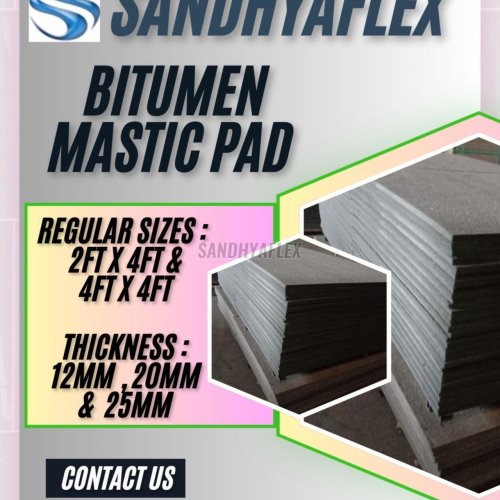
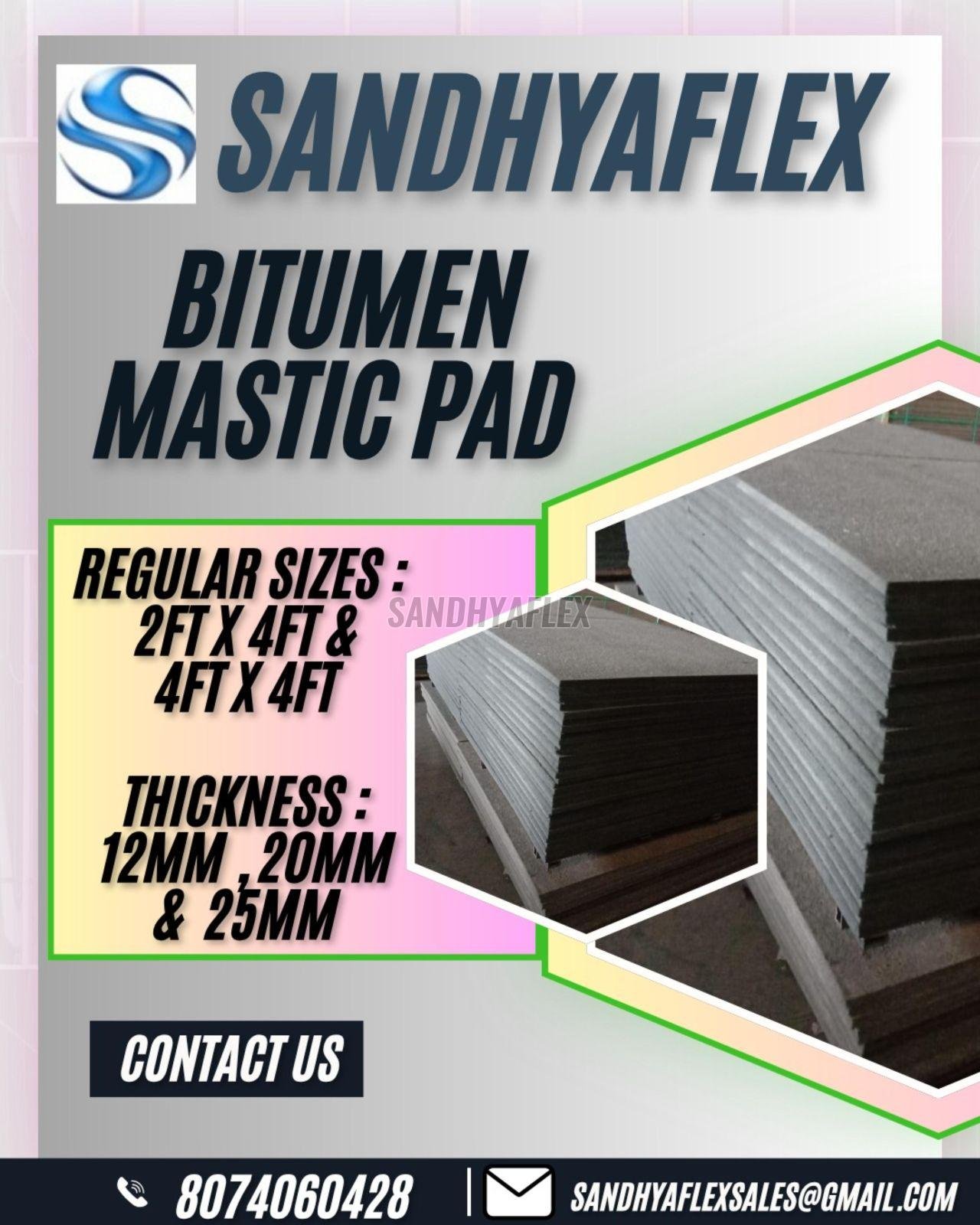
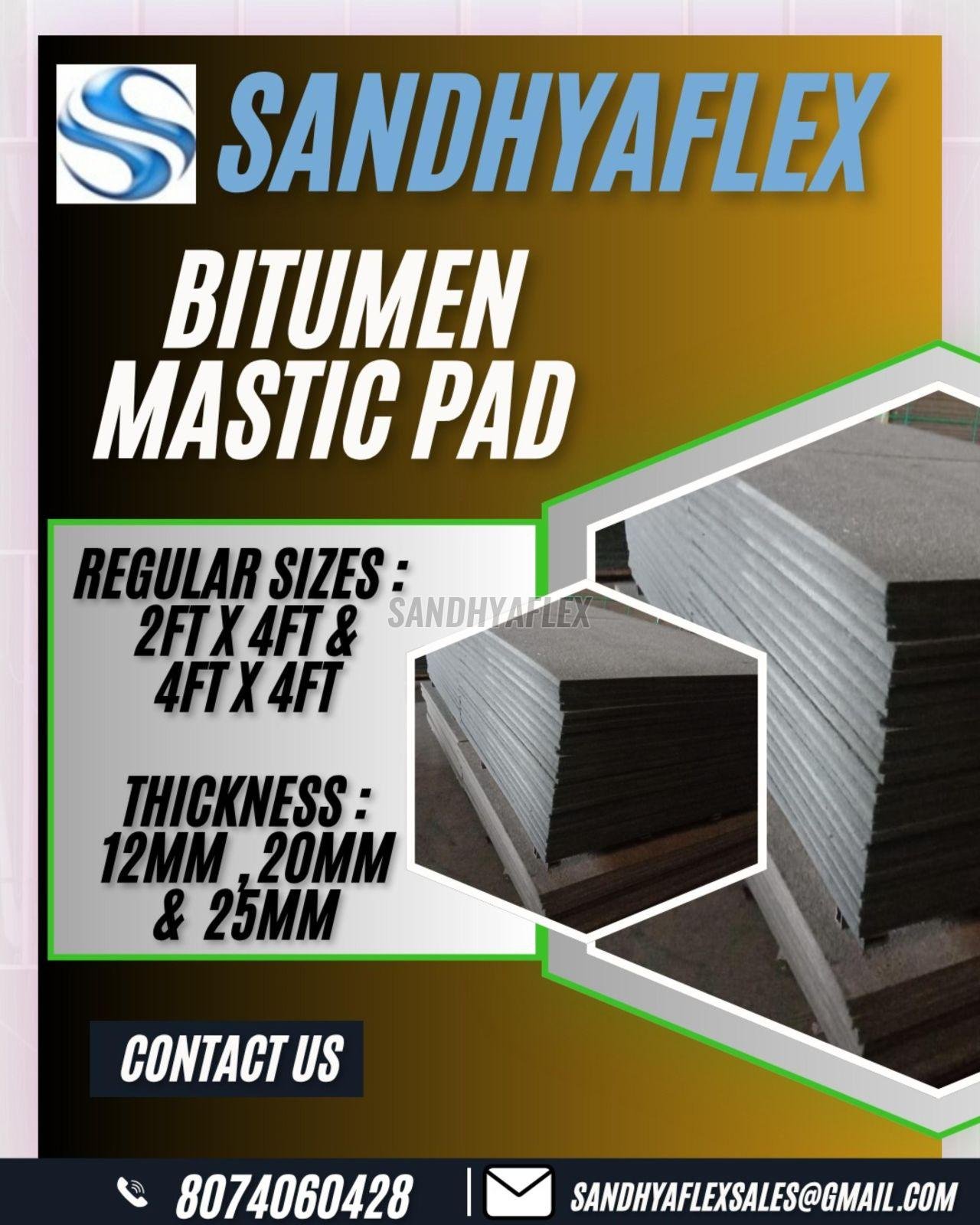
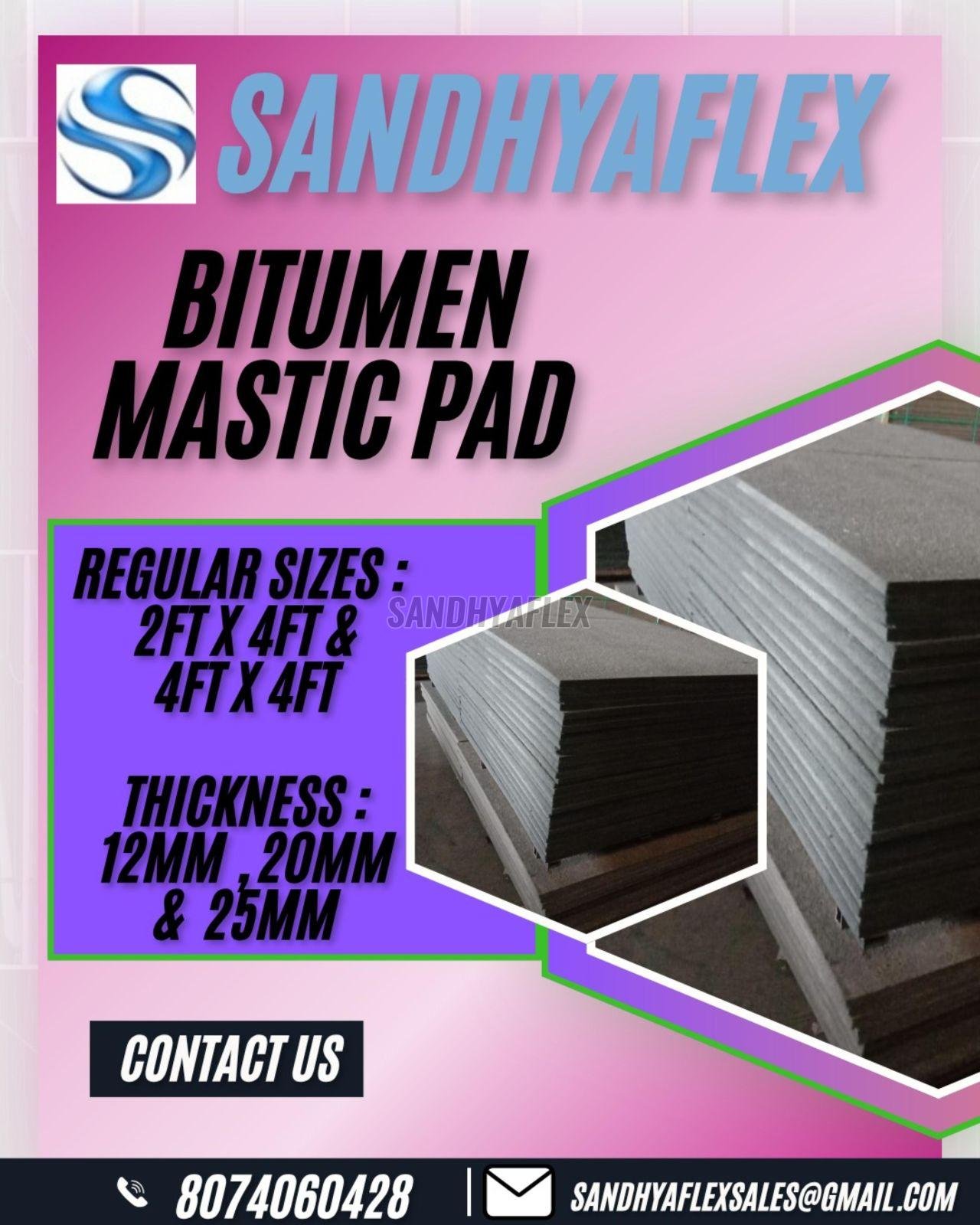
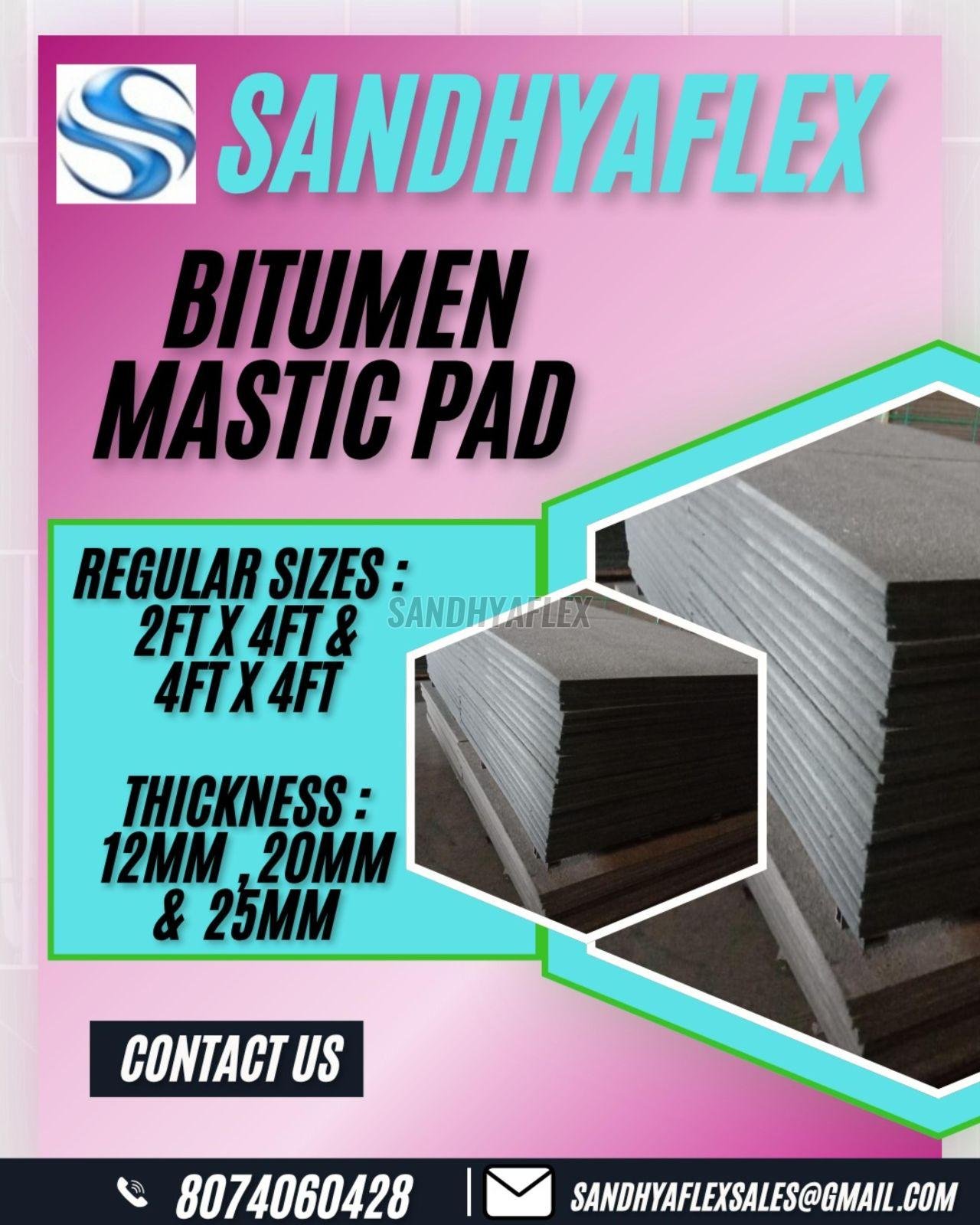
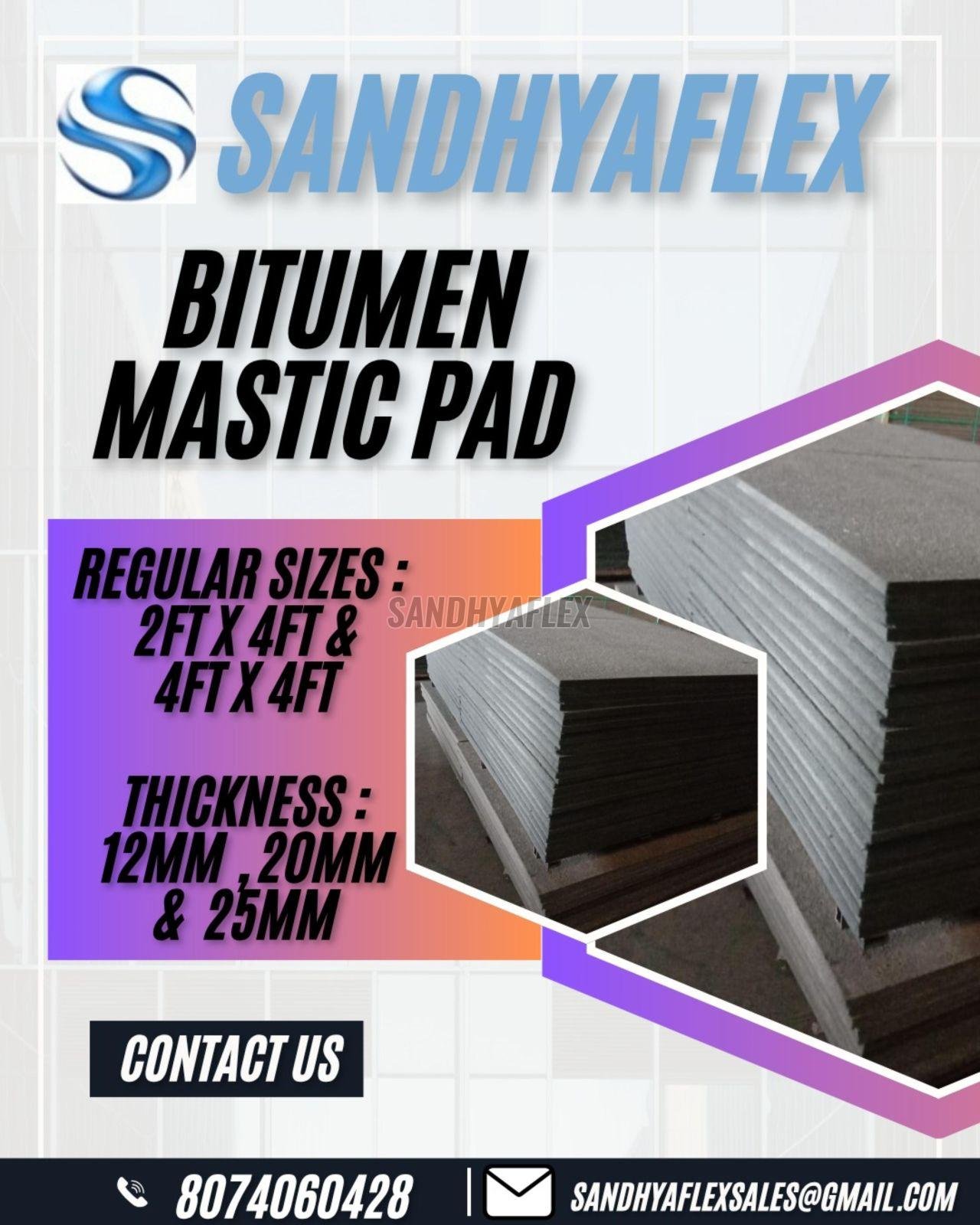
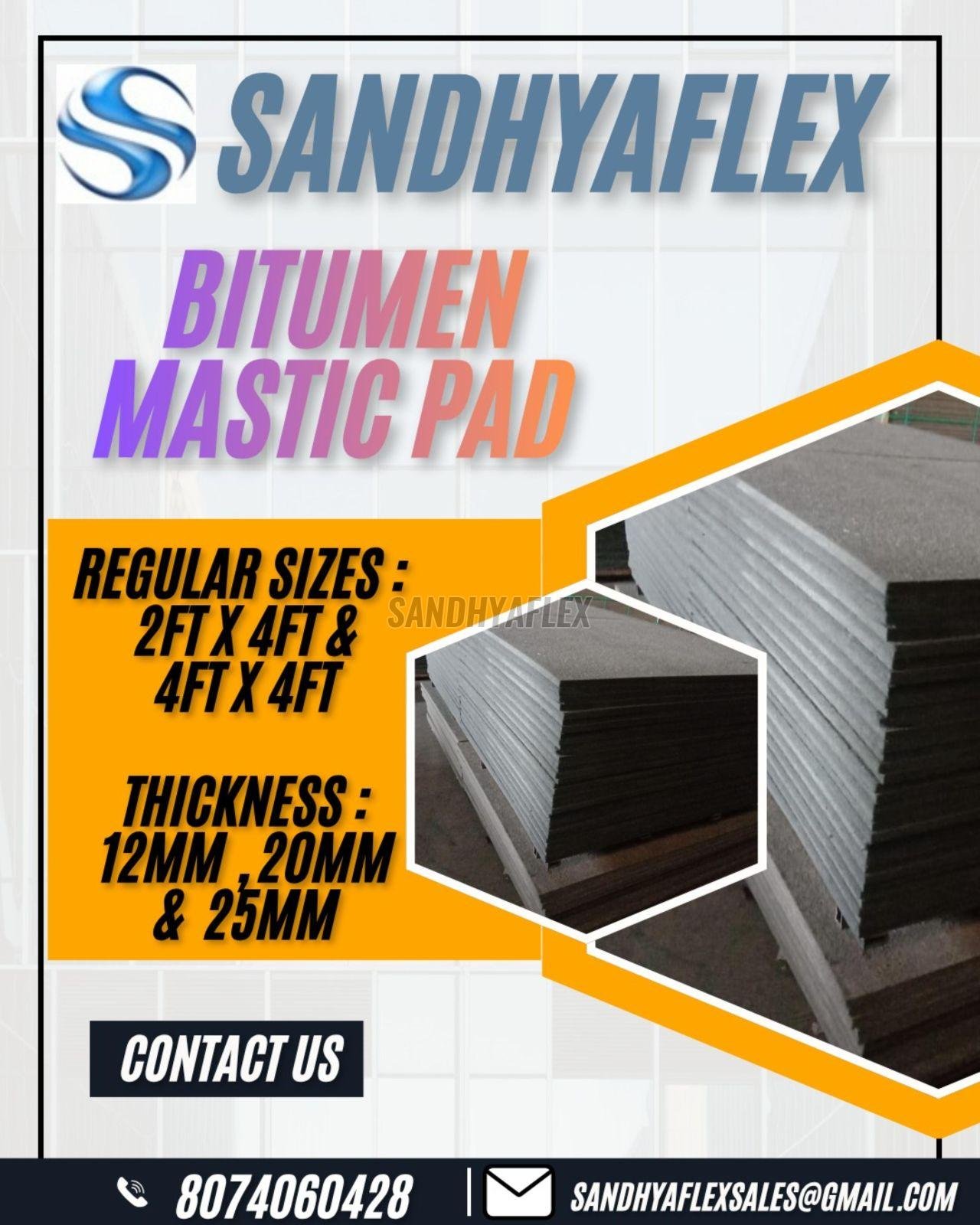
| Business Type | Manufacturer, Exporter, Supplier |
| Brand Name | SNDHYAFLEX |
| Material | Bitumen Pad |
| Shape | Square |
| Color | Black |
| Application | Applications Rail track support systems Precast concrete joints Heavy machinery base isolation |
| Certification | ISO:9001-2015 |
| Length | 2-4feet |
| Port | mumbai |
| Delivery Time | 2 to 7 days |
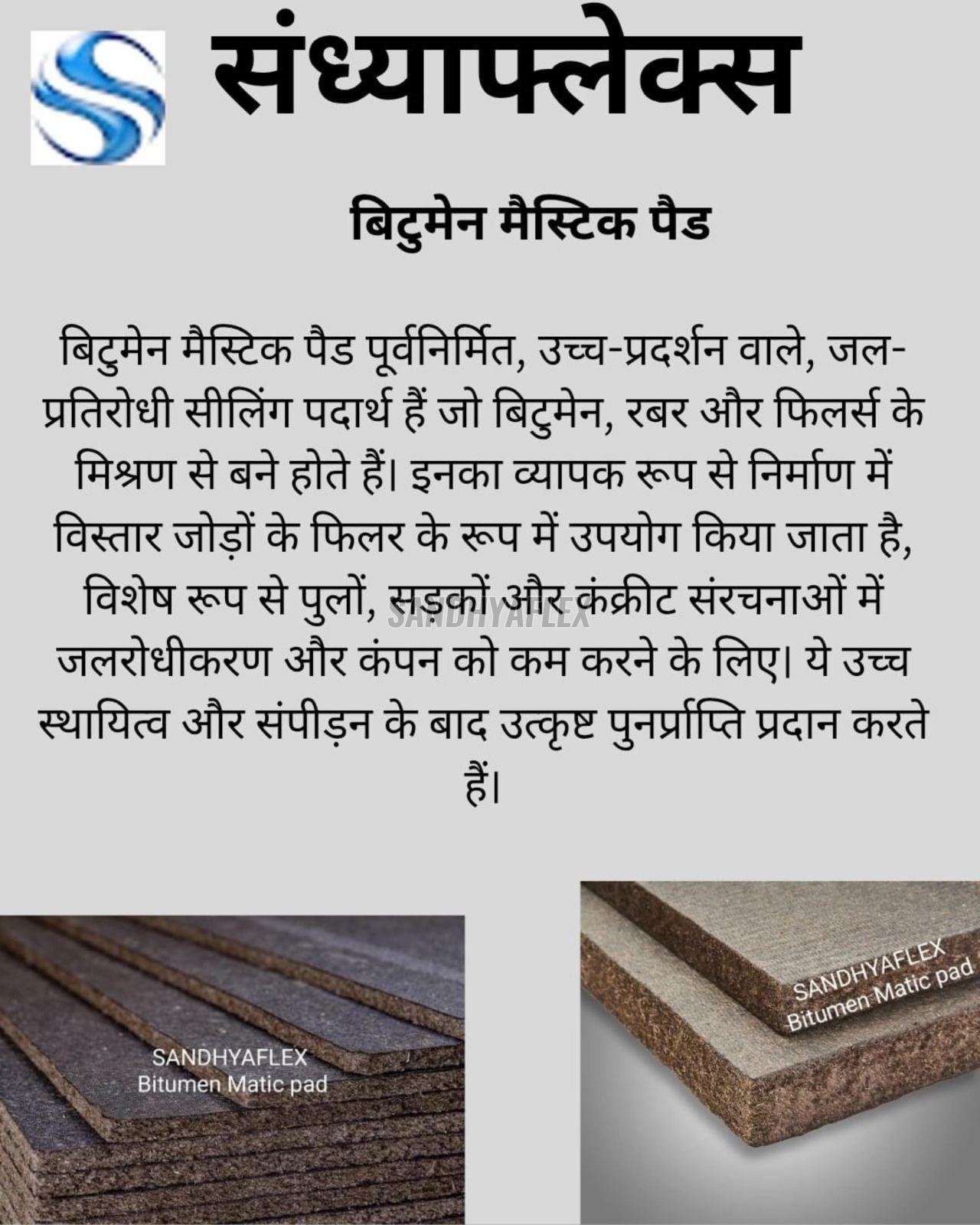
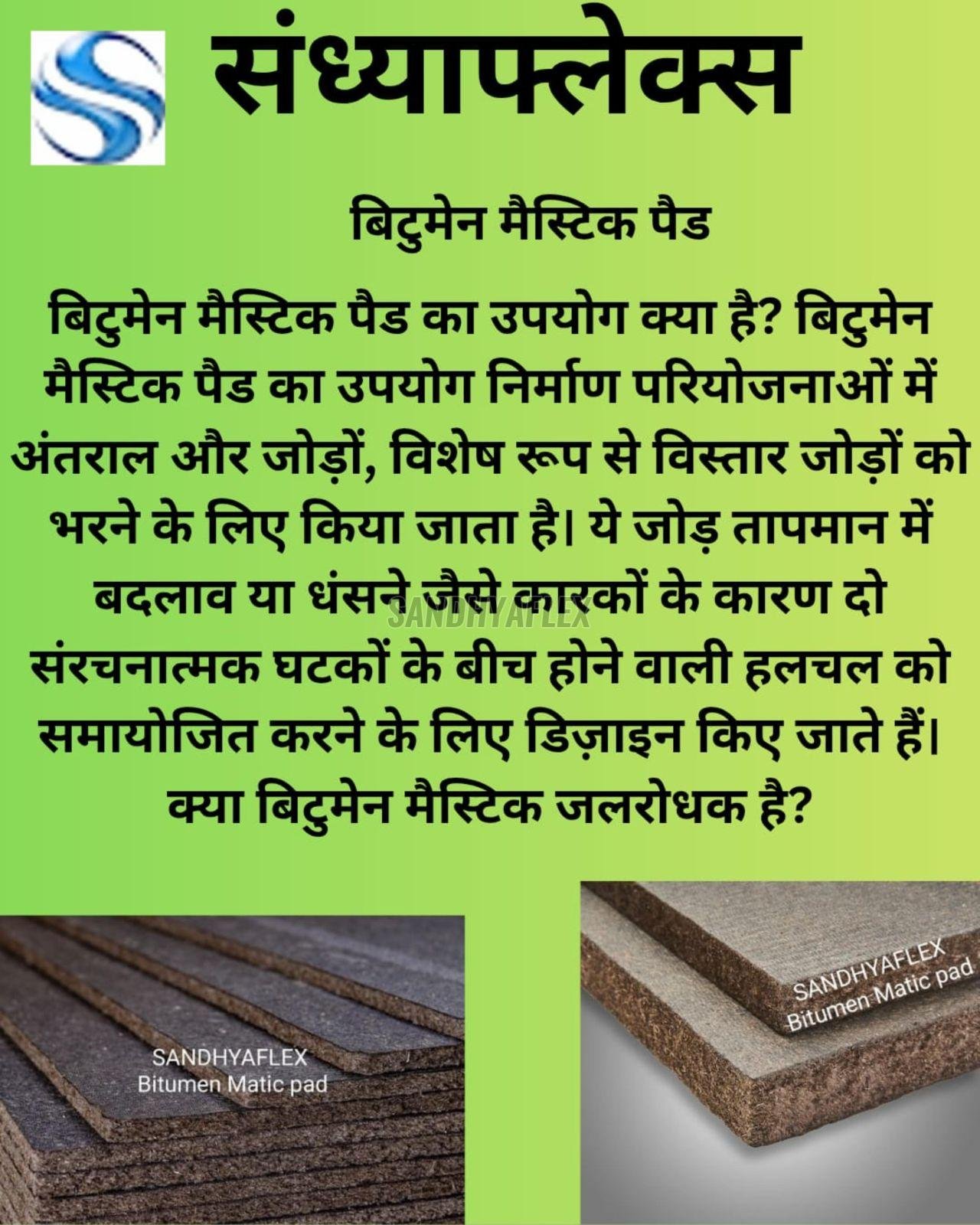
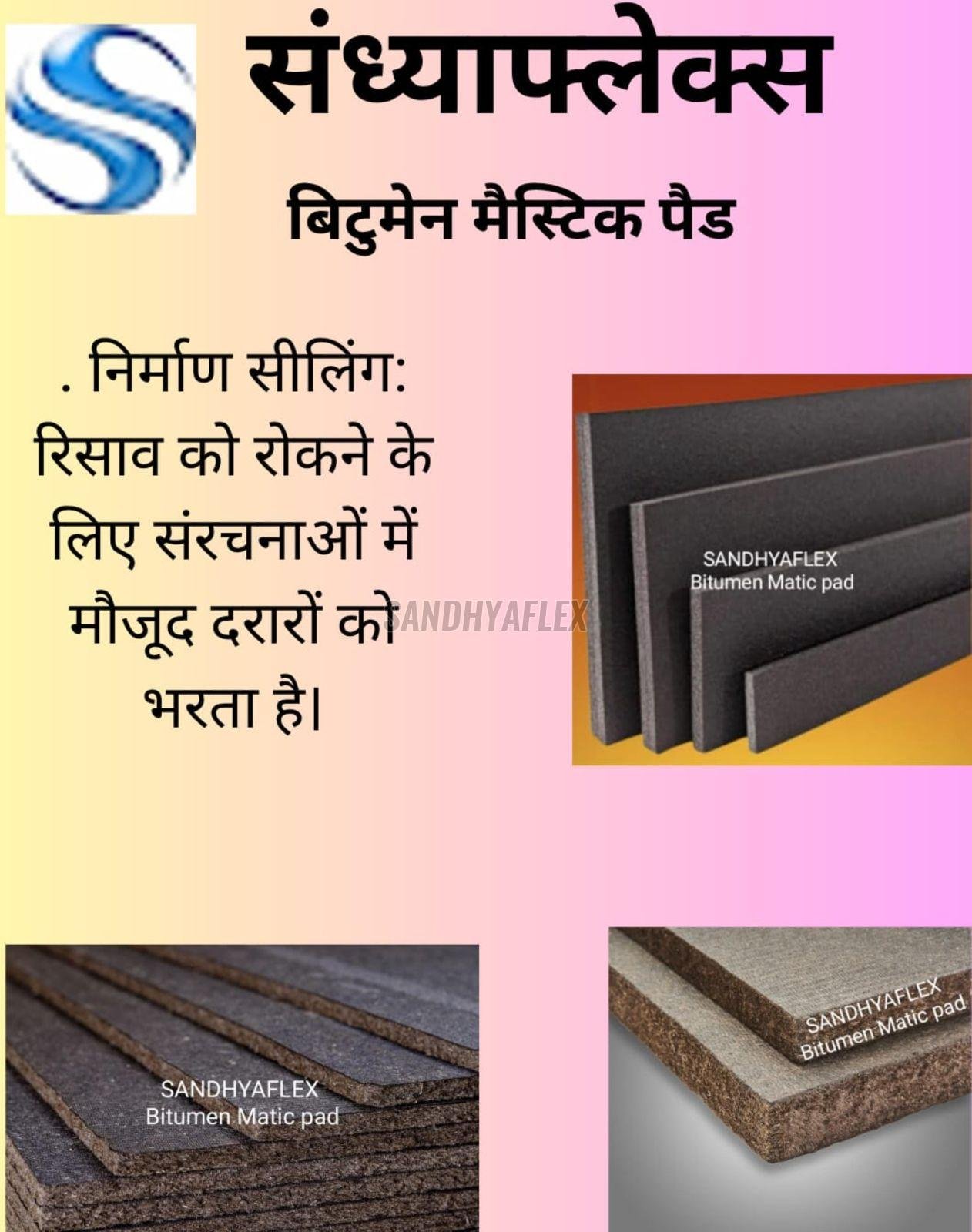
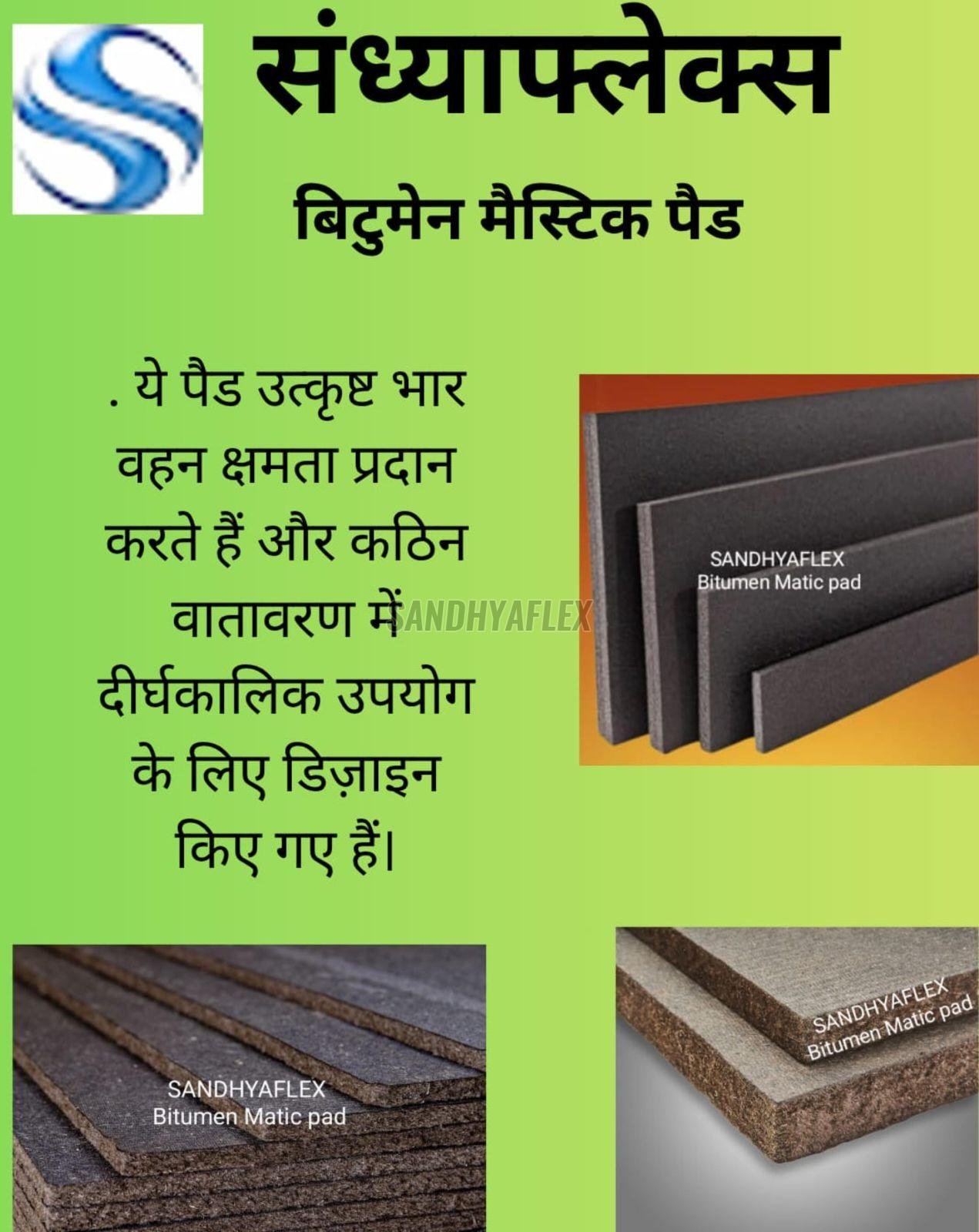
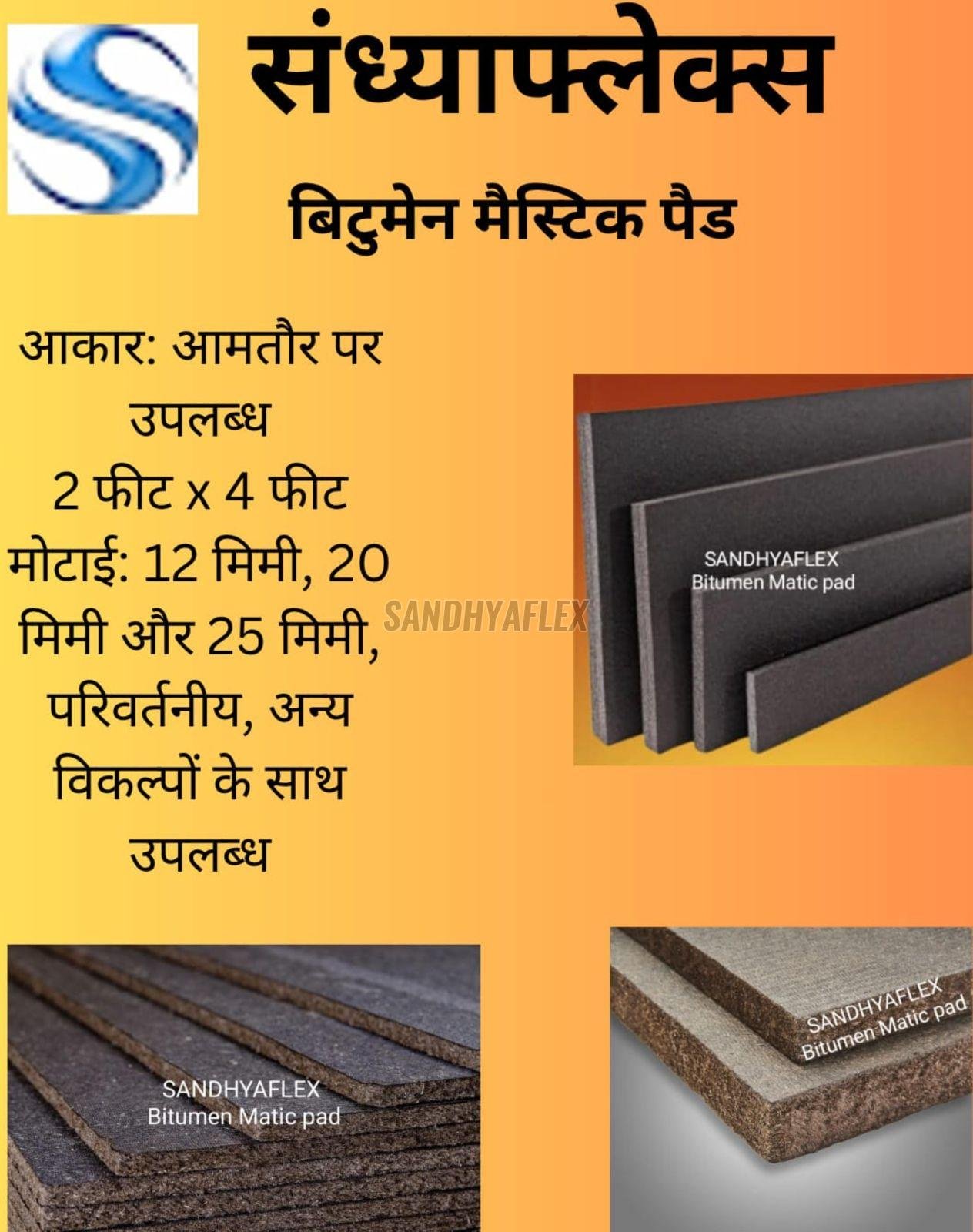
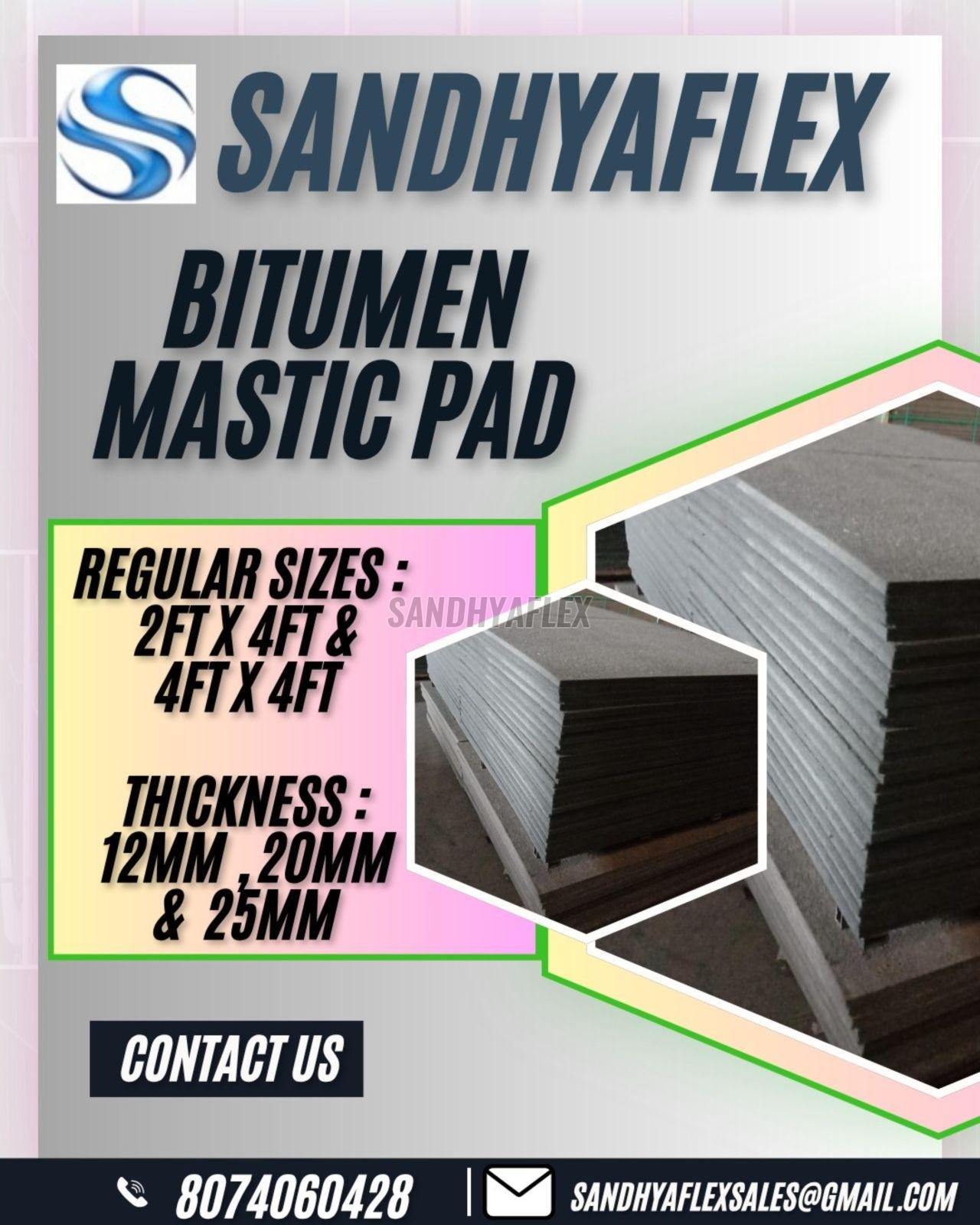
For SANDHYAFLEX 12mm × 2ft × 4ft Bitumen Mastic Pad, the key purpose is bridge bearing cushioning, expansion joint filling, and vibration absorption. This is a heavy-duty waterproof and compressible pad widely used in civil construction projects.
📌 Product Overview
SANDHYAFLEX Bitumen Mastic Pad (12mm thick, 2ft × 4ft) is a preformed flexible pad made from bitumen, mineral fillers, and rubber additives, designed to:
Absorb vibration & load movement
Provide watertight sealing
Act as a shock-absorbing layer between concrete structures
⚙️ Technical Specifications
| Size | 12mm thickness × 2ft × 4ft |
| Material | Bitumen + mineral filler + rubber |
| Density | ~1.8 – 2.0 g/cm³ |
| Compression | High load-bearing capacity |
| Water Absorption | Very low (waterproof) |
| Temperature Resistance | Up to ~70–80°C |
| Finish | Smooth / semi-flexible sheet |
🔧 Key Features
✔ Excellent shock absorption → reduces structural stress
✔ Waterproof & weather-resistant
✔ High compressive strength → supports heavy loads
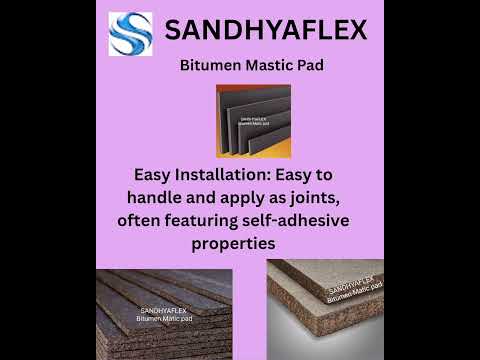
✔ Flexible & easy to install
✔ Resistant to chemicals & ageing
🏗️ Where It Is Used
Bridge Construction
Bridge bearings
Deck slabs
Expansion joints
Structural Projects
Flyovers
Metro projects
Industrial foundations
Other Applications
Rail track support systems
Precast concrete joints
Heavy machinery base isolation
👉 Mainly used where load transfer + movement + vibration control is required.
📊 Advantages vs Traditional Materials
| Load Capacity | High | Medium |
| Waterproofing | Excellent | Moderate |
| Cost | Economical | Higher |
| Durability | High | High |
| Installation | Easy | Easy |
💰 Typical Price (India)
Approx ₹300 – ₹600 per piece (2ft × 4ft × 12mm)
(Depends on quality and quantity)
✅ Final Recommendation
Best for bridges & heavy structures → 12mm pad (standard choice)
For higher load → use thicker pads (15mm–25mm)
For light structures → thinner pads (6mm–10mm)
🧠 Simple Conclusion
SANDHYAFLEX 12mm Bitumen Mastic Pad = Strong + Waterproof + Shock-absorbing solution for heavy construction joints
If you want, I can also help you with:
IS standard specifications
Load calculation / thickness selection
Or a sales brochure/catalog for your products

| Business Type | Manufacturer, Exporter, Supplier |
| Brand Name | SNDHYAFLEX |
| Material | Bitumen Mastic Pad |
| Shape | Square |
| Color | Black |
| Application | Applications Heavy machinery foundations Precast concrete structures Industrial flooring joints |
| Certification | ISO:9001-2015 |
| Length | 2-4feet |
| Product Code | 20mmBMP |
| Port | mumbai |
| Delivery Time | 2 to 7 days |
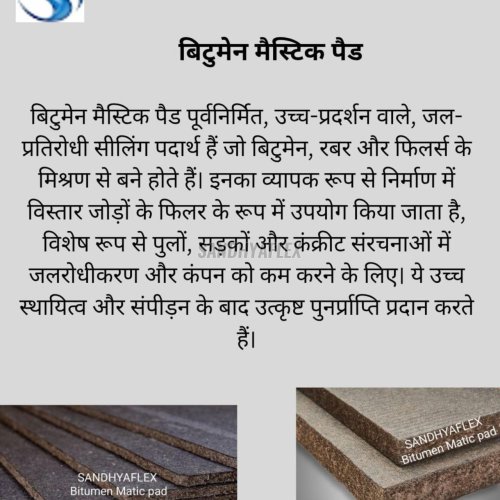
For SANDHYAFLEX 20mm × 2ft × 4ft Bitumen Mastic Pad, this is a heavy-duty grade used where higher load, movement, and vibration absorption are required compared to 12mm pads.
📌 Product Overview
SANDHYAFLEX 20mm Bitumen Mastic Pad is a thick, compressible, waterproof sheet made from bitumen + mineral fillers + rubber compounds, designed for load transfer and expansion joints in major infrastructure projects.
⚙️ Technical Specifications
| Size | 20mm thickness × 2ft × 4ft |
| Material | Bitumen + mineral filler + rubber |
| Density | ~1.8 – 2.0 g/cm³ |
| Compression Strength | Very High |
| Water Absorption | Negligible (Waterproof) |
| Temperature Resistance | Up to ~70–80°C |
| Finish | Semi-flexible sheet |
🔧 Key Features
✔ Higher thickness (20mm) → more load bearing capacity
✔ Excellent shock & vibration absorption
✔ Waterproof and weather-resistant
✔ Prevents direct concrete-to-concrete contact
✔ Long life with low maintenance
🏗️ Where It Is Used
Heavy Infrastructure
Bridges & flyovers (bearing pads)
Metro rail & elevated corridors
Highway expansion joints
Industrial Applications
Heavy machinery foundations
Precast concrete structures
Industrial flooring joints
Railway Projects
Track support cushioning
Structural vibration control
👉 20mm pads are used where movement + heavy load + durability are critical.
📊 20mm vs 12mm Bitumen Pad
| Load Capacity | Very High | High |
| Shock Absorption | Excellent | Good |
| Thickness | 20mm | 12mm |
| Use Case | Heavy projects | Standard projects |
| Cost | Higher | Lower |
💰 Typical Price (India)
Approx ₹500 – ₹900 per piece (2ft × 4ft × 20mm)
(Depends on quality & quantity)
✅ Final Recommendation
Heavy load / bridge work → 20mm pad (best choice)
Normal construction → 12mm pad
Extreme load → consider 25mm or layered pads
🧠 Simple Conclusion
SANDHYAFLEX 20mm Bitumen Mastic Pad = Maximum strength + vibration control + long-term durability for heavy infrastructure
If you want, I can also:
Suggest which thickness suits your project load
Create a product datasheet or quotation format
Or help you compare with neoprene bearing pads
| Business Type | Manufacturer, Exporter, Supplier |
| Brand Name | SNDHYAFLEX |
| Material | PVC Hand Rial |
| Color | Black |
| Port | mumbai |
| Payment Terms | L/C |
| Delivery Time | 7 days |
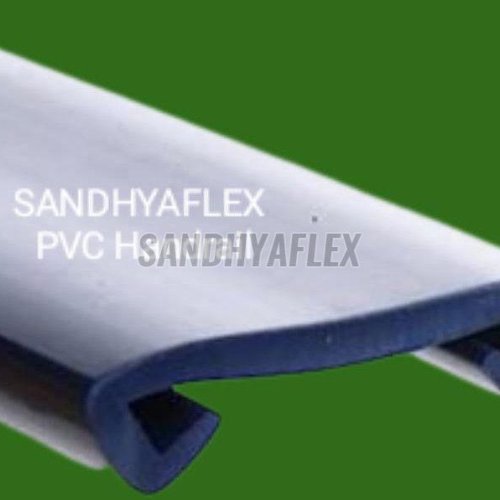
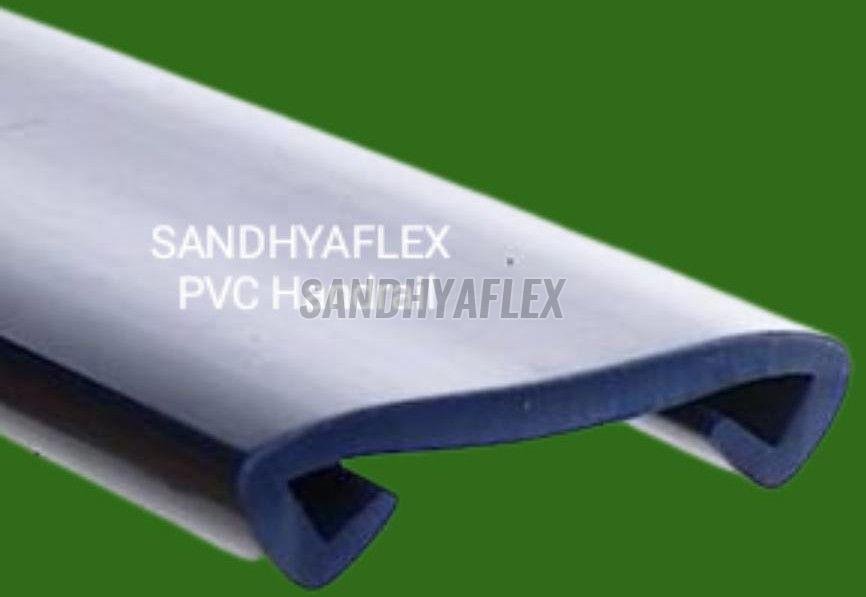
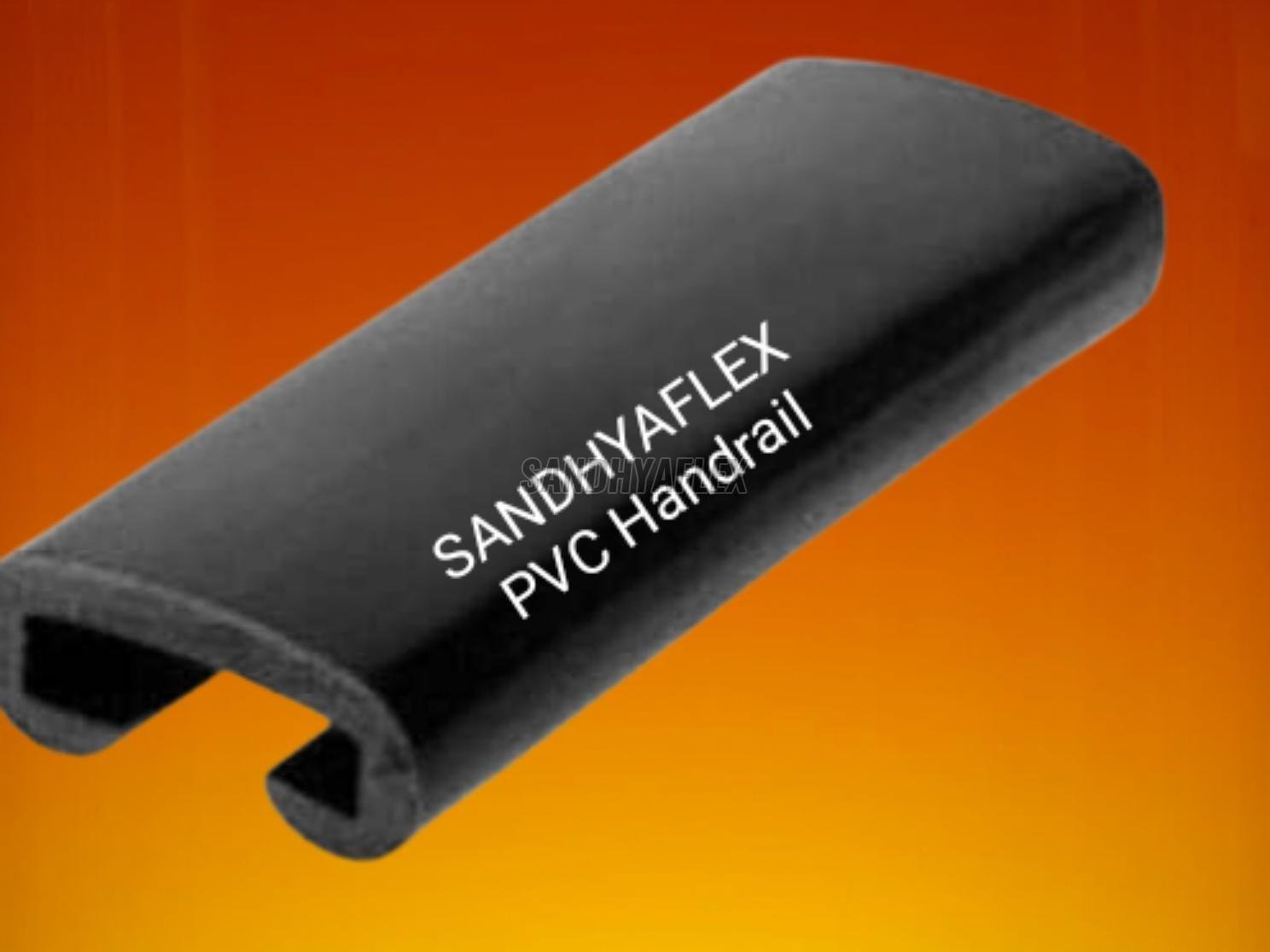
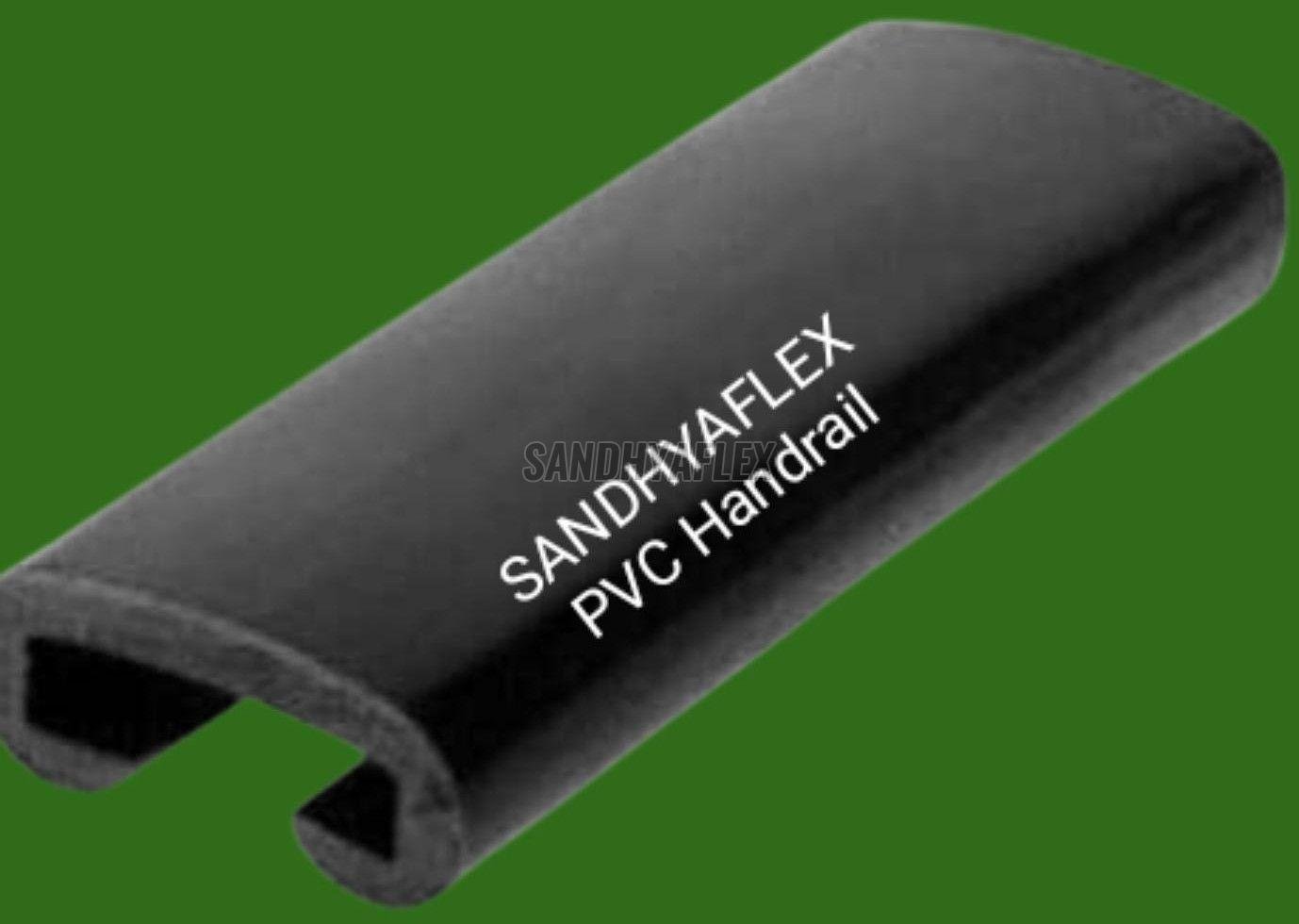
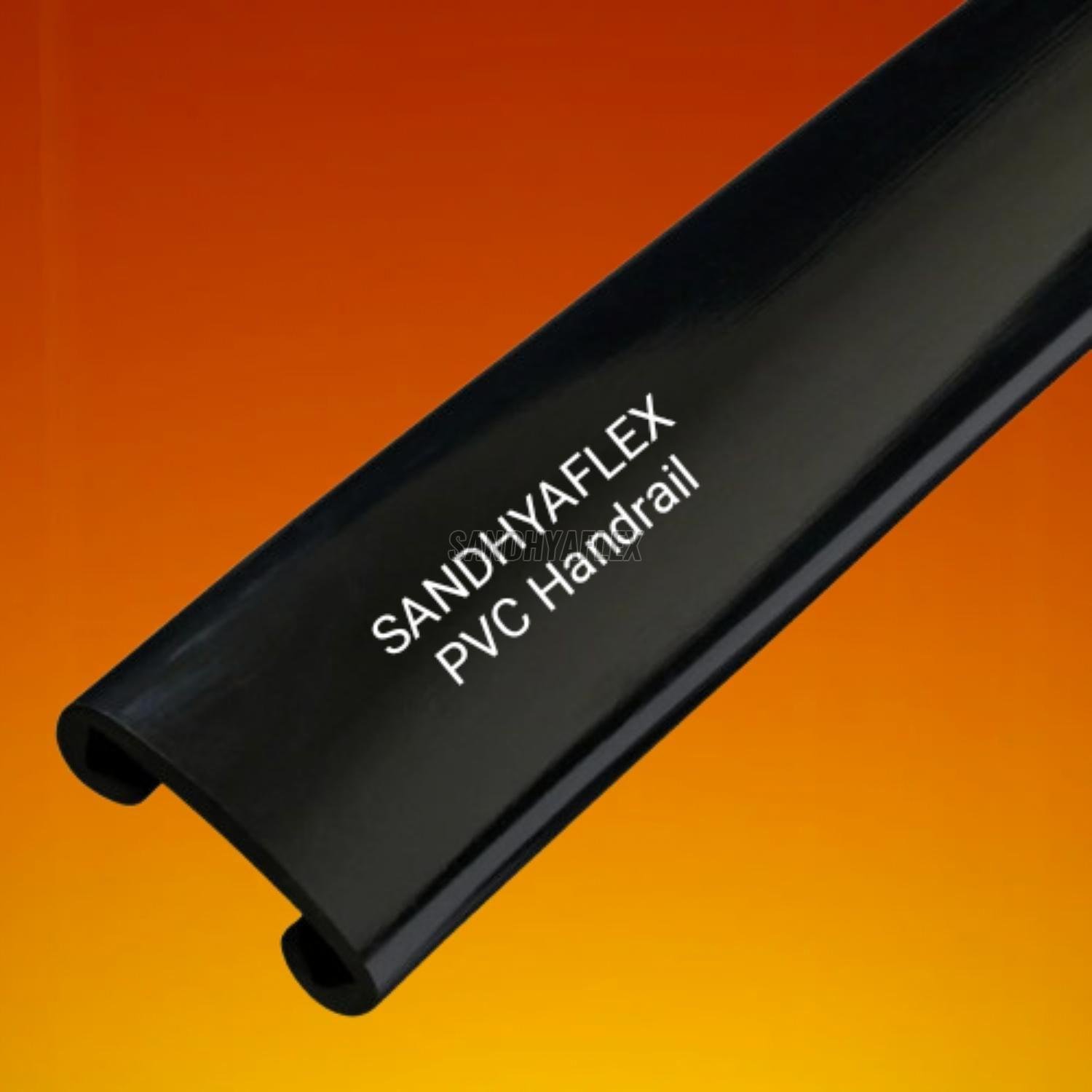
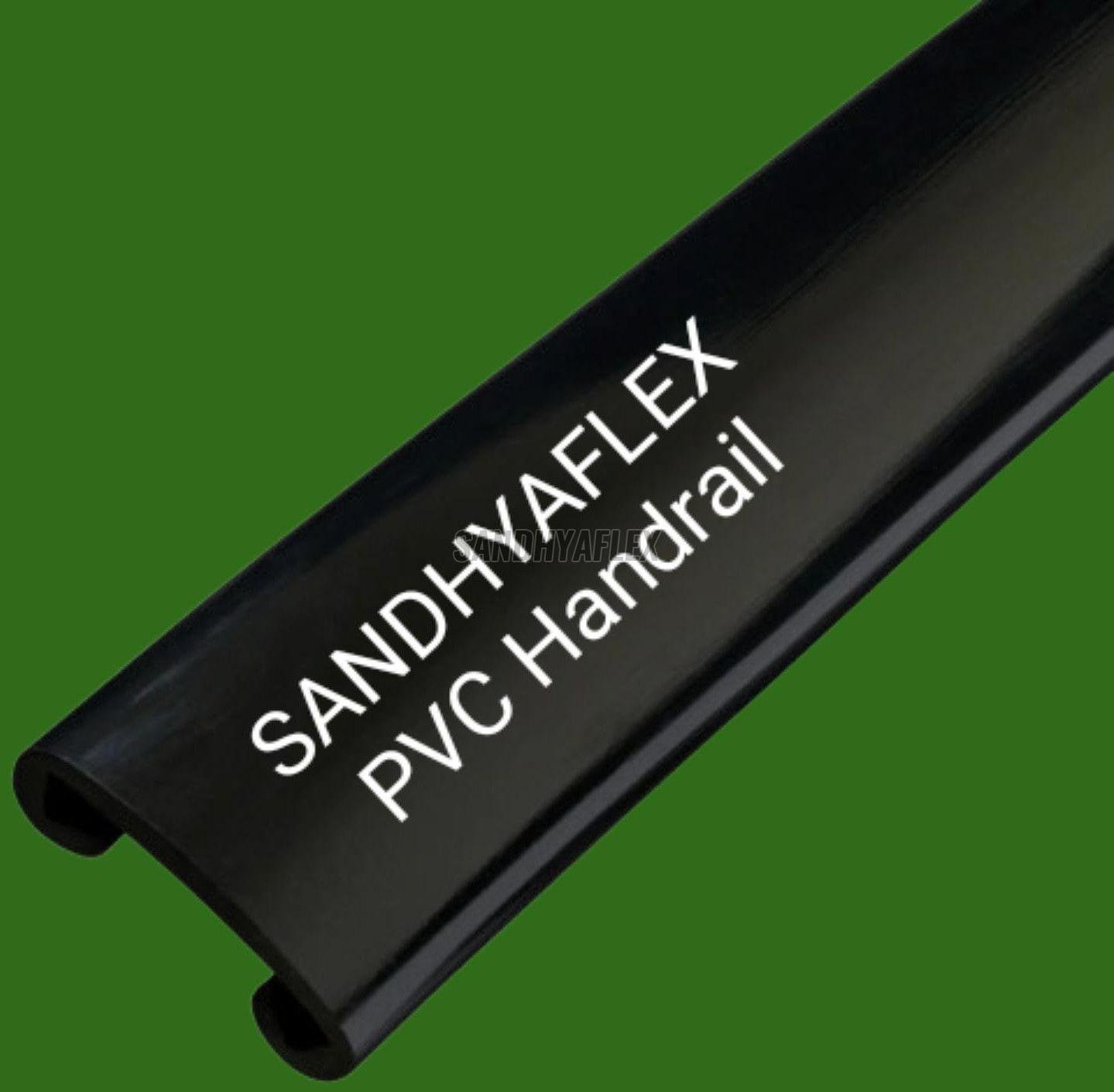
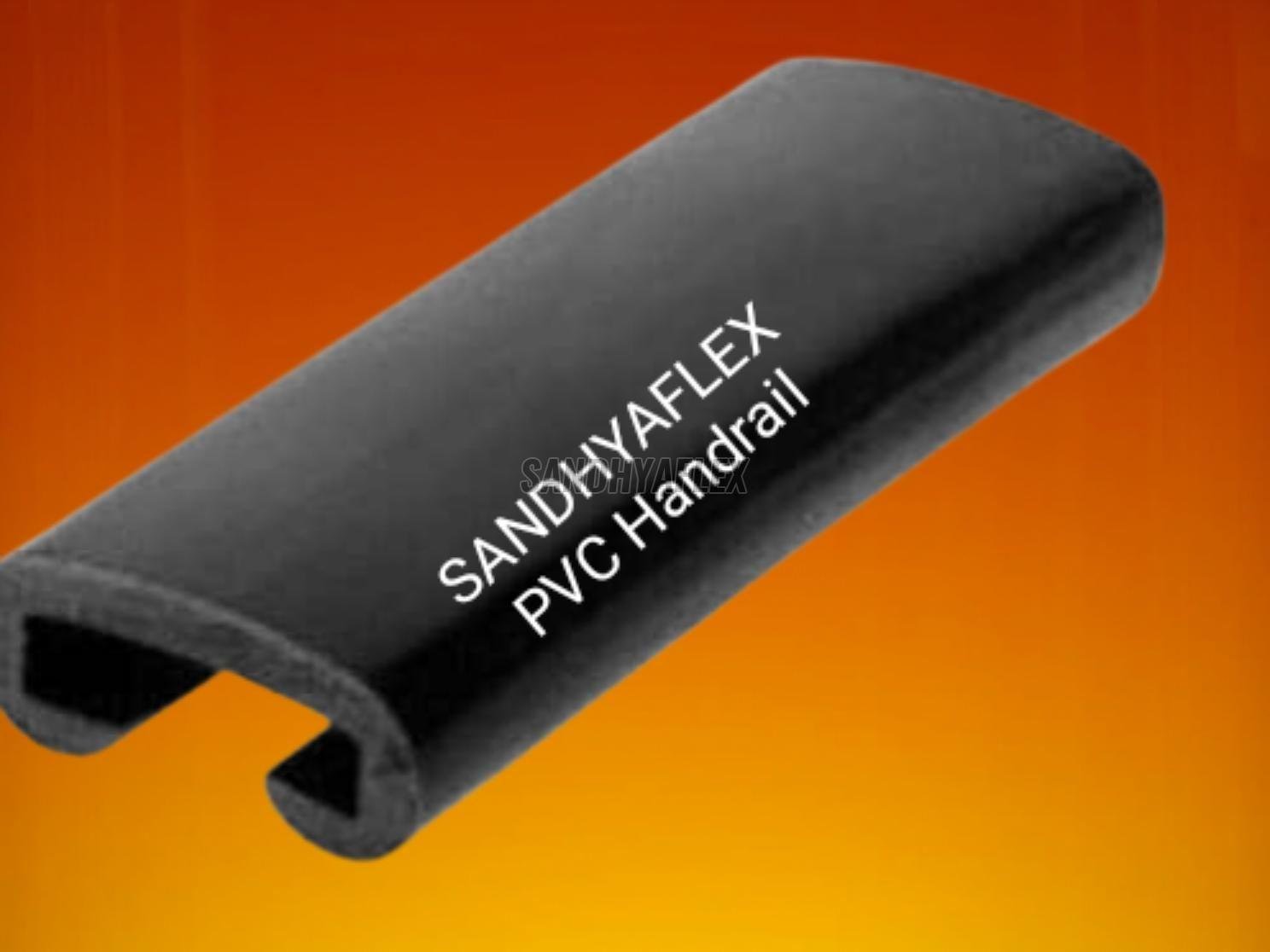
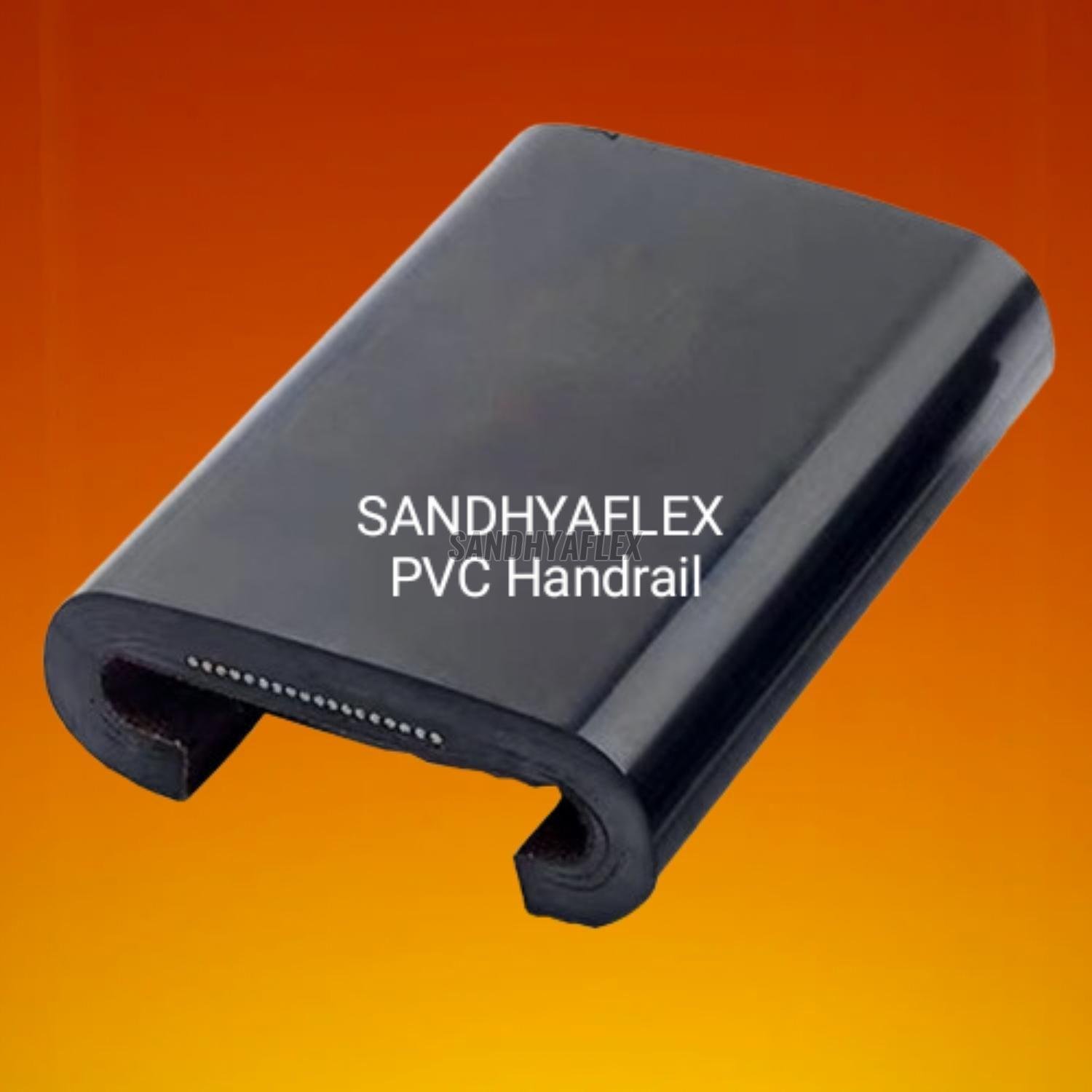
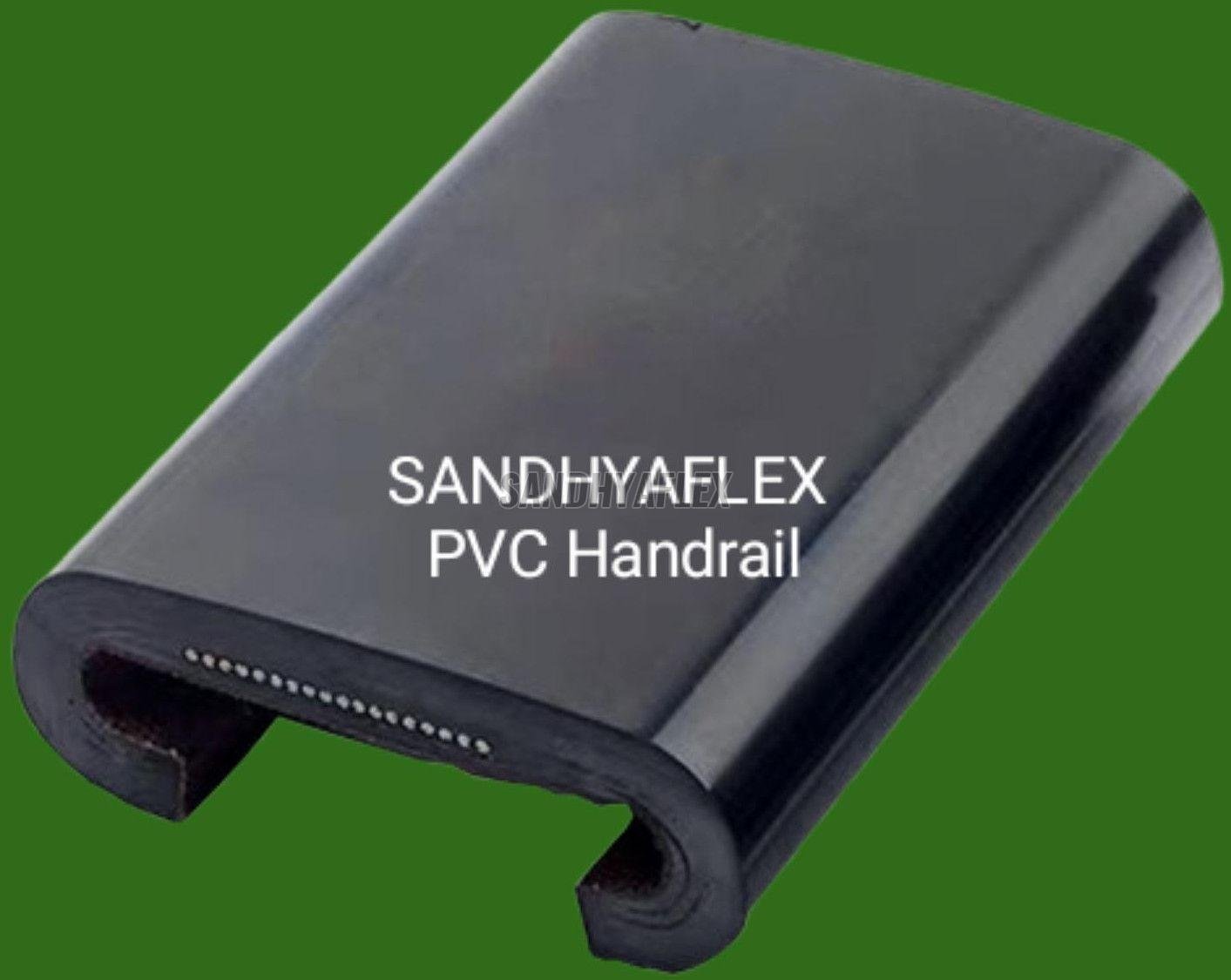
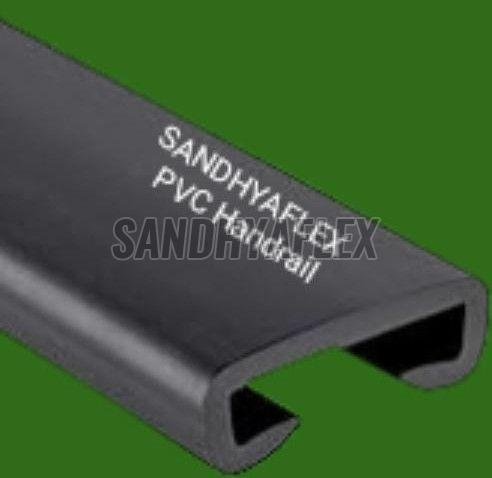
For SANDHYAFLEX 38mm PVC Hand Rail, the key buying factors are grip comfort (38mm diameter), flexibility for bending, durability, and application (staircase vs industrial). The 38mm size is the most commonly used standard, offering the best balance between strength and comfort.
🏆 Best Overall (38mm Industrial PVC Hand Rail)✔ Ideal for industrial + residential use
✔ Comfortable 38mm grip size (standard)
✔ Economical and widely available
👉 Typical price: around ₹80/meter (Read More...
| Business Type | Manufacturer, Exporter, Supplier |
| Brand Name | SNDHYAFLEX |
| Material | PVC Hand Rial |
| Color | Black |
| Product Code | 50MMPVCHR |
| Port | mumbai |
| Delivery Time | 7days |
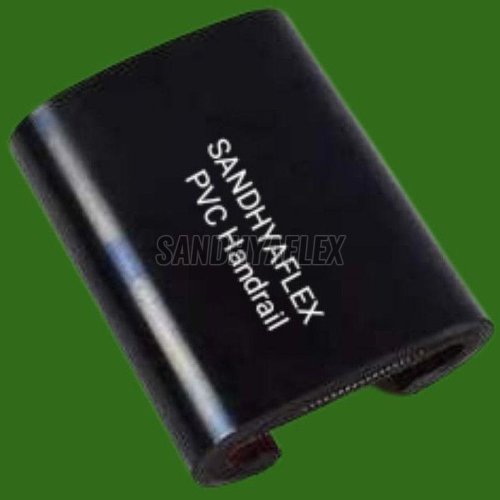
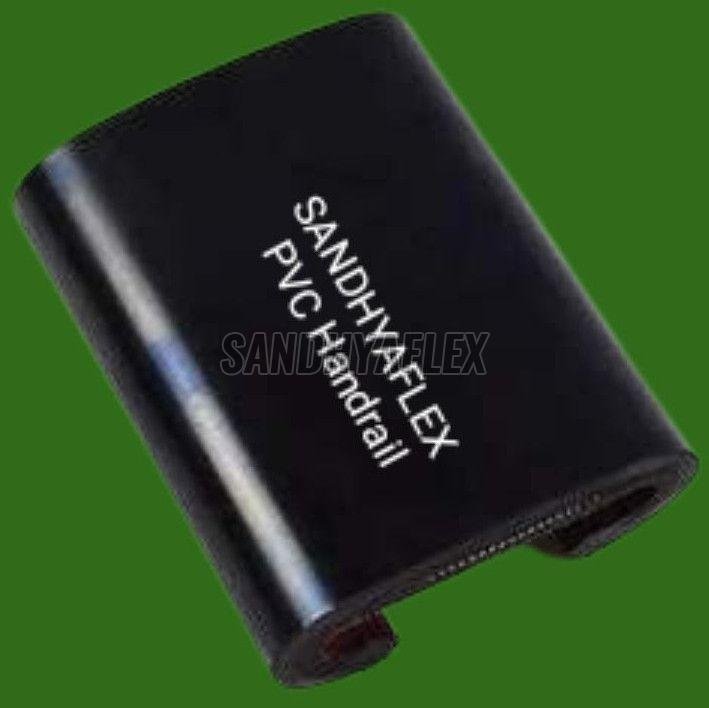
When choosing a SANDHYAFLEX 50mm PVC Hand Rail, the key decision factors are diameter (50mm for strong grip), durability, flexibility for bending, and industrial vs residential use. The 50mm size is considered heavy-duty, best for industrial safety and high-traffic areas.
🏆 Best Overall (50mm Heavy-Duty PVC Hand Rail)✔ Strong 50mm diameter → excellent grip & safety
✔ Ideal for industrial plants & heavy-use staircases
✔ Flexible PVC → easy bending using hot water
-
Best for factories & construction sites
-
Strong and long-lasting
-
Suitable for homes & small projects
-
Lower cost option
-
Better design & finish
-
Used in commercial buildings & showrooms
| Business Type | Manufacturer, Exporter, Supplier, Retailer |
| Brand Name | SNDHYAFLEX |
| Condition | New |
| Application | Roofing |
| Feature | Best Quality |
| Country of Origin | India |
| Port | mumbai |
| Delivery Time | 7 to 15 days |
| Packaging Details | packing in coil |
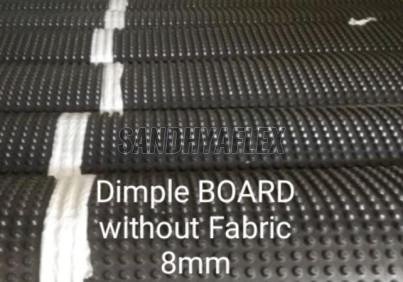
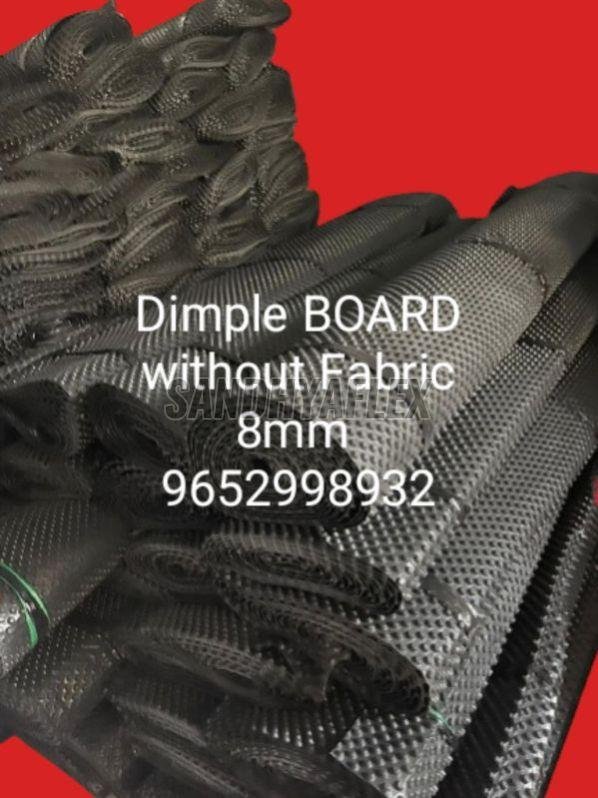
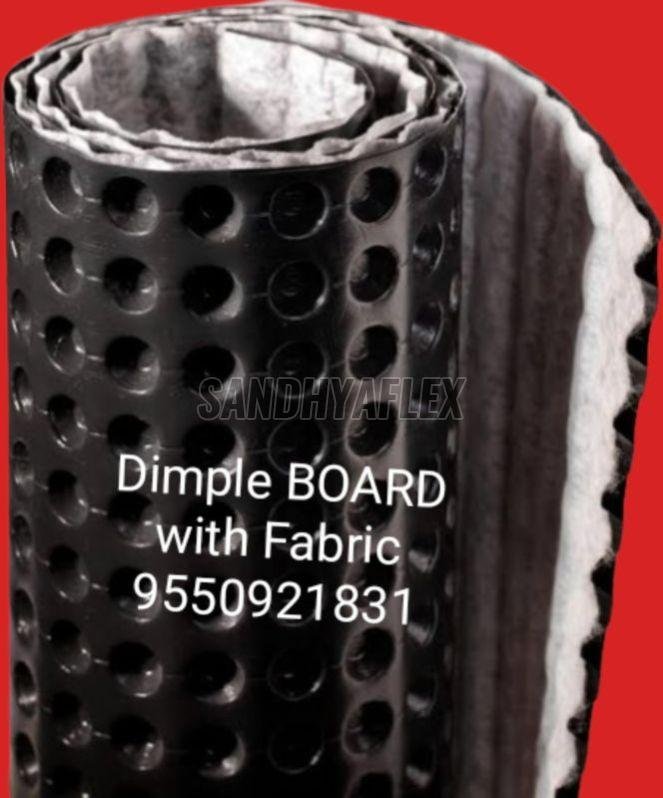
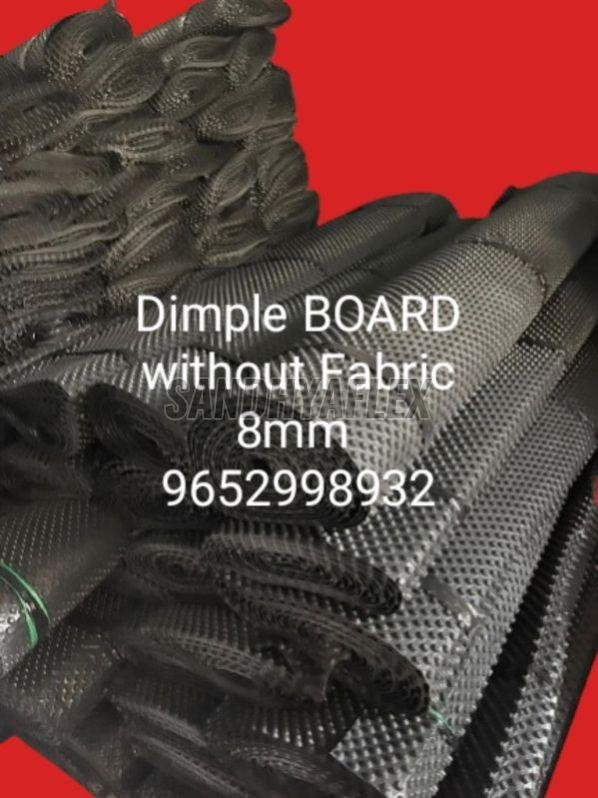
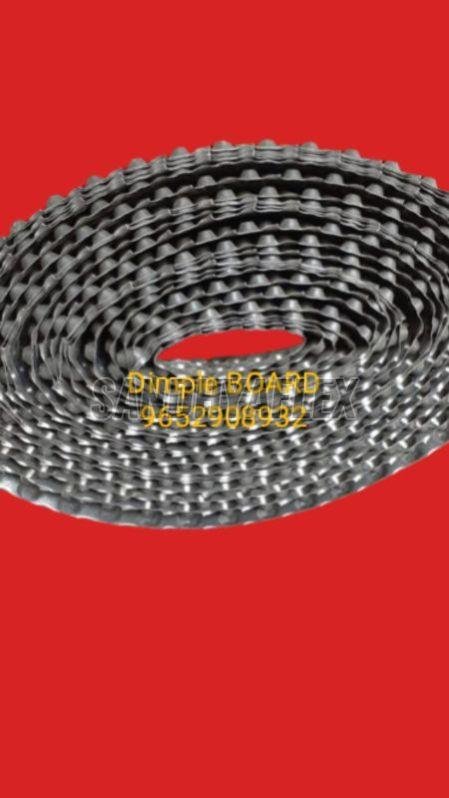
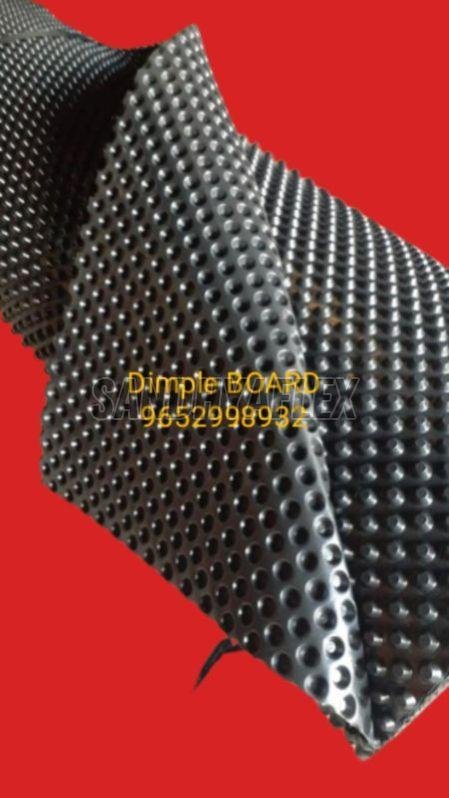
"Dimple board" is a term commonly used to refer to a type of material designed for drainage and protection in construction applications. It typically describes a board or sheet with a surface featuring raised dimples or studs. This design creates an air gap, which allows water to flow freely, helping to manage moisture and prevent water damage in various building and landscaping scenarios. Here are some key points related to dimple boards:
1. **Material:** Dimple boards are often made from materials like high-density polyethylene (HDPE) or other durable plastics. HDPE is popular due to its resistance to chemicals, durability, and ability to withstand the pressure exerted by soil and construction materials.
2. **Drainage Function:** The primary purpose of dimple boards is to facilitate drainage. The raised dimples create an airspace between the board and the substrate, allowing water to move freely. This is particularly useful in applications where water management is crucial, such as foundation walls, basements, and below-grade structures.
3. **Preventing Hydrostatic Pressure:** By providing an air gap, dimple boards help reduce hydrostatic pressure against below-grade walls. This can be essential in preventing water infiltration and potential damage to the structure.
4. **Installation:** Dimple boards are typically installed with the dimpled side facing the substrate or foundation. Some products may have a flat side that is covered with a geotextile fabric to prevent soil particles from entering the drainage channels.
5. **Applications:** Dimple boards are used in various construction applications, including foundation walls, basements, retaining walls, green roofs, and plaza decks. They are versatile and can be applied in both residential and commercial projects.
6. **Landscaping:** In landscaping, dimple boards are often used in areas where effective drainage is required, such as behind retaining walls or in planter boxes. The ability to manage water effectively can help prevent erosion and ensure the stability of landscaping features.
7. **Insulation Compatibility:** Some dimple boards are designed to work in conjunction with insulation materials. In these cases, the boards provide both drainage and insulation benefits.
8. **UV Resistance:** For applications exposed to sunlight, it's important to choose dimple boards with UV-resistant properties to ensure long-term performance.
When considering the use of dimple boards, it's crucial to follow manufacturer guidelines and specifications for proper installation. This includes ensuring the correct orientation of the board, proper slope for drainage, and any specific requirements for the intended application.
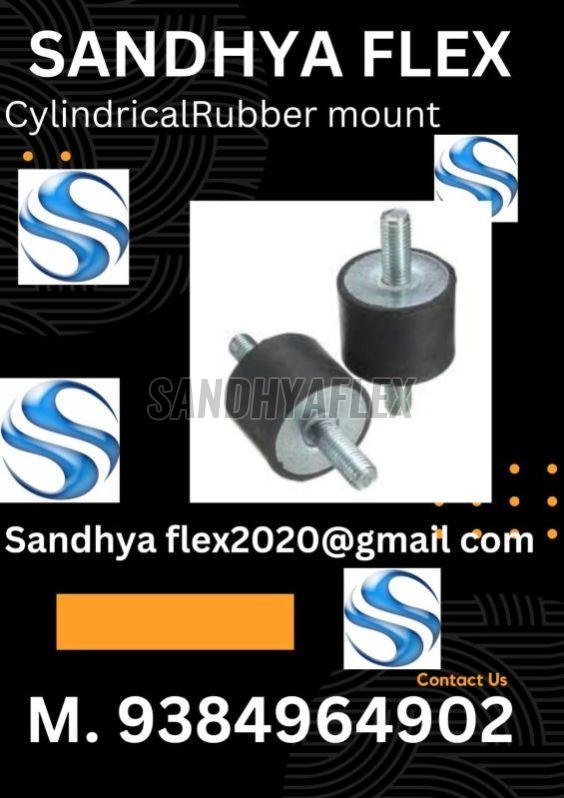
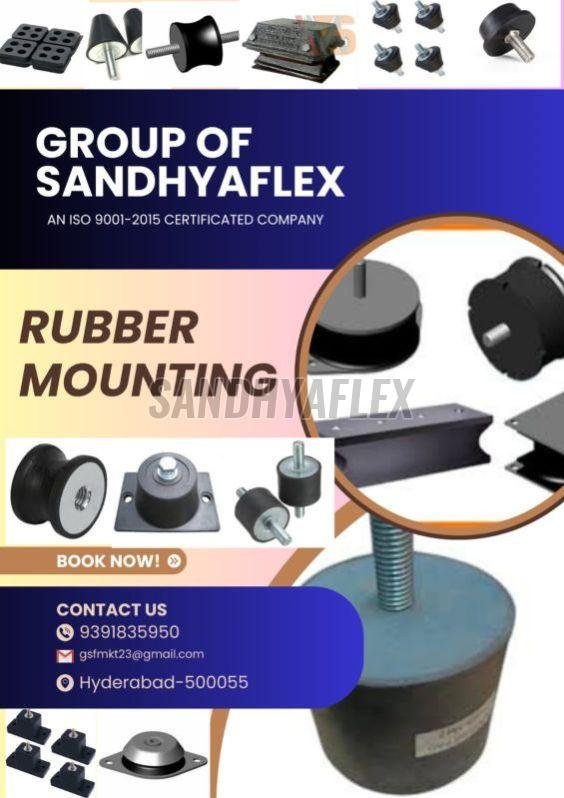
| Business Type | Manufacturer, Exporter, Supplier |
| Load Capacity | 50-100kg |
| Feature | Good Quality |
| Size | 6x6inch |
| Application | Industrial Use |
| Shape | Round |
| Material | Rubber |
| Brand Name | SNDHYAFLEX |
| Port | MUMBAI |
| Payment Terms | L/C |
| Delivery Time | 7 to 15 days |
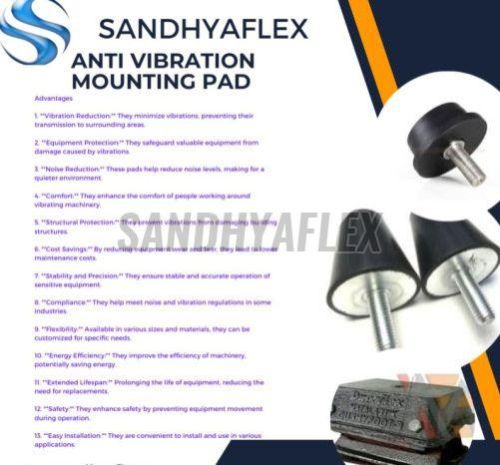
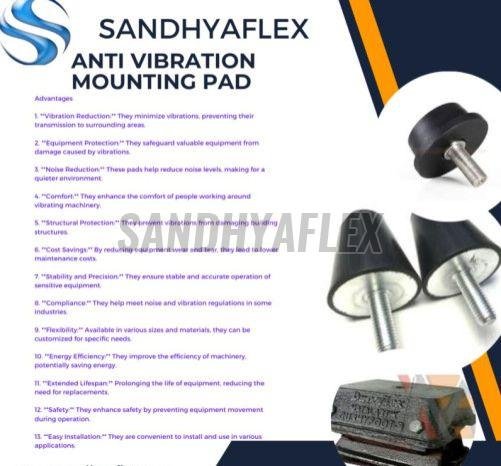
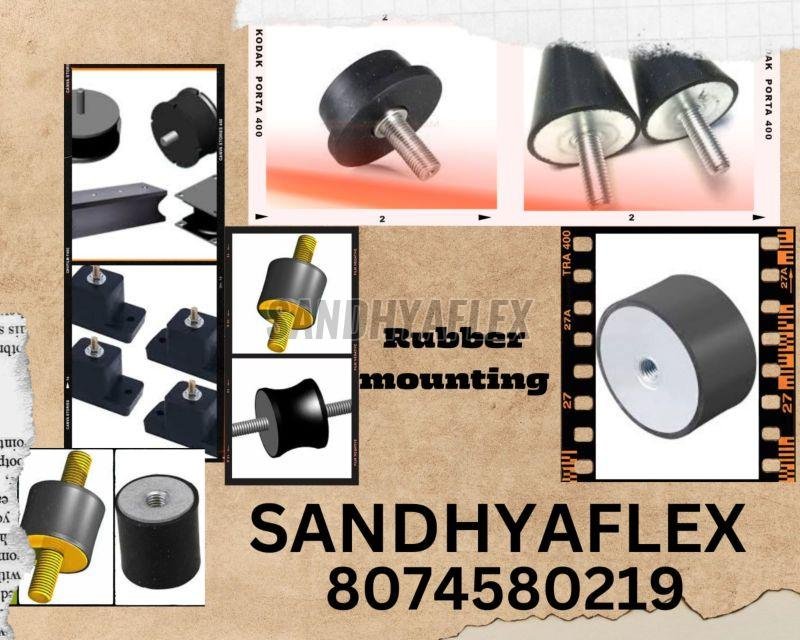
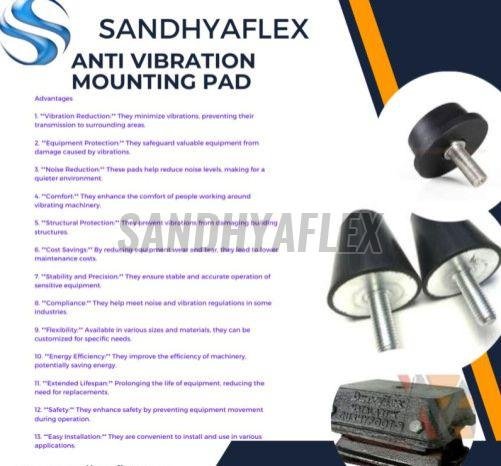
Anti-vibration mounting pads, also known as vibration isolation pads or vibration dampening pads, are mechanical devices designed to reduce or eliminate the transmission of vibrations and shocks between industrial equipment or machinery and their surrounding structures. These pads are commonly used to protect equipment, reduce noise, and prevent structural damage caused by vibrations.
\r\n\r\n
Key features and information about anti-vibration mounting pads:
\r\n\r\n
1. Materials: Anti-vibration pads are typically made from various materials that have good damping properties, such as rubber, neoprene, cork, or elastomeric compounds. The choice of material depends on the specific application and the amount of vibration to be mitigated.
\r\n\r\n
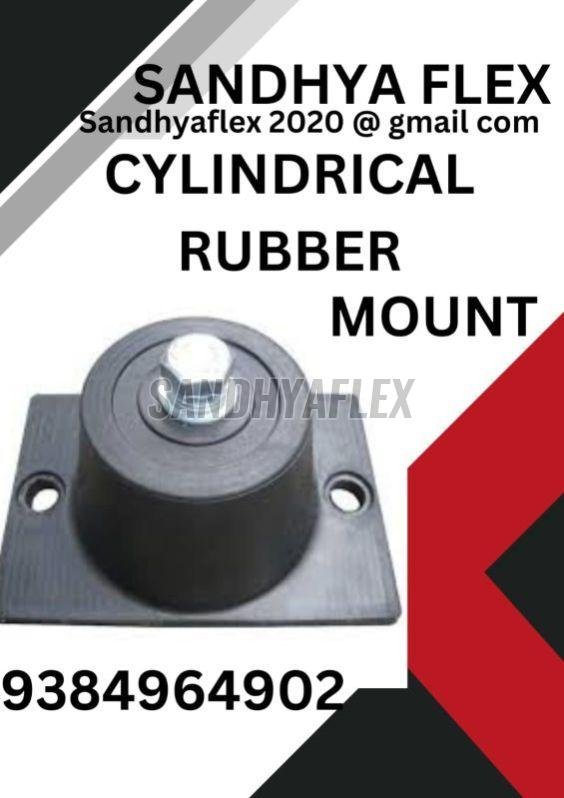
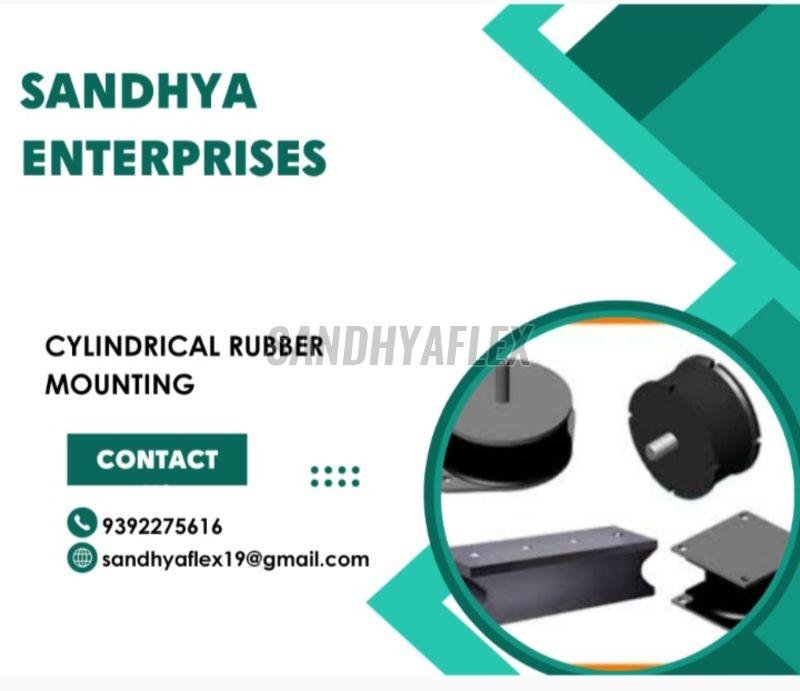
2. Design: These pads come in different shapes and designs, including rectangular, circular, or custom shapes to suit the equipment and the installation requirements. Some have a layered or composite design for enhanced vibration absorption.
\r\n\r\n
3. Function: Anti-vibration mounting pads work by isolating the equipment from the structure it\\\'s mounted on, creating a barrier that absorbs and dissipates vibrations and shocks. This helps prevent the transfer of these unwanted forces to the building or other nearby machinery.
\r\n\r\n
4. Applications: Anti-vibration mounting pads are used in various industries and applications, including HVAC systems, generators, pumps, compressors, motors, industrial machinery, and more. They are especially crucial in environments where vibration control is essential for safety, equipment performance, and noise reduction.
\r\n\r\n
5. Installation: These pads are typically installed between the equipment or machinery and the mounting surface (floor or foundation). Proper installation is important to ensure they effectively isolate vibrations.
\r\n\r\n
6. Benefits: The use of anti-vibration mounting pads provides several benefits, including reduced noise, improved equipment performance and longevity, protection against structural damage, and enhanced operator comfort and safety.
\r\n\r\n
7. Maintenance: Regular inspection and maintenance of anti-vibration mounting pads are necessary to ensure they continue to perform effectively. Over time, these pads may wear out or deteriorate and may need replacement.
\r\n\r\n
8. Load Capacity: Anti-vibration mounting pads are available in various load capacities to match the weight and size of the equipment they support. It\\\'s important to choose the right pads that can handle the expected loads.
\r\n\r\n
By using anti-vibration mounting pads, industries can minimize the impact of machinery vibrations on the surrounding environment, protect their equipment, and ensure a safer and quieter workspace. Proper selection and maintenance of these pads are essential for achieving these benefits.
| Business Type | Exporter, Supplier |
| Material | Metal |
| Shape | Round |
| Product Code | BW |
| Port | mumbai |
| Payment Terms | T/T |
| Delivery Time | 2 to 7 days |
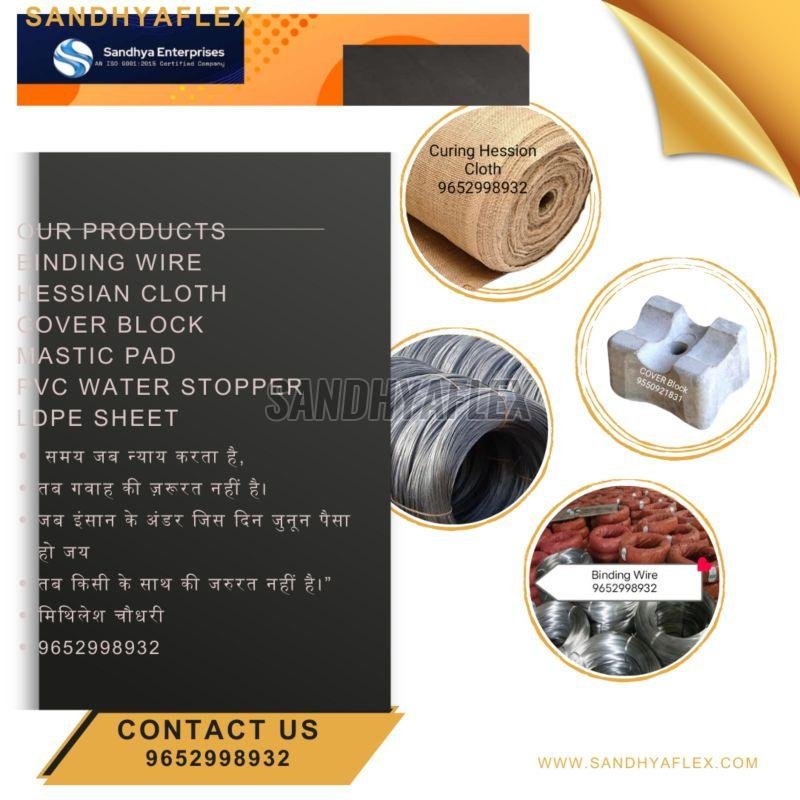
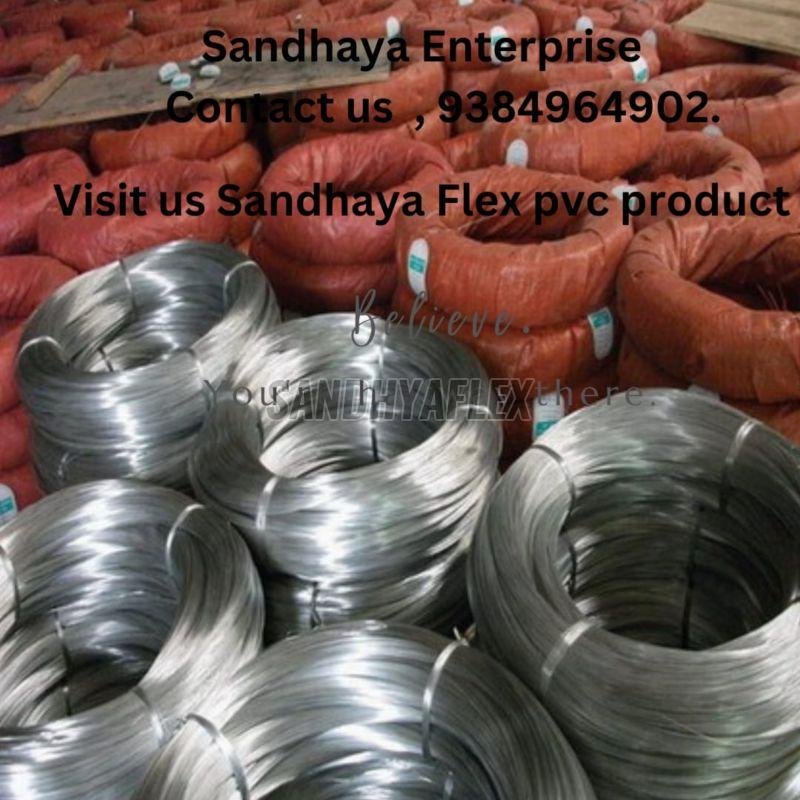
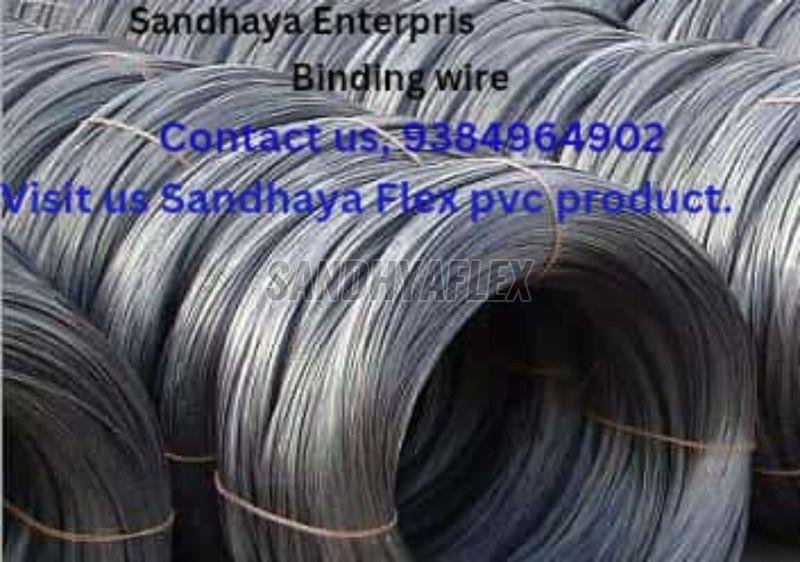
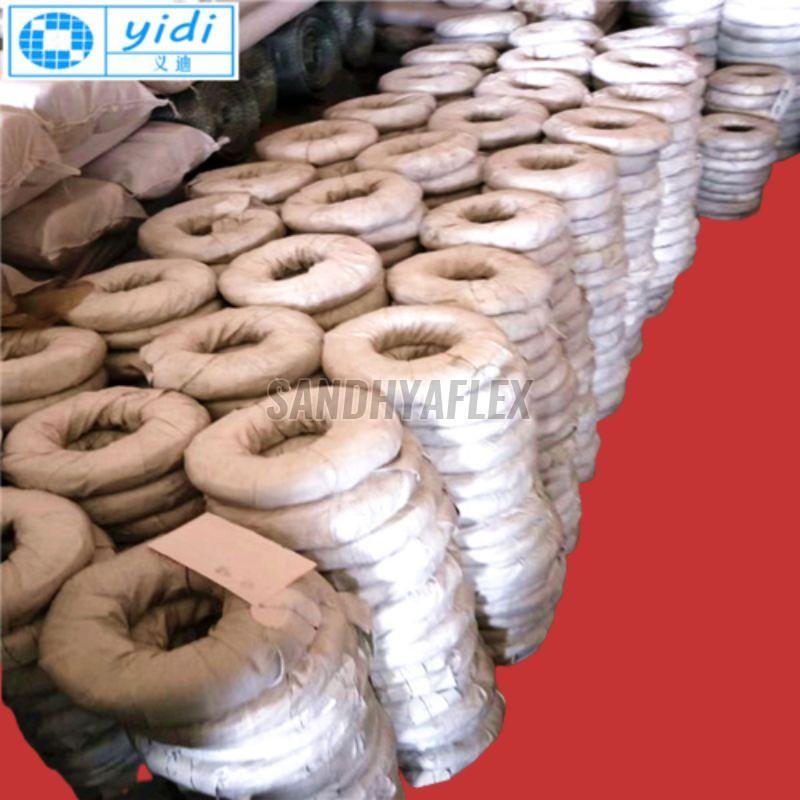
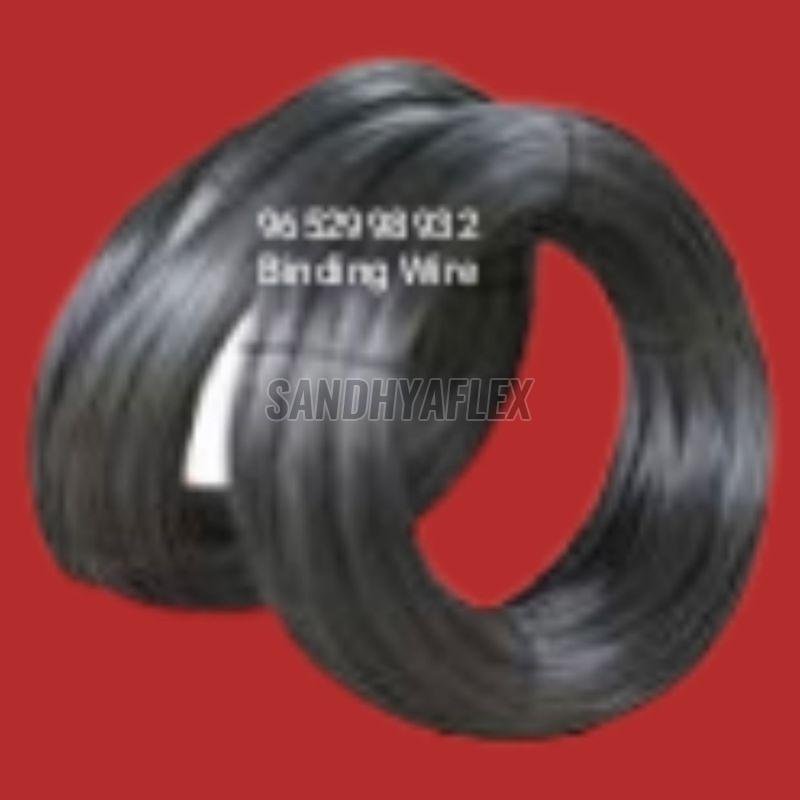
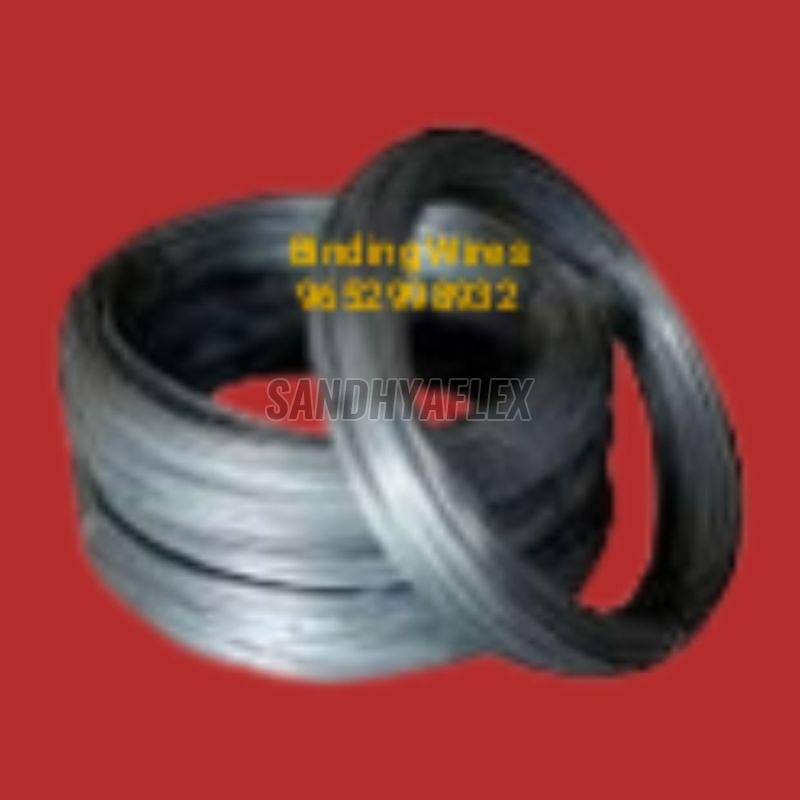
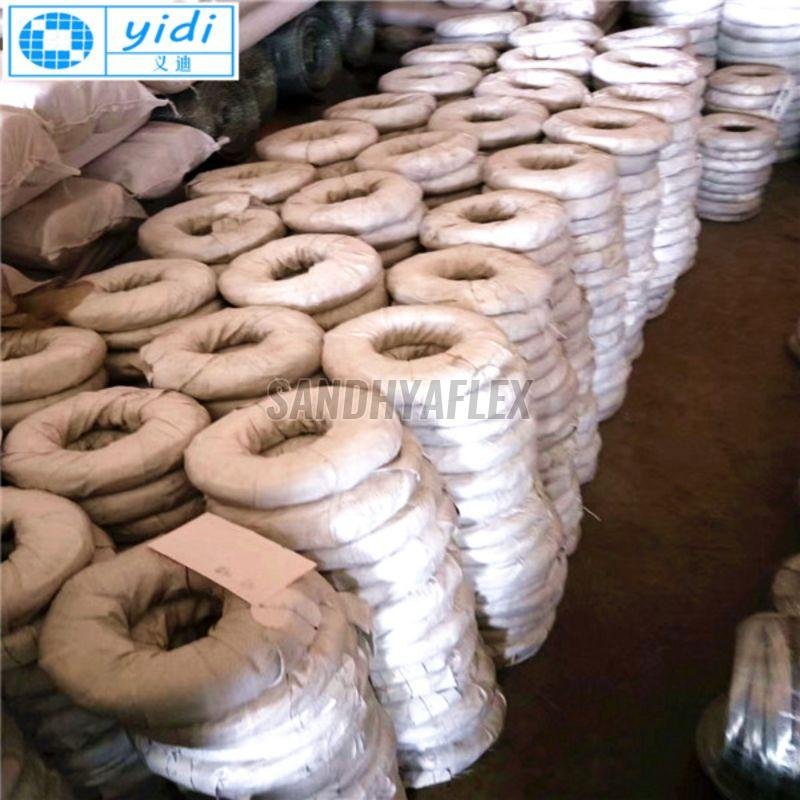
| Packaging Details | The packing details of binding wire can vary depending on the manufacturer, supplier, and the specific requirements of the customer. However, I can provide you with a general idea of how binding wire is typically packaged: 1. **Coils**: Binding wire is often wound into coils, which are then packaged for sale. The coils can vary in size, with common weights ranging from 1 kg to 50 kg or more, depending on the thickness and length of the wire. These coils are usually made of mild steel wire and may be coated with zinc (galvanized) for added corrosion resistance. 2. **Spools**: In some cases, binding wire is wound onto spools, similar to the way thread is wound onto a sewing machine bobbin. Spooled binding wire is more commonly used for smaller quantities or for ease of dispensing in specific applications, such as in gardening or crafting. 3. **Bundles**: Binding wire may also be bundled together in straight lengths and tied together with additional wire or twine. These bundles are often used in construction and are available in standard lengths, such as 3 feet or 4 feet, to suit various tying needs. 4. **Cartons or Boxes**: Coils or spools of binding wire may be placed inside cartons or boxes for shipping and storage. The packaging may include labels with product information, specifications, and safety instructions. 5. **Pallets**: For larger orders or bulk purchases, coils or bundles of binding wire may be stacked on wooden pallets and shrink-wrapped for ease of transportation and handling. 6. **Custom Packaging**: Some manufacturers or suppliers may offer custom packaging options based on the specific needs of customers. This could include private labeling or branding on the packaging. 7. **Labeling**: Regardless of the packaging method, binding wire packaging typically includes important information such as the wire gauge (thickness), length or weight of the wire, material composition (e.g., mild steel or galvanized steel), and any relevant standards or certifications. It's important to note that the packaging details can vary between different regions and suppliers. When purchasing binding wire, it's a good practice to check with the manufacturer or supplier for their specific packaging options, quantities, and any special requirements you may have. Additionally, always follow safety guidelines and instructions provided on the packaging for handling and use. |
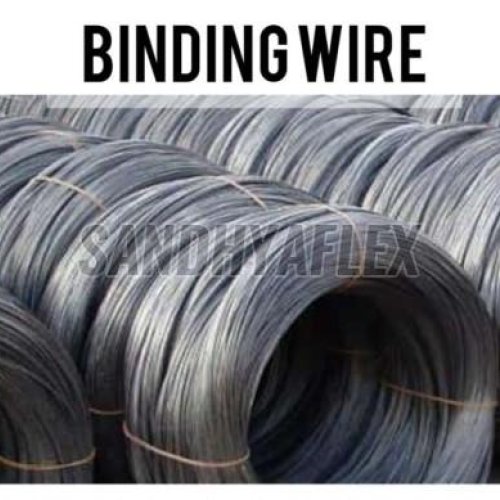
Binding wire, also known as tie wire, is a type of wire commonly used in construction, gardening, and various other applications to secure or tie together different materials or objects. It is typically made of steel or iron and comes in various thicknesses and lengths to suit different needs.
Here are some common uses for binding wire:
1. Construction: Binding wire is frequently used in construction to tie together reinforcing steel bars (rebar) and mesh. This helps in maintaining the structural integrity of concrete structures, such as buildings, bridges, and highways.
2. Gardening: Gardeners often use binding wire to secure plants to trellises or stakes. It can also be used to create fencing for garden areas or to support climbing plants.
3. Bundling: Binding wire is useful for bundling together electrical cables, wires, or pipes, helping to organize and secure them neatly.
4. Packaging: In some cases, binding wire is used in packaging to secure items together, especially in situations where traditional twine or tape might not be sufficient.
5. Crafts and DIY Projects: Artists and DIY enthusiasts may use binding wire for various creative projects, such as sculpture, jewelry making, or floral arrangements.
6. Temporary Repairs: Binding wire can serve as a temporary fix for broken items, such as a broken fence or a loose car part, until proper repairs can be made.
Binding wire is typically malleable and can be bent or twisted easily to create a secure hold. It is available in various gauges or thicknesses, with thicker wire being stronger and more durable. The choice of binding wire depends on the specific application and the level of strength required.
In construction, for example, the type of binding wire used must meet certain standards and specifications to ensure it can withstand the stresses placed upon it in concrete structures. Therefore, it's essential to choose the appropriate binding wire for the intended purpose to ensure safety and durability.
| Business Type | Manufacturer, Exporter, Supplier |
| Color | Black |
| Brand Name | sandhyaflex |
| Material | Chrome Steel, Elastomeric Bridge Bearing |
| Outer Diameter | 15 Mm |
| Inner Diameter | 10 Mm |
| Delivery Time | 7 days |
| Packaging Details | **Sandhyaflex Elastomeric Bridge Bearing** is a structural support component used mainly in bridge construction to **transfer loads safely while allowing controlled movement** between the bridge deck and substructure. |
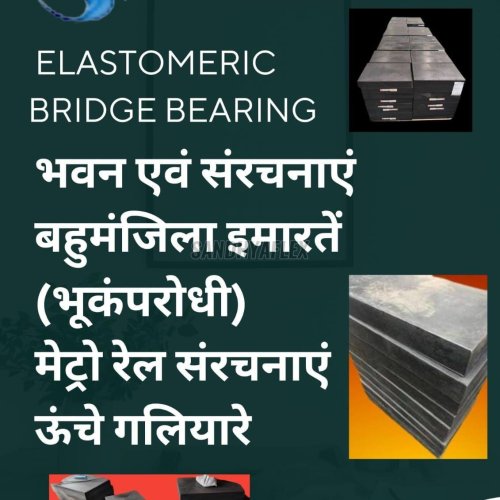
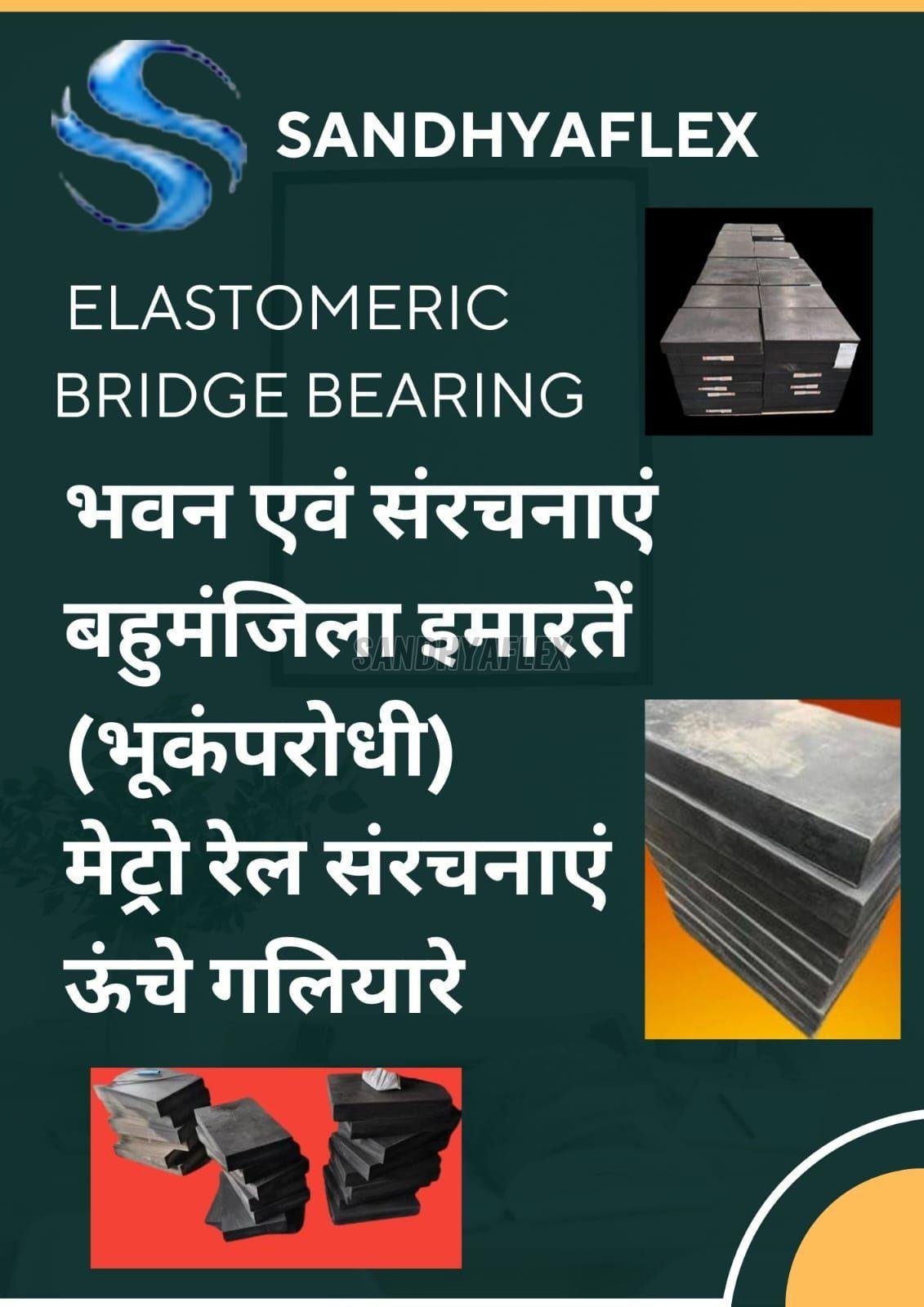
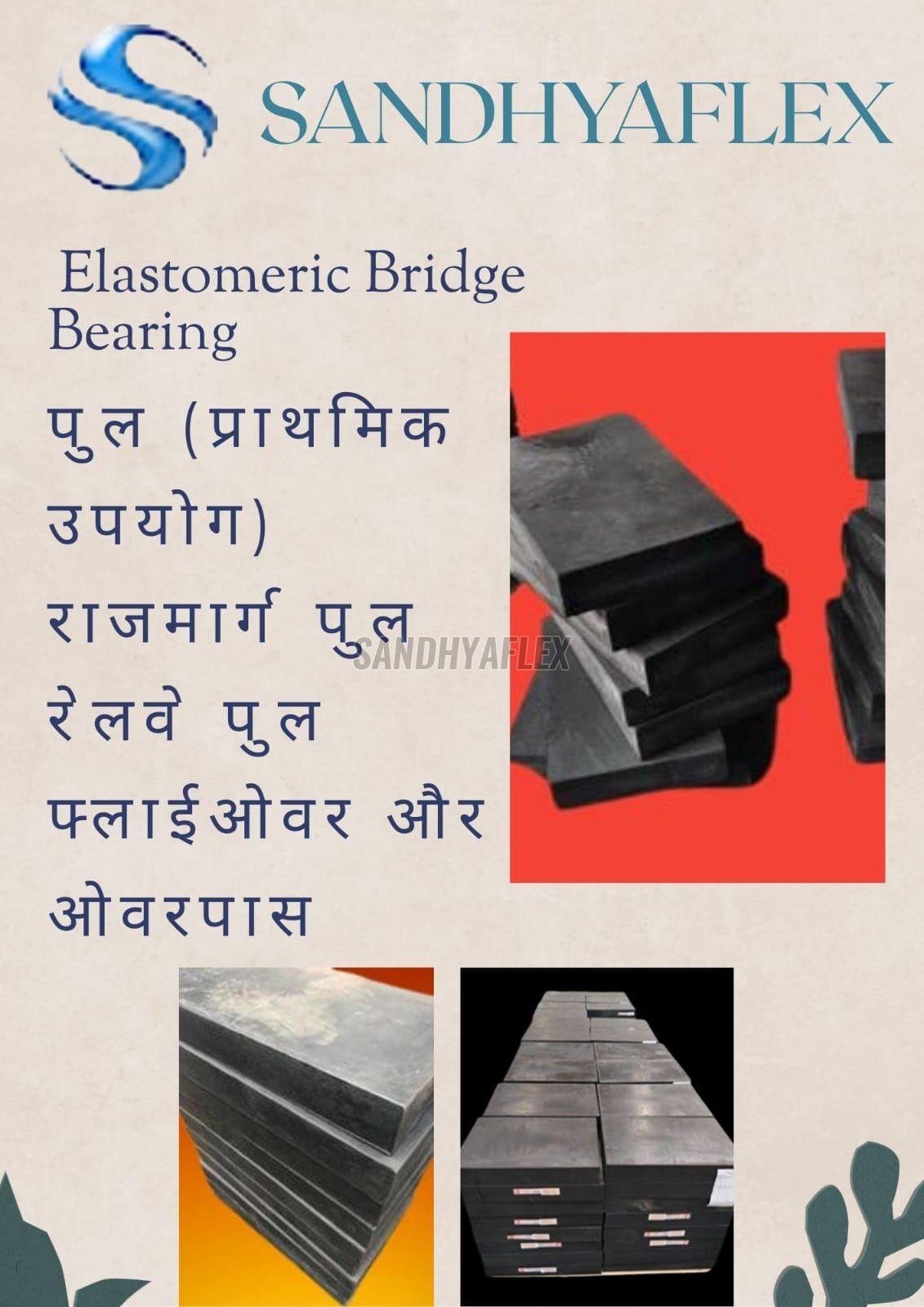
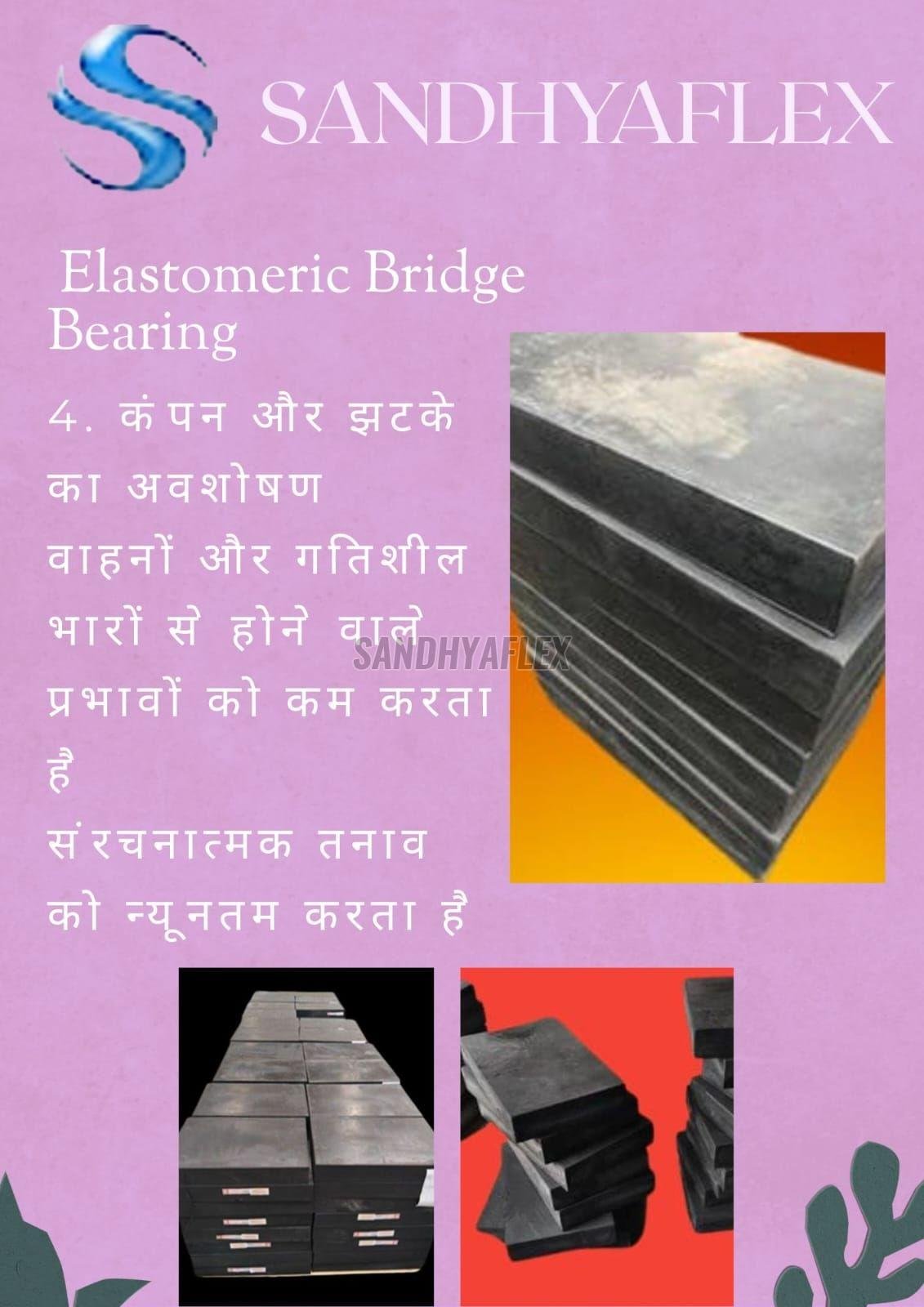
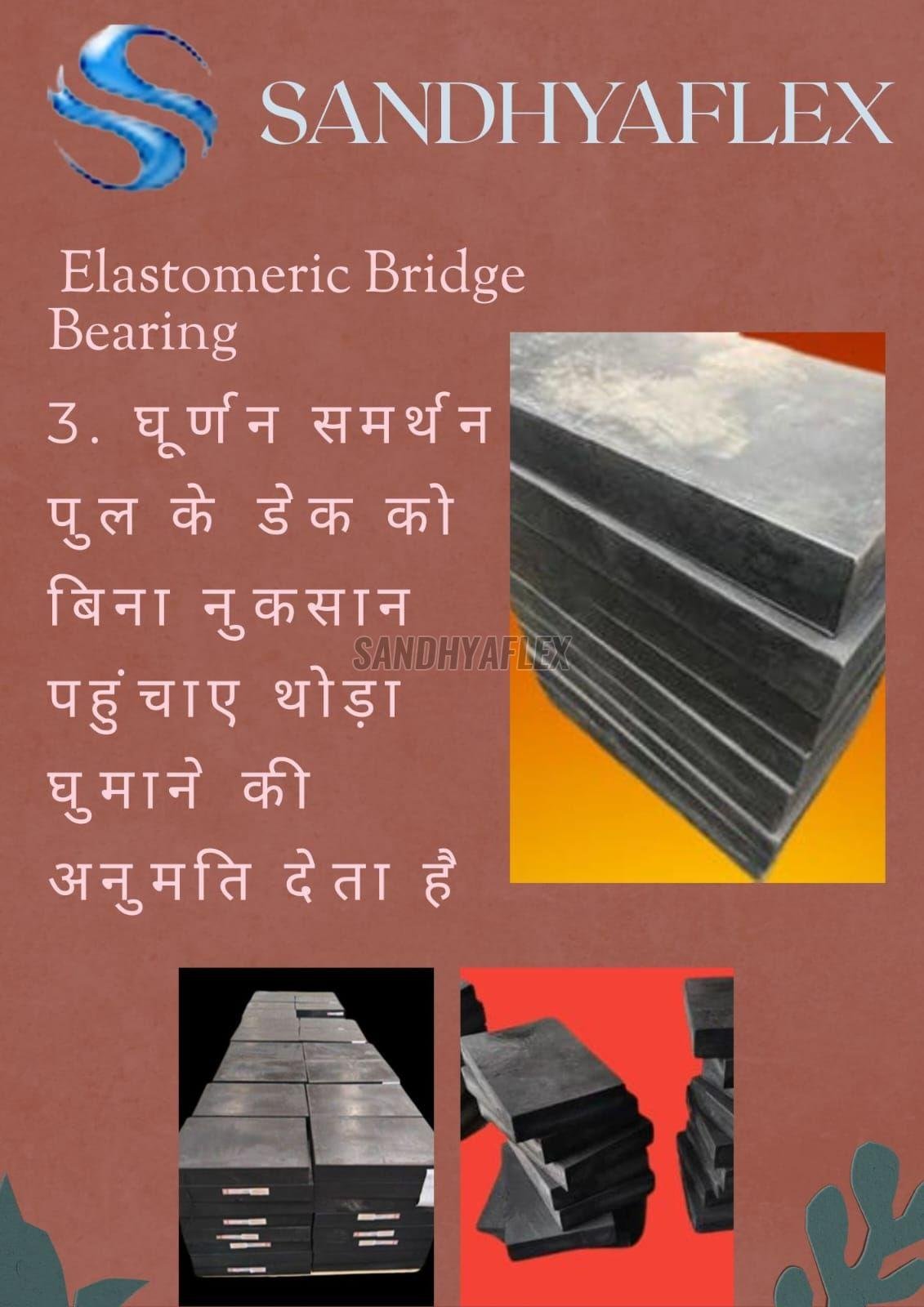
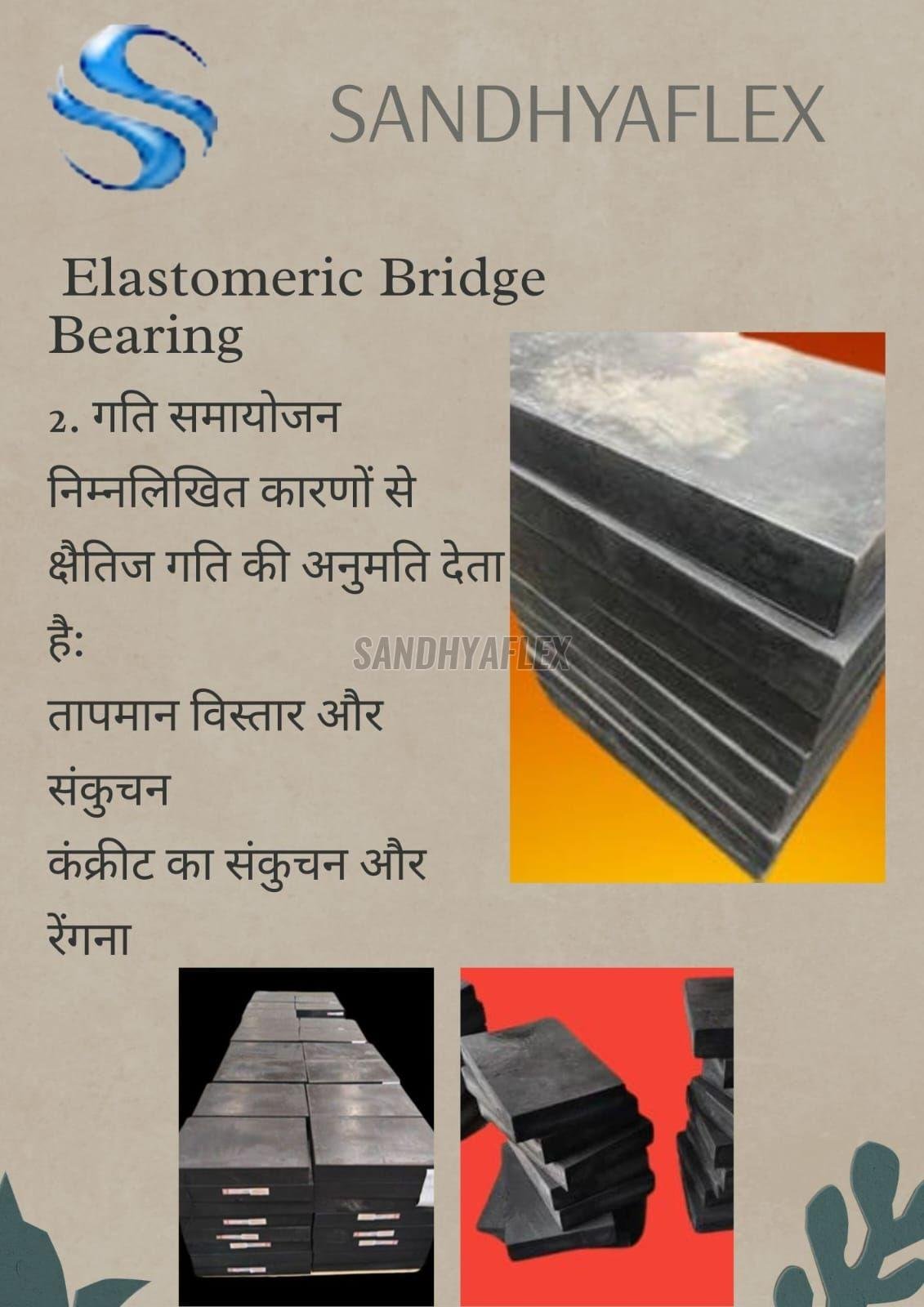
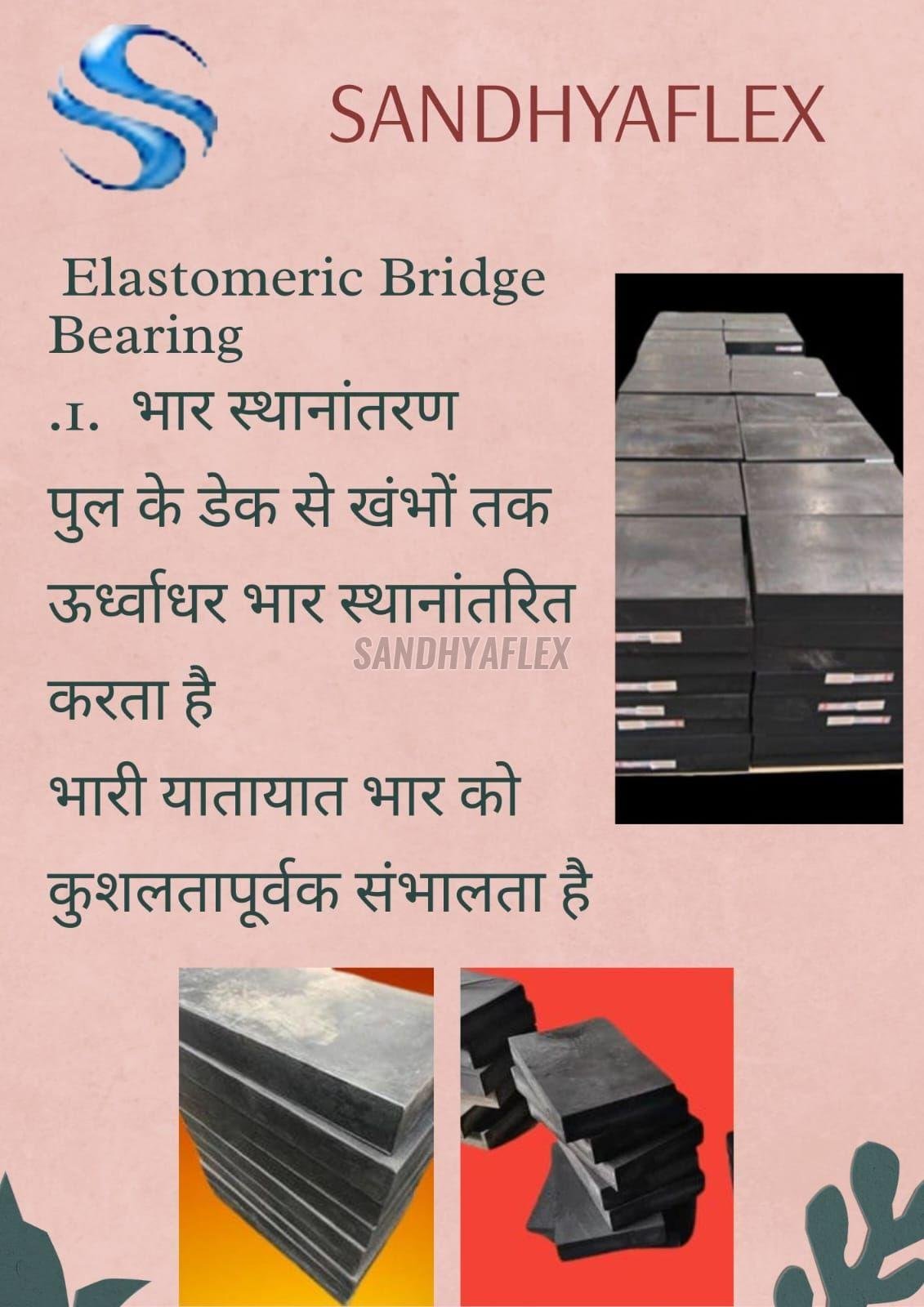
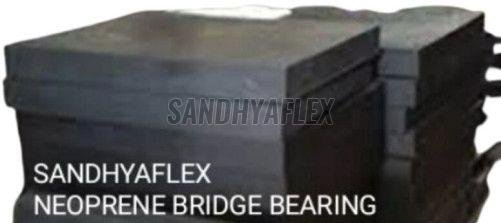
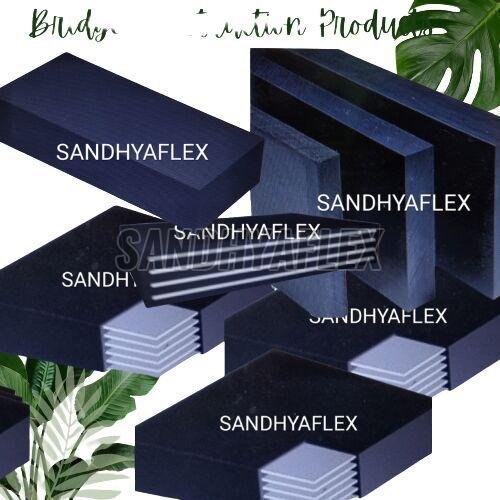
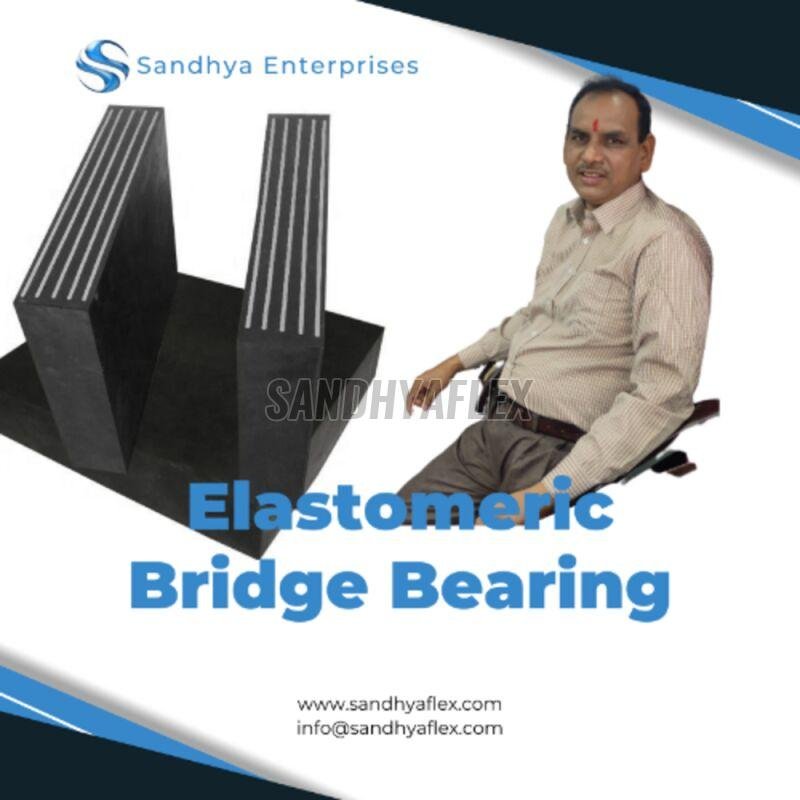
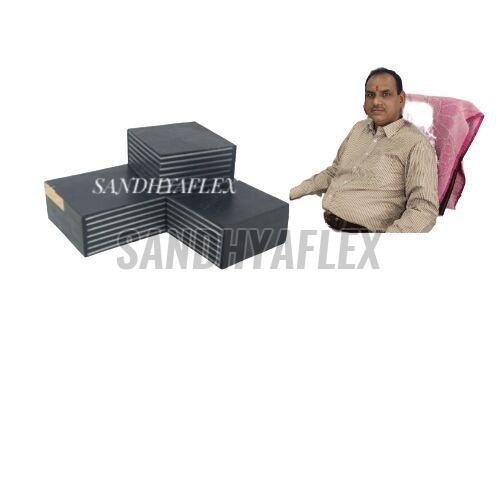
Sandhyaflex Elastomeric Bridge Bearing is a structural support component used mainly in bridge construction to transfer loads safely while allowing controlled movement between the bridge deck and substructure.
🔹 What is Sandhyaflex Elastomeric Bridge Bearing?
It is a rubber-based (elastomeric) bearing pad, often reinforced with steel laminates, designed to:
Support heavy loads from the bridge
Allow horizontal & rotational movement
Absorb vibrations, thermal expansion, and contraction
These bearings are widely used in:
Bridges
Flyovers
Buildings
Stadiums & heavy structures (
| Business Type | Manufacturer, Exporter, Supplier |
| Business Type | Manufacturer, Exporter, Supplier |
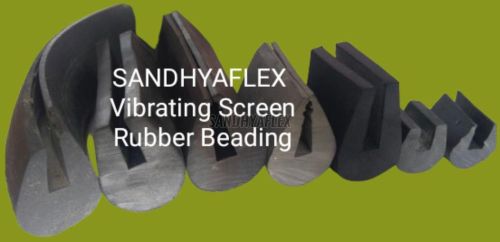
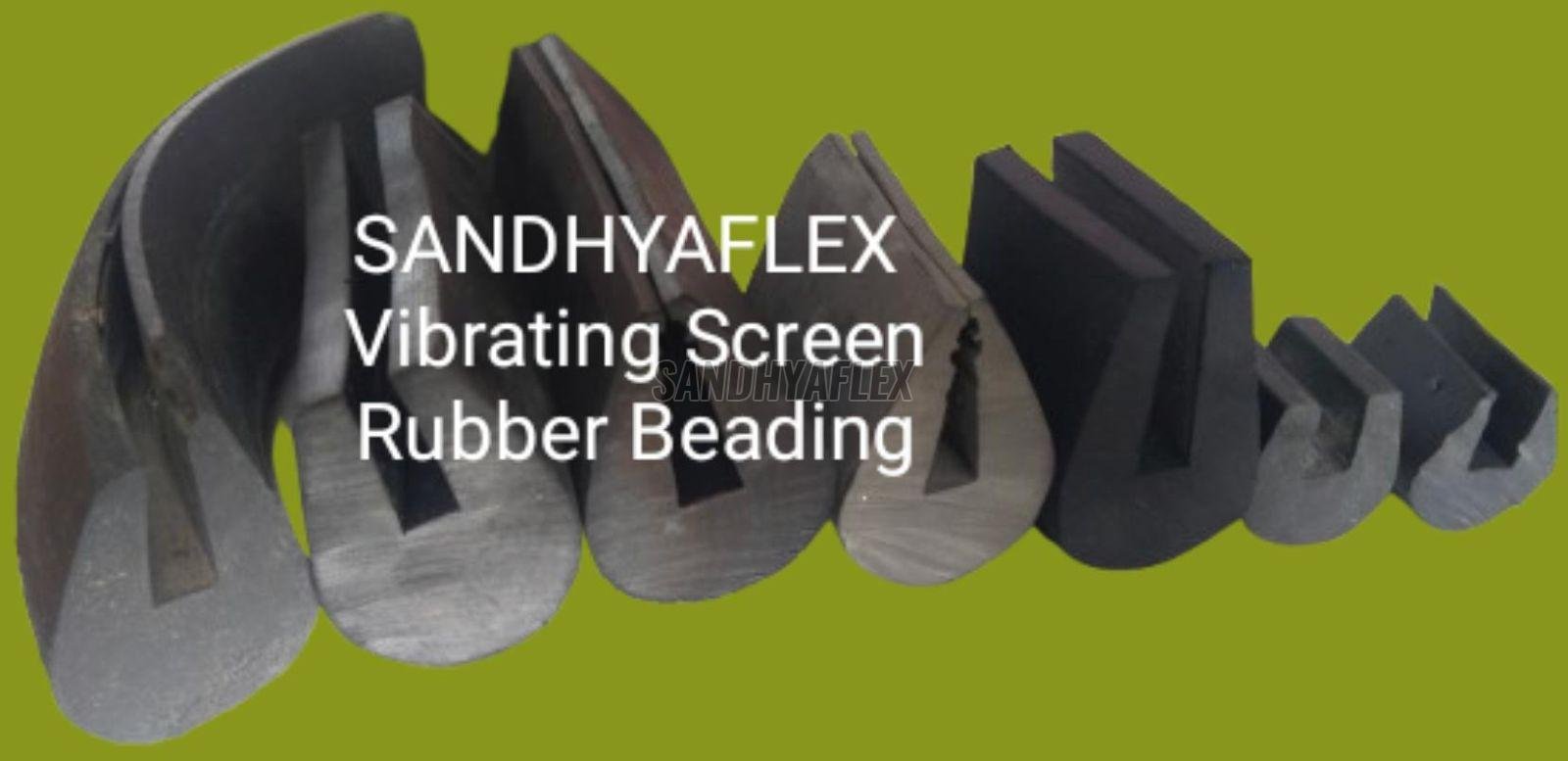
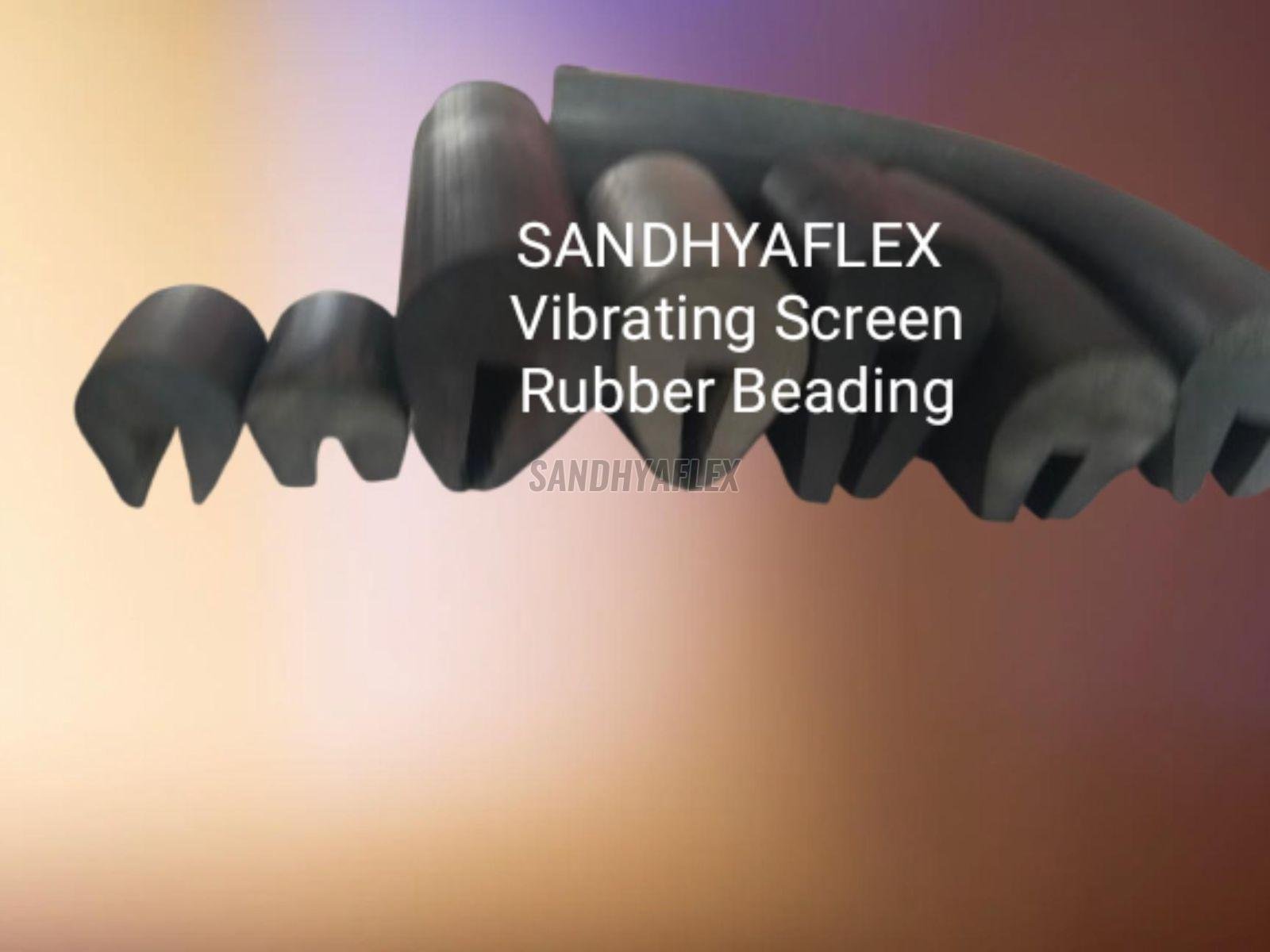
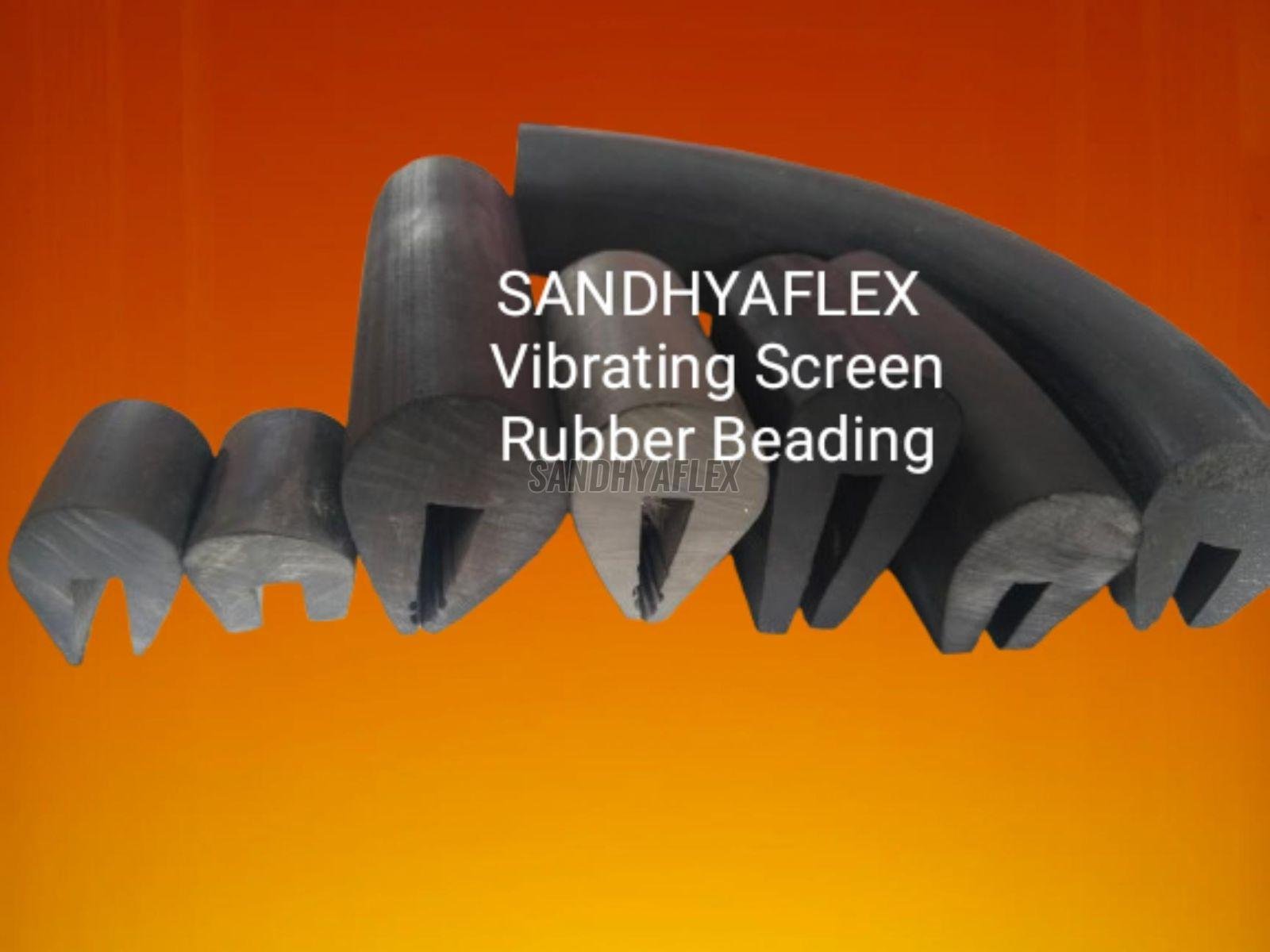
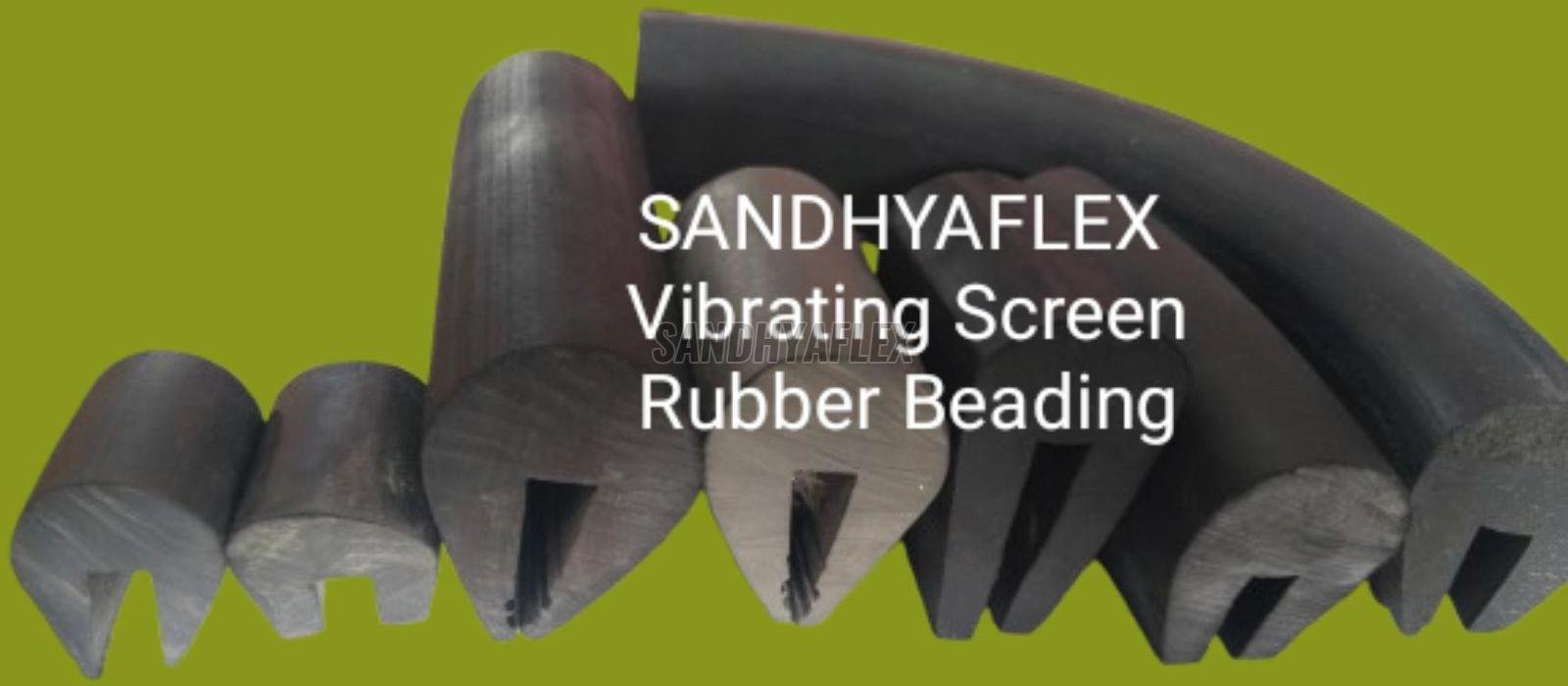
For SANDHYAFLEX EPDM Vibrating Screen Rubber Beading, the key advantage over regular quality is higher durability, weather resistance, and longer life in harsh conditions. EPDM grade is considered premium quality, especially for continuous operation and outdoor plants.
🏆 Best Overall (EPDM Premium Rubber Beading)✔ EPDM rubber → excellent weather & ozone resistance
✔ High abrasion resistance → longer life
✔ Better vibration damping → protects screen mesh
✔ Ideal for continuous plant operation
| Durability | Very High | Medium |
| Weather Resistance | Excellent | Low–Medium |
| Heat Resistance | Up to ~150°C | ~80–100°C |
| Abrasion Resistance | High | Medium |
| Life Span | Long | Shorter |
| Cost | Medium–High | Low |
👉 If your plant runs continuously or outdoors, EPDM is worth the extra cost.
📌 SANDHYAFLEX EPDM Rubber Beading – Technical Details-
Material: EPDM (Ethylene Propylene Diene Monomer)
-
Gap Sizes: 7mm, 8mm, 10mm, 12mm, 15mm
-
Length: ~25 meter roll
-
Hardness: ~60–65 Shore A
-
Temperature Range: -40°C to +150°C
-
Color: Black
-
High-grade EPDM rubber compound
-
Designed for anti-vibration + sealing performance
-
Superior vibration absorption → reduces noise
-
No cracking in sunlight or rain
-
Resistant to chemicals, ozone & ageing
-
Better grip between screen mesh & frame
-
Prevents material leakage and metal damage
-
Stone crusher plants
-
Mining & quarry industries
-
Sand & aggregate screening plants
-
Asphalt and cement plants
👉 EPDM beading is preferred in heavy-duty and outdoor applications where regular rubber fails faster.
💰 Typical Price Range (India)-
Approx ₹180 – ₹300 per meter (depends on gap size & quality)
-
Best overall → EPDM rubber beading (premium choice)
-
Continuous operation → strongly recommended EPDM
-
Budget or small plants → regular rubber beading
👉 If your screen runs 8–12 hours daily, EPDM is the smart long-term investment (less replacement, less downtime).
🧠 Simple ConclusionSANDHYAFLEX EPDM Vibrating Screen Rubber Beading = Longer life + better performance + less maintenance
If you want, I can also suggest:
-
Exact gap size for your screen
-
Best quality vs price option
-
Or create a product catalog / brochure for your business
| Business Type | Manufacturer, Supplier |
| Country of Origin | India |
| Feature | High Strength, Perfect Shape,As Of My Last Knowledge Update In January 2022 |
| Application | Industrial |
| Material | Galvanized Iron |
| Brand Name | Sandhyaflex |
| Surface Treatment | Coated |
| Quality | Good |
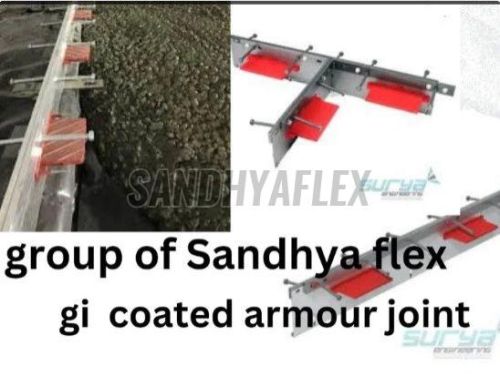
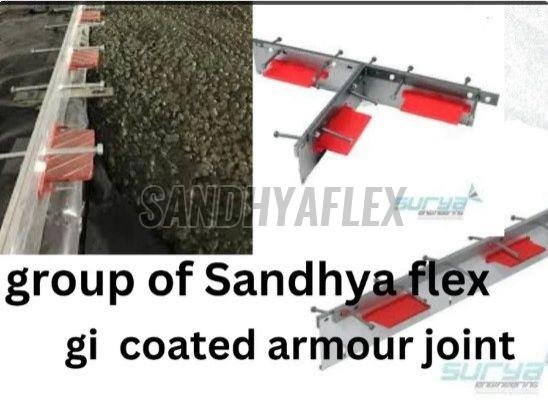
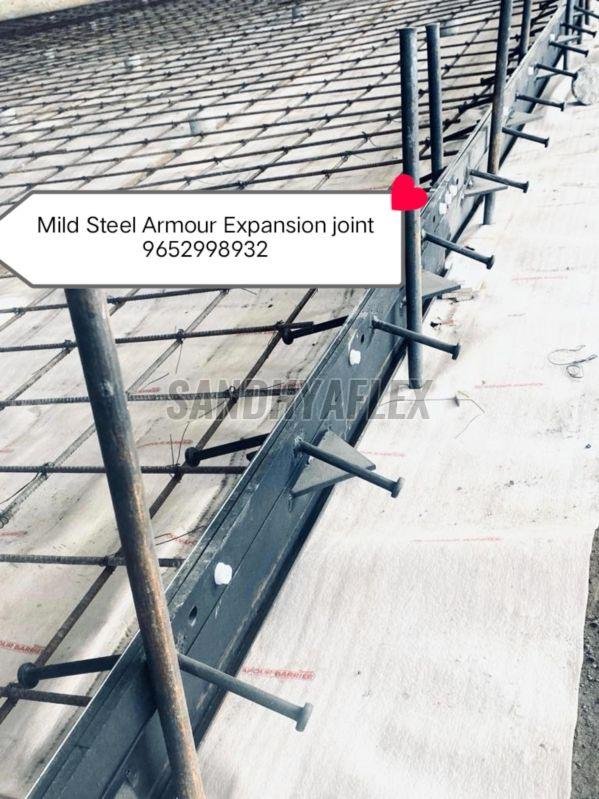
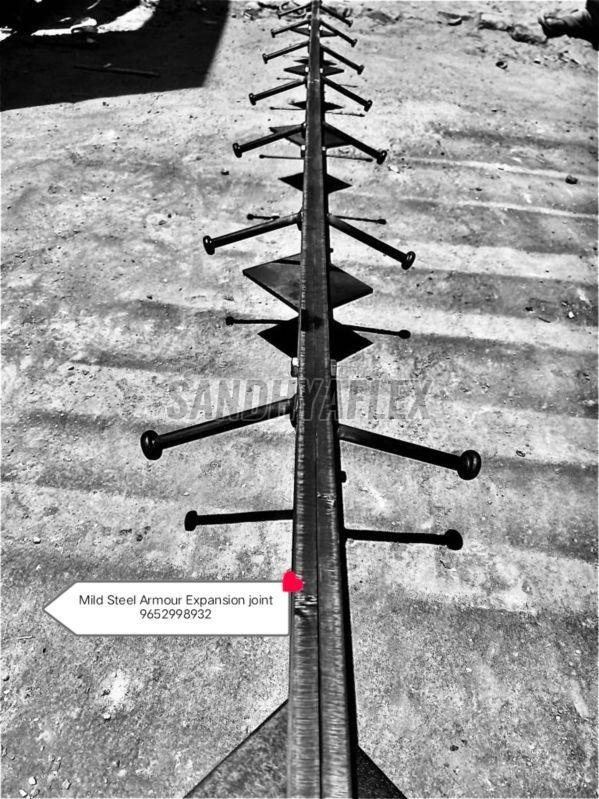
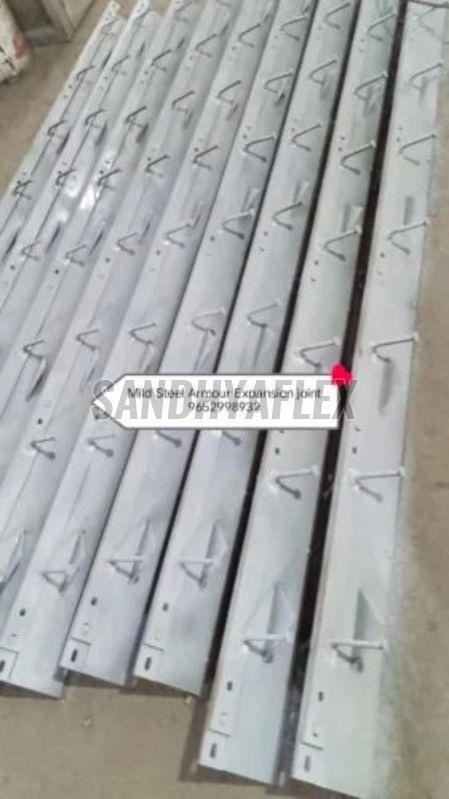
As of my last knowledge update in January 2022, I don't have specific information about a product or technology known as "GI coated Armour Joint." However, I can provide some general features that might be associated with a product combining galvanized iron (GI) coating and an armor joint:
1. **Corrosion Resistance:** GI coating provides protection against corrosion, which is crucial for applications in various environments, especially those with exposure to moisture or harsh weather conditions.
2. **Strength and Durability:** Armor joints are often associated with strength and durability, providing robust connections or protection in applications such as structural components or military equipment.
3. **Versatility:** Depending on the specific design and application, GI coated armor joints might offer versatility, making them suitable for a range of industries and purposes.
4. **Ease of Installation:** Many joint systems aim for ease of installation, reducing the complexity and time required for assembly. This can be a significant factor in construction or manufacturing applications.
5. **Customization:** Some armor joint systems allow for customization to meet specific requirements, whether in terms of size, shape, or other characteristics.



| Business Type | Manufacturer, Exporter, Supplier |
| Brand Name | SNDHYAFLEX |
| Payment Terms | T/T |
| Business Type | Manufacturer, Exporter, Supplier |
| Product Code | PVCHR |
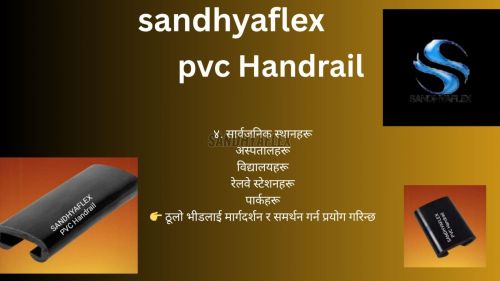
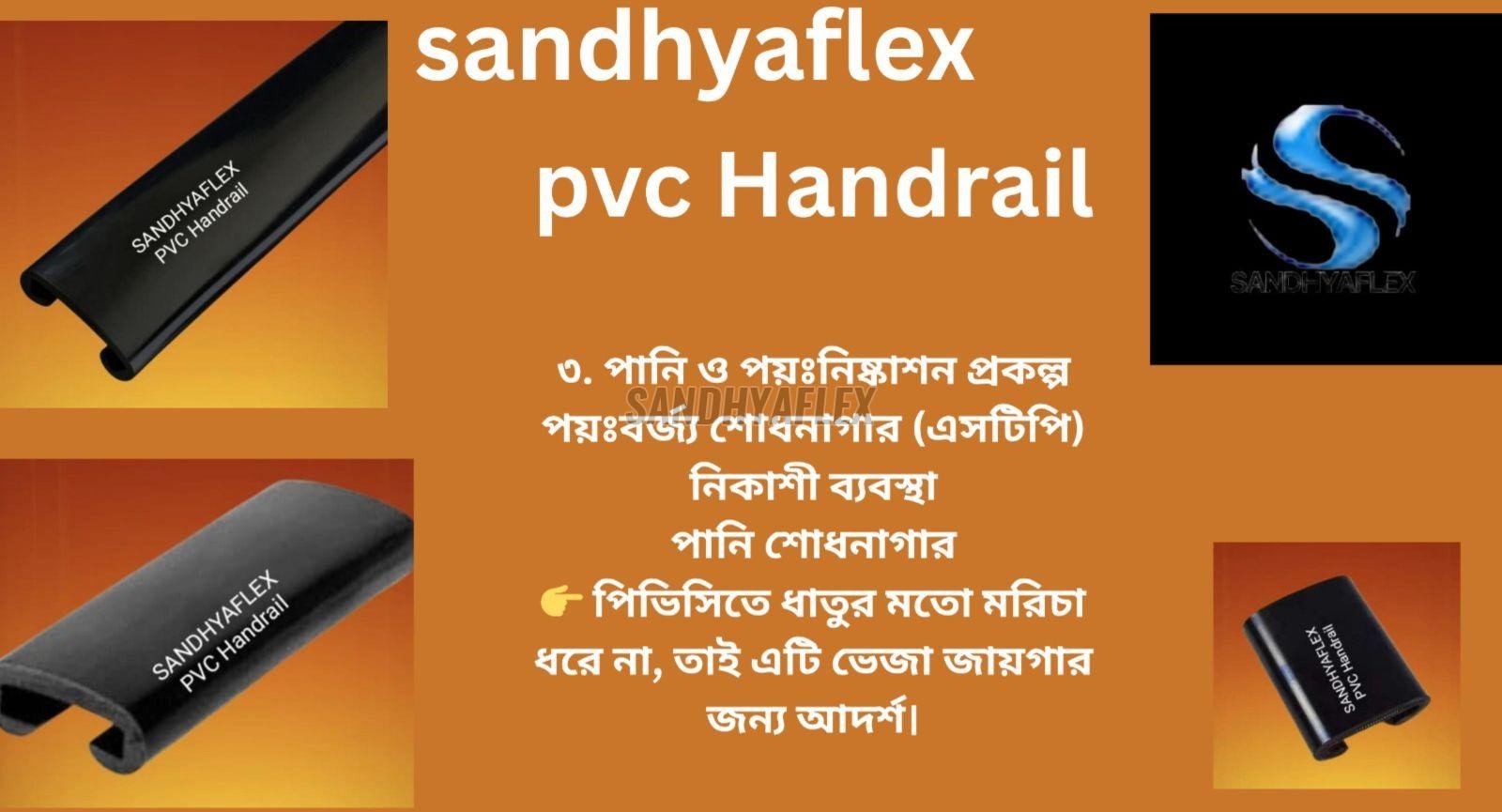
For SANDHYAFLEX Hospital PVC Hand Rail Profiles, the most important buying factors are anti-bacterial surface, impact resistance (crash rail function), grip comfort, and wall protection design. Unlike normal PVC handrails, hospital profiles are designed for patient safety + wall protection + hygiene.
🏆 Best Overall (Hospital Corridor Handrail System)✔ Anti-bacterial PVC surface → hygiene safety
✔ Aluminium reinforcement → high strength
✔ Works as handrail + wall guard (crash protection)
-
Used in corridors & wards
-
Provides continuous support for patients
-
Best for ICU, emergency corridors
-
High impact resistance (trolley/bed protection)
-
Available in multiple colors for zoning
-
Improves visibility & interior design
| Business Type | Manufacturer, Exporter, Supplier, Retailer |
| Material | LDPE |
| Shape | Square |
| Pattern | Plain |
| Port | mumbai |
| Packaging Details | Packing in Roll |
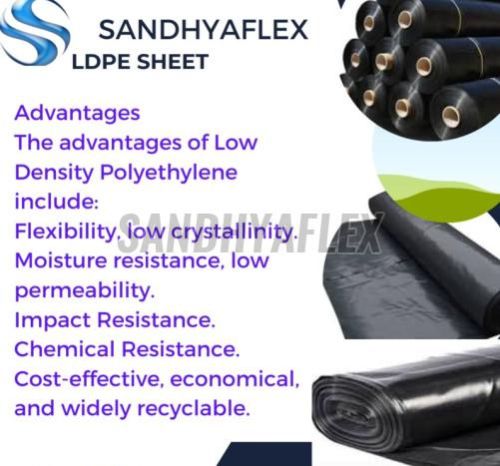
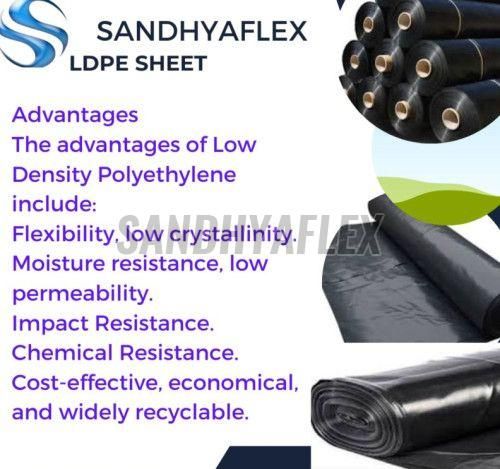
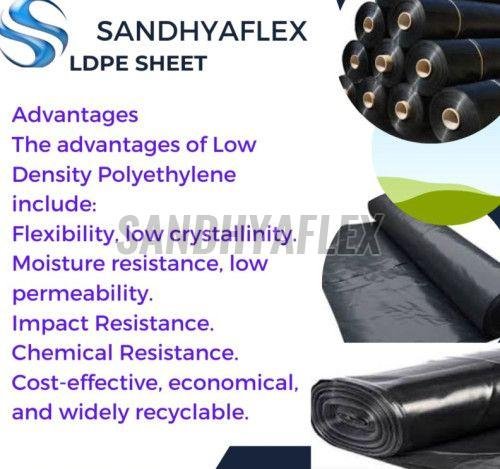
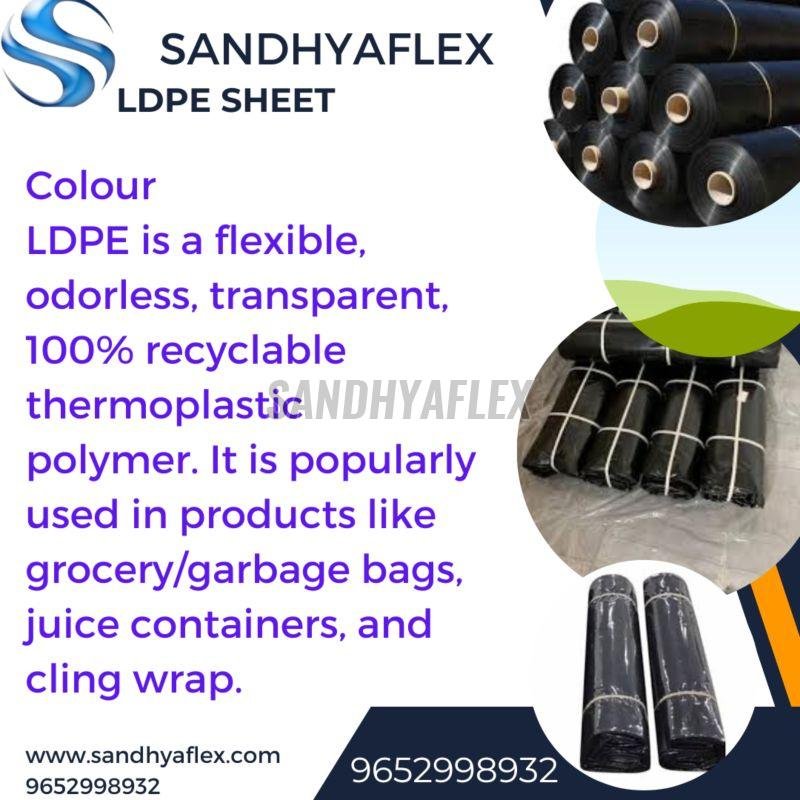
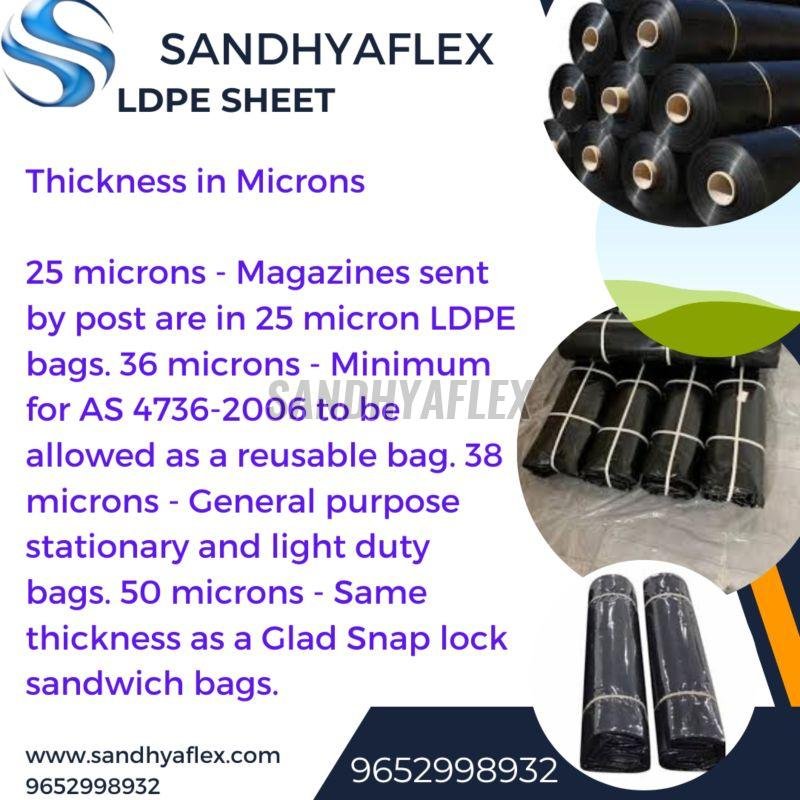
Low-Density Polyethylene (LDPE) sheets are commonly used in construction for various purposes. LDPE is a thermoplastic made from the monomer ethylene. It is known for its flexibility, toughness, and chemical resistance. Here are some common uses of LDPE sheets in construction:
1. **Vapor Barriers:** LDPE sheets are often used as vapor barriers to prevent the passage of moisture through walls and floors. They are placed between the insulation and the interior surface of a building to protect against condensation and mold growth.
2. **Concrete Curing:** LDPE sheets can be used to cover freshly poured concrete to slow down the curing process. This helps to retain moisture, ensuring that the concrete cures properly and achieves the desired strength.
3. **Temporary Enclosures:** LDPE sheets can be used to create temporary enclosures or barriers on construction sites. They are often used to contain dust, protect against the weather, or create isolated workspaces.
4. **Underlayment for Flooring:** LDPE sheets can serve as a moisture barrier when installing flooring, particularly in areas where moisture infiltration is a concern. They are placed between the subfloor and the flooring material.
5. **Landfill Liners:** In civil engineering applications, LDPE sheets are used as liners for landfills. They help to contain and prevent the leaching of waste materials into the surrounding soil and groundwater.
6. **Roofing Membranes:** LDPE sheets are used in the construction of flat roofs as a waterproofing membrane. They provide protection against water infiltration and contribute to the overall durability of the roofing system.
When using LDPE sheets in construction, it's essential to consider factors such as thickness, durability, and compatibility with other materials used in the construction project. Additionally, proper installation techniques should be followed to ensure the sheets perform their intended functions effectively. Always adhere to local building codes and regulations when incorporating LDPE sheets into construction projects.
| Business Type | Manufacturer, Exporter, Supplier, Retailer |
| Pattern | Printed |
| Usage | Packaging Use |
| Shape | Round |
| Material | LDPE |
| Brand Name | Aristo |
| Port | MUMBAI |
| Payment Terms | L/C |
| Delivery Time | 7 to 15 days |
Low-Density Polyethylene (LDPE) sheets are commonly used in construction for various purposes. LDPE is a thermoplastic made from the monomer ethylene and is known for its flexibility, transparency, and toughness. Here are some common uses and considerations when it comes to using LDPE sheets in construction:
\r\n\r\n
1. **Waterproofing:**
\r\n- LDPE sheets are often used as a moisture barrier or waterproofing membrane. They can be applied to foundations, roofs, and walls to prevent water infiltration.
\r\n\r\n
2. **Vapor Barriers:**
\r\n- LDPE sheets are effective as vapor barriers, preventing the passage of water vapor through walls and floors. This is crucial in controlling humidity and preventing mold growth.
\r\n\r\n
3. **Insulation:**
\r\n- LDPE sheets can serve as insulation material in construction. They provide a layer of thermal insulation, helping to regulate temperature within a building.
\r\n\r\n
4. **Protection and Encapsulation:**
\r\n- LDPE sheets are used to protect surfaces during construction or renovation. They can be laid over floors, walls, or furniture to prevent damage from dust, paint, or other construction materials.
\r\n\r\n
5. **Concrete Curing:**
\r\n- LDPE sheets can be used to cover freshly poured concrete to ensure slow and even curing. This helps prevent cracks and enhances the overall strength of the concrete.
\r\n\r\n
6. **Greenhouse Construction:**
\r\n- LDPE is often used in the construction of greenhouses due to its transparency and ability to allow sunlight to pass through while protecting plants from external elements.
\r\n\r\n
7. **Tarpaulins:**
\r\n- LDPE sheets are commonly used as tarpaulins for temporary coverings on construction sites. They provide protection from the elements and help keep construction materials dry.
\r\n\r\n
8. **Landfill Liners:**
\r\n- In landfill construction, LDPE sheets are employed as liners to prevent leachate (contaminated water) from entering the soil and groundwater.
\r\n\r\n
When using LDPE sheets in construction, it\\\'s important to consider factors such as thickness, UV resistance (if exposed to sunlight), and the specific requirements of the construction project. Additionally, proper installation methods, such as sealing seams and edges, are crucial to ensure the effectiveness of LDPE sheets in various applications. Always follow industry standards and guidelines to ensure the correct use of LDPE sheets in construction projects.
| Business Type | Manufacturer, Exporter, Supplier |
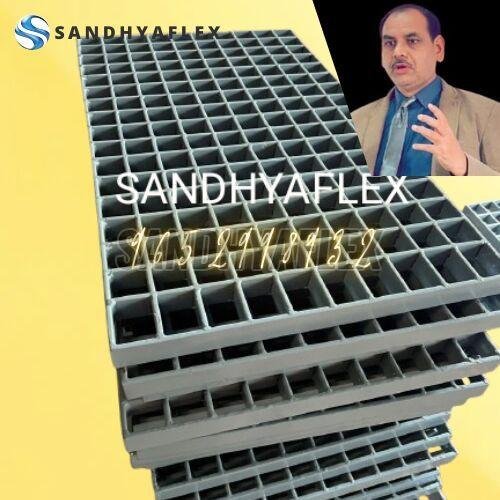
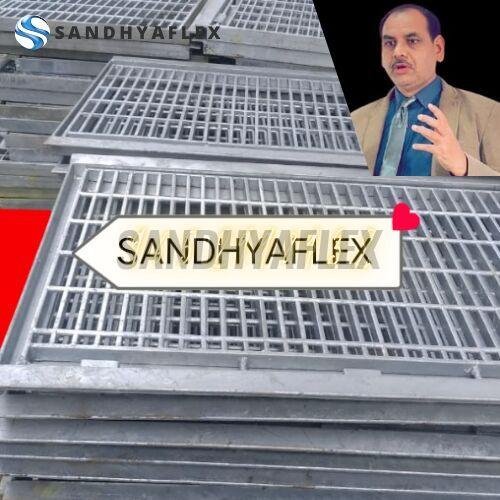
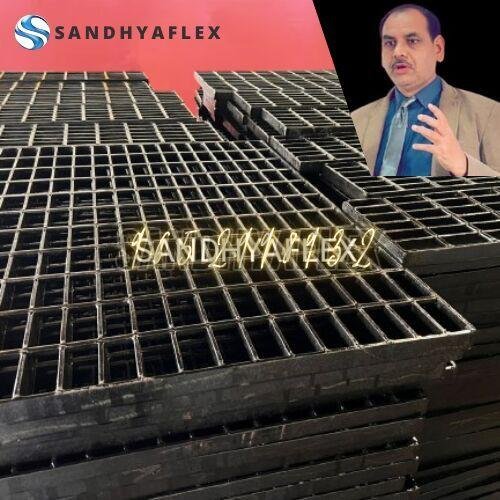
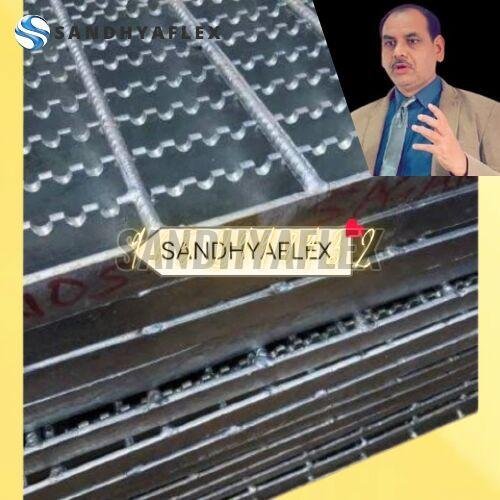
| Material | Mild Steel |
| Surface Finishing | Painted and Gulvnised |
| Shape | Square |
| Color | Silver,Black and Red |
| Surface Treatment | The **surface temperature of MS (Mild Steel) grating** is not a fixed property of the material — it |
| Application | Floor Grating |
| Length | as per customer need |
| Product Code | MSG |
| Port | mumbai |
| Payment Terms | T/T |
| Delivery Time | 15 ot 30 days |
| Packaging Details | Nill |
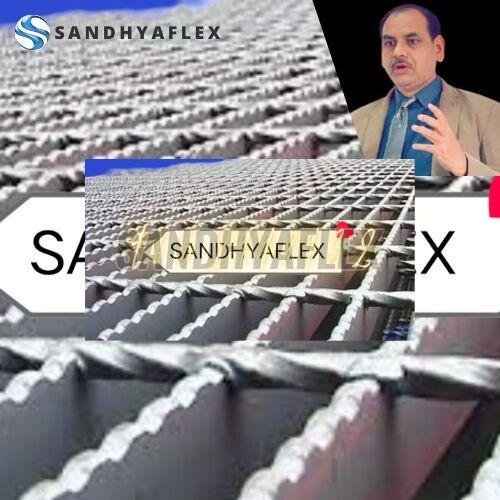
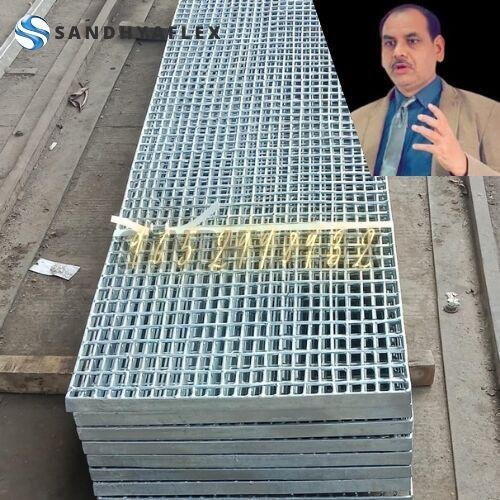
Here’s a summary of what MS Grating (mild steel grating) is + specs + suppliers + product examples. If you tell me the load, environment (outdoor/indoor, corrosive etc.), size etc., I can pick some that match your requirement.
What is MS Grating
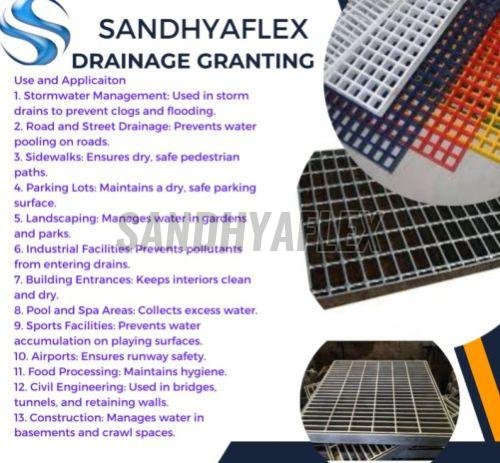
MS grating is a grid-type structure made by welding or fastening bearing bars (main load carrying) and cross bars. It allows drainage, ventilation, or light to pass through, while supporting foot or vehicular loads.
Common uses: walkways, floors, stair treads, platforms, trench covers, drainage covers etc.
Materials: Mild Steel (MS), sometimes hot-dip galvanized or primer coated to resist corrosion. Grade often IS2062 in India.
Important Specifications to define
When ordering or selecting MS grating, you should know:
| Bearing bar size & pitch (spacing) | Determines load capacity, stiffness, and how easily debris passes through. |
| Cross bar size & spacing | Helps with rigidity, safety, and prevents slipping. |
| Grating thickness | Heavier gauge gives stronger load bearing. |
| Finish & coating (galvanised, painted, epoxy etc.) | Determines life in corrosive or outdoor environments. |
| Dimensions (length, width) and cut-outs | Fit to site, drainage pipes, etc. |
| Serrated or plain surface | For slip resistance in walkways or wet/oily places. |
Prices & Suppliers in India (recent data)
Here are some quotes / manufacturers and typical rates in India:
Parasnath Buildwell: ₹ 82-88 / kg for MS Grating. (
| Business Type | Manufacturer, Exporter, Supplier, Retailer |
| Brand Name | SANDHYAFLEX |
| Material | Rubber With MS Plate |
| Certification | ISO 9001:2008 Certified |
| Country of Origin | India |
| Hardness | 60 Shore A |
| Tensile Strength | 17MPa |
| Number Of Flower | Elastomeric Bridge Bearings |
| Size | 160mm To 1500mm Lenght |
| Elastomeric Bridge Baring | 0.34 to 0.40ccm |
| Elastomeric Bridge Bearing | 0.34 to 0.40/ccm |
| Product Code | NEBB |
| Port | kakinada |
| Payment Terms | T/T |
| Delivery Time | 7 to 15days |
| Packaging Details | Packing with HDPE cover |
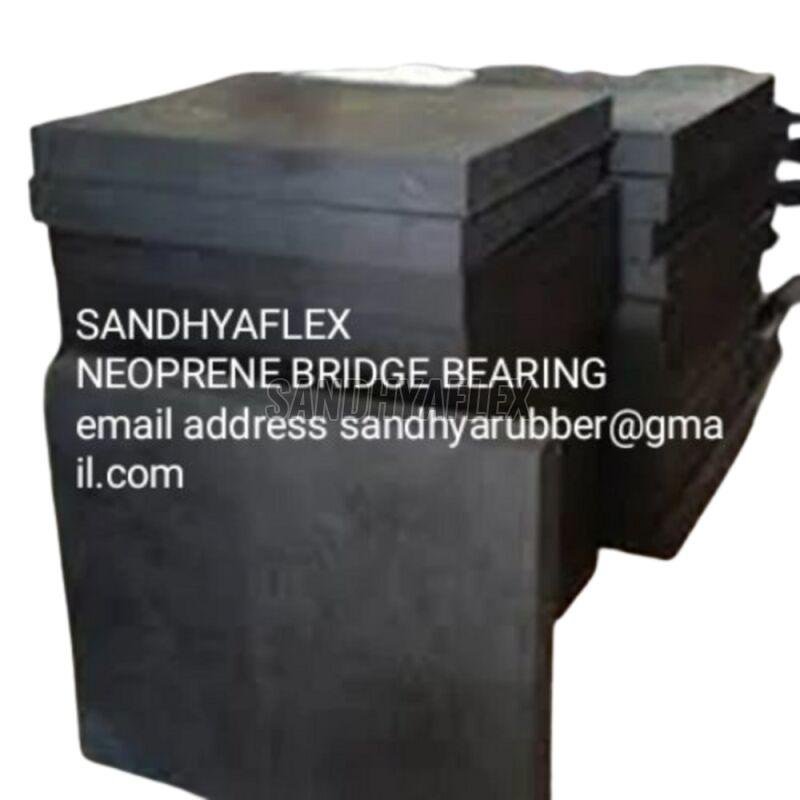
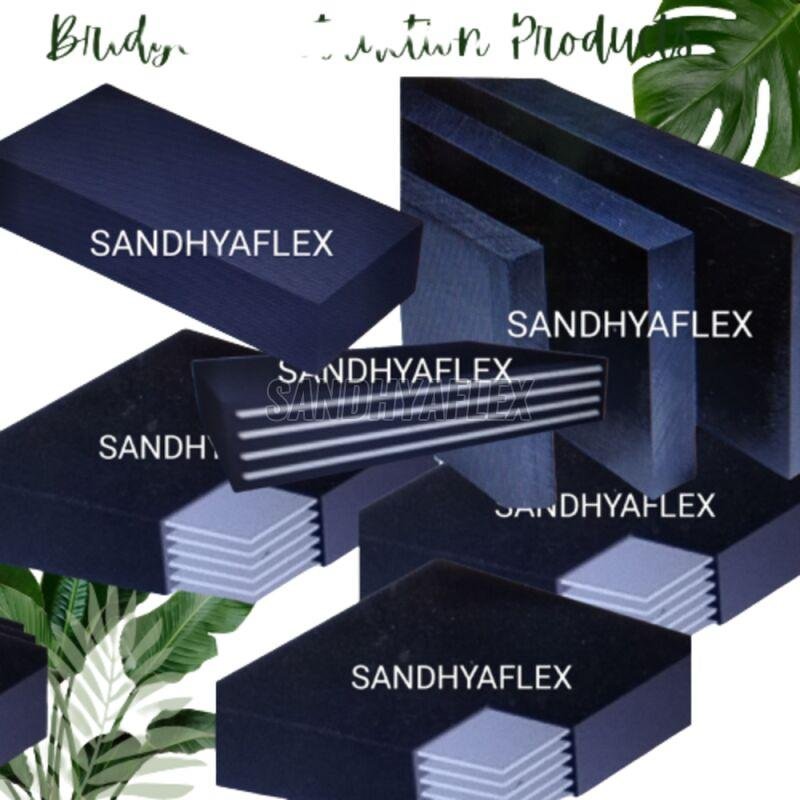
sandhya enterprises is a manufacturer and supplierof bridge bearing pad as per morth, irc 83 (part ii) 1987 and uic 772 2r. thickness 25mm to 144mm we are pleased to introduce ourselves as rubber sheet, textile braided hose, rubber suction hose, elastomeric bridge bearing, rubber moulded products, extruded products and pvc water stop, bridge expansion joint. We have leading and reputed consumer as our valued customers. It will be our pleasure if we can be of any service to your good selves and welcome your inquiries for your requirements. our service is well established with the, cement industries, granites industries, electric power industries, ready mix industries, construction company and civil construction works. We go through the test certificate, physical properties, processing condition of the finished goods, grades etc and after looking at the final product we confidently recommended our valued customer to buy the product. ultimate compression strength 60mpa adhesion strength (stripping test) at 4mpa vl and 3mpa hl shear modulus test 5mpa vl and hl load 2h technical details sr no. Test unit specification and testing method specimens 1 hardness irhd is: 3400 (part ii) cl.5.1.2.2 4.0mm (min ) thickness of test specimen 2 tensile strength mpa is:3400 ( part i) table 1 type -1 thick- 2.0 +.0.20mm width 6.0 + 0.40mm bench mark-25.0mm (max) 3 elongation at break % 4 adhesion strength (metal to rubber kn/m is:3400 ( part xiv) cl.3.3 length -125mm width-25mm 5 ash content % is:3400 (part xxii) cl. A-8.3.1 is 1 g (min) 6 polymer identification chemically 0.5 g (min) 7 percentage of polymers % 1 g (min) 8 compression set % is: 3400 (part x) cl. 5.1 thick -12.5 + 0.50mm dia-29 + 0.50mm 9 elastic modulus mpa irc 83 (part ii) 1987, uic 772 -2r and morth 2 nos from finish product 10 shear modulus mpa 11 ultimate compression strength mpa one specimen size of 100x200mm (cutting piece from An elastomeric bridge bearing, also known as a rubber bridge bearing, is a structural component used to support and accommodate movement in bridge structures. It is designed to transfer loads from the superstructure (the bridge deck and its components) to the substructure (piers, abutments, or supports) while allowing for various types of movement, such as rotation, translation, and rotation in multiple axes. Elastomeric bridge bearings are typically made of layers of elastomeric material, such as natural rubber or synthetic rubber compounds. The rubber layers are often reinforced with steel plates or fabric inserts to provide additional strength and stability. The combination of rubber and reinforcement allows the bearing to withstand the applied loads and movements while providing flexibility and resilience. The main functions of elastomeric bridge bearings are: 1. Load transfer: Elastomeric bearings distribute the weight and loads from the bridge superstructure to the substructure, reducing the stress on the bridge components and foundations. 2. Movement accommodation: They accommodate various types of bridge movements, including expansion and contraction due to temperature changes, horizontal and vertical displacements caused by live loads or settlement, and rotational movements due to bridge deck rotations or seismic events. 3. Vibration and shock absorption: Elastomeric materials have inherent damping properties, which help absorb and dissipate vibrations and shocks, improving the overall structural performance and comfort of the bridge. 4. Noise reduction: The rubber material helps to dampen and reduce noise generated by traffic or other sources, resulting in quieter bridge operations. Elastomeric bridge bearings are available in different types and designs, depending on the specific application and load requirements. Common types include pot bearings, spherical bearings, and strip bearings, each with their own characteristics and advantages. Proper installation and maintenance of elastomeric bridge bearings are crucial for
| Business Type | Manufacturer, Exporter, Supplier |
| Color | BLACK |
| Material | PVC HANDRAIL |
| Brand Name | SANDHYAFLEX |
| Product Code | PVCH |
| Delivery Time | 7 days |
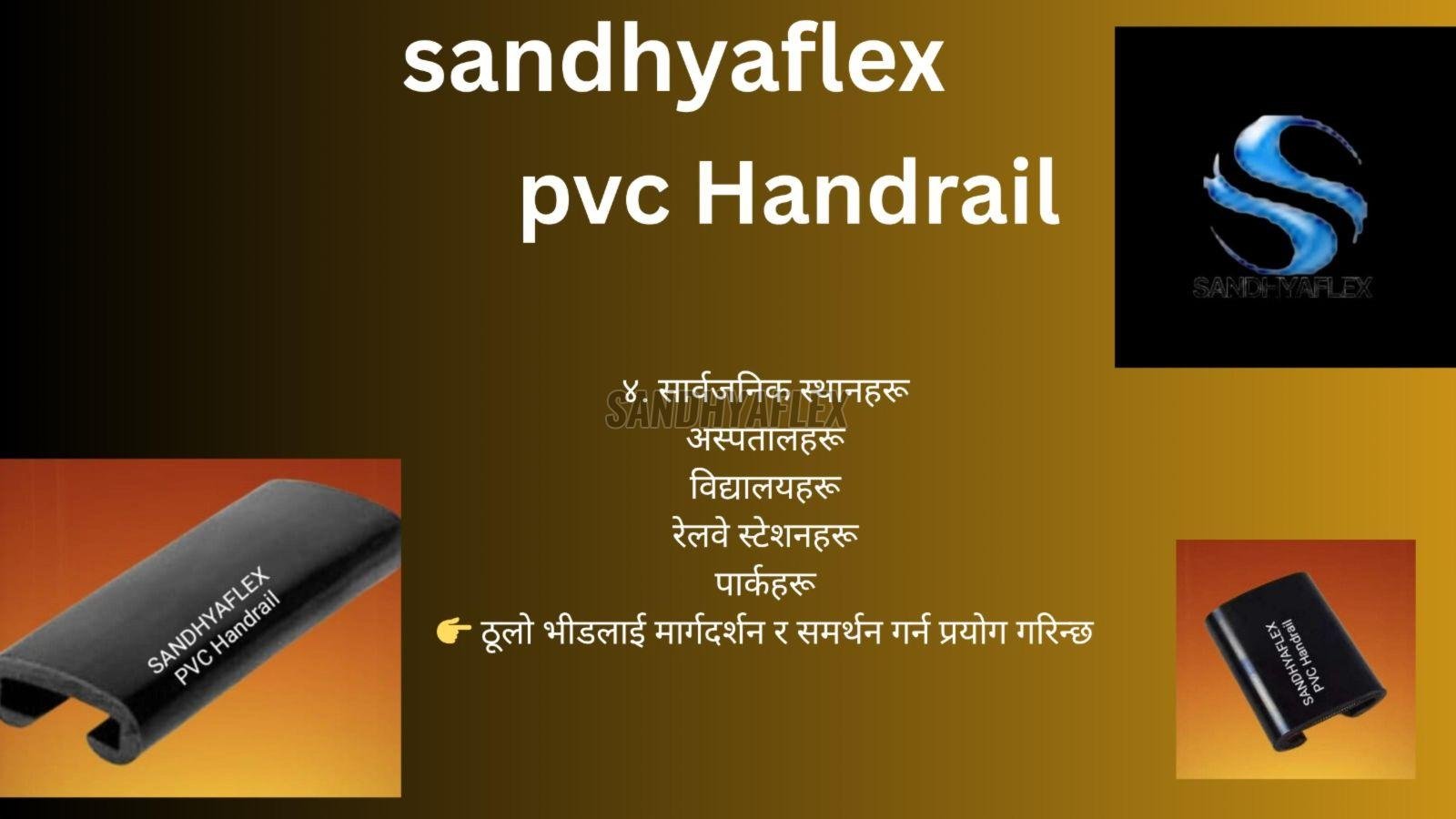
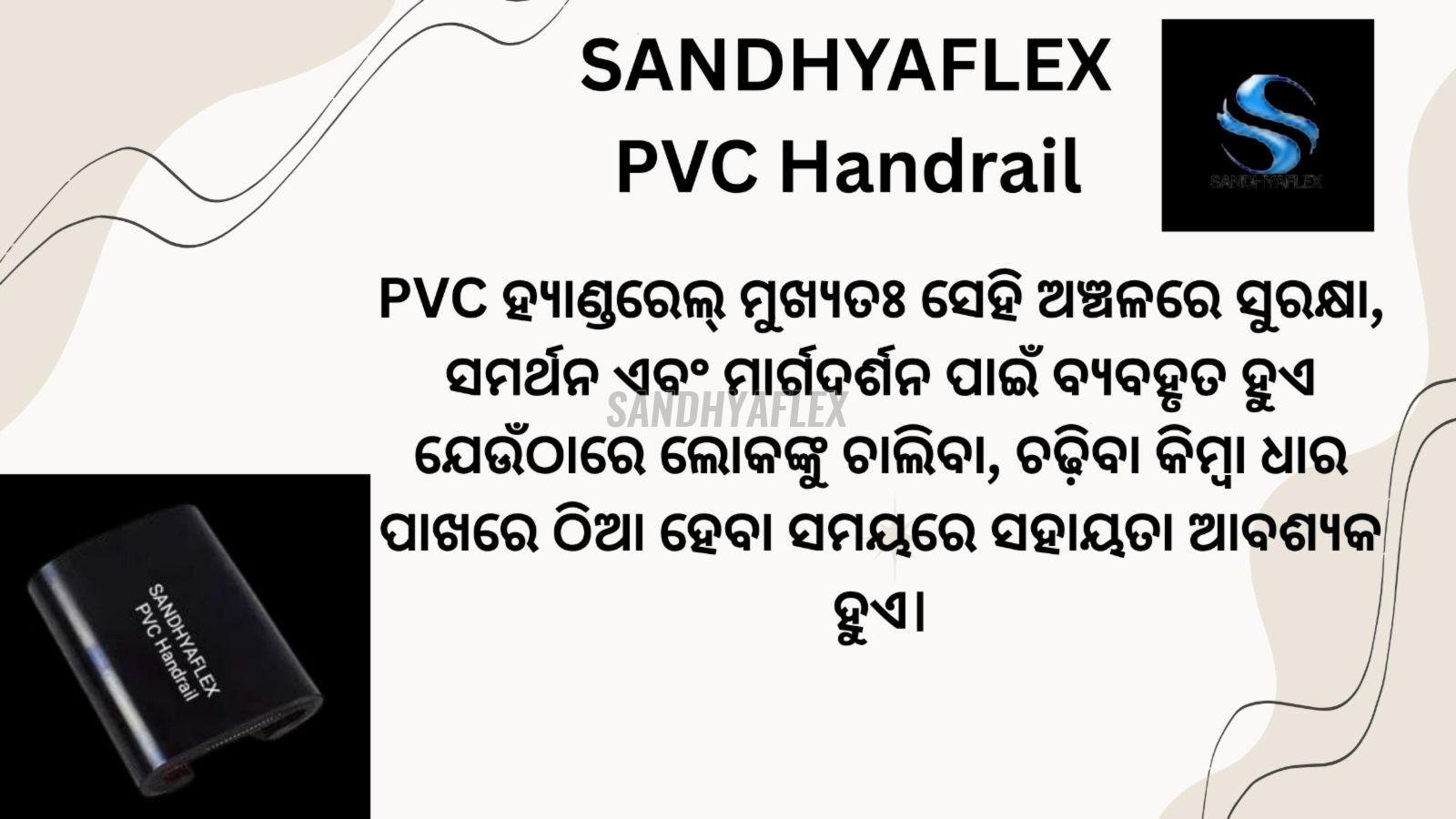
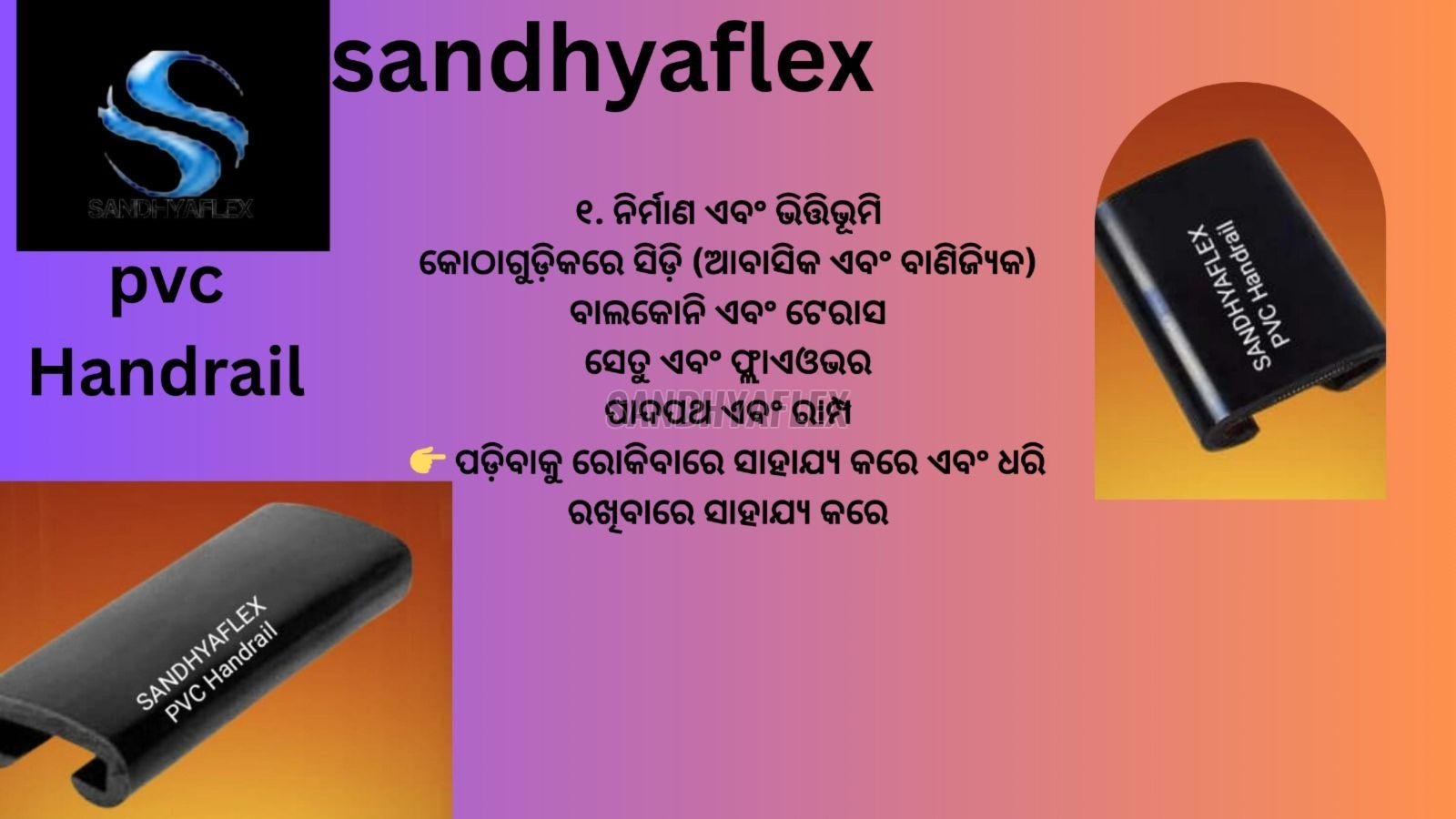
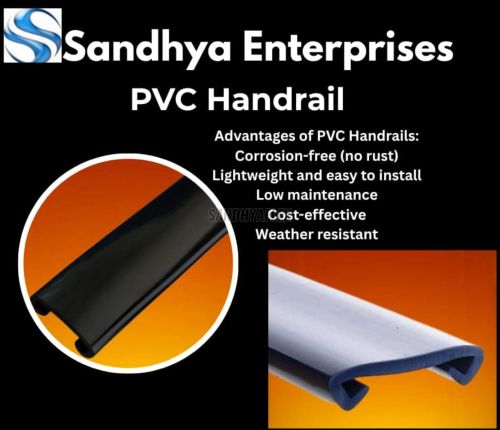
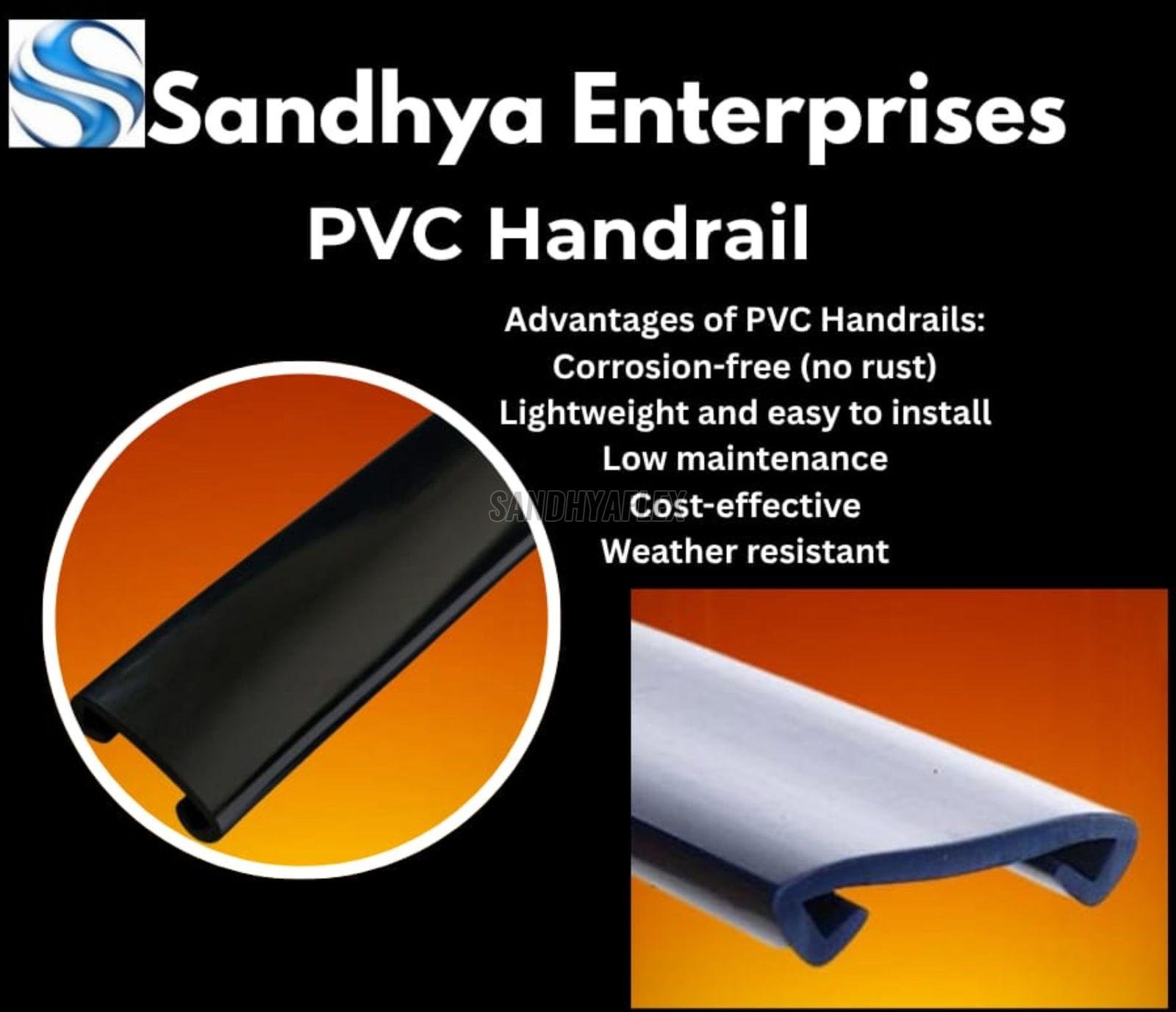
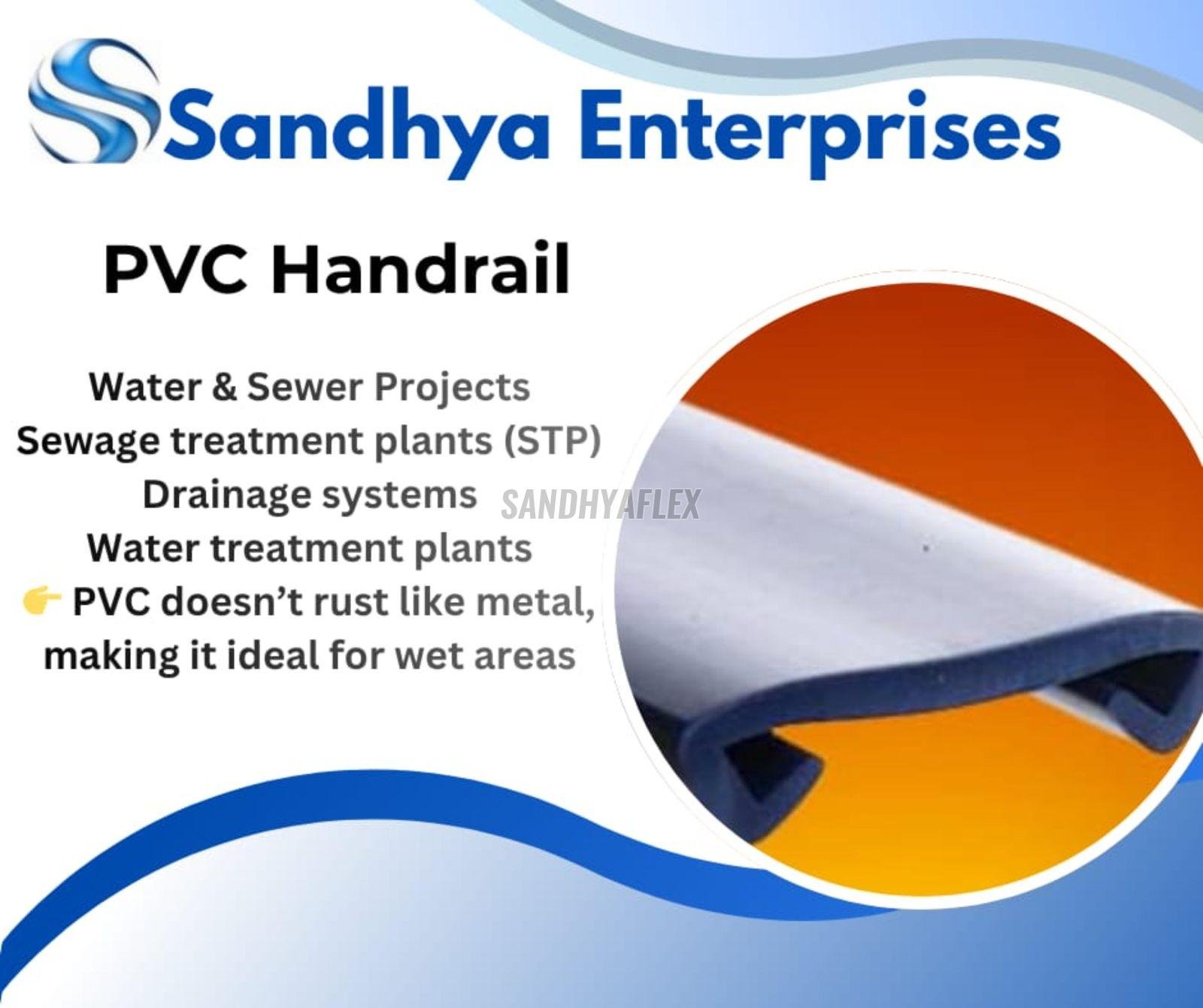
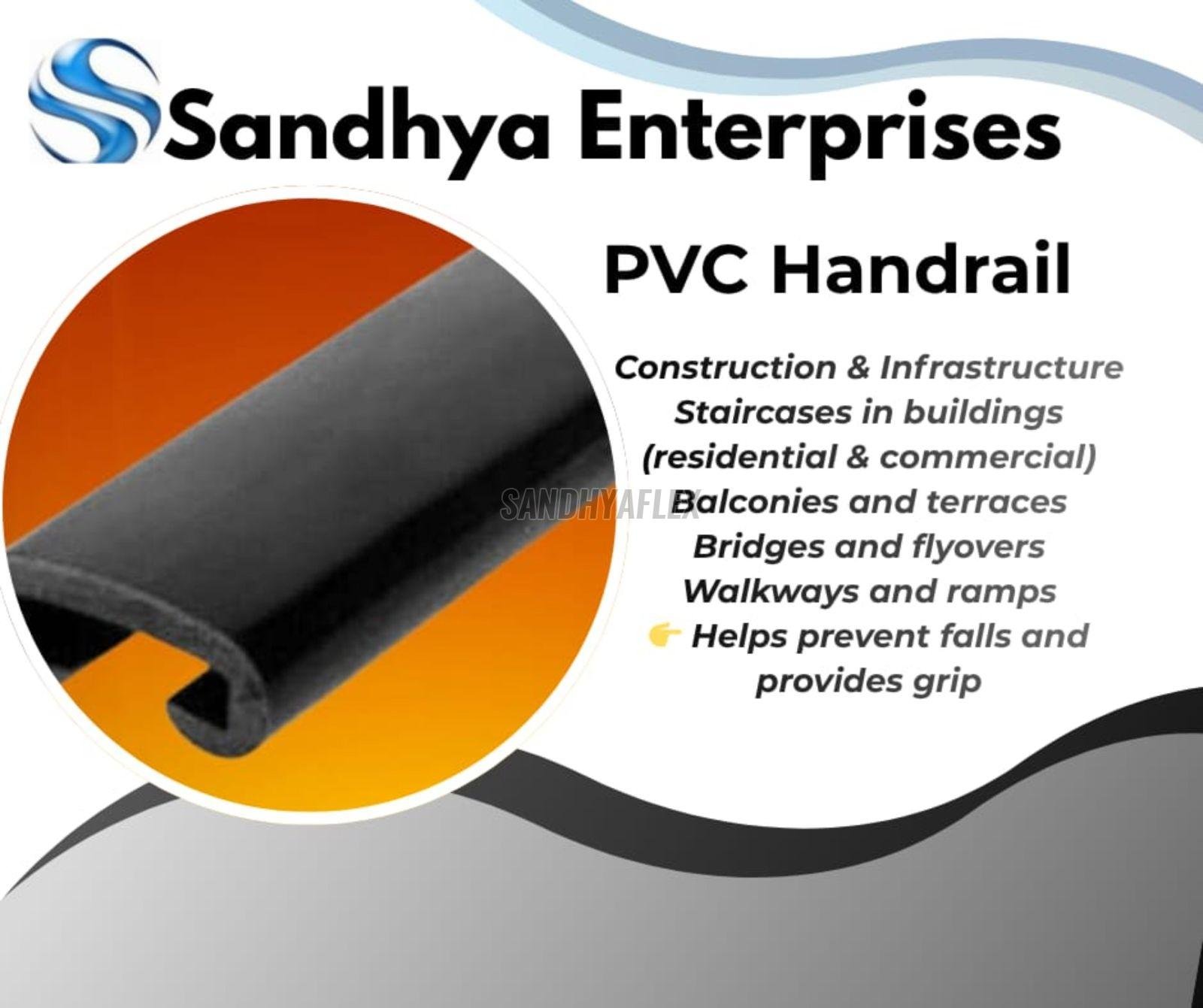
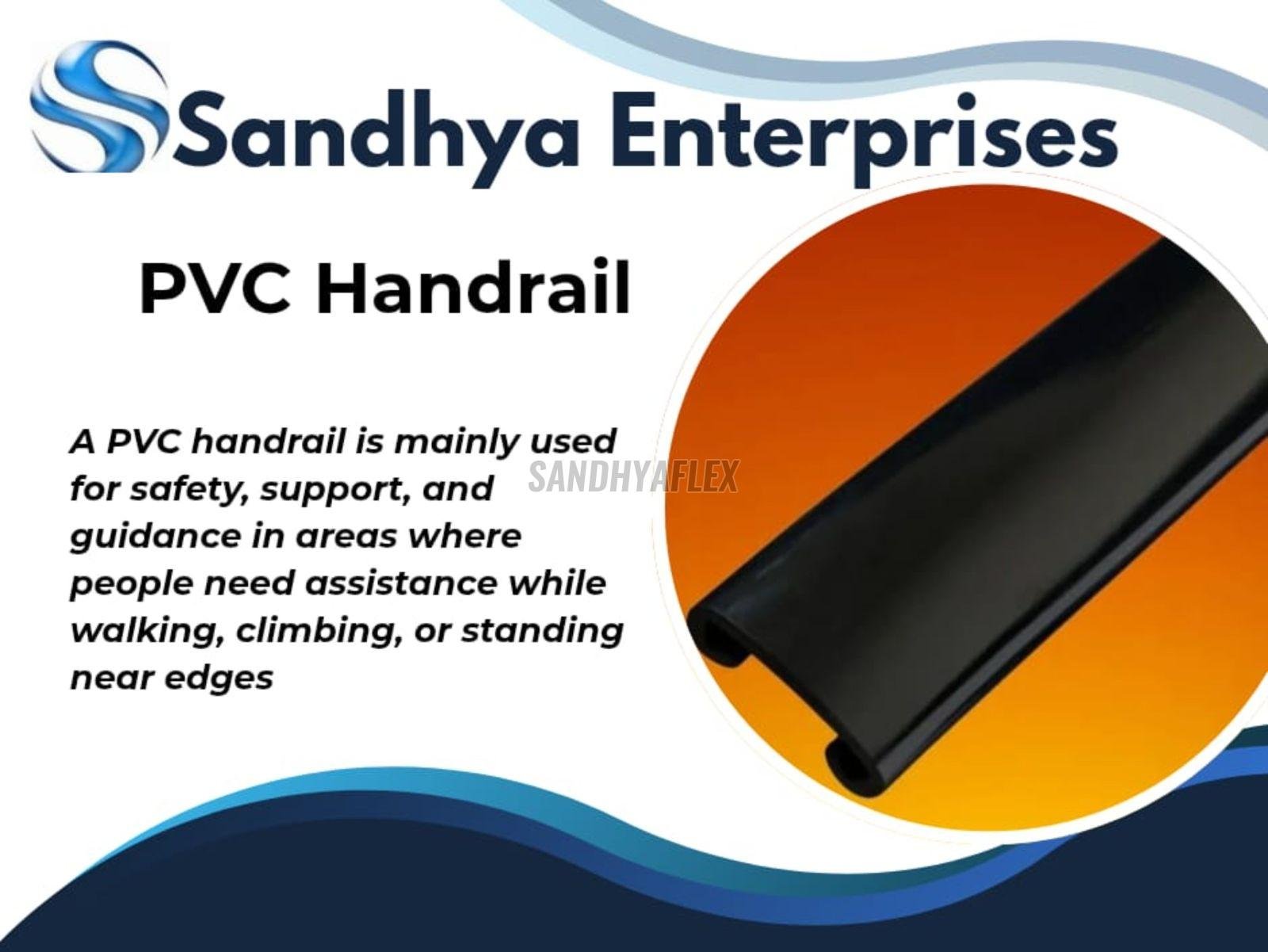
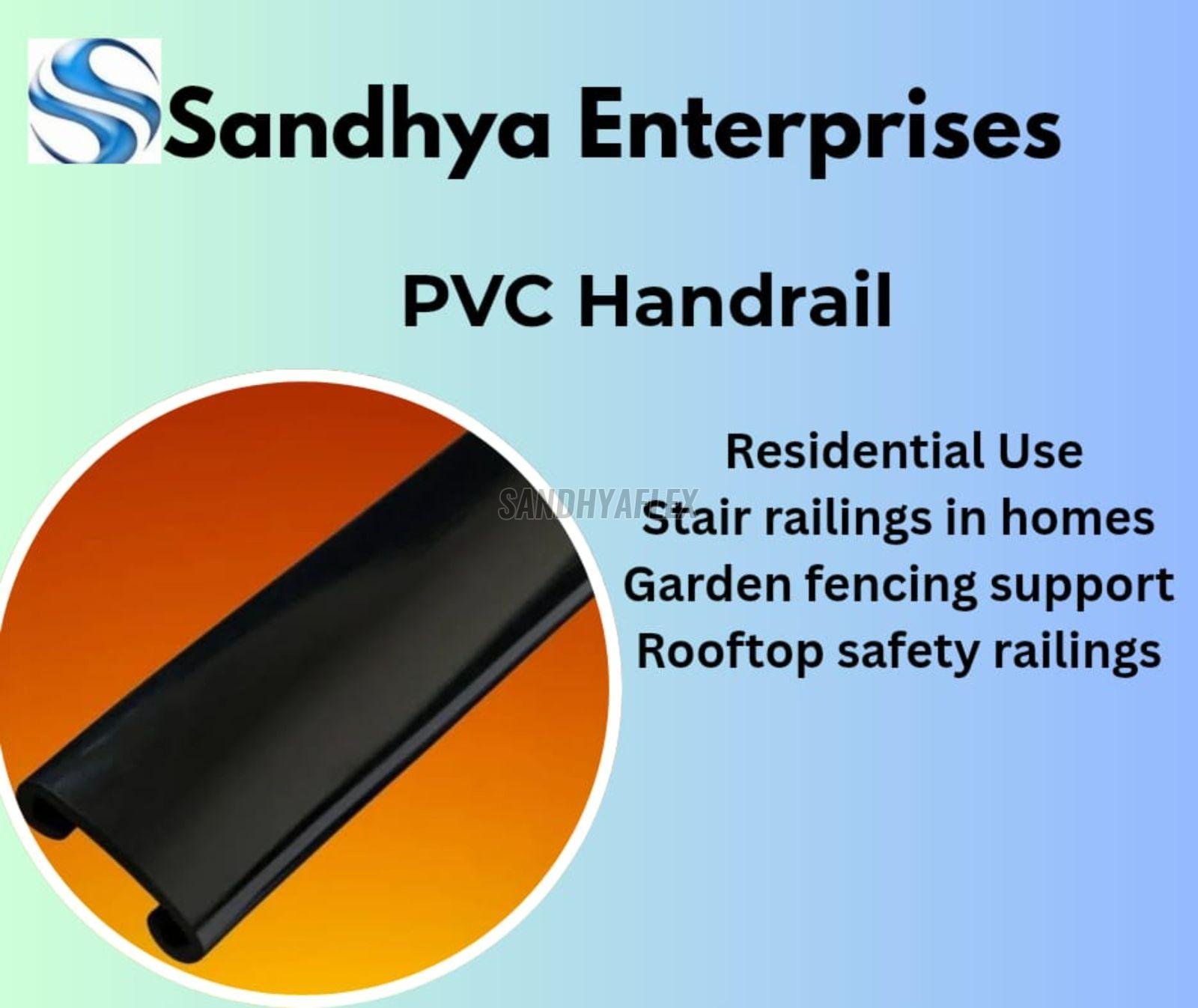
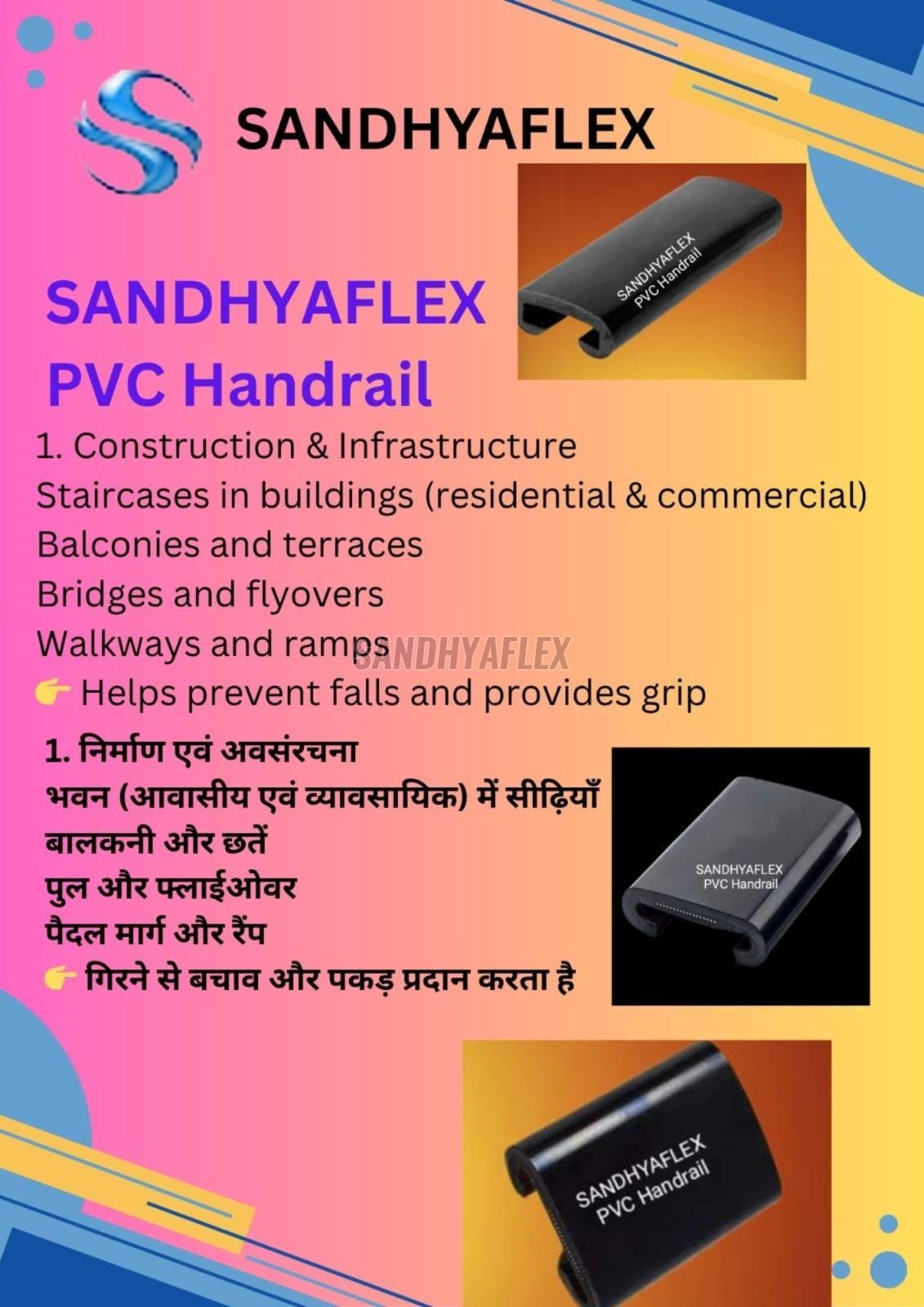
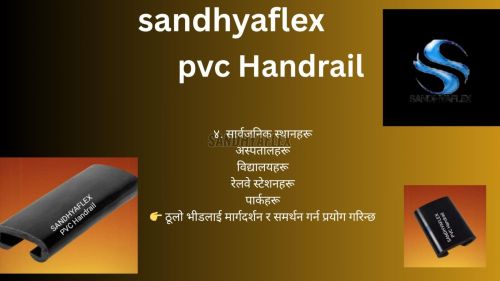
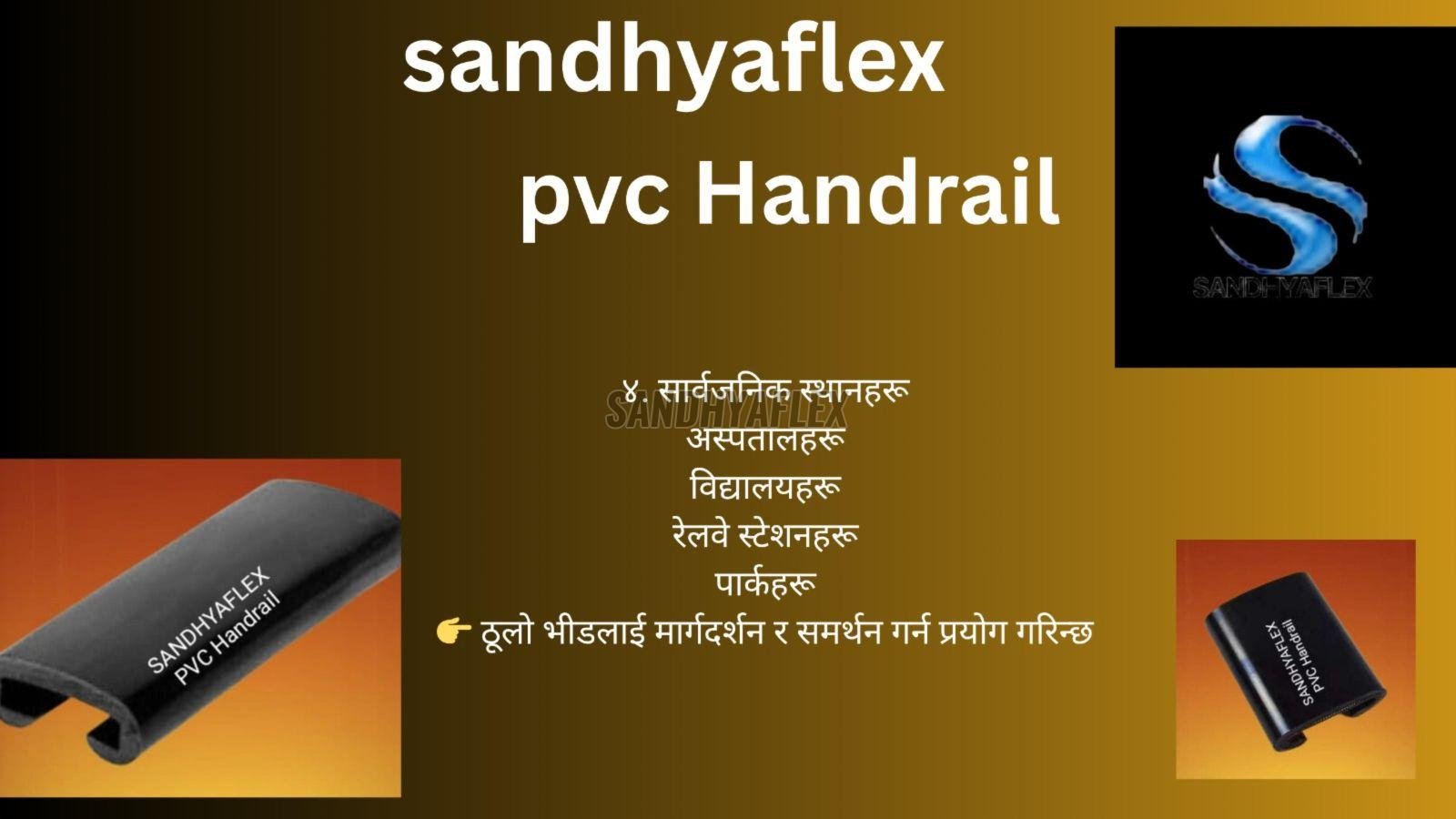
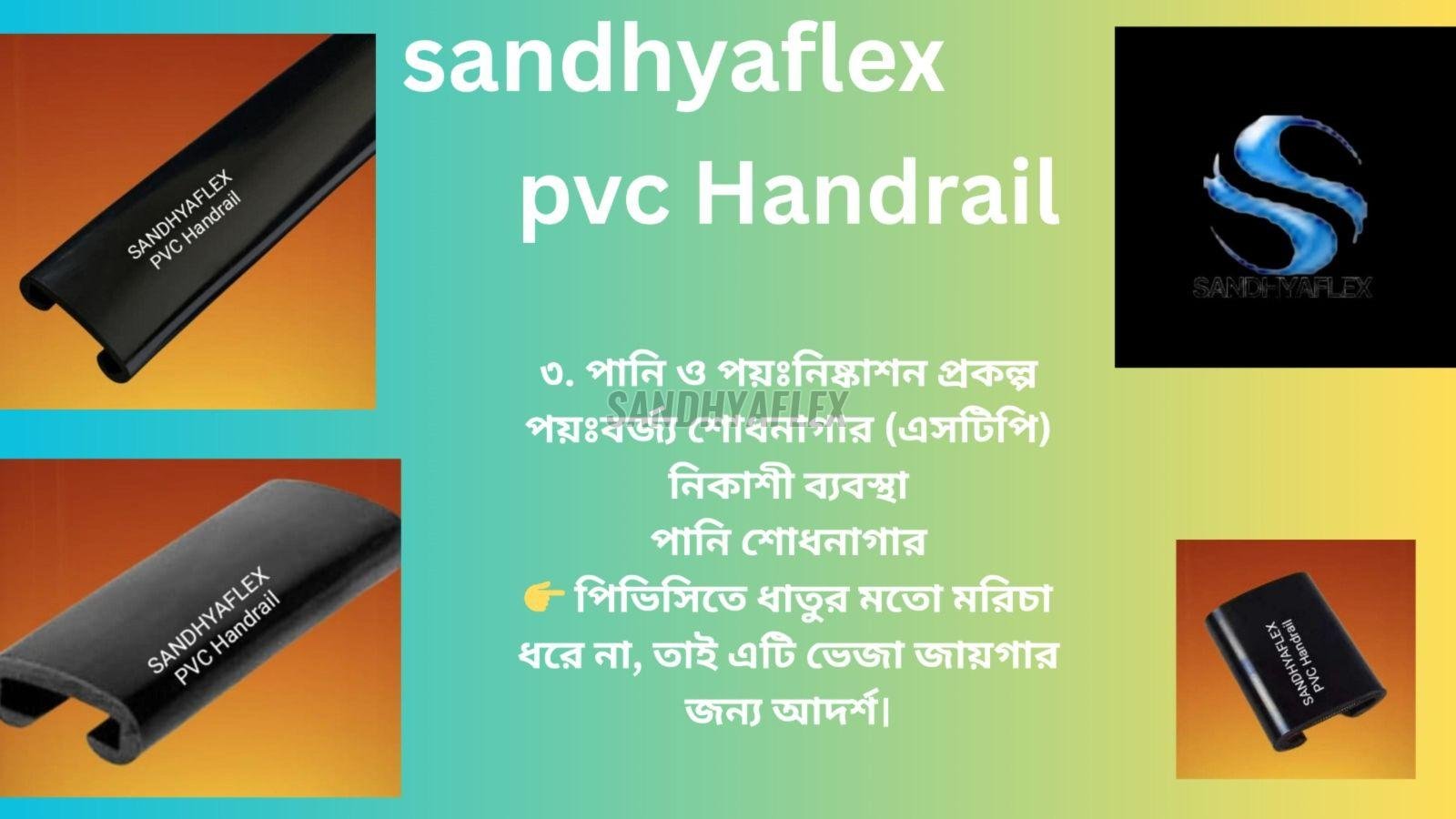
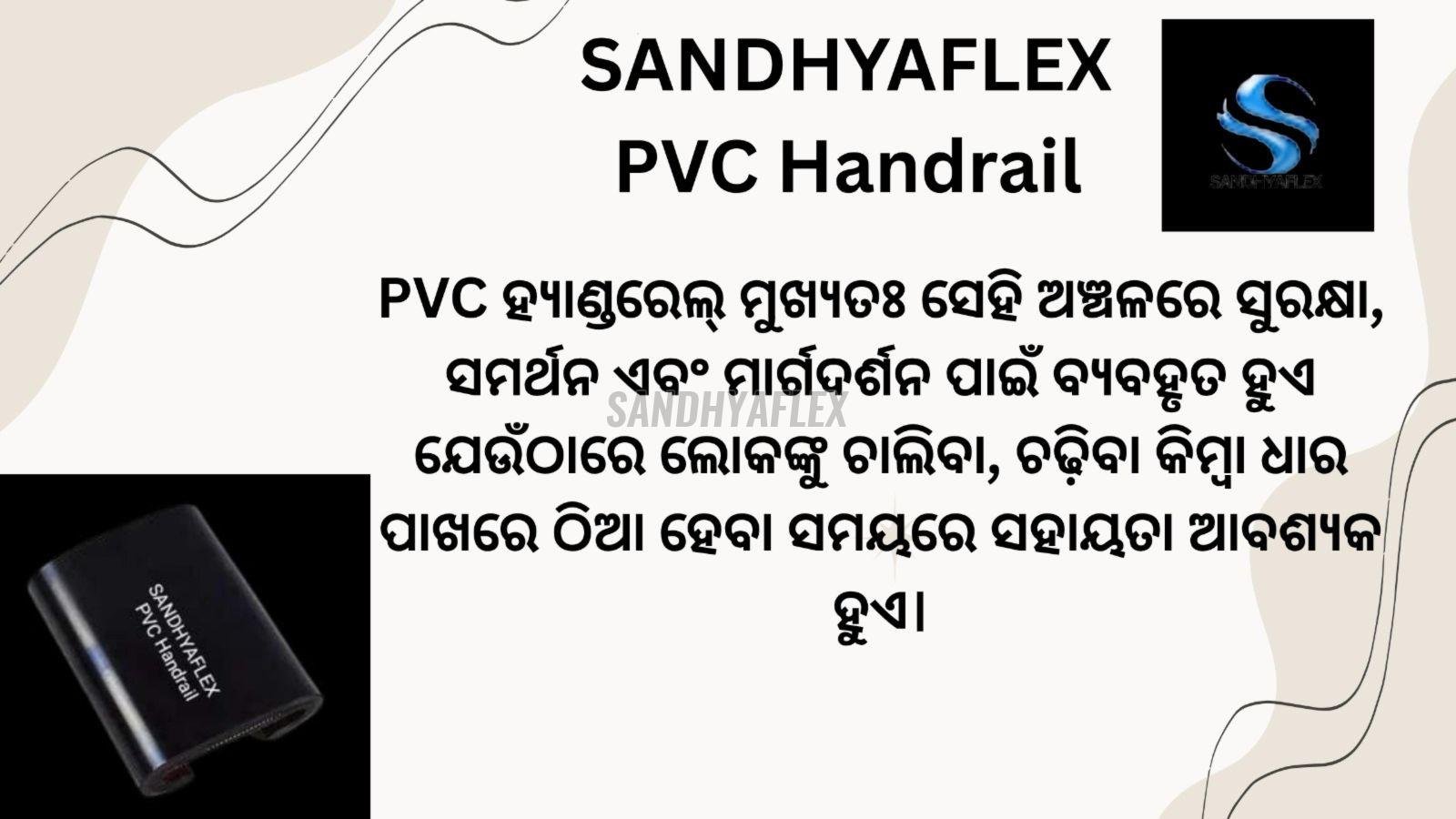
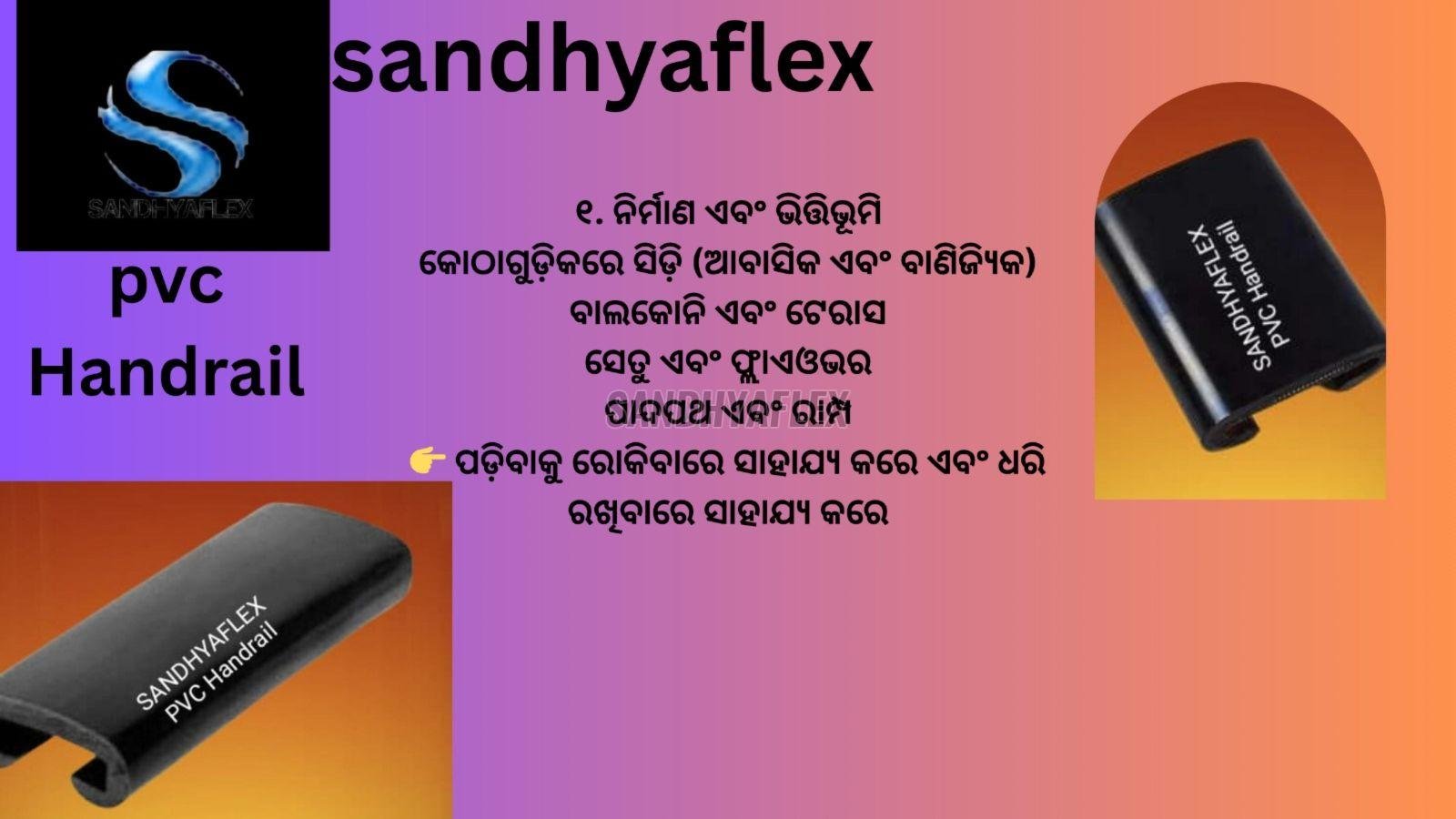
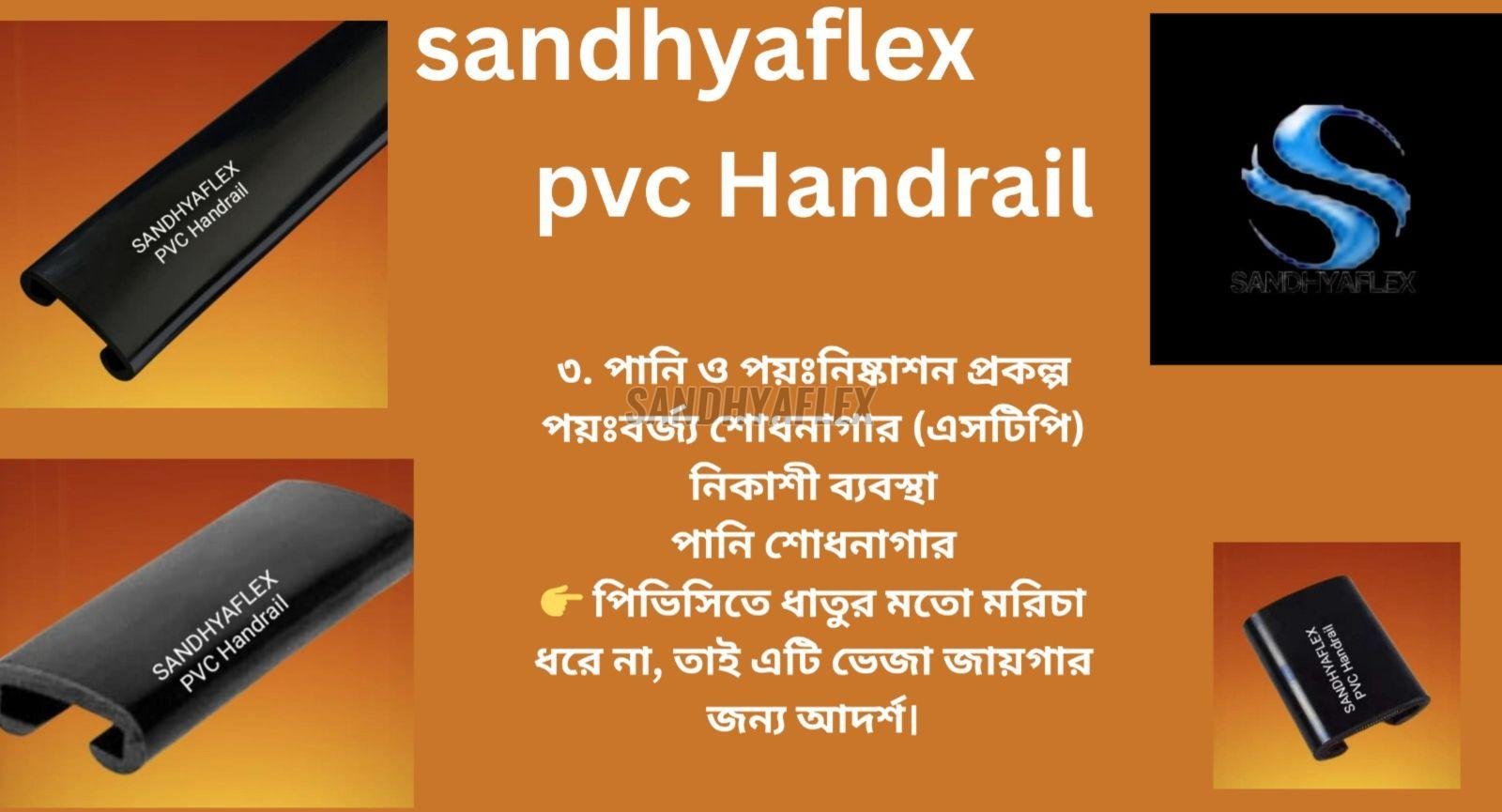
PVC handrails are widely used in construction for stairs, corridors, balconies, and hospitals because they are durable, economical, and easy to maintain. They are usually installed as a cover over metal (MS) flat or pipe railings to provide better grip and comfort.
PVC handrails are widely used in construction for **stairs, corridors, balconies, and hospitals** because they are **durable, economical, and easy to maintain**. They are usually installed as a **cover over metal (MS) flat or pipe railings** to provide better grip and comfort. ([PVC Water Stopper Seals][1])
---
## 🔹 Popular PVC Handrail Options
### [PVC Handrails (basic profiles)]()
*₹65*
### [PVC Wall Handrail]()
*₹150*
### [Stair PVC Handrail]()
*₹60*
### [PVC Staircase Handrail Profile]()
*₹6,607*
### [DIY PVC + Metal Bracket Handrail]()
*₹17,529.11*
---
## 🔹 What is a PVC Handrail?
A **PVC handrail** is a flexible or rigid plastic profile (Polyvinyl Chloride) used to:
* Cover metal railings
* Provide **safe, anti-slip grip**
* Improve appearance of staircases
They are commonly supplied in **roll form (20–25 meters)** or straight lengths and can be heated slightly for easy bending during installation. ([Sandhya Flex][2])
---
## 🔹 Key Features
* **Durable & long-lasting**
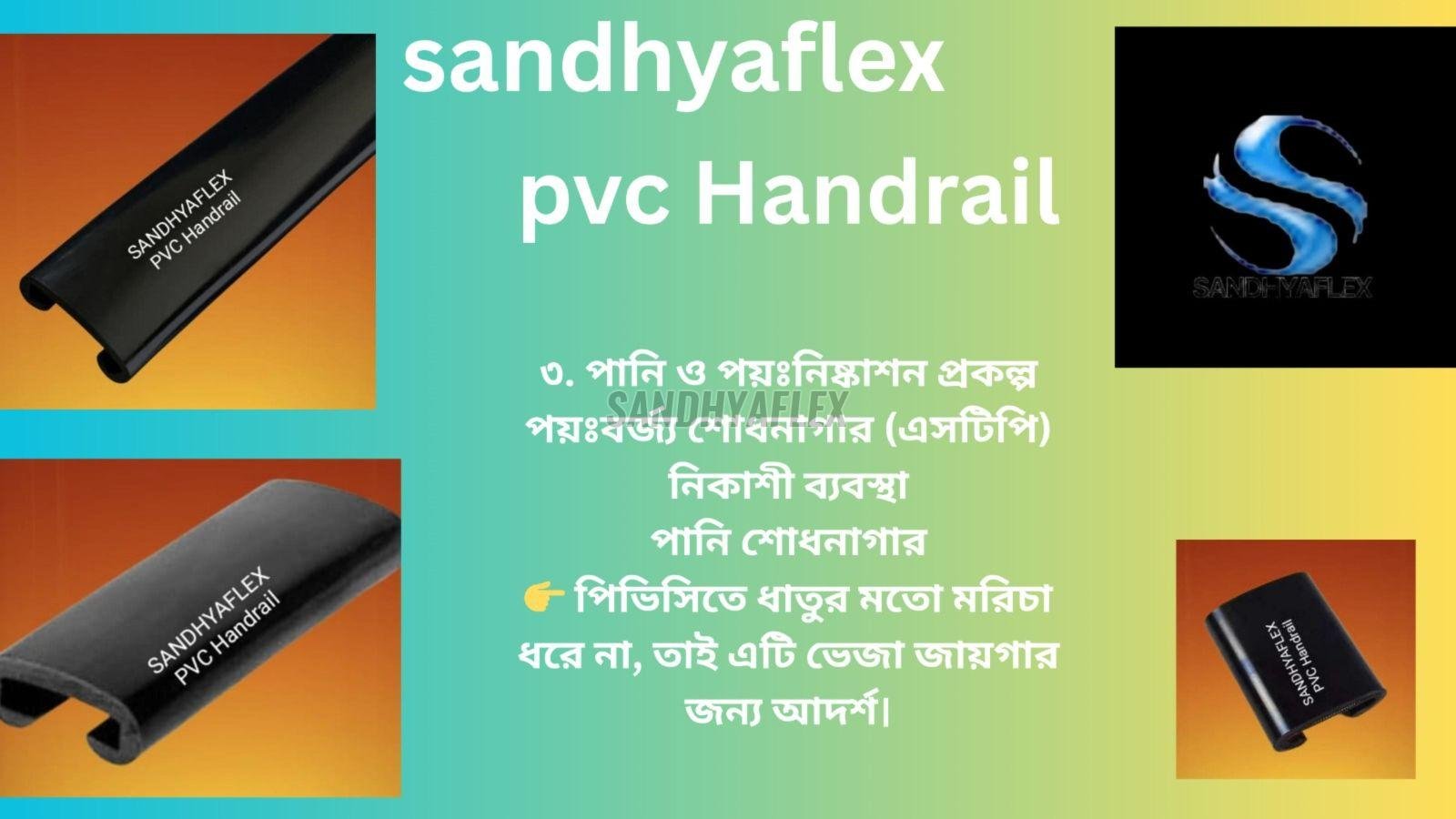
* **Corrosion & moisture resistant** (no rust like metal)
* **Low maintenance** – easy to clean
* **Available in multiple colors & sizes** (25mm to 75mm widths) ([PVC Water Stopper Seals][1])
* **Weather & UV resistant** for outdoor use ([Sinecos Profiles][3])
---
## 🔹 Common Applications
* Residential staircases
* Apartments & commercial buildings
* Hospitals & public corridors
* Factories and industrial walkways
* Railway stations, airports, schools
PVC handrails are preferred in **high-traffic areas** because they provide both safety and wall protection. ([Sinecos Profiles][3])
---
## 🔹 Types of PVC Handrails
1. **Staircase handrail covers** (most common)
2. **Wall-mounted hospital handrails** (with aluminum support)
3. **Round / flat profile handrails**
4. **Decorative wood-finish PVC handrails**
---
## 🔹 Typical Price Range (India)
* Basic PVC handrail: **₹45 – ₹150 per meter**
* Heavy-duty / aluminum insert type: **₹1000+ per meter** ([ExportersIndia][4])
---
## 🔹 Advantages Over Wood/Metal
* No termite or rust issues
* Cost-effective
* Easy installation (heat & fit method)
* Smooth and comfortable grip
---
If you want, I can suggest **best PVC handrails for your project (factory, building, or hospital use)** or even help you find **suppliers near your location** 👍
[1]: "Pvc Handrails for Stairs , Plastic railing, staircase buffers"
[2]: "PVC Handrail Manufactures - Sandhya Enterprises"
[3]: "PVC Handrail For Staircase | Sinecos Profiles Pvt Ltd - Noida"
[4]: "PVC Handrail, Brand Name : Lifeline Universal at Rs 1075 in Delhi - ID: 8307367"
| Business Type | Manufacturer, Exporter, Supplier, Retailer |
| POT PTFE Bridge Bearing | 30000 to 65000/nos |
| Product Code | POTPTFEB |
| Port | kakinada |
| Payment Terms | T/T |
| Delivery Time | 15 to 30days |
| Packaging Details | Packing with HDPE Cover |
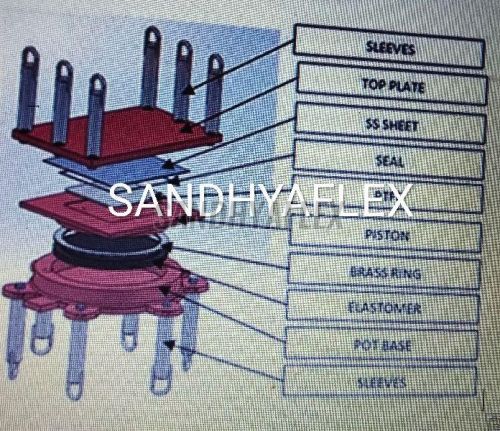
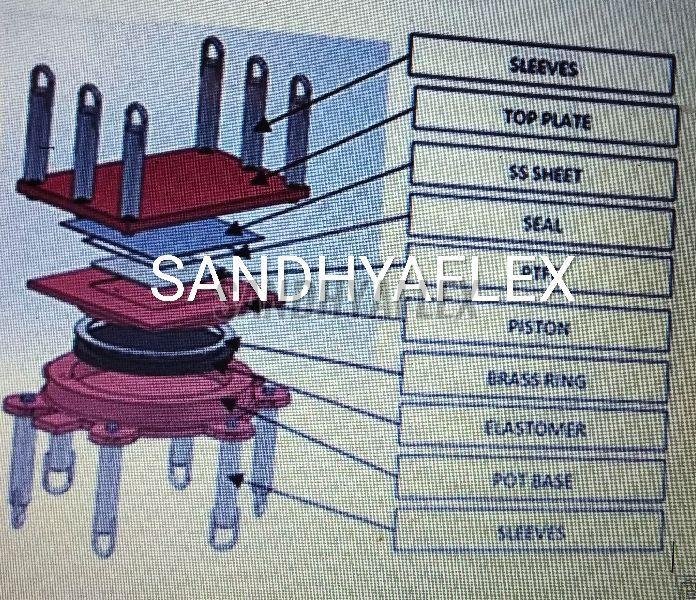
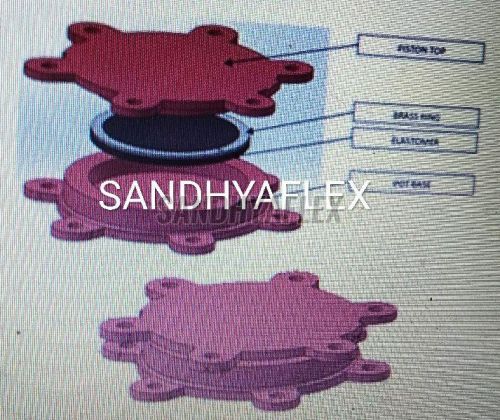
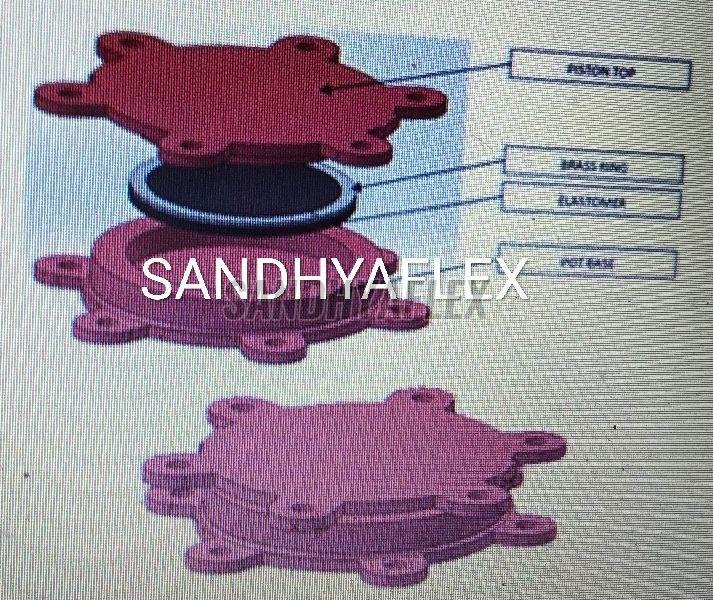
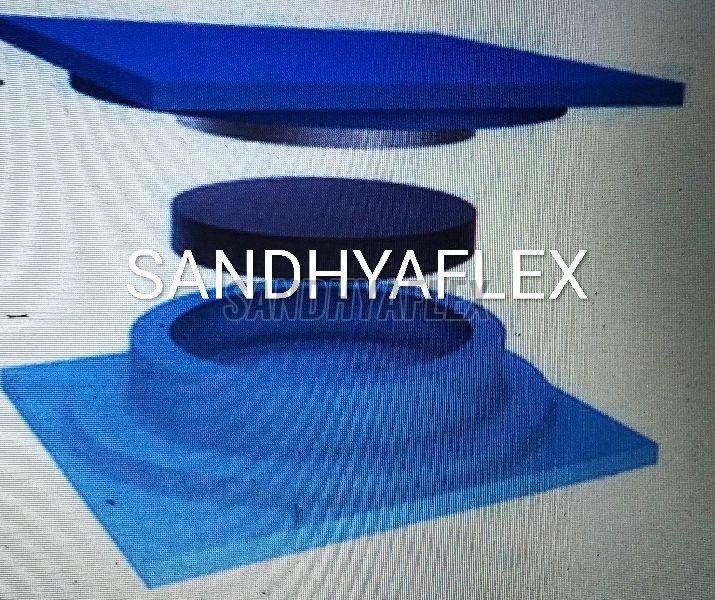
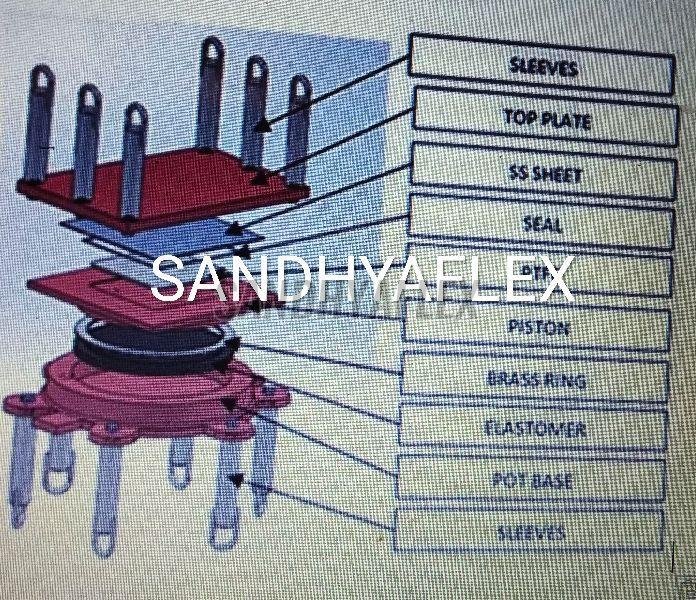
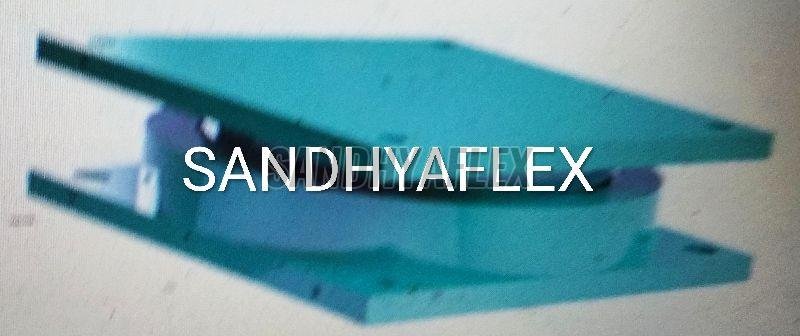
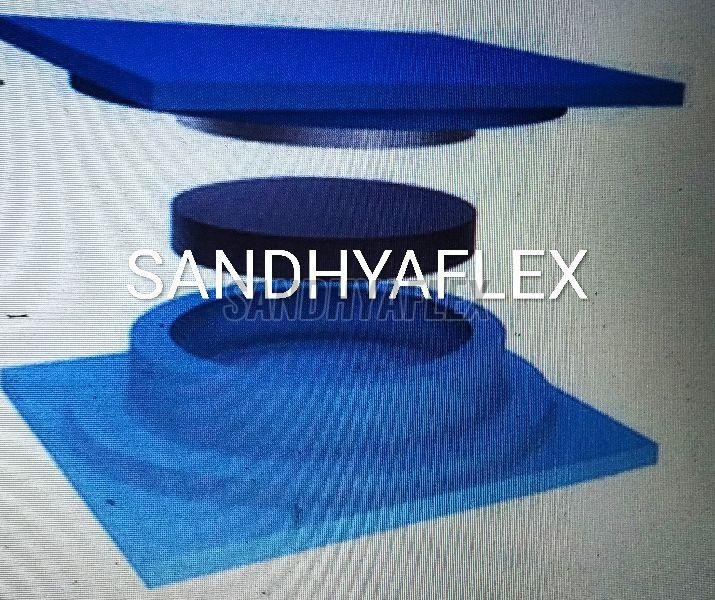
A PTFE (polytetrafluoroethylene) pot bearing, also known as a PTFE sliding bearing or PTFE spherical bearing, is a type of structural bearing used in bridge construction and infrastructure projects. It is designed to accommodate movements, rotations, and loads between different structural components, such as bridge superstructures and substructures, while providing low friction and smooth sliding surfaces.
The key features and characteristics of PTFE pot bearings include:
1. Material: PTFE, a high-performance fluoropolymer, is the main material used in PTFE pot bearings. PTFE offers excellent chemical resistance, low friction coefficient, high load-bearing capacity, and resistance to deformation and wear.
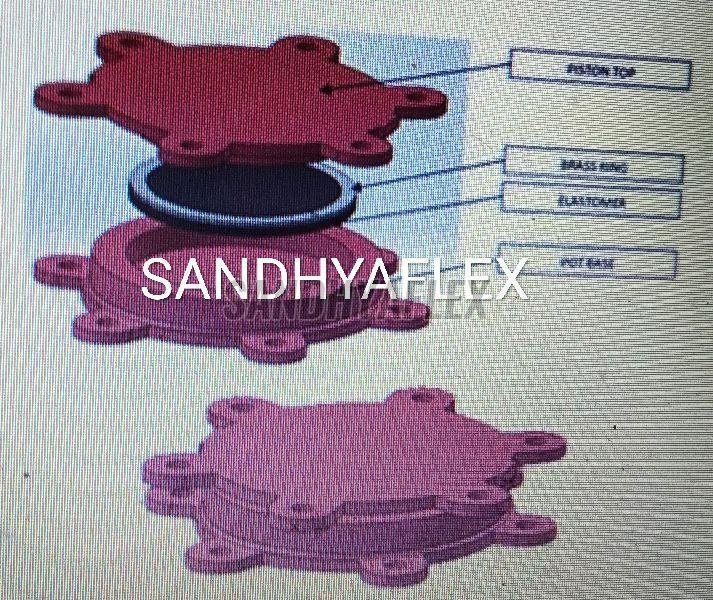
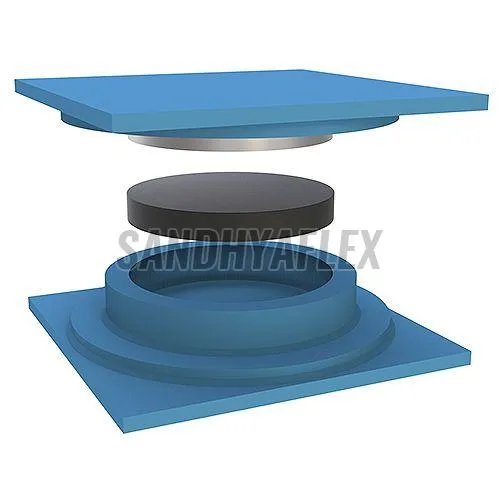
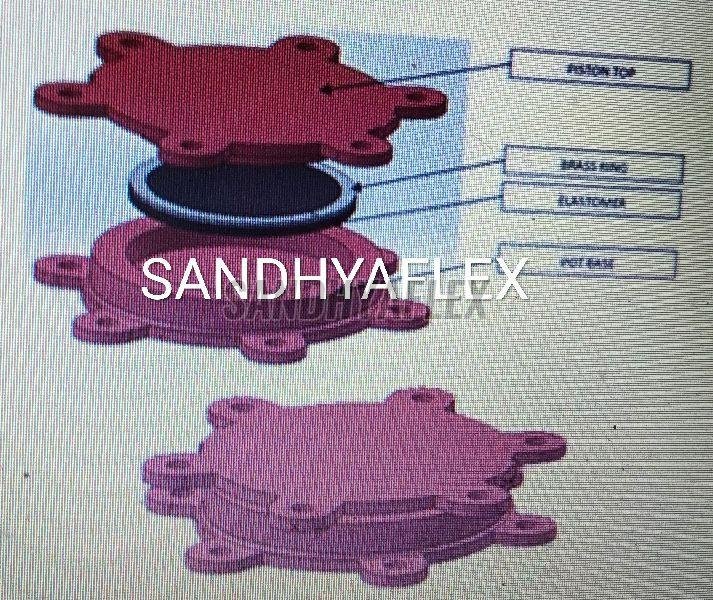
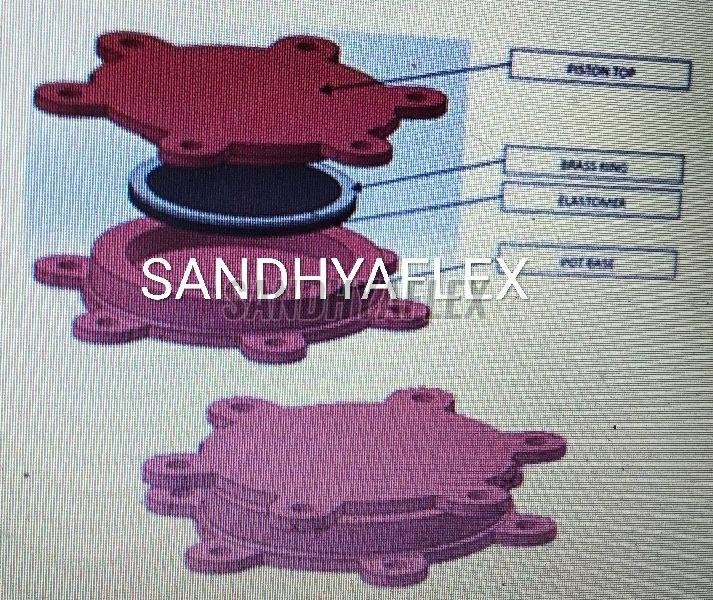
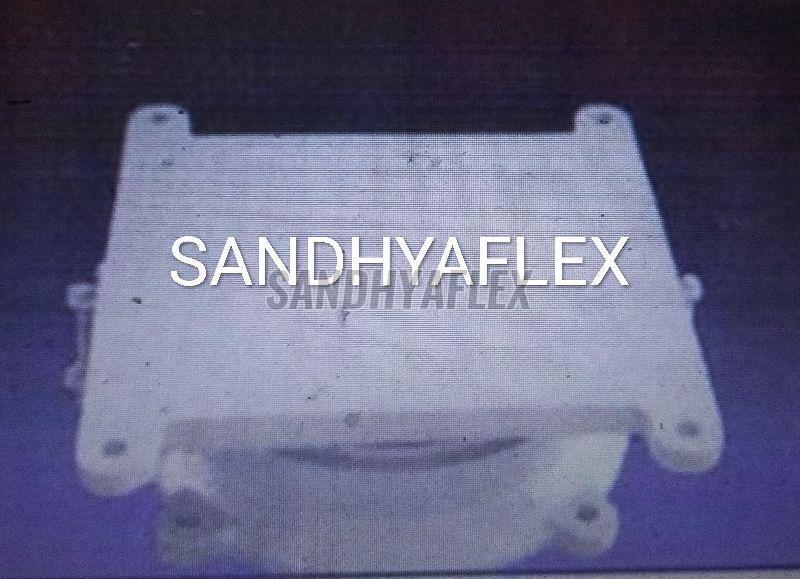
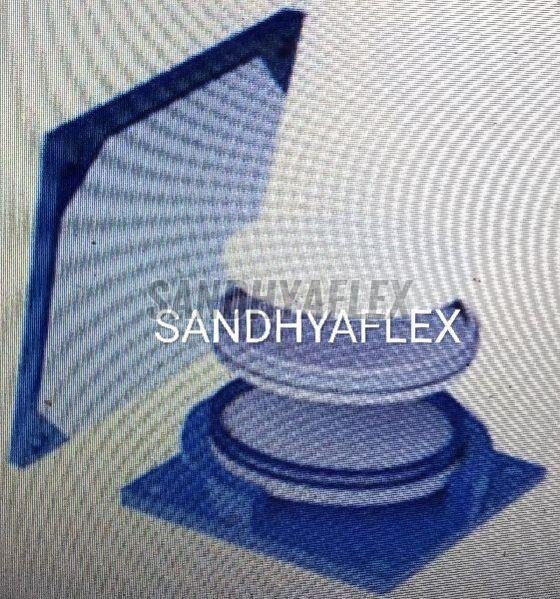
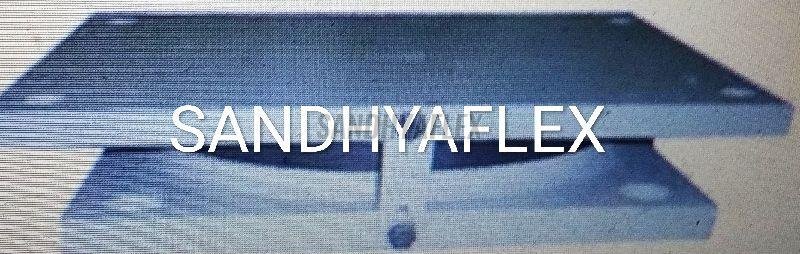
2. Design: PTFE pot bearings typically consist of a steel pot or housing that encloses a concave spherical PTFE disc or sliding surface. The PTFE disc provides the sliding capability, allowing movement and rotation between the bearing surfaces.
3. Load capacity: PTFE pot bearings are designed to support significant vertical loads while allowing movements in different directions. They can accommodate vertical loads, horizontal displacements, rotations, and even seismic forces, depending on the design and size of the bearing.
4. Friction reduction: PTFE's low friction coefficient helps to reduce friction and shear forces between the bearing surfaces. This allows for smooth and controlled movements, reducing wear and energy loss within the bearing system.
5. Durability and maintenance-free operation: PTFE pot bearings are known for their long-term durability and low maintenance requirements. PTFE's inherent resistance to corrosion, weathering, and aging ensures the longevity of the bearing, even in harsh environmental conditions.
6. Safety and reliability: PTFE pot bearings are engineered to meet stringent safety standards and regulations for structural bearings. They are designed to withstand heavy loads, provide stability, and ensure the structural integrity of bridges and other infrastructure elements.
7. Customization: PTFE pot bearings can be customized to meet specific project requirements, including load capacity, movement ranges, and dimensions. They are available in various sizes and configurations to accommodate different structural designs and loads.
Proper installation and periodic inspection of PTFE pot bearings are essential to ensure their optimal performance. Regular maintenance and lubrication may be required, depending on the specific design and usage conditions of the bearings.
It is important to consult with qualified engineers or professionals with experience in bridge construction and bearing systems to ensure the proper selection, installation, and maintenance of PTFE pot bearings in accordance with project requirements and industry standards.
| Business Type | Manufacturer, Exporter, Supplier, Retailer |
| Number Of Flower | Pot PTFE Bearing |
| Certification | ISO 9001:2008 Certified |
| Shape | Round |
| Total Carbohydrate | 1 Year |
| Condition | New |
| Country of Origin | India |
| POT PTFE Bridge Bearing | 140 to 160MT |
| Grey | 140 to 160/MT |
| Product Code | POTPTFESBB |
| Port | kakinada |
| Payment Terms | T/T |
| Delivery Time | 7 to 15days |
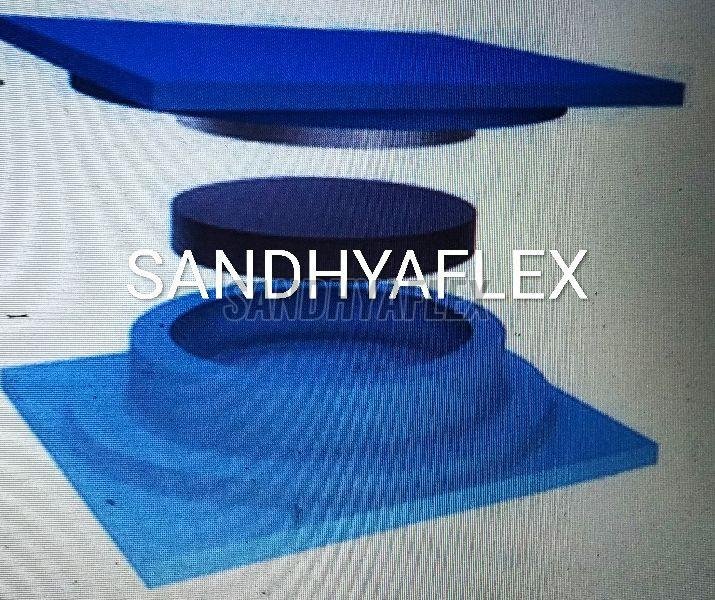
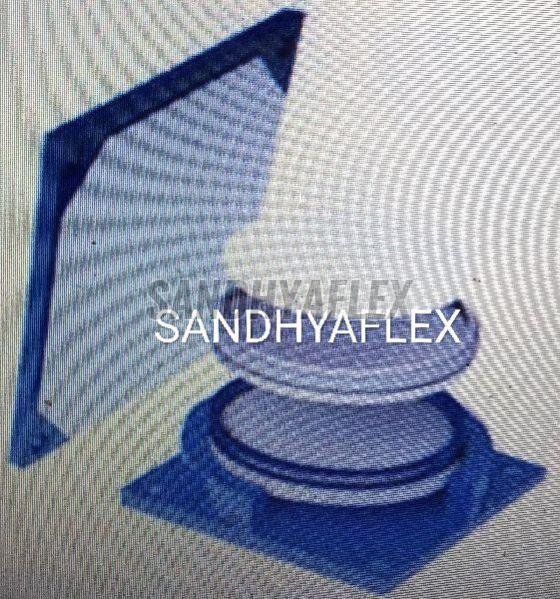
Sandhya Enterprises AN ISO:9001: 2015 Cerifisfied Company, manufacturer and Supplier of PTFE POT Bearing.
Fixed POT PTFE Beairng
Free POT PTFE Bearing
Guided POT PTFE Beairng
A PTFE (polytetrafluoroethylene) pot bearing, also known as a PTFE sliding bearing or PTFE spherical bearing, is a type of structural bearing used in bridge construction and infrastructure projects. It is designed to accommodate movements, rotations, and loads between different structural components, such as bridge superstructures and substructures, while providing low friction and smooth sliding surfaces.
The key features and characteristics of PTFE pot bearings include:
1. Material: PTFE, a high-performance fluoropolymer, is the main material used in PTFE pot bearings. PTFE offers excellent chemical resistance, low friction coefficient, high load-bearing capacity, and resistance to deformation and wear.
2. Design: PTFE pot bearings typically consist of a steel pot or housing that encloses a concave spherical PTFE disc or sliding surface. The PTFE disc provides the sliding capability, allowing movement and rotation between the bearing surfaces.
3. Load capacity: PTFE pot bearings are designed to support significant vertical loads while allowing movements in different directions. They can accommodate vertical loads, horizontal displacements, rotations, and even seismic forces, depending on the design and size of the bearing.
4. Friction reduction: PTFE's low friction coefficient helps to reduce friction and shear forces between the bearing surfaces. This allows for smooth and controlled movements, reducing wear and energy loss within the bearing system.
5. Durability and maintenance-free operation: PTFE pot bearings are known for their long-term durability and low maintenance requirements. PTFE's inherent resistance to corrosion, weathering, and aging ensures the longevity of the bearing, even in harsh environmental conditions.
6. Safety and reliability: PTFE pot bearings are engineered to meet stringent safety standards and regulations for structural bearings. They are designed to withstand heavy loads, provide stability, and ensure the structural integrity of bridges and other infrastructure elements.
7. Customization: PTFE pot bearings can be customized to meet specific project requirements, including load capacity, movement ranges, and dimensions. They are available in various sizes and configurations to accommodate different structural designs and loads.
Proper installation and periodic inspection of PTFE pot bearings are essential to ensure their optimal performance. Regular maintenance and lubrication may be required, depending on the specific design and usage conditions of the bearings.
It is important to consult with qualified engineers or professionals with experience in bridge construction and bearing systems to ensure the proper selection, installation, and maintenance of PTFE pot bearings in accordance with project requirements and industry standards.
| Business Type | Manufacturer, Supplier, Retailer |
| Country of Origin | India |
| Number Of Flower | Pot PTFE Bearing |
| Material | PTFE & POT |
| Usage | Bridges |
| Movement | In both directions |
| Service Life | Long-term Serviceability |
| Advantage | Does Not Get Severely Effected By External Atmospheric Correction |
| Performance | Optimum |
| Color-Grey | 160 to 170 |
| Port | kakinada |
| Payment Terms | T/T |
| Delivery Time | 7 days to 15 Days |
| Packaging Details | Packing with depend as per size |
POT/PTFE BEARINGS
POT-PTFE Bearing is an efficient and economic substitute to conventional metallic bearing and offers a number of advantages such as minimum maintenance, weather resistance, reduced height, compact size, lesser weight, easy handling, high load carrying capacity and easier installation. PTFE has an exceptionally low coefficient of friction and high self-lubricating characteristics, resistance to attack by almost any chemical, and an ability to operate under a wide temperature range.
Area of Application:
· Bridges such as Box Girder, Truss, Arch, Cable Stayed, Flyovers, Grade Separators, Aqueducts etc.
· Other structures: Barrages, Pipelines Support Structures, Multistoried Buildings, Thermal Power Stations, Atomic Reactors, Auditoriums, Chimneys, Foundations of Heavy Machines, Large Pressure Vessels, Large Storage Tanks, Gantry Supports, Off Shore Platforms, Turn Tables etc.for more details pl contact to Mr Mithilesh Chaudhary having 20 years experience in Rubber and PVC Products Contact no 9652998932, email:sandhyaprises@gamil.com,website:www.sandhyaflex.com, Payment 50% Advance balance against Proforma Invoice. Delivery 7 to 15 days max.
| Business Type | Manufacturer, Exporter, Supplier |
| Brand Name | SNDHYAFLEX |
| Material | PVC Hand Rial |
| Color | Black |
| Port | mumbai |
| Payment Terms | L/C |
| Delivery Time | 7days |
For SANDHYAFLEX Hospital PVC Hand Rail Profiles, the most important buying factors are anti-bacterial surface, impact resistance (crash rail function), grip comfort, and wall protection design. Unlike normal PVC handrails, hospital profiles are designed for patient safety + wall protection + hygiene.
🏆 Best Overall (Hospital Corridor Handrail System)
✔ Anti-bacterial PVC surface → hygiene safety
✔ Aluminium reinforcement → high strength
✔ Works as handrail + wall guard (crash protection)
🔧 Other Hospital Handrail Profile Options Wall Mounted PVC Hospital Handrail
-
Used in corridors & wards
-
Provides continuous support for patients
Premium Hospital Corridor System
-
Best for ICU, emergency corridors
-
High impact resistance (trolley/bed protection)
Colored PVC Hospital Handrail
-
Available in multiple colors for zoning
-
Improves visibility & interior design
📊 PRODUCT COMPARISON TABLE
Attribute